Skip to content



The development of cylindrical battery can be divided into three generations
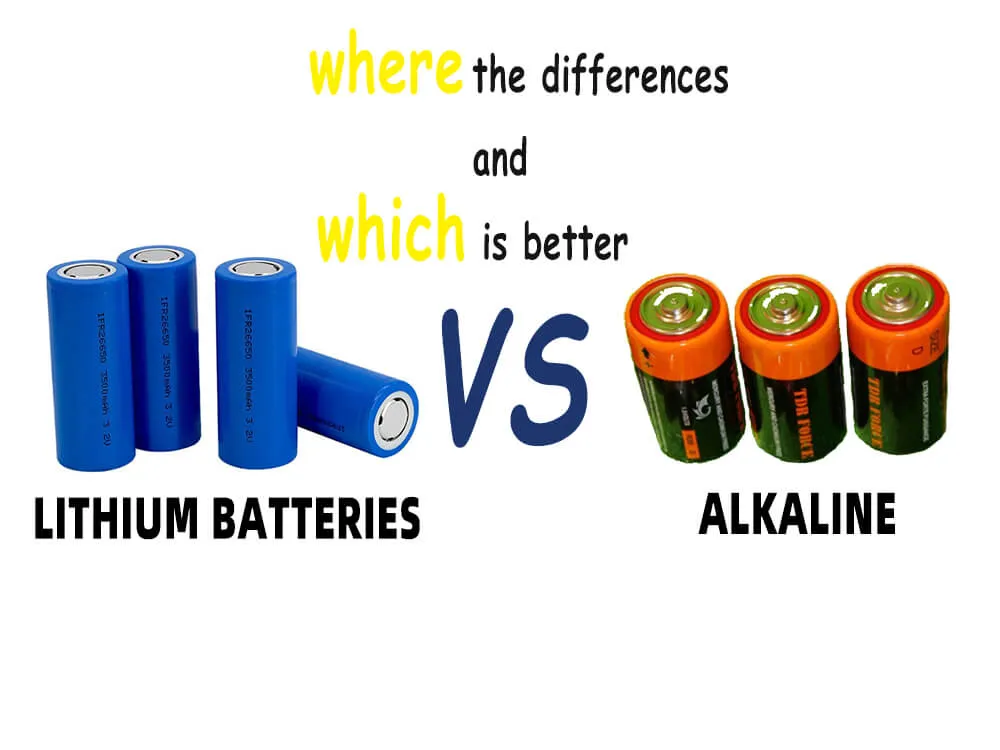
Lithium ion battery refers to the secondary battery (one of the best rechargeable batteries) with lithium as the energy carrier, which mainly relies on the lithium ion to move between the positive pole and the negative pole to achieve charging and discharging. The structure, charging and discharging principles of different types of lithium ion batteries are basically the same, with the main difference being the cathode materials.
The power battery is divided into ternary battery and lithium iron phosphate battery according to the different cathode materials. The ternary cathode material refers to the cathode material composed of nickel, cobalt and manganese. The development of cylindrical power battery can be divided into three generations according to battery size:
- The first generation:18650 cylindrical power battery (2008)
- Second generation: 21700 power battery (2017)
- The third generation: 4680 power battery (2019)
In 2020, the sales volume of China’s cylindrical power batteries was recovered, mainly due to the large-scale production of Tesla. LGES supported the mass production of 21700 cylindrical batteries in Tesla at its Nanjing base in China; In 2022H1, the installed capacity of cylindrical power battery was about 4.43GWh, a decrease of 17%.
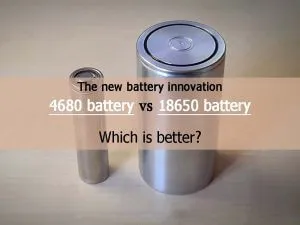
4680 cylindrical battery with excellent performance
The 4680 cylindrical battery has the characteristics of high specific energy, fast charging, high safety, low cost and long life. The cylindrical power battery increases nickel and decreases cobalt through ternary cathode materials, and the graphite cathode is doped with silicon oxide. The energy density of the single battery continues to lead.
- Fast charging:
Relying on the full pole lug design of the 4680 cylindrical battery, the conductive and thermal conductive areas are improved, and the 4C-6C high current charging can be realized, which is significantly higher than the square and soft packed batteries.
- High security:
4680 cylindrical battery has high consistency, reducing the danger of overcharge, overdischarge and local overheating; The circular arc structure is conducive to the thermal insulation between batteries, and the thermal runaway barrier is good.
- Low cost:
Relying on the dry electrode process and new materials such as ultra-high nickel positive electrode materials and silicon carbon negative electrode materials, the cost of 4680 cylindrical battery has been greatly reduced.
- Long life:
The design life of 4680 battery is about 2000 times, and the consistency of single battery is good. The overall life of battery system is relatively long, meeting the power demand of passenger vehicles.
In 2022, Q2 Tesla Texas factory has started to deliver Model Y with 4680 battery pack. By Q3 2022, the company has produced more than 1000 sets of 4680 battery packs every week. Based on 690 batteries of the standard endurance Model Y, the annual production capacity is 3.4GWh, which is expected to reach 6.8-10.2GWh by the end of the year. However, there is still much room for growth from Tesla’s long-term target of 1000GWh.

Development trend
Cost reduction
On the whole, the positive and negative electrode materials and production process equipment are supported, and the production and equipment investment costs are expected to be halved. Tesla is vigorously promoting Panasonic, LGES and other battery suppliers to manufacture and develop 46 series large cylindrical batteries.
By using cobalt free positive electrode materials, silicon carbon negative electrode materials and ionic polymer coating technology, Tesla is jointly driving the cost of battery power consumption down from $110-120 to $48-53, a decrease of 56%.
With reference to the investment cost of Panasonic, LGES and Samsung SDI in the U.S. production line, The equipment investment of a single GWh production line decreased from US $109-133 million to US $34-042 million, a decrease of 69%.
Synergies
The large cylindrical full pole lug scheme reduces internal resistance/increases heat conduction, which can realize 4C-6C fast charging, and the fast charging time is reduced to 15 minutes. 4680 cylindrical battery has high consistency and good thermal runaway barrier.
The cylindrical battery is manufactured by winding process, and the production efficiency is improved by speeding up the rotating speed, while the efficiency improvement of the stacking process of pouch and square shell is limited. There are top 5 stacking battery companies in the world.
4680 cylindrical batteries have small contact area and good thermal runaway barrier when they are grouped. From the perspective of monomer, the shell of cylindrical battery is heated evenly during thermal expansion, and there will be no side bulge, deformation and other problems affecting the battery life.
From the point of view of the module, the cylindrical battery is arranged in a honeycomb manner, and the electric cells are filled with thermal insulation potting glue. The contact area between the electric cells is almost zero. The heat must pass through the potting glue and then be transmitted to the surrounding electric cells. The electric cells have good thermal insulation effect, which can prevent the heat from spreading out of control, thus effectively improving the safety of the battery’s thermal runaway.
The cylindrical structure is suitable for ultra-high nickel/silicon carbon, which further improves the energy density of the battery. At present, the 4680 cylindrical battery uses NCM811 positive pole and artificial graphite negative pole. The energy density of the battery reaches 244Wh/kg, which is 9.2% lower than that of the mature Panasonic 21700 cylindrical battery.
However, in the future, the energy density can be increased to 292Wh/kg by reducing the shell wall thickness and using silicon carbon negative pole.
Market
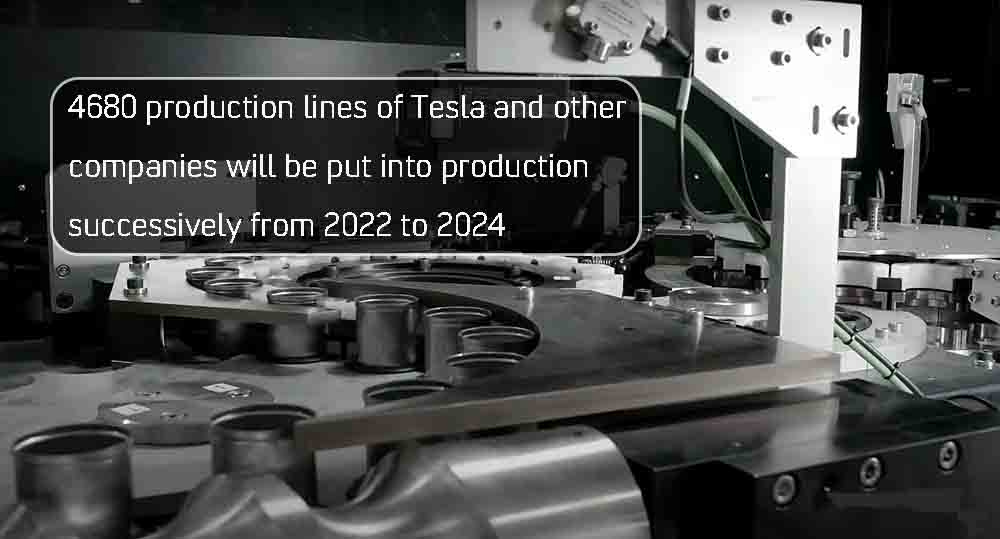
From the perspective of production capacity and planning forecast, 4680 production lines of Tesla, Panasonic, LGES, Samsung SDI, EVE, CATL and other companies will be put into production successively from 2022 to 2024. Tesla is the first to achieve mass production.
By the end of this year, it will initially achieve about 10GWh capacity, followed by Panasonic. It is expected that in March next year, it will initially achieve 10GWh 4680 cylindrical battery capacity and gradually expand its capacity.
LGES, Samsung SDI and EVE accelerate the construction of 46 series large cylindrical battery production lines, with the planned production lines of about 10GWh. CATL expects to build a new production line of 12GWh 46 series large cylindrical battery by 2024 and achieve mass production.
It is estimated that Tesla’s global sales volume will exceed 4 million in 2025, with an average annual growth of 44%. Tesla’s global production of new energy vehicles will reach 144.6 million, 199.4 million, 271.0 million and 4.005 million respectively from 2022 to 2025. The increase in growth in 2025 is mainly due to the increased capacity of new factories and new models.
In addition to Tesla, many car companies are optimistic about the market application of 46 series cylindrical batteries. BMW, Rimac, NIO, JAC and other car companies are vigorously laying out 46 series big cylinders. BMW has reached a 46 series big cylinder battery supply agreement with EVE, CATL and Envision AESC respectively from September to October.
The overall scale exceeds 110GWh. Based on 100kWh of each vehicle, the full production and loading volume reaches 1.1 million vehicles. In 2025, the installed capacity of 46 series large cylinders in the world will exceed 200GWh, and the market size will exceed 100 billion.
Industrial chain
The 46 series large cylindrical battery has obvious cost reduction and efficiency increase, has broad market prospects, and has a great impact on the battery industry chain. We focus on new production lines and processes such as lithium battery manufacturing, ultra-high nickel cathode materials, silicon carbon cathode materials, and new lithium salt LiFSI.
Lithium battery manufacturing
Technically, the 46 series large cylindrical batteries all use ultra-high nickel+silicon carbon as the main positive/negative materials. Tesla cathode uses 9-series high nickel NCM cathode, and the subsequent goal is to develop binary cobalt free cathode materials, namely nickel manganese cathode (NMx);
LGES selects 9-series quaternary high nickel NCMA; Panasonic and Samsung SDI use NCA; CATL, EVE and SKI all use high nickel NCM, and 9 series will be used in the future. The negative electrode material is silicon carbon negative electrode doped with 12% – 15% silicon oxide, with a capacity of 550mAh/g.
 From the product level, Tesla has achieved 4680 loading at present, and it is likely to achieve mass production in 2023. In 2022, Q3 Tesla will produce about 1000 sets of 4680 battery packs every week, with an annual production capacity of 3.5GWh. It is estimated that the production capacity will reach 6.8-10.2GWh at the end of the year.
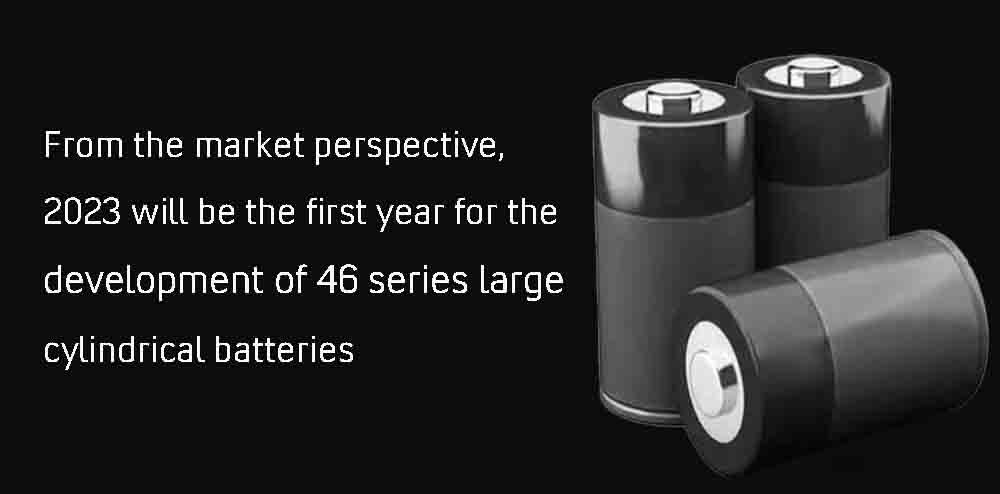
From the market perspective, 2023 will be the first year for the development of 46 series large cylindrical batteries, and the installed capacity will exceed 200GWh in 2025. It is predicted that the installed capacity of 46 series large cylindrical batteries will reach 207.8GWh in 2025, and the market scale will exceed 100 billion RMB.
From the perspective of company competition, the shares of the three giant cylinders in Japan and South Korea are leading in the world, and Tesla’s self-made 4680 has driven the big cylinder to make a comeback.
According to data, in 2021, the global cylindrical battery market was mainly occupied by Panasonic, LG and Samsung SDI, and Panasonic and LG will lead by the sales of Tesla new energy vehicles.
Tesla started to load 4680 vehicles in Q2 of the year 22, with a capacity of about 10GWh by the end of the year. The leading battery manufacturers have followed the big battery camp of the extra 46 series, including Panasonic, LG, Samsung SDI, CATL, EVE, and Bak.
From the supply chain perspective, the upstream material technology is highly mature, and the battery production line capacity is steadily climbing. The promotion of 4680 may affect the battery pattern dominated by square cells in China. Companies with cylindrical battery production capacity and process accumulation in China have the first mover advantage.
Ultra high nickel cathode materials
The development of ultra-high nickel cathode materials mainly includes the following aspects:
- NCMA (nickel cobalt manganese aluminum) quaternary material is conducive to improving cycle life
- High nickel can reduce cost and increase efficiency, which is the development trend of ternary cathode materials
- High nickel products have higher technical barriers, and cathode material companies with deep technology have development potential
- High nickel ternary positive electrode products have high customer viscosity
From the perspective of global business development, the operating revenue of Easpring, Huayou Cobalt, BTR and CNGR has achieved rapid growth. Easpring is mainly engaged in ternary cathode materials. From 2018 to 2021, its overseas business income grew rapidly, with an average annual growth rate of 53.9%.
Huayou Cobalt mainly engages in cobalt, nickel, ternary precursor, copper, etc., and develops Cobalt nickel lithium resource development business in Congo (DRC), Indonesia and other countries and regions, with an average annual growth of 58.9% from 2018 to 2021.
Silicon carbon anode material
Technically, the silicon carbon negative electrode can effectively improve the energy density of the battery. The commercialization of lithium ion battery cathode is dominated by artificial/natural graphite, with a capacity per gram of 365mAh/g, which is close to its theoretical specific capacity limit of 372mAh/g, while the theoretical specific capacity of silicon is up to 4200mAh/g, which is more than 10 times that of graphite anode materials.
There is no potential for lithium evolution, and its safety is better than that of graphite anode materials. It is also rich in reserves and low in cost. It is the most promising next generation of lithium battery cathode materials.
From the market level, the commercial silicon carbon anode is suitable for cylindrical batteries, and the mass production of batteries drives the rapid growth of demand for silicon carbon anode.
As square cells and soft packed cells are very sensitive to expansion, while the 4680 cylinder has the advantages of uniform stress, high degree of automation, high expansion tolerance, and high degree of automation in manufacturing, the advantages of silicon carbon negative electrode and high nickel ternary positive electrode with high energy density are more prominent in the application of cylindrical cells.
From the perspective of supply chain, 4680 battery mass production is imminent, and the demand for cylindrical power battery is expected to increase.
New lithium salt LiFSI
From the technical perspective, the requirements of 4680 high nickel and high voltage on electrolyte performance have been improved. First of all, the nickel content in the cathode material increases. As the 4-valent nickel ion has a high redox potential, it will catalyze the oxidation and decomposition of the electrolyte, affecting the battery performance.
Secondly, transition metals such as manganese and cobalt will dissolve out during the cycling process of high nickel battery system, which will damage the SEI film on the negative electrode surface. Therefore, additives such as overcharge and flame retardant should be added to high nickel battery to improve its safety.
Lithium difluorosulfonylimide (LiFSI) is considered to be the best substitute, especially suitable for active electrode materials such as high nickel positive electrode and high voltage positive electrode. It can greatly increase the number of battery charges and discharges, maintain stability, and improve safety. Its permeability is expected to further increase.
LiFSI has excellent properties such as good structural stability and electrochemical performance, and has become a new lithium salt with the fastest industrialization process.
Compared with LiPF6, LiFSI has the following advantages:
- LiFSI has higher thermal stability, its melting point is 145 ℃, and its decomposition temperature is higher than 200 ℃, which can withstand higher working temperature and inhibit air expansion;
- LiFSI has high conductivity, up to 9.8ms/cm (LiPF6 is only 6.8ms/cm), which helps to reduce the internal resistance of the battery, reduce heat generation, and improve efficiency and safety;
- LiFSI has good compatibility with SEI membrane, and has high chemical stability with positive and negative electrodes. Only when the temperature is above 160 ℃, it will have displacement reaction with some of its components.
At present, the amount of LiFSI as an additive is increased. At present, only first-line battery companies and leading electrolyte companies have various formulations of LiFSI as additives and lithium salts, while most second-line companies only have formulations as additives.
LiFSI can be used as electrolyte lithium salt in two ways: first, it can be used as an additive of common electrolyte LiPF6; Second, LiPF6, as a new electrolyte, is still in the laboratory stage.