Skip to content
Battery Converter vs Inverter: What Is the Real Difference?
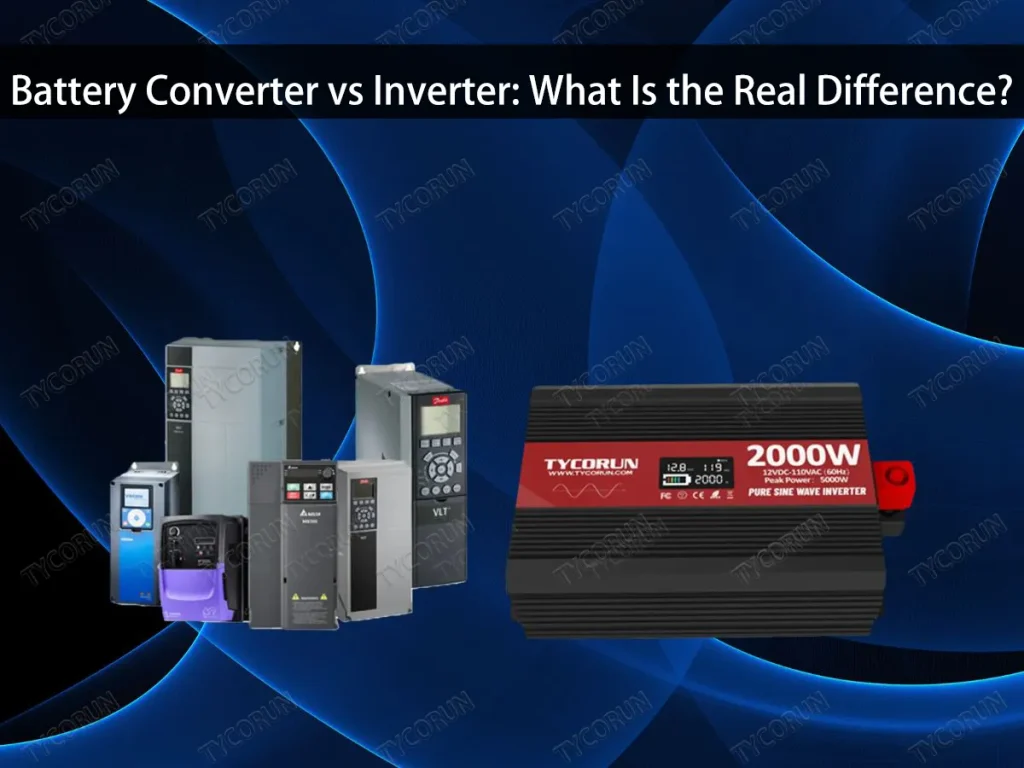
Power management systems are growing more effective and adaptable as technology develops. In the world of modern electricity, the debate of battery converter vs inverter has resurfaced multiple times because both play an important role in the process of converting and distributing electricity. Even though they are frequently thought of as being similar, they have distinct roles and methods of operation to guarantee that electrical power might be utilized as efficiently as possible.
Understanding the difference between converters and inverters is critical not only for technicians or users of major energy systems, but also for anybody who uses battery-powered products, including residential energy storage systems, electric vehicles, and ordinary electronic devices. We can determine the device is best suited to our power requirements by understanding its operations and advantages.


What are Battery Converter and Inverter?
Battery converters and inverters are two critical components in modern electrical systems that regulate and manage the flow of electricity. Despite the fact that they are frequently discussed together, their functions are different. In order to adapt the voltage level of power to the requirements of the device or battery system being used, Battery converters, more precisely known as DC-DC converters, adjust the direct current (DC) voltage from the battery by stepping it up (boost) or down (buck) to meet the voltage requirements of the load or other parts of the system.
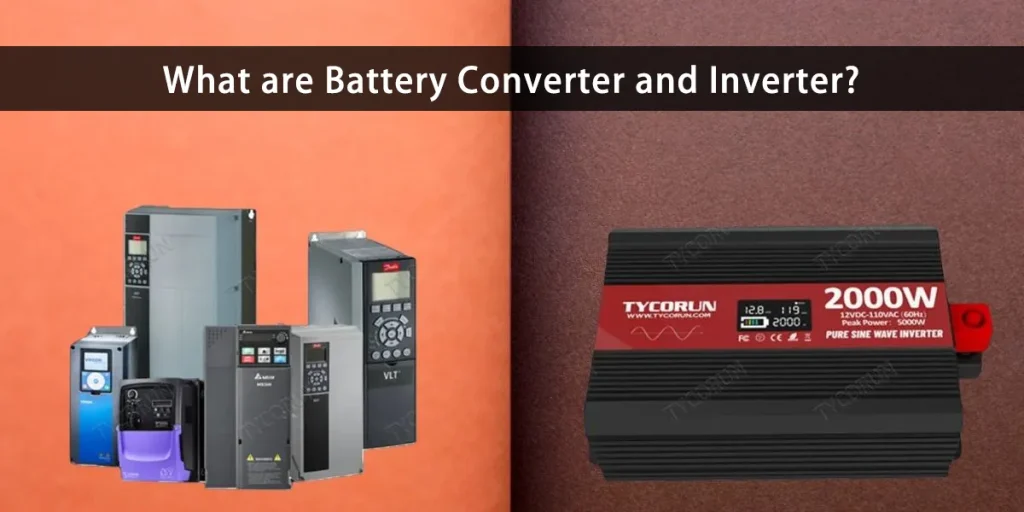
Meanwhile, inverters serve a different purpose. Inverters not only convert DC power from batteries into AC power but also regulate the voltage, frequency, and waveform to ensure compatibility with household appliances or the power grid. Battery electricity cannot be directly used for common electronic devices without inverters.
These two technologies actually complement each other in current energy systems, such as solar power systems, electric vehicles, and home energy storage solutions, allowing energy to be used more efficiently and flexible.
How Does Battery Converter and Inverter work?
When comparing battery converter vs inverter, it is critical to understand how they function. Battery converters and inverters operate very differently, even though they both control the flow of electricity.
DC-DC converters operate by adjusting the voltage at which electricity enters or exits a battery. They use switching devices such as MOSFETs and IGBTs, along with inductors and capacitors, to regulate the output voltage according to load demand through boost or buck topologies and PWM control, rather than simply stabilizing the current.
Meanwhile, an inverter converts the battery’s direct current (DC) into alternating current (AC), which is utilized by most electronic equipment. Inverters generate stable AC voltage waveforms through semiconductor switching and PWM control. They may also use LC filters to produce pure sine waves, ensuring stable voltage frequency and low harmonic distortion, making them suitable for sensitive equipment such as laptops or medical devices..
With this mechanism, DC-DC converters regulate and adjust battery voltage to efficiently supply various DC loads, while inverters convert DC into AC to power AC-based devices, ensuring optimal utilization of battery energy across a wide range of applications.
Battery Converter vs Inverter: Key Differences
It is crucial to comprehend the main differences in debate between battery converter vs inverter. Here are the main differences:
- Main function: Without altering the kind of current, battery converters alter the voltage level (increase or decrease). Inverters, on the other hand, transform batteries’ direct current (DC) into the alternating current (AC) that most electrical devices require.
- Electrical conversion type: Inverter performs DC to AC conversion (Alternating Current) system, whereas Converter performs DC to DC conversion (Direct Current) system.
- Common uses: Converters are frequently used to modify voltage for safe operation in solar power systems, electric cars, and portable electronics. In order to run AC-based equipment, inverters are utilized in backup power systems, power plants, and home electrical systems.
- Function in power systems: DC–DC converters regulate voltage, but the accuracy of voltage regulation, ripple control, and safety protection are not solely determined by the converter itself; they also depend on the overall system design and the controller for electronic parts. However, inverters convert DC to AC and output a controllable waveform that enables household or industrial AC devices to operate.
Applications of Battery Converters and Inverters
After discussing with the differences between battery converter vs inverter, it is equally critical to comprehend their uses. Converters manage DC voltage levels and optimize energy transfer within the system, while inverters convert DC power to AC and control the output waveform and frequency. The functional differences between battery converters and inverters really work well together in many situations, whether they are used in large-scale enterprises, electric automobiles, or homes.
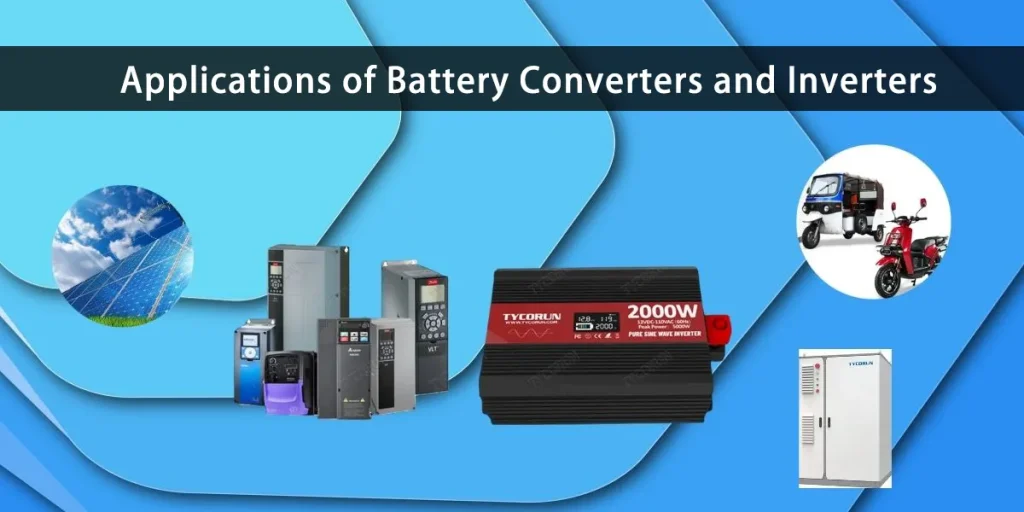
- Solar power systems: Converters (MPPT controllers) in solar power systems adjust the voltage from solar panels to match the battery charging voltage for optimal energy conversion. Meanwhile, inverters transform battery-derived DC electricity into AC power suitable for domestic usage. The process of energy distribution and storage is more effective when the two are combined.
- Electric vehicle (EV): In EVs, DC–DC converters step down the battery’s high voltage to low-voltage DC for auxiliary systems. The inverter then turns the battery’s DC power into AC, which drives the electric motor. EVs’ power systems wouldn’t function at their best without both.
- Energy storage systems (ESS): inverters transfer battery energy to the electrical grid or electronic devices, while converters regulate battery charging and discharging. Energy storage systems can function effectively and safely because to this combination.
- Industrial and commercial applications: In industrial systems, inverters (VFDs) control motor speed and torque by adjusting the output frequency, while DC–DC converters supply stable DC voltage for control units and sensors. Utilizing both guarantees effective operations with less chance of power outages.
Using Converters and Inverters with Lithium Batteries
Lithium batteries are widely used with converters and inverters due to their high energy density, lightweight design, and fast charging characteristics, though they require precise voltage and current management. Lithium batteries are appropriate for systems that need voltage control and current conversion because of their great energy storage capacity.
While inverters convert DC current to AC so that power from the battery can be used by industrial equipment or household appliances, converters adjust the DC voltage levels between the lithium battery and other components to ensure efficient power transfer, while the battery management system (BMS) protects against overcharging or overdischarging. When used together with a BMS, converters and inverters enable efficient and controlled use of lithium battery energy, helping to protect both the batteries and connected devices.
In addition to efficiency, safety is a primary concern. Lithium batteries require precise power management due to their chemical characteristics, which are susceptible to voltage spikes or fluctuating currents. The battery can continue to function safely, prolonging its service life and preserving power stability, by utilizing the appropriate converter and inverter. Therefore, the combination of lithium batteries, converters, inverters, and a dedicated battery management system (BMS) forms an efficient and reliable power architecture for modern applications.
Efficiency and Performance Comparison
Understanding the differences in efficiency and performance between battery converter vs inverter is critical for selecting the equipment that best meets your power system requirements. Despite the fact that both control electrical energy, their various modes of operation have an impact on their effectiveness and performance levels in real-world applications.
- Energy efficiency: Converters are often slightly more efficient because DC-DC conversion typically involves fewer power conversion stages than DC-AC inversion, leading to less switching and transformation loss. Conversely, inverters convert DC to AC, which may result in a small amount of energy loss.
- Long-term performance: stable AC current may be maintained by high-quality inverters, allowing electrical gadgets to operate at their best. In order to prevent batteries and electronic components from being harmed by voltage fluctuations, converters are essential for maintaining steady voltage.
- Response to load changes: converters can swiftly adjust voltage to maintain system efficiency. Although the conversion process is a little more complicated, modern inverters are likewise made to react to changes in load.
Tips for Choosing the Right Device for Your Needs
Choosing between a battery converter and an inverter is not always simple, especially when the power system includes a variety of devices and battery capacities. There are a few factors to take into account to make sure you receive the best device. Efficiency and safety can be increased by being aware of the features of each device and the system needs.
- Determine the devices to be used: Check whether your loads require AC power or a regulated DC supply with specific voltage and current characteristics. An inverter is the first choice if the majority of devices need AC, whereas a converter is required if voltage adjustment is the main concern.
- Modify the power capacity: ensure the converter’s or inverter’s capacity corresponds to the system’s overall needs. While using a device with too much capacity can be expensive, using one with too little capacity can result in damage.
- Choose a device compatible with the battery type, especially for lithium batteries: long battery life and steady system performance are guaranteed with a compatible device.
- Safety and protection features: look for converters or inverters that are protected from overheating, overcurrent, and voltage surges. For the device and battery to remain secure, these characteristics are crucial.
Conclusion
In conclusion, it is critical to comprehend the difference battery converter vs inverter in order to maximize the efficiency of energy distribution and storage systems. Although they serve separate purposes, these two gadgets work well together. While an inverter transforms DC power from the battery into AC current that may be utilized for home and commercial appliances, a converter controls voltage to satisfy system needs and preserves electrical current stability. Users can choose the best device for their power requirements by comprehending the fundamental features of each.
In actuality, a battery converter and an inverter can work together to create a safe and effective energy system, particularly when using lithium batteries. While inverters guarantee that battery energy can be used as efficiently as possible without endangering the device, converters aid in preventing overcharging and overdischarging. When both are used properly, power efficiency rises, battery life is prolonged, and the overall stability of the energy system is preserved.
FAQS
Can a battery converter replace an inverter?
Not entirely. Converters and inverters have different functions. A converter is a general term for any device that changes electrical characteristics—such as voltage, current, or the type of current—while an inverter is a specific type of converter that converts DC to AC. Therefore, a DC-DC converter cannot replace an inverter, especially if you need to run devices that require AC current.
Are inverters compatible with lithium batteries?
Yes, most modern inverters are compatible with lithium batteries, provided that the system voltage and communication protocols match. Lithium batteries offer stable voltage and high energy efficiency, but the inverter must include suitable charging parameters and BMS communication support.
Can I use both a converter and inverter together?
Yes, converters and inverters are often used together. The converter regulates or stabilizes DC voltage and current between the battery and DC bus, while the inverter transforms this regulated DC into AC for external loads. In some systems, a bidirectional converter also manages battery charging and discharging to maintain system balance and efficiency.