Skip to content
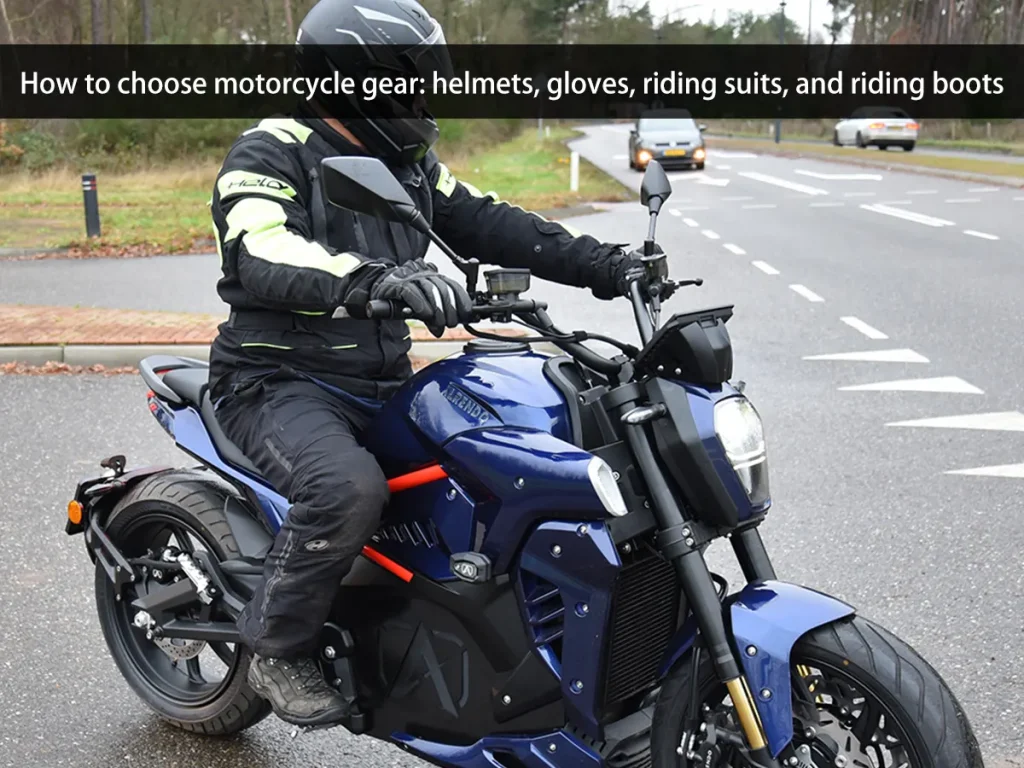

Riding on the road inevitably comes with the risk of accidents. Unlike cars, motorcycles do not have built-in safety features like airbags to protect the rider during crashes or collisions. To have such protection, riders must wear safety gear such as helmets and gloves, which can provide protection in the event of an accident. Because motorcycles expose riders to greater risks—referred to as “meat wrapped in iron”—the only things that can protect riders are various protective gears. These gears serve the same purpose as seat belts and airbags in cars.

Motorcycle gear, including helmets, gloves, jackets, pants, and boots, provides critical protection against injuries in the event of an accident. Helmets protect the head from traumatic injuries, while other gear protects against abrasions, cuts, and fractures.
Besides, motorcycle gear is designed to provide comfort during long rides. Features like ventilation, padding, and ergonomic designs ensure riders remain comfortable and focused.
Helmets are protective gear for the head and are indispensable tools in people’s traffic. Helmets include full helmets, rally helmets, rally flip-up helmets, flip-up helmets, multifunctional helmets, 3/4 half helmets, and off-road helmets. Different usage methods require different types of helmets. Currently, the more common high-end helmet brands on the market are Japan’s Arai, Shoei, the USA’s Scorpion Exo, and Germany’s Schuberth helmets.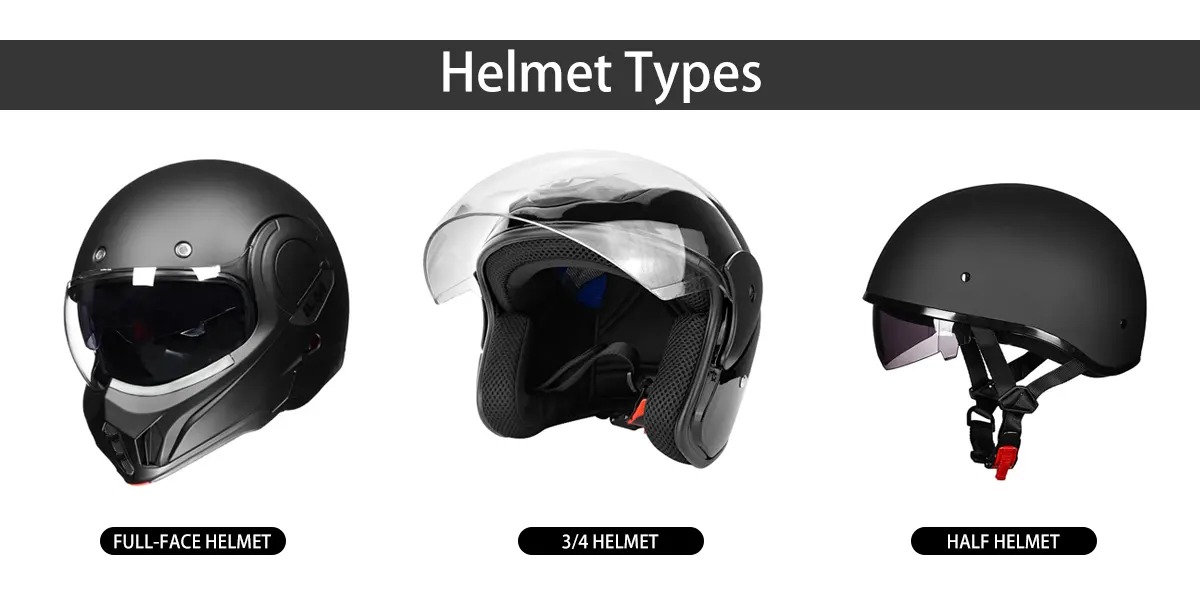
Helmets, as one of important motorcyle gear, are made of incredibly tough yet lightweight materials, with the outer shell effectively protecting the head upon impact. High-end helmets use KwilWick for the inner lining, which has excellent sweat absorption and a cooling touch, enhancing helmet comfort, antibacterial properties, and hypoallergenic features. ScorpionEXO helmets come with the Airfit cheek pad inflation system, which can improve rider comfort and safety. This is why helmets are increasingly popular and even mandated by law, with non-wearers prohibited from riding on the road.
When choosing a helmet, safety certification is the primary concern. The key function of a helmet is its safety, and safety certification is an important indicator of a helmet’s safety. Different countries have different safety certification standards for helmets, commonly including China’s “CCC”, the USA’s “DOT”, the EU’s “ECE”, and Japan’s “JIS” safety certification standards.
Additionally, motorcycle helmets have a safety shelf life, usually around five years. If used daily, regardless of exposure to wind and sun, the shelf life will be further shortened. The outer shell (fiberglass) is relatively resistant to aging. However, regardless of whether aging can be seen on the surface, the outer shell and inner shell (EPS) materials will become brittle and fail over time. Therefore, when purchasing this motorcyle gear, it’s best to check the manufacturing date and choose one produced in the current or previous year.
When choosing gloves for motorcycle gear, the primary consideration should be their protective performance. Truly safe gloves must provide comprehensive protection, including back hand protection shells, palm pads, and wrist reinforcements.
The protective block on the back of the hand should usually be made of hard materials such as carbon fiber or titanium alloy to provide good protection. Palm pads are also essential. When people fall off their bikes, they instinctively reach out with their hands to brace themselves, and palm pads can effectively reduce the impact between the hand and the ground, preventing more severe hand injuries.
Main considerations:
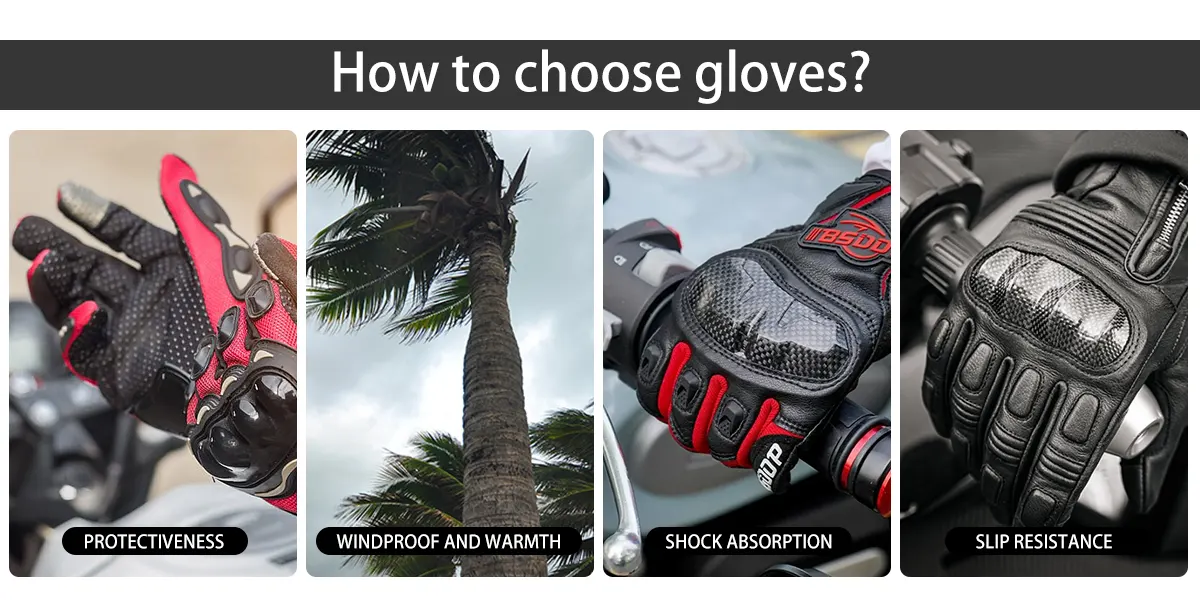
Protectiveness: Protection is the most important function of gloves. Protective function determines whether they can provide the necessary protection for you. If you need high protection levels, choose gloves with harder protective materials. If the protection level required is not very high, you can choose softer materials for more comfort during use.
Windproof and warmth: In cold regions, if hands become stiff from the cold, it can adversely affect vehicle control. Motorcycle control is highly dependent on hand skills during high-speed movement. Typically, the warmth of gloves is achieved through a waterproof shell, windproof layer, warm filling, and fleece lining.
Shock absorption: The shock absorption effect of glove linings ranges from foam, EVA, memory foam, to shock-absorbing gel. Professional gloves, as one of key motorcyle gear, often use memory foam and shock-absorbing gel. You can easily identify them when buying: press the pad area, and foam has poor elasticity, memory foam slowly rebounds, and shock-absorbing gel has elasticity and a slippery feel.
Slip resistance: Gloves have special anti-slip designs on the fingers to aid in operation. The palm part of the gloves has anti-slip and wear-resistant materials or genuine leather, which can increase friction and improve adhesion.
When choosing a riding suit for motorcycle gear, we can pay attention to the following points:
Soft lining: It can reduce friction with the neck skin, providing a more comfortable wearing experience for riders.
Cold resistance: Built-in zippers and windproof layers behind the zippers can effectively prevent cold wind from entering, keeping the body warm.
Ergonomic design: Pre-curved elbows and designs closer to the natural riding posture can ensure safety and comfort for riders during the ride.
Durability: Firm zippers and stitching make riding suits more durable; the fitted cut is not only aesthetic but also prevents wind from entering, and internal protectors won’t shift.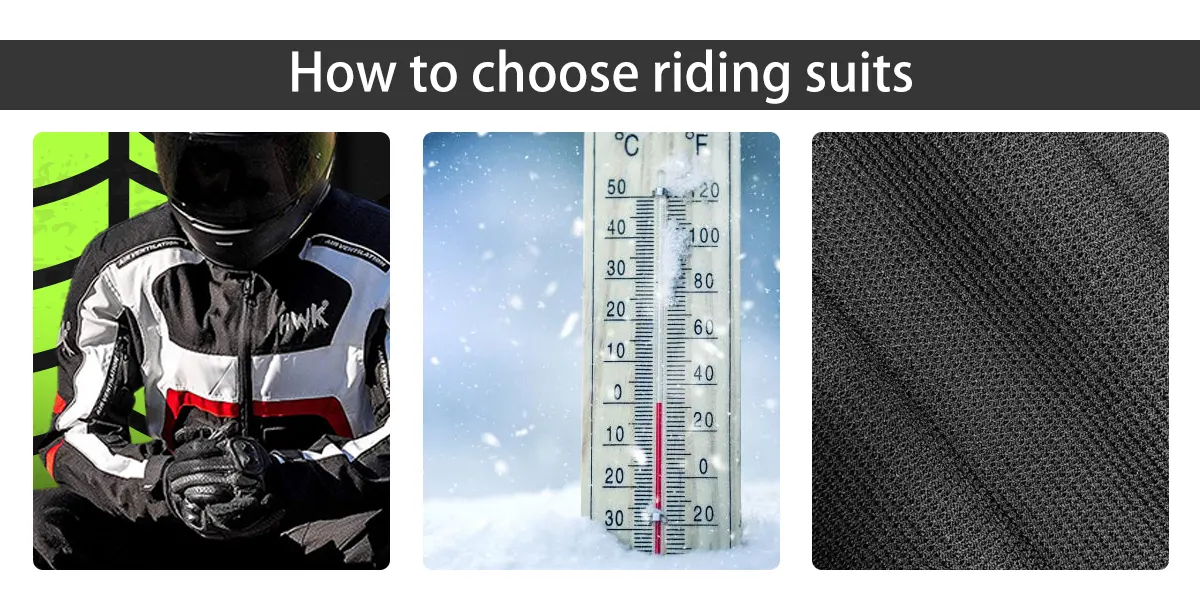
Reflective materials: Increase visibility, making riders more noticeable at night or in low light, thus improving safety.
Heavy-duty wear-resistant materials: As important motorcyle gear, double-layer fabric or armor at the shoulders and elbows provides comprehensive protection, ensuring a safer riding experience.
Common materials and structure of riding suits
Built-in protectors: Whether it’s a winter, four-season, or summer riding suit, for long-distance travel or commuting, built-in protectors are standard. Mid-to-high-end riding suits generally come with protectors for all key areas: shoulders, elbows, chest, and back (jacket); hips and knees (pants).
More affordable models may only come with shoulder and elbow protectors, while chest and back protectors are often not included or need to be purchased separately to reduce costs and price.
Protector materials, shapes, and safety levels are also key selling points that brands compete on. After all, a riding suit without good protectors lacks soul. Major brands often have their own developed protective inserts, with more advanced material structures.
Common fabrics: Common outer layer fabrics for this riding motorcyle gear include leather, high-denier Oxford cloth, and some composite waterproof and wear-resistant polyester/nylon. Summer riding suits mainly use breathable mesh. High-end textile riding suit brands might use the US Gore-Tex’s high-tech waterproof breathable film, which is usually quite expensive.
GORE-TEX fabric, produced by the US Gore company specializing in innovative materials, has a unique material structure that keeps you from getting wet and embarrassed in sudden heavy rain while continuously releasing internal heat molecules. This makes it both highly waterproof and highly breathable, ideal for long-distance travel. Apart from the clothing field, GORE-TEX fabric has also been applied in aerospace, medical, military, and other fields.
Functions:
Protection: Wearing riding boots can provide comprehensive protection. The feet are one of the most easily injured parts during riding. Riding boots, as one of essential motorcycle gear, usually have reinforced ankles, impact-resistant materials, and abrasion-resistant soles that can effectively reduce the impact and abrasion injuries to the feet in accidents.
Comfort and control: Suitable riding boots can provide good comfort and control. Their design considers the riding posture and movements, enabling better control of the motorcycle, stable foot support on the ground, and reduced fatigue and discomfort.
Preventing slippage and debris injuries: The high-top design of riding boots can prevent laces from getting caught on the footpegs or being pulled into the wheels, reducing the risk of accidents. They also prevent small stones, dust, and other debris from entering the boots, providing a better riding experience.
You need to consider the following three main factors:
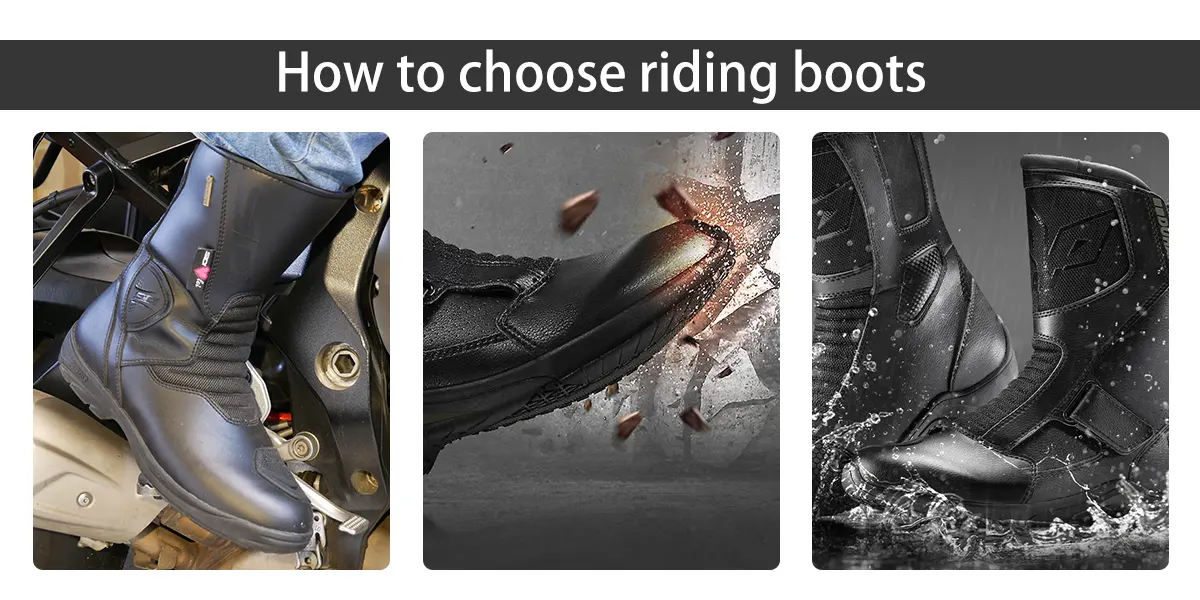
Comfort: If your motorcyle gear are uncomfortable, you might not wear them. They need to fit the size of your feet and provide a combination of support and padding. The soles should be sturdy, helping reduce fatigue during long trips. Reinforced heel and toe areas make shifting and braking less tiring. If you’re racing on the track, you might prefer stiffer boots, while riders who often stop and walk around will want more flexible motorcyle gear.
Safety: Safety is a major factor when choosing motorcycle boots. Casual shoes can’t protect you from impacts or ground abrasion in an accident. This motorcyle gear is designed to protect your shins, ankles, toes, and heels from collisions. Different brands use various combinations of designs, materials, and padding to enhance the safety of motorcycle footwear.
Protection: Since we can’t always avoid rain and cold weather, choosing durable motorcycle boots or shoes is important. Many boots use waterproof materials and have lace covers with zippers to keep out rain and provide warmth when temperatures drop.