Skip to content
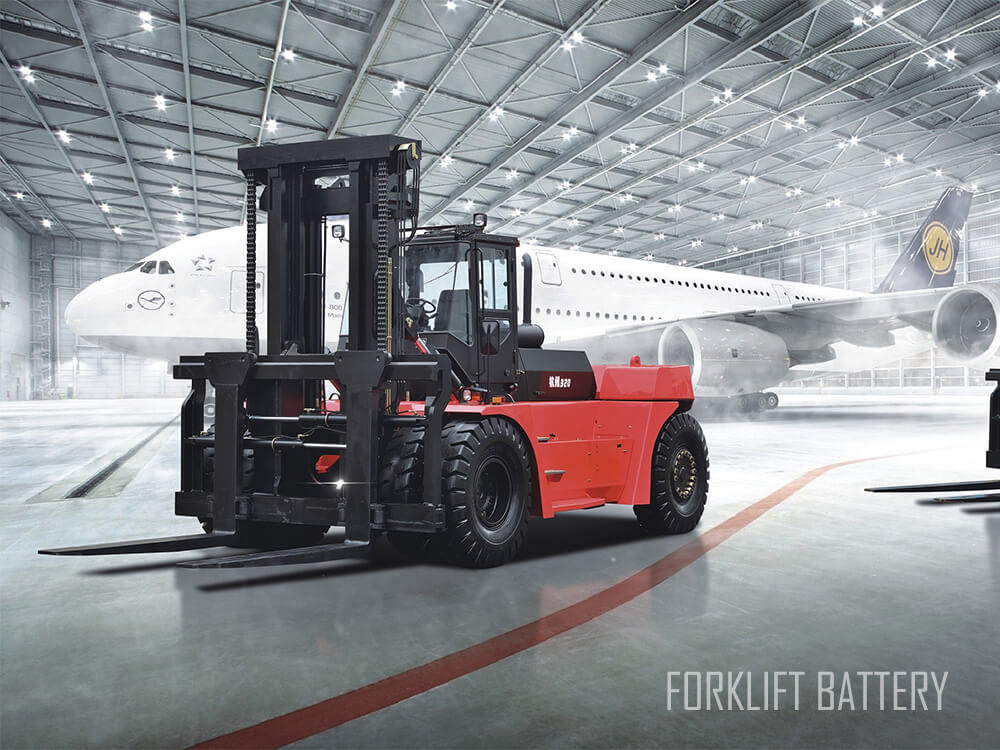
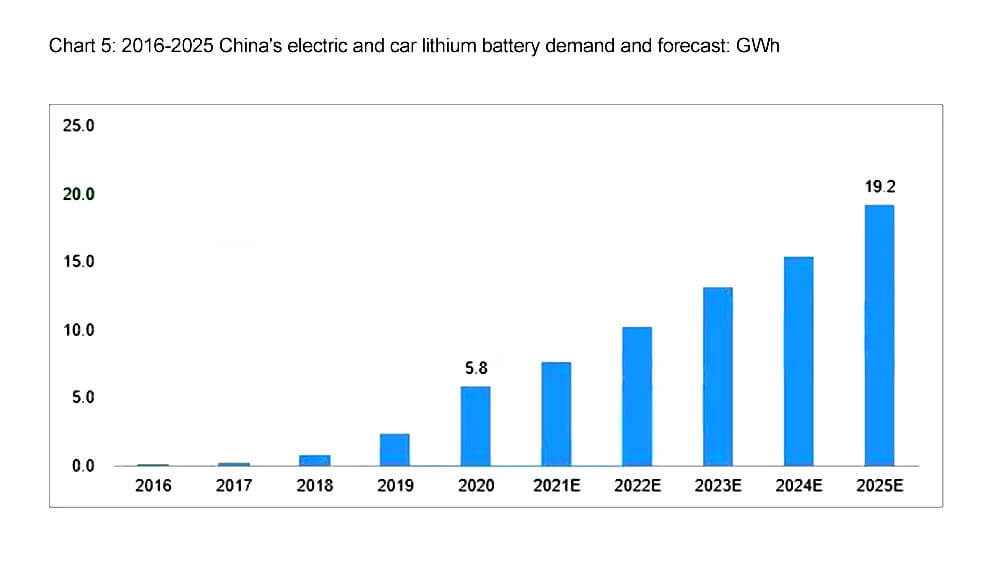
Forklift is the largest core product of material handling equipment. When it comes to electric forklifts, the biggest trend is the rapid growth of forklifts powered by lithium-ion batteries. In the future, with the continuous reduction of the cost of lithium ion battery, the cost advantage of the whole life cycle of lithium forklifts will be more obvious. The demand for lithium forklift battery in China will continue to grow, and is expected to reach 19.2GWh by 2025.
Market situation of lithium forklift battery
Data shows that driven by the replacement of human labor by machines in logistics and other industries and the upgrading of manufacturing, global forklift sales reached 1,596,000 units in 2020, up 6.9% year on year, with a CAGR of about 8.5% in the past five years, of which China’s forklift sales accounted for about 50.1%, up 18.0% compared with 2016. From January to March 2021, the sales volume of forklifts in China exceeded 240,000 units.
Thanks to the obvious economic benefits brought by mature lithium technology and cost reduction, as well as the strong support of policies, the penetration rate of lithium forklifts in China’s electric forklift market in 2020 reached 39.3%, up 14.5 percentage points from 2019. It expects that the penetration rate of lithium forklifts will reach about 60% by 2025. Fuel cell forklifts will also occupy a considerable share of the market in 2025, while lead-acid batteries will gradually reduce their share.
Statistics show that the installed capacity of lithium-ion batteries for electric forklifts in China in 2020 was 5.8GWh, a year-on-year increase of 144.9%. Experts analyzed that with the continuous reduction of the cost of lithium in the future, the cost advantage of the whole life cycle of lithium forklifts will be more obvious. The demand for Lithium Battery Replacement Lead Acid for electric forklifts in China will continue to grow. It is expected that the demand for lithium batteries for electric forklifts will reach 19.2GWh in 2025.
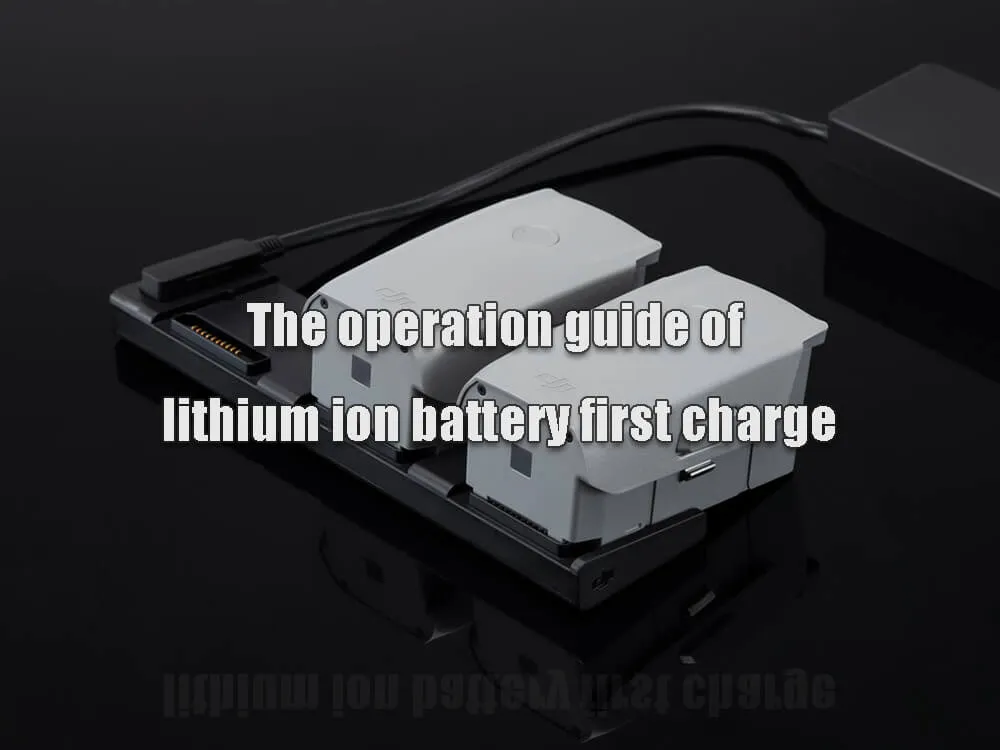
For the current new energy lithium electric charging forklift, extending the life and performance of the battery is a problem that cannot be ignored in the use of lithium electric forklift. Overcharging or undercharging a battery can shorten its service life and adversely affect its performance.

We will introduce to you in detail the forklift battery charging operation must comply with the safety precautions, hope to provide you with help in the process of using forklift in lithium.
Charging type of forklift battery
There are a number of safety precautions to be followed when charging forklift lithium batteries, which are essential to ensure the safety of the workers recharging the batteries and to prevent damage to the batteries and recharging equipment. If workers do not follow safety precautions, they risk serious injury to themselves from the current or dangerous chemicals contained in the batteries.
Damage or failure of batteries or charging equipment, due to the current and the presence of combustible toxic chemicals in batteries, poses a safety hazard not only to individuals, but to the entire operating place. In order to greatly improve safety when charging forklift batteries, forklift lithium-ion battery manufacturers recommend following safety precautions.
- Before the forklift starts charging, the forklift should be firmly parked in a safe position
- All battery compartment covers must be kept open to eliminate any buildup of gas during charging.
- It is important to provide adequate washing, cleaning and safety equipment in all battery charging areas. Includes but is not limited to eye wash, chemical cleaning kits to prevent chemical spills and fire extinguishers to extinguish any fires caused during battery charging.
- The building in which the battery is charged must be properly ventilated to ensure that any gases generated during the charging process can be safely dissipated. All battery charging rooms need to be designed and built to Australian Building Code standards to ensure work safety codes are met
- All charging components must be in good working condition, and connectors must not be damaged or broken. Charge and replace batteries only by appropriately trained and authorized personnel who can quickly identify potential problems and have been trained in response methods.
- Appropriate personal protective equipment, including masks, aprons and rubber gloves, must be worn at all times during battery charging to reduce the possibility of eye or skin damage caused by battery acid. Workers performing battery charging must observe the following additional precautions: Do not smoke, no open flame, no sparks, do not use mobile phones or similar electronic devices, do not use flammable objects and metal objects that can cause sparks.
Safety precautions for forklift battery charging
- Conventional charging
Conventional forklift battery charging is common and straightforward, and batteries are standard overnight charging. Overnight charging usually lasts eight to ten hours, resulting in the battery being charged to 100% capacity. During traditional charging, the battery heats up and needs to allow enough time to cool down properly before operating the forklift. Conventional forklift battery charging is suitable for single shift operation or applications where forklifts can use multiple batteries. Regular battery charging allows you to maximize battery life, but may not be a good solution for multiple shifts.
- Fast charging
Quick charge is suitable for multi-shift operation where there is no time to charge the battery. Fast charging uses higher current and doesn’t slow down as traditional chargers do, allowing the battery to be fully charged in half to two to four hours of traditional charging time. Fast-charging batteries are built to have heavy load components due to excessive heat processing, so it is important that the size of the battery and charger be carefully adjusted based on power consumption studies. Fast-charging batteries typically have to be balanced for six to eight hours a week to reduce sulfate content.
3. Opportunity recharge
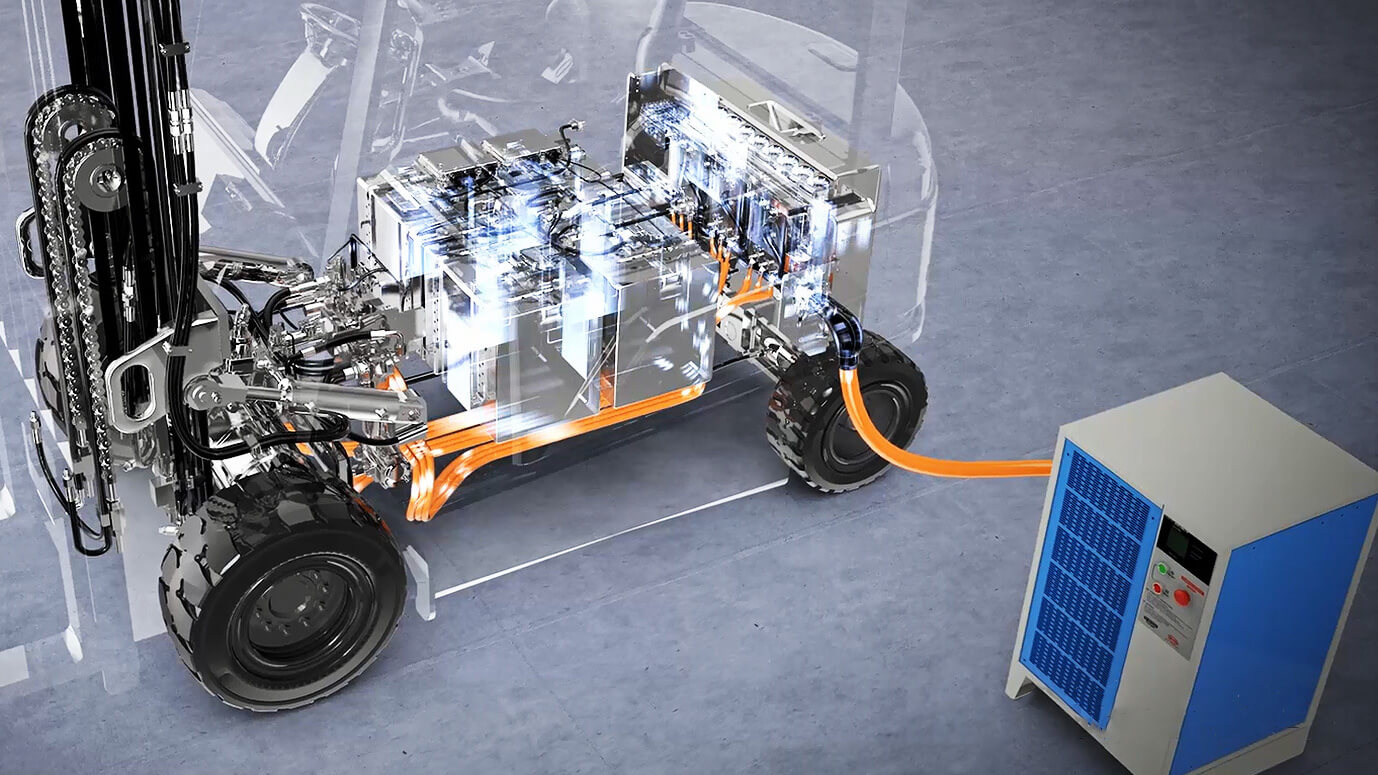
Opportunistic charging is exactly what the name implies: charging forklift battery when it is convenient and possible, such as during lunch breaks. Similar to traditional charging machines, charging helps greatly reduce the downtime of forklifts and avoids the need to purchase multiple batteries per shift. Opportunity charging is ideal for long periods of use. With today’s modern technology, the equalization and cooling period can be adjusted to less than 8 hours, but the battery must be carefully monitored to ensure that the charger is not slow to charge the battery during peak hours.
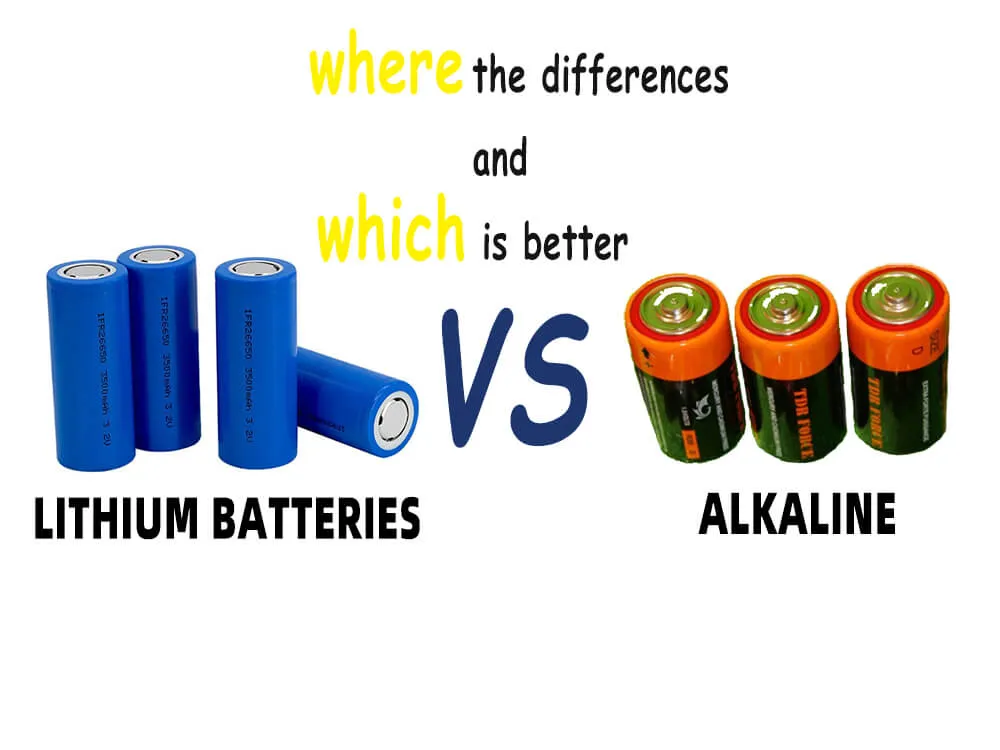
Compared with lead-acid batteries, forklift lithium batteries have advantages
Advantage of Lithium forklift battery:Charge quickly
Traditional lead-acid battery forklift, need to charge 8-12 hours to full; And lithium battery forklift, the battery can be filled in 2-3 hours, and can be charged with use, effectively improve work efficiency. For ordinary lead-acid battery forklifts, customers who work more than 8 hours a day need to prepare a separate lead-acid battery, which increases the procurement cost. The forklift lithium battery does not need to prepare a spare battery, the rest gap, timely supplement battery power, can meet the needs of three shifts a day.
Advantage of Lithium forklift battery:High charging efficiency
Ordinary lead-acid battery, charging efficiency is only about 60%, resulting in waste of electric energy, increase the use of cost; The energy conversion rate of lithium battery is more than 97.9%, which can save resources and create value for customers.
Advantage of Lithium forklift battery:Maintenance free
Ordinary lead-acid batteries need to be regularly maintained, replenished with distilled water, and balanced charging. For lithium batteries, there is no need for routine maintenance, just keep the case and charging port clean and dry.
Advantage of Lithium forklift battery:Long service life
Ordinary lead-acid battery charge and discharge cycle is about 1200 times, according to the number of discharge attenuation speed, generally use two to three years will need to replace the battery, and lithium battery charge and discharge cycles can reach more than 4000 times, and slower discharge attenuation degree, so the service life is basically consistent with the whole life, without having to change the battery within the whole life cycle of vehicles.
Advantage of Lithium forklift battery:The battery warranty period is long
The warranty for ordinary lead-acid batteries is 1 year or 2000 hours, while the warranty for forklift lithium batteries is 5 years or 10,000 hours. (Normal use, no man-made damage conditions).
Advantage of Lithium forklift battery:Safe and environmentally friendly
Ordinary lead-acid battery, when charging acid mist volatilization, need to be charged in an open and ventilated area, and lithium battery adopts sealed box structure, no pollution gas release in the charging process, more safe and environmental protection in the process of use.
When does the forklift battery need to be replaced?
Electric forklift in use for a long time, we will find that electric forklift not as far as when they just bought, run fast, this is why? Most people tend to think that something is wrong with the battery. So, how long to replace the electric car battery is the most appropriate? Under what circumstances should the battery be replaced?
Serious heating during charging of forklift battery
When the battery to the end of life, the positive electrode will be seriously softened, active material off, internal resistance increases, the impurity elements in the plate is constantly dissolved, so that the gas extraction rate increases when charging, the efficiency becomes poor, and the calorific value increases.
If you open the battery check of the electric forklift, you will see the electrolyte blackened, which can not be repaired when it fails seriously, resulting in the electric forklift battery running out of power soon after charging.
Various performance significantly reduced
The power is obviously insufficient, not far, not fast, at this time the forklift battery may cause adverse consequences, such as electric forklift charging and heating deformation, short circuit, open circuit, serious even cause fire, explosion.
The battery discharge capacity reduced
After the battery encounters this situation, it can be determined to scrap when the maintenance is still unable to rise significantly. This is because in the process of using the battery of electric forklift, after the capacity attenuates to about 60%, all parts basically reach the deterioration state. This attenuation has a trend of gradually accelerating. The battery of electric forklift will soon completely lose its charging and discharging ability.
Electric forklift battery capacity decline, performance decline, can not meet the requirements of the user, must be replaced in time forklift battery, to avoid some unnecessary trouble, but also responsible for their own safety and the safety of others!