Skip to content

And the sodium-ion battery industry chain companies with related patented technologies mainly include CATL, Zhongke Haina, Nai Innovation Energy, Penghui Energy, Sunwoda, China Great Wall, San Yang shares (002580), GEM, etc.
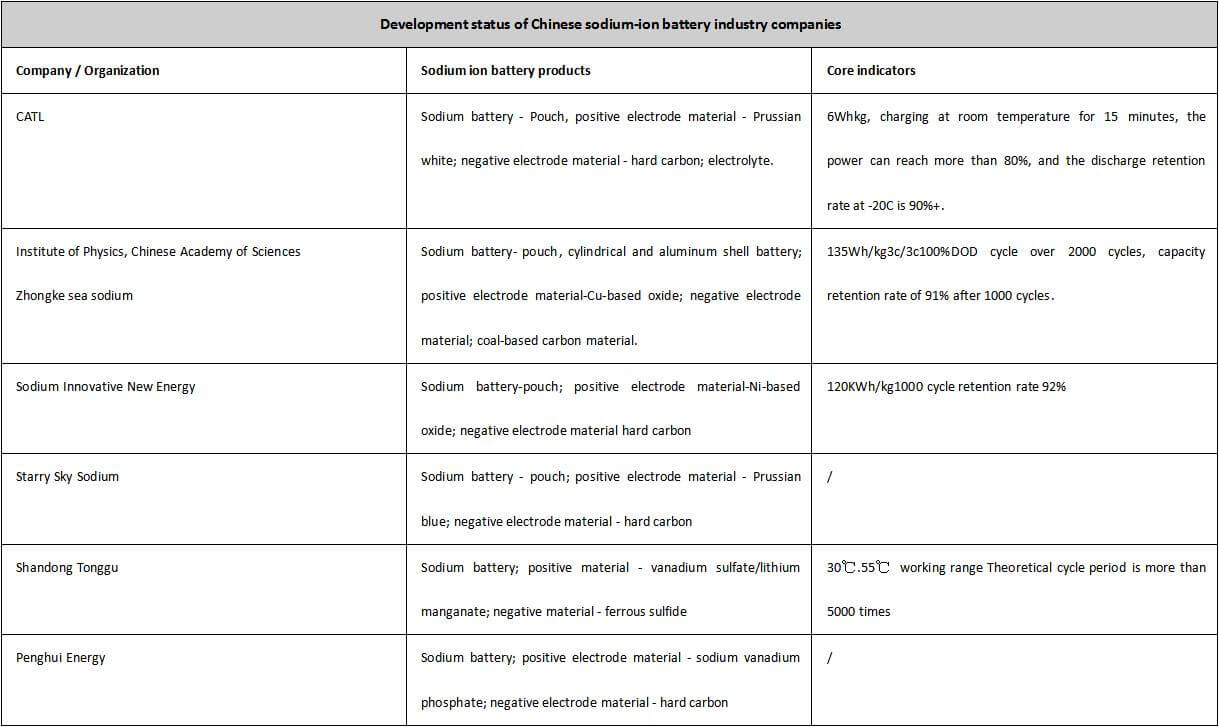
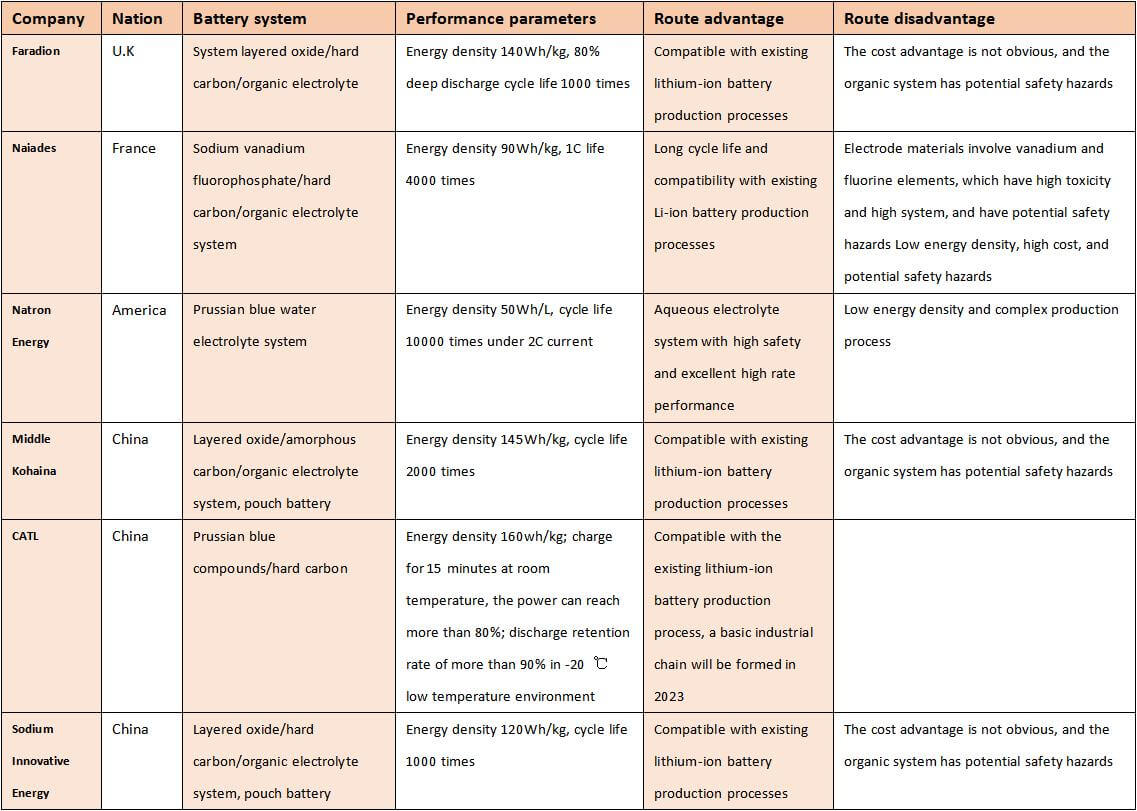
According to the current research progress, the commercialization of sodium-ion batteries has varying degrees of influence on various components of battery materials, especially the changes in cathode materials and current collectors are the most significant, and the changes in cathode material systems will affect non-ferrous metals and Sodium carbonate and other industries have an impact.
The use of aluminum foil for both positive and negative electrodes is expected to promote a rapid increase in the demand for aluminum foil, while changes in positive electrode materials are expected to increase the demand for sodium carbonate; followed by negative electrode materials, materials such as separators and electrolytes have less impact. Specifically:
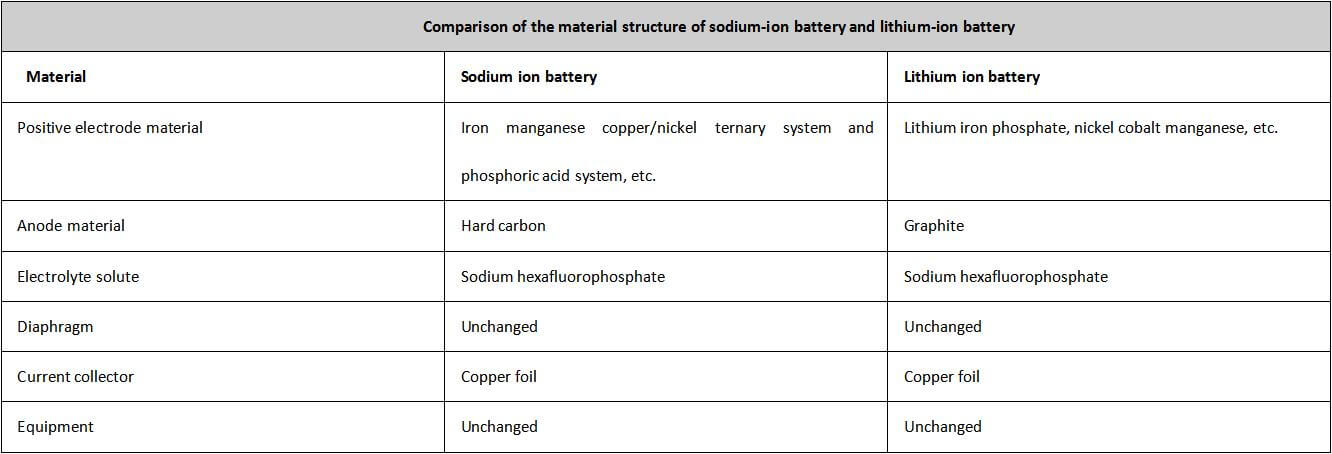
Cathode material: There are current ternary system lithium salts or lithium iron phosphates changed to layered transition metal oxides, polyanionic compounds or Prussian blue compounds.
Anode material: Different from the graphite-based negative electrode material of lithium ion battery, the negative electrode material of sodium ion battery is generally amorphous carbon materials such as hard carbon, soft carbon and composite carbon.
Electrolyte: The electrolyte salt of sodium ion battery is generally NaPF6. The electrolyte synthesis method is basically the same as that of LiPF6, but the electrolyte salt concentration will be lower; the solvent is generally binary or multi-component composed of solvents such as EC, DMC, EMC, DEC and PC. mixed solvent system.
Due to the raw materials, the cost of sodium-ion battery electrolyte will be lower than that of lithium-ion battery after large-scale supply.
Diaphragm: At present, the commonly used diaphragms are mainly PP, PE, PP/PE and PP/PE/PP diaphragms, ceramic diaphragms, glued diaphragms, etc. At present, the pore size of the separators produced on a large scale is much larger than the radius of the solubilizer of sodium ions, which meets the needs of sodium ion batteries.
Current collector: Lithium-ion battery negative electrode can only use copper foil, while sodium-ion battery negative electrode can use aluminum foil as current collector.
Carbon based material: Aluminum tabs can be used for both positive and negative electrodes of sodium-ion batteries. Compared with lithium-ion batteries, the cost of nickel-plated copper tabs or nickel tabs is reduced; and the welding process of aluminum tabs is simpler, which can also reduce some manufacturing costs.


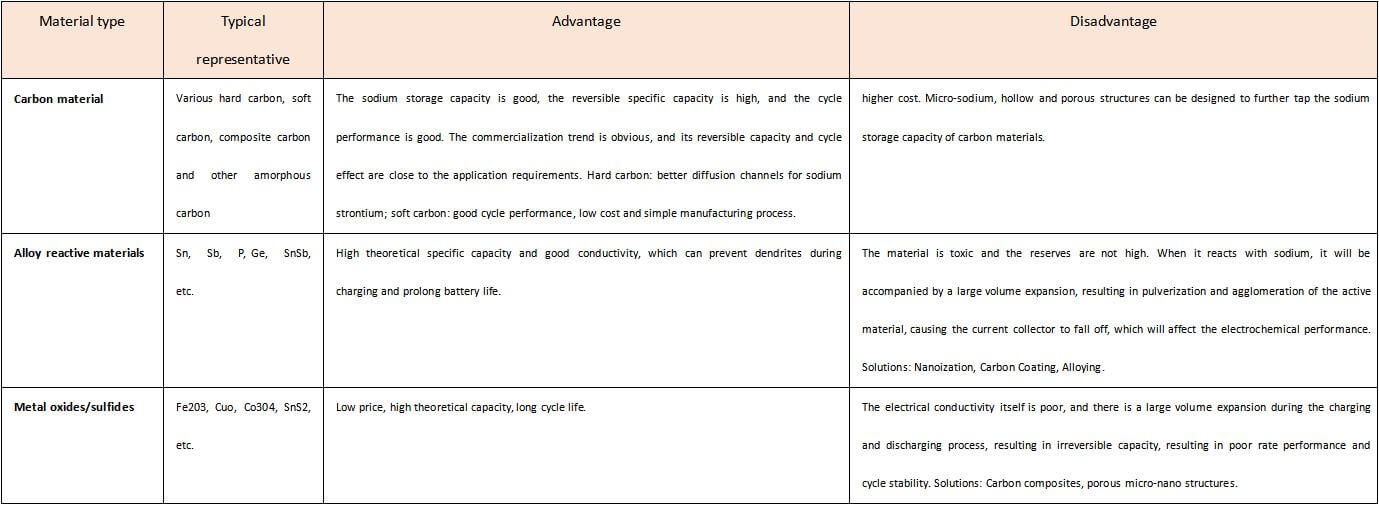
Carbonaceous materials are mainly divided into soft carbon and hard carbon. Among them, soft carbon, also known as easily graphitizable carbon material, refers to amorphous carbon that can be graphitized at high temperatures above 2500 °C. Common soft carbons include petroleum coke, needle coke, carbon fiber and carbon microspheres.
Hard carbon, also known as refractory carbon material, is also difficult to graphitize under high temperature conditions above 2500 °C. Pyrolytic carbon, carbon black and biomass carbon, etc.
As a sodium ion anode material, hard carbon is superior to soft carbon in terms of specific capacity, initial charge-discharge efficiency, and potential stability, and its specific capacity can reach more than 350mAh/g. Therefore, hard carbon is more suitable as a negative electrode material for sodium-ion batteries, while soft carbon is mainly used as a raw material for artificial graphite.
Or as a doping, coating material to modify natural graphite, alloy and other negative electrode materials. At present, mainstream sodium-ion battery manufacturers mainly use hard carbon as the anode material.
No anode or the next generation of sodium ion batteries
We looked for possible answers in the future from forward-looking technology research and development, and after rummaging through the patent contents published by leading companies in the industry, we found that a patent named “Na metal battery, electrochemical device” approved by CATL in 2021 entered our Sight.
In particular, the “negative electrode-free metal battery” mentioned in it is indeed the first time I have encountered it. It is in this way that anode-free metal battery technology has attracted our attention.
The two keywords “no negative electrode” and “metal” have subversive metaphors, and the targeted materials are rarely concerned by the market before. Literally, it is not just the sodium-ion battery that we have been focusing on before, but it may be a major innovation in materials and processes.Seeing “no negative pole”, many people must be stunned. Is a battery without a negative pole still called a battery? There was Tesla’s “electrodeless ear” technology before, but now there is a “no negative electrode” suddenly in the Ningde era. This year, there is really no way to invest in new energy without a chemical foundation.
In fact, no negative electrode is an industry term. In layman’s terms, a negative electrode-free metal battery means that no negative active material is added during the manufacturing process, and only the negative current collector is used as the nominal negative electrode.
However, this negative electrode current collector does not have the function of negative electrode. Only after the first charging is completed, the metal in the positive electrode material migrates to the surface of the negative electrode current collector, and the metal layer formed on the negative electrode current collector is the real negative electrode.
Or we can understand the absence of negative electrodes as the absence of negative electrodes in the manufacturing process, and the negative electrodes appear after the battery is assembled and charged for the first time. Maybe this is still too abstract, let’s expand on the battery schematic for further explanation.
In the battery production process, the positive electrode material and the positive electrode current collector (aluminum foil) are pressed together, the negative electrode is pressed together by the graphite and the negative electrode current collector (copper foil), and finally the positive and negative electrodes are laminated or wound. “combined”. During the entire production process, the graphite negative electrode is fully online.
Let’s talk about the working principle of the battery. The charging process is that ions (such as lithium ions, sodium ions) in the positive electrode material pass through the diaphragm to reach the graphite of the negative electrode, and the electrons start from the positive electrode current collector and run along the external circuit all the way to the negative electrode current collector.
The discharge process is reversed, and the ions and electrons cycle back and forth in this way, completing the charging and discharging of the battery again and again.
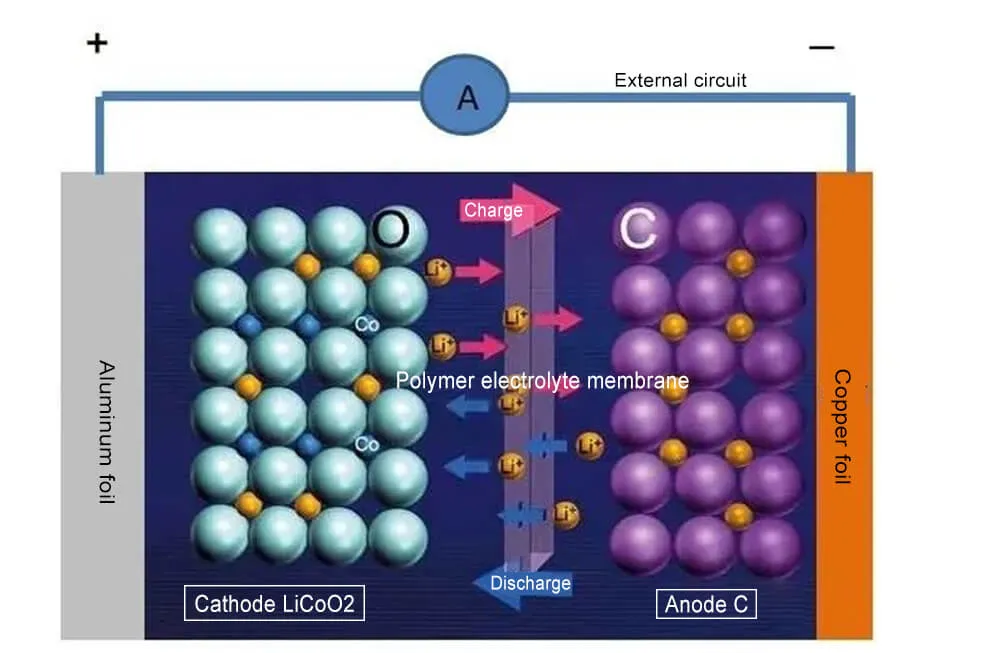
What will happen to the situation after switching to a non-negative metal battery? In fact, the positive side has not changed much, that is, the negative electrode no longer has graphite, and only the negative electrode current collector (copper foil) is left.
In the battery production process, since there is no negative electrode material to accompany, the isolated copper foil is “self-sealed” as the negative electrode until the battery is assembled.
Then the first journey of discovery of ions began. It started from the positive electrode, deposited it in the form of metal to the negative electrode current collector, and formed a metal layer on the negative electrode current collector. At this time, the misnamed copper foil gave way to the negative electrode name. metal layer.
During the subsequent discharge process, the ions “escape” from the negative electrode current collector and return to its “birthplace”, so that the battery completes its first charge-discharge cycle and the negative electrode appears.

This form of new technology is named as anode-free metal battery technology. The biggest advantage of this black technology is that it can greatly increase the energy density, and this can not just solve the pain point of the low energy density of sodium-ion batteries, we seem to see the dawn of the next generation of sodium-ion batteries.