Skip to content


What is lithium made of
Lithium (Li) is a silver-white metallic element that is soft and can be cut with a knife. Lithium exists as the third element on the periodic table and is generally a very unique element on its own. It is made up of two stable isotopes which are lithium-7 and lithium-6 with the former accounting for over 92% of the natural abundance of Lithium.
Although a relatively popular element in battery manufacturing, lithium doesn’t occur naturally and is only found as a mixture with other elements in the form of igneous rocks and deposits of natural minerals. More than 150 kinds of minerals are known to contain lithium, among which are spodumene, lepidolite, and feldspar. China is rich in lithium ore resources.
What are the properties of lithium
Some unique properties of lithium include:
- Lithium is the lightest and least dense solid metal in the world and has a silver-white color in its metallic form.
- Lithium has a relatively low melting point of 180.5°C and a very high boiling point of 1342°C.
- Lithium has a very low density, almost half the density of water meaning under unreactive conditions it would float on the surface of the water.
- Lithium is very reactive with water and is very corrosive which is why it requires special handling during mining, extraction, and production processes.
- Although lithium has a silver-white color, it burns red or crimson red as a flame.
- Lithium also has high specific heat and high thermal conductivity which makes it flammable.

Application of lithium material
Lithium has a wide range of applications due to some of its special properties, some of which include:
- Lithium has significant electrochemical potential which makes it suited to be used as anodes for the manufacture of lithium batteries. Because of the excellent characteristics of lithium ions, many application scenarios use lithium battery replacement lead acid.
- Lithium can be manufactured as a lithium hydroxide compound which is then used in medicine as an antidepressant and is also used in the pottery industry most especially in Porcelain items.
- Lithium can be used as a compound of lithium Chloride in addition to bromine which forms concentrated brine. This mixture has a unique humidity absorption property that is then used in the manufacturing of air conditioning systems.
- Lithium is also used as a stearate which is an important thickener commonly found in lubricant grease.
- Lithium is also used as a needed additive to boost the performance of brass welding and autogenous welding tools.
- Lithium is used in various heat-transfer applications most commonly in the production of heat-resistant ceramics and glass items.
Which element has similar properties to lithium
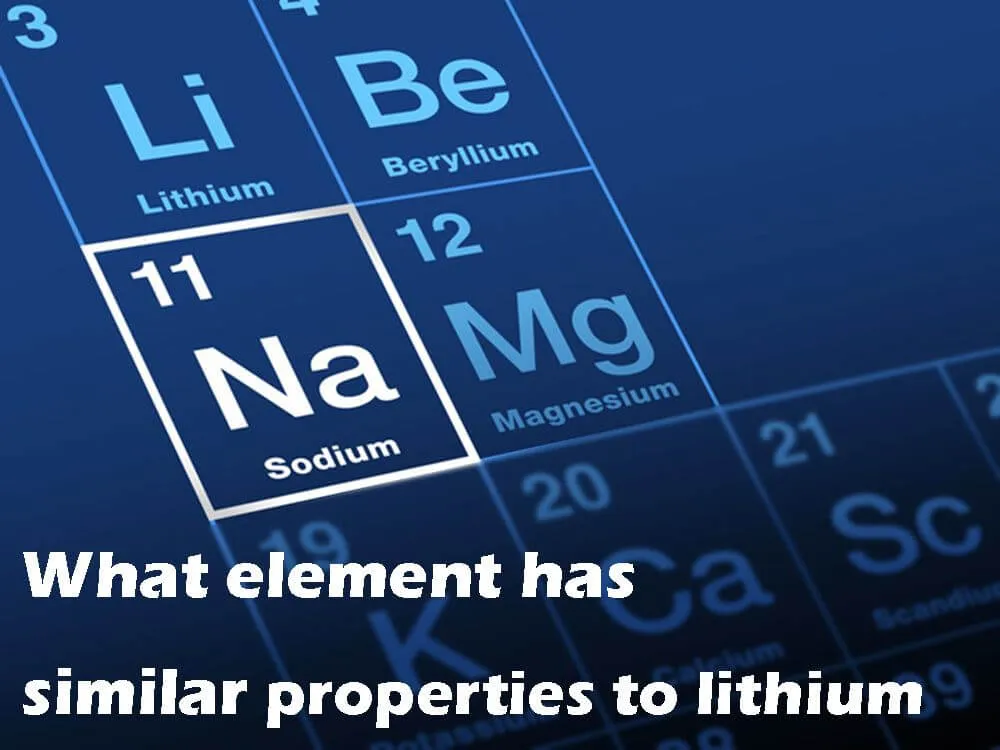
Due to its unique set of properties, it is important to note which element has similar properties to lithium. The most common element with similar properties to lithium is Sodium, another alkali metal. This is mainly because they are found in the same group on the periodic table meaning they exhibit similar properties. Sodium has been known to function in similar uses as lithium most commonly as electrochemical cells in rechargeable batteries and energy storage applications.

Noting which element has similar properties to lithium, it should also be noted that sodium is significantly more dense than lithium which means sodium has a much lower energy density when used in battery applications than lithium. In essence, 1 kilogram of lithium, will store significantly more energy/electricity than 1 kilogram of sodium.
What is similar about lithium and sodium
The question of which element has similar properties to lithium has been stated to be sodium and they have a few similarities between them. Firstly, both lithium and sodium are found in the same group on the periodic table and both only have a single electron on the outer shell, meaning the same valency. They are both unstable in their natural forms and need to form compounds with other elements. They both also react harshly when mixed with water producing hydrogen as the end product.
Is there a substitute for lithium
Lithium is quite unique and while there are no perfect substitutes for it, elements like sodium have been used interchangeably. This is because sodium is found more abundantly and in larger quantities than lithium on Earth.
Sodium can easily be extracted from seawater, making clean drinkable water in the process. Another reason sodium is used as a substitute for lithium in batteries is that it doesn’t require the use of expensive Cobalt but can simply be used with cheap manganese and iron instead.
Although the cost is low, it does not mean that it can replace the technical advantages of lithium-ion batteries, and the market cannot reach the state of large-scale supply and demand, and cannot be mass-produced.
If you want to know the detailed comparison information of the two element batteries before, you can click the lithium vs sodium battery reference. Therefore, it is difficult for sodium-ion batteries to replace lithium-ion batteries in the short term.
FAQs
Can lithium be recycled in lithium ion battery
Indeed, battery scrap is another important source of lithium battery raw material supply. After recycling, it can produce greater economic benefits, and the value of lithium is obvious. If the recovery rate of lithium is further improved, higher returns will be obtained.
This process is carried out by specialized and certified lithium battery recycling factories and should not be attempted unsupervised. In particular, by dismantling waste new energy vehicles and recycling batteries, we can avoid environmental pollution while improving battery utilization efficiency, creating new profit margins, and reducing the cost of new energy vehicles.
Demand for lithium resources and why lithium so popular
The demand for lithium has been on a steady rise over the last few years and will continue to increase for the foreseeable future. This is mainly because lithium is needed to manufacture batteries for electric cars and vehicles as well as other consumer electronics which have increased demand.
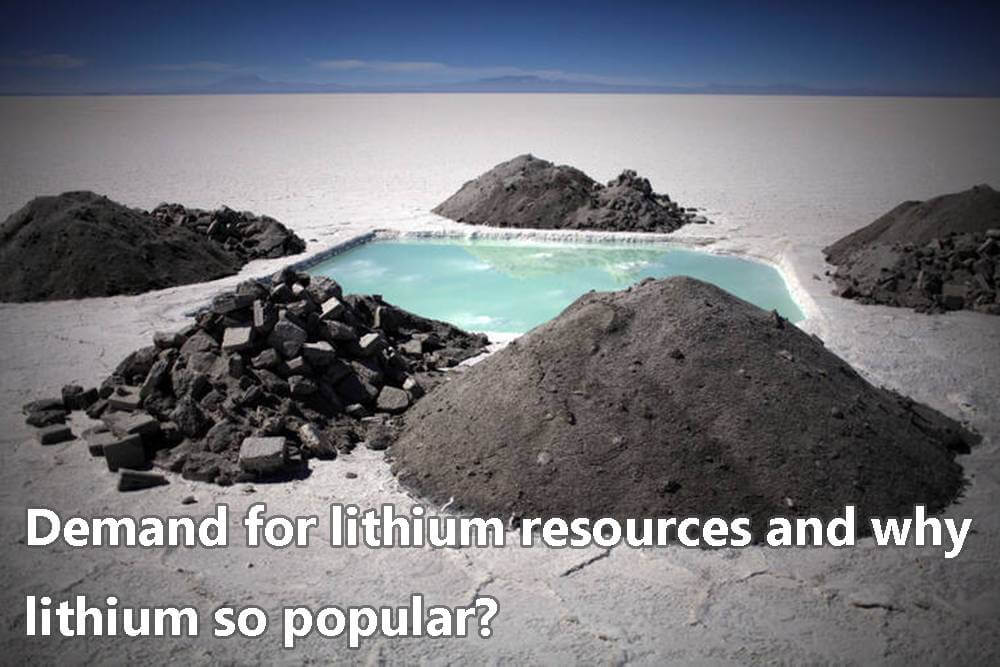
As automanufacuters switch from fossil fuel to battery-powered cars, the demand for lithium batteries will continue to rise exponentially. In fact, statistics have it that by 2030, lithium batteries will account for over 80% of electric vehicles and consumer electronics. Production of lithium has doubled over the last few years and is projected to grow by 400% by the end of the decade.
Which country is rich in lithium
Chile currently has the world’s largest reserves of lithium with over 8 million tons. But China controls over 80% of the global lithium refining and production capacity. This is why the top and best odm lithium ion battery pack manufacturer of lithium products such as lithium cells, and lithium batteries are found in the country.