Skip to content

The energy storage market in the coming decades
Energy storage systems are likely to be a key element of a low-carbon, flexible and resilient grid of the future. Renewable energy generation in the U.S. power sector has increased dramatically over the past few years, and the energy storage market is expected to witness significant growth in the future.
So more and more companies are getting involved in these areas and you can read top 10 energy storage battery companies in USA about the energy storage industry in the United States.
In addition, the market demand for energy storage market increases with emphasis on clean energy deployment while maintaining reliable operation of the power system.
The United States and countries around the world are increasingly focusing on use cases for addressing power system outages, and increasing emphasis on research and analysis of power system reliability and resiliency.
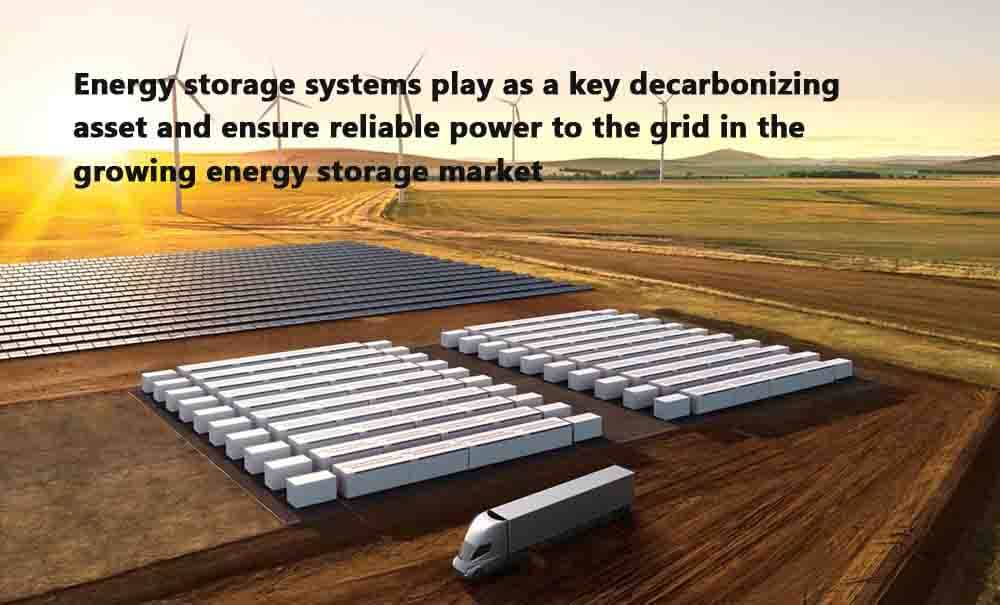
At the same time, the cost of energy storage technology has dropped significantly over the past few years, and more and different energy storage technologies are being developed. These factors increase attention to the vital role that energy storage systems play as a key decarbonizing asset and ensure reliable power to the grid in the growing energy storage market.
Energy storage systems offer many potential benefits to the grid. Energy storage systems can store and provide electricity, supplementing wind and solar power generation facilities, and providing electricity when the availability of these resources decreases. When combined with renewable or other clean energy sources, energy storage systems have the ability to reduce greenhouse gas emissions.
Energy storage systems can also improve utilization of transmission lines while offsetting or slowing the construction of new generation facilities to provide peak capacity or meet energy storage market demand for operational reserves.
Finally, distributed energy storage systems can reduce operational stress on the grid during periods of peak demand. This flexibility is important for the expected growth in electric vehicles and potential load increases from other end-use electrification.
As the cost of energy storage systems continues to decline and the grid integrates more variable renewable energy sources, the deployment of energy storage system will increase significantly in the coming decades. But it also raises questions, such as how will energy storage affect how the grid operates and develops in the coming decades?
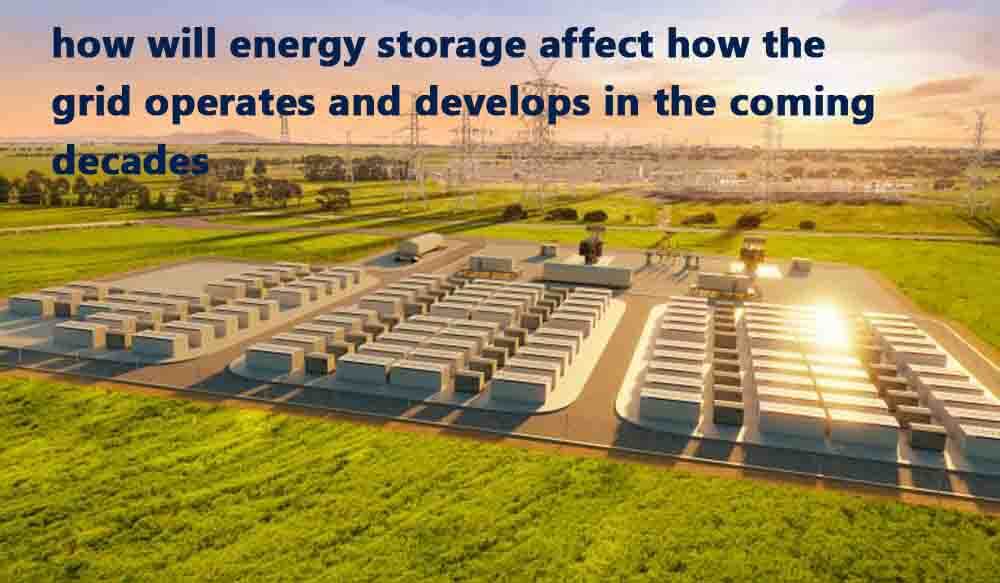
Quantifying the value of an energy storage system is more complex than quantifying the value of a renewable energy generation facility such as solar power or wind power, due to the properties of energy storage systems that affect generation, transmission, and distribution.
The National Renewable Energy Laboratory (NREL) aims to deepen its understanding of how energy storage systems can add value to the power system.
How much value is added to the power system, how much energy storage can be economically deployed, and an understanding of how storage deployment affects the operation and evolution of the power system.
Increase energy storage deployment and duration over time, create some long-term forecasts for daytime (sub-12 hour) deployment of energy storage systems in the US, then apply detailed production costs and agent-based modeling to better understand The role of the energy storage system.
Energy storage deployment has the potential to increase significantly—at least five times the cumulative installed capacity of energy storage systems deployed today by 2050—and will play an integral role in determining the future cost-optimized grid mix for the energy storage market.
8 key takeaways about the future of the energy storage market and its impact on the power system. These important lessons and lessons can help policymakers, technology developers, and grid operators prepare for the coming wave of energy storage deployment.
Installed capacity is expected to grow rapidly
The adoption of daytime energy storage in the U.S. power sector has enormous economic potential and demonstrates the increasing cost competitiveness of energy storage systems.
Using an advanced large-scale capacity expansion model, it is found that under various scenarios, day energy storage systems (duration < 12 hours) are cost-competitive in the energy storage market, for energy storage systems, wind power facilities, solar power facilities and a range of cost and performance assumptions for natural gas power plants.
In all scenarios, the total installed capacity of energy storage systems deployed in the future energy storage market ranges from 100GW to 650GW. And such a wide range is driven by a variety of factors, including the cost of energy storage systems, natural gas prices and rising renewable energy costs.
Even the most conservative scenario would represent a five-fold increase in installed capacity compared to the cumulative deployment of 23 GW of energy storage, most of which is pumped hydro, by 2020.
It is interesting to note that even without additional carbon reduction policies, renewable energy and energy storage systems will be heavily deployed, demonstrating their increasing cost competitiveness as resources for providing energy and capacity services.
In a significant but incomplete decarbonization simulation scenario, carbon emissions from the U.S. power sector are reduced by 46% to 82% compared to 2005, and by 2050, variable renewable energy (VRE) will be available in the U.S. The share of total installed capacity reaches 43% to 81%.
Storage systems with a duration of 4 to 6 hours are typically employed, driven by inherent synergies with solar power generation facilities, but storage systems with longer durations are typically deployed in later modelling years.

Energy storage system energy storage capacity and wide deployment range
Lithium-ion battery energy storage systems will lead the energy storage market share
Future energy storage market development forecasts for the cost of utility-scale battery storage systems and other energy storage technologies that drive most of the expected growth identified in installed capacity.
Most of the stationary energy storage systems expected to be deployed in the short term are battery energy storage systems, especially lithium-ion battery energy storage systems. The dominance of lithium-ion battery energy storage systems in the energy storage market, at least in the near term, is driven by its growth in multiple markets, including consumer electronics and stationary energy storage applications, as well as electric vehicles.
An example of the historical and future cost of a lithium-ion battery pack is shown in the figure, showing the rapid decline in the cost of energy storage systems in recent years. The chart also shows that the vast majority of batteries are used in transportation applications, which may be the most important driver of battery technology development and battery cost reductions.
Use various future cost projections for utility-scale battery storage systems to assess overall system costs, including inverters, system balancing, and installation.
 The cost of lithium-ion batteries has fallen by more than 80% over the past decade and is expected to continue to decline based on continued production scale driven by demand for electric vehicles.
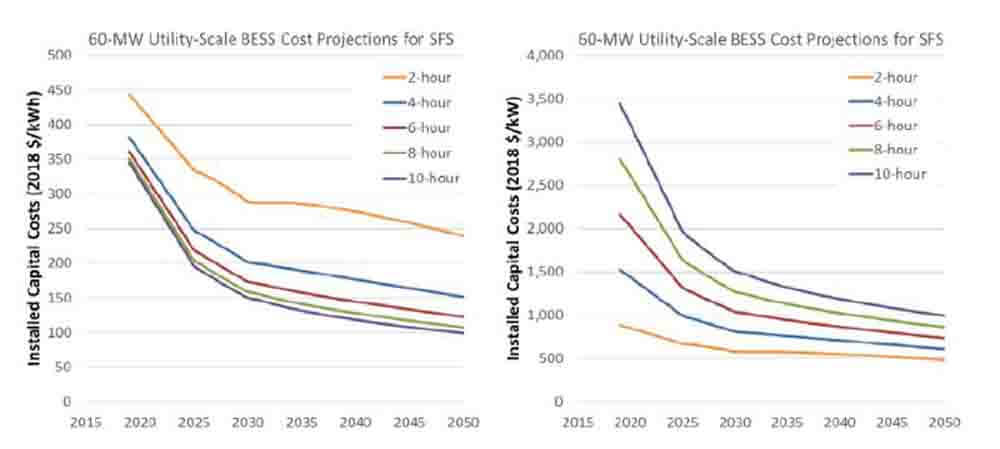 The utility-scale battery energy storage system reference scenario is expected to continue to reduce costs. The left side measures costs on a $/kWh (storage capacity) basis, while the right side measures costs on a $/kW (installed capacity) basis. A 60MW battery storage project is assumed in the forecast
The curve on the left shows the total cost of energy storage capacity (kWh) of the energy storage system, which is a commonly used measure in the energy storage market. This is the total cost of the energy storage system installation. For stationary energy storage applications, also include electricity-related costs (storage and conversion-related) and energy-related costs (storage medium).
The costs associated with electricity generally do not increase with duration, meaning they are the same for a 2-hour energy storage system and a 10-hour energy storage system, and this is where the energy storage capacity (kWh) cost increases with duration The reason for the decrease with time. The cost breakdown for electricity and duration is shown in the figure.
The curve on the right shows the cost of installed capacity (kW), a measure of the cost of traditional power generation facilities used by utilities. With this measure, its cost increases with duration.
As duration increases, battery cost is a major component of battery energy storage systems. As battery costs fall over time, longer-duration battery storage systems fall faster than the overall cost of shorter-duration battery storage systems.
Although most of the energy storage systems deployed in the energy storage market in recent years are battery energy storage systems, various energy storage technologies may enter the energy storage market as costs fall or the value of long-term energy storage increases.
The figure summarizes capital cost estimates for 15 different types of energy storage systems and energy storage technologies at different stages of commercialization. To arrive at the total cost, the installed capacity-related costs (x-axis) are multiplied by the number of hours (duration) and added to the electricity-related costs (y-axis).
A cost area of this relationship is also depicted, which may be more or less applicable to short- or long-term applications. Using battery storage systems as a benchmark, the blue lines represent segments of the energy storage market where alternative technologies are or may be more cost-effective when commercialized.
It is important to note that for most energy storage technologies, the distinction between these power and energy-related components is not absolute, and it can be difficult to distinguish between these components. Many other important factors are not accounted for in Figure 4, including charge-discharge round-trip efficiency and potential siting constraints.
Due to the difference between electricity and energy-related costs, certain technologies may be better suited for different energy storage applications based on the required duration. Low-power technology costs (but high energy costs) may be more suitable for short-term applications, while devices with higher power-related costs but lower energy-related costs may be more competitive in long-term applications.
As the energy storage market grid develops, longer-duration applications are likely to play an increasing role, which may increase the chances of adopting more energy storage technologies. The far left area of contains technologies with very low energy-related costs (utilizing underground caverns or reservoirs) that are well suited for seasonal energy storage system applications.
Overall, battery energy storage systems currently dominate the energy storage market, but other energy storage technologies are likely to continue to improve in the future. As the power system evolves and the role of energy storage changes over time, other technologies may have new energy storage market opportunities if they can compete with battery energy storage on cost.
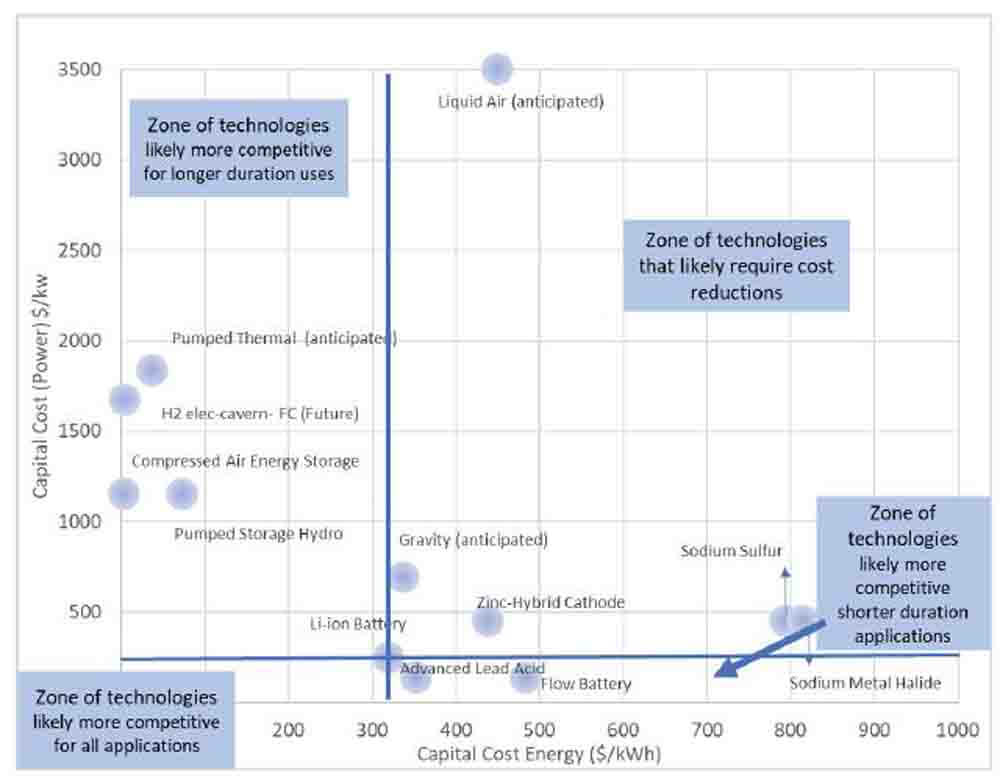 Energy storage capacity cost ($/kWh) versus installed capacity cost ($/kW) for various energy storage technologies. Energy storage technologies with low costs related to installed capacity but high costs related to energy storage capacity may be more suitable for short-term energy storage applications, while energy storage technologies with high costs related to installed capacity and low costs related to energy storage capacity in the energy storage market are in May be more competitive in long-term energy storage applications. Expected costs may change as technology develops and commercializes
The ability to fix capacity is a competitive driver for deployment in the energy storage market
A framework for the expansion of the role of energy storage in the power system discusses the multiple sources of value provided by energy storage systems in four phases of utility-scale energy storage deployment.
Fixed capacity: Meets user demand during peak demand in the power system and replaces the capacity of traditional power generation facilities such as natural gas power generation facilities.
Energy time-shifting: Storing lower-priced electricity during periods of low net demand and releasing electricity during periods of high net demand. This includes avoiding unusable renewable energy generation.
Operational Reserves: Rapid responses to supply and demand imbalances caused by random changes and disruptions. Several reserve types include frequency regulation and contingency reserves.
Avoid retrofitting or upgrading transmission facilities: Offset or reduce the need to upgrade or retrofit transmission facilities by deploying energy storage systems in constrained areas, charging when power is sufficient, and discharging when the local transmission system approaches or reaches maximum power capacity .
Energy storage systems can provide multiple services at the same time or at different times (often referred to as “value stacking”). To determine the relative value of these services in the evolving energy storage market grid, various scenarios were simulated in the study, with energy storage systems being activated or deactivated to provide individual or combined reserves, capacity, and the ability to transfer time.
While the value of transmission delays is important, it is difficult to isolate from each other and is very regional, so there is no attempt to isolate the value of delayed transmissions.
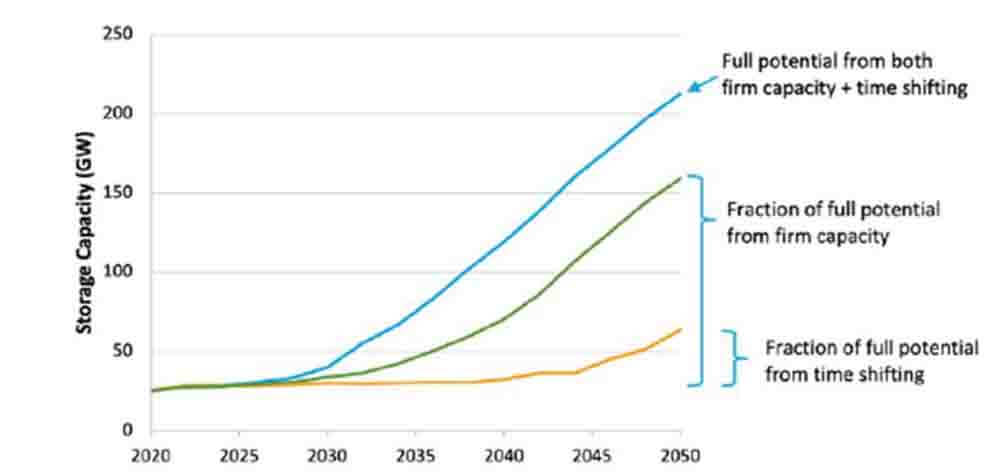 An example of a use-reference case is shown in the figure, limiting the services that an energy storage system can provide shows that, in order to realize the maximum potential of an energy storage system, capacity services are more important than energy time-shifting or operational reserves. The figure does not take into account the impact of transmission-related interests, which are important but very regional.
By 2050, about 200GW of energy storage systems will be deployed in the U.S. energy storage market. It achieved 30% of its “all four services” potential when only providing energy time-shifting services. However, 150GW of energy storage may be deployed if the energy storage system only provides fixed capacity and is of economic value.
The provision of operational reserve services will only increase deployment by a relatively small amount, in part due to the limited operational reserve required and the saturation of reserve demand due to energy storage systems deployed primarily to provide capacity and time-shifting services.
Overall, this shows that energy storage systems are able to provide stable storage capacity and offset the need for conventional generation to meet peak demand, which is critical to realizing its full potential. The actual ability of an energy storage system to provide fixed capacity depends largely on its duration and its correlation with the duration of peak net load in the deployment area.
The duration of net load peaks is influenced by various factors, including solar and incremental energy storage deployments.
Energy storage is not the only flexibility option
The ability to increase the flexibility of the power system, meet peak demand, and help address the increased variability of net demand in the energy storage market is often expressed in the form of a flexible supply curve. An example of this concept is provided in the figure, illustrating the resources that can provide flexibility services.
Historically, energy storage has been seen as one of the most expensive options for increasing grid flexibility in the energy storage market. However, falling costs may change its relative position on the elastic supply curve.
It is important to emphasize that energy storage is only one of several resources that can provide flexibility to the energy storage market grid to better align generation supply with electricity demand.
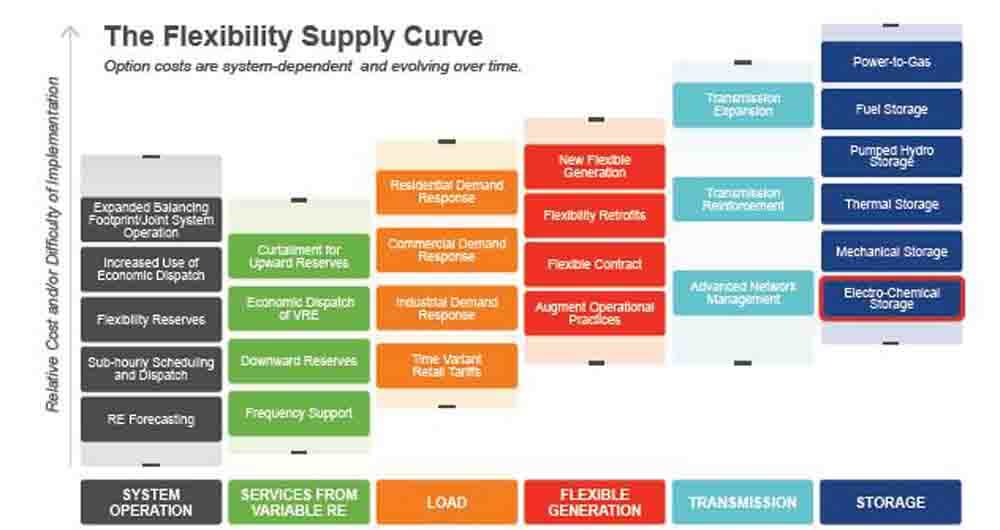 elastic supply curve
Cost-effective decarbonization requires consideration of all resources, including the largely untapped potential flexibility in end-use electricity demand. Flexible demand can be achieved through a variety of mechanisms, from price signals to the concentration of distributed energy sources to flexible electric vehicle charging. Many of the same services as energy storage systems can be provided, including reducing peak net demand and changing the timing of variable generation.
 The figure shows the demand of the energy storage market and the huge utilization potential of energy storage systems in the power industry. Columns 1 and 3 in the figure provide the results for the base scenario.
Columns 2 and 4 assume additional demand response deployments to assess their impact on energy storage systems and overall investment decisions. In these cases, flexible demand reduces the overall demand for energy and the value of energy time transfers.
As a result, there has been a reduction in energy storage deployments, especially where the cost of energy storage systems is moderate, highlighting the potential competition between flexible demand and energy storage systems.
More research is needed to fully understand the potential opportunities for demand response deployments in the energy storage market. Consider implementation costs, social acceptance, availability during net peak periods (which may vary with increased deployment of variable generation), and implementation mechanisms.
While energy storage systems may increasingly compete with resources such as flexible demand, the least-cost decarbonization requires analysis of a range of flexibility options that can help enable renewables and other clean energy sources.
As the demand for load flexibility and responsiveness increases, there will be less capacity demand for the energy storage market by 2050, regardless of whether the energy storage market has high demand response, for low renewables//battery cost scenarios
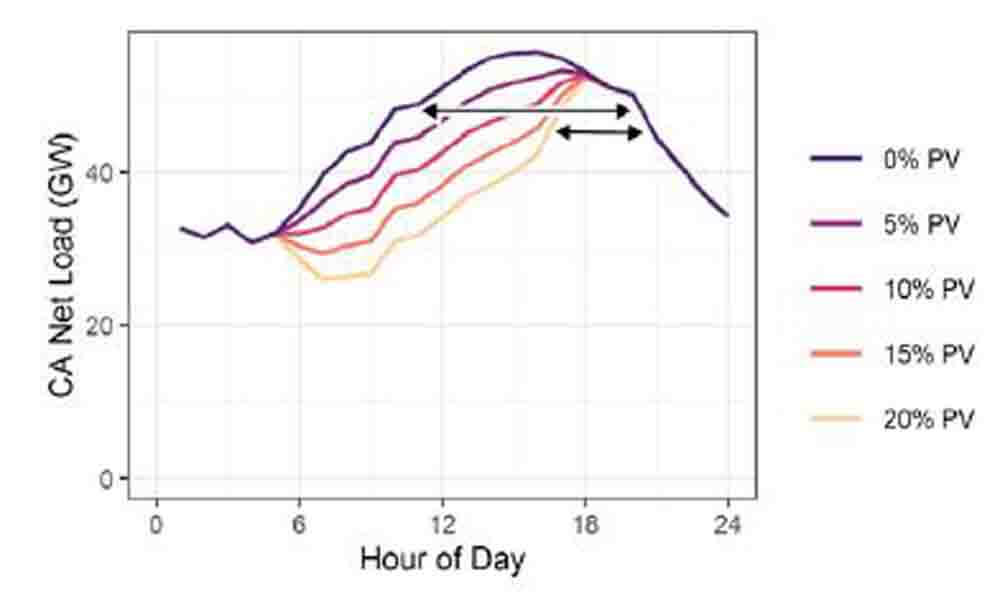 Increased deployment of solar power facilities indicates shorter duration of net load peaks
The graph illustrates how the daily net load changes during peak California, with the solar generation contribution increasing from 0% to 20% of the annual load.
A key consequence of increased deployment of solar power facilities in nearly all locations exhibiting peak demand from midday to evening is a reduction in the duration of peak net load periods.
This reduces the energy storage system time (and therefore costs) needed to provide fixed capacity, which is a major source of value.
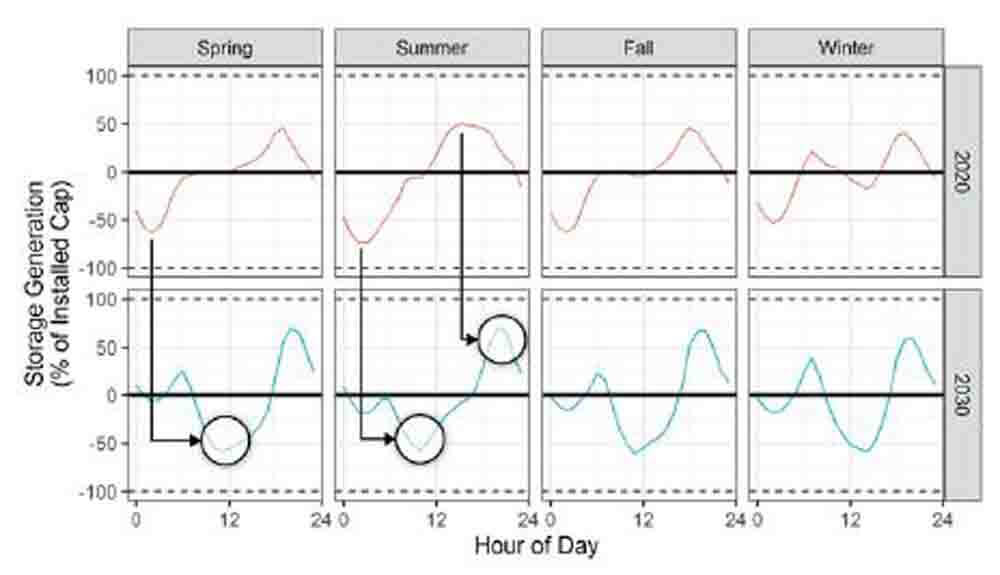 Increased deployment of solar power facilities indicates shorter duration required for energy storage systems to provide fixed capacity
Figure illustrates how energy storage system operations vary with net load as the installed capacity of solar power generation facilities increases. The top curve shows an overview of the average daytime energy storage charge and discharge in the U.S. energy storage market under simulated conditions in 2020, where energy storage systems are primarily charged at night, which corresponds to the lowest net load levels.
The bottom panel shows the results of simulated conditions for the energy storage market in 2030, with a large increase in the deployment of solar power. Most of the time for energy storage system charging will be shifted to midday, coinciding with the availability of excess solar power.
In terms of energy storage system value, the most important change occurs in discharge mode. During the peak summer season of the energy storage market in 2020, in order to extend the discharge time, the energy storage system must operate at a portion of the installed capacity, thereby reducing its ability to meet the peak demand of the power system.
In the energy storage market in 2030, the energy storage system can discharge at full installed capacity due to a short-duration peak period later in the day due to solar power generation.
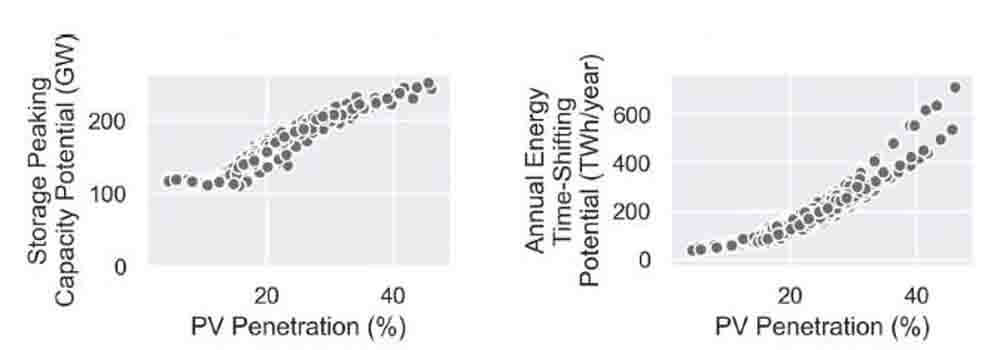 Diurnal energy storage peak capacity potential (up to 12 hours) as a solar contribution function curve (left) and diurnal energy time-shift potential as a solar generation contribution curve (right)
Changes in peak net load patterns increase the energy storage system’s potential to meet peak demand and increase energy time-shift opportunities. The graph shows the potential for daytime energy storage (<12 hours) per year in the United States to provide peak capacity in each case, plotted as a function of contribution to solar generation.
This curve represents energy storage system capacity that can reliably provide fixed capacity during periods of high demand in the energy storage market and may replace traditional peak capacity. Relative to 2020 levels, the potential for U.S. energy storage market systems to meet peak demand has doubled, with solar generating 35 percent of the electricity.
This eventually leveled off as peak net load in many regions shifted to winter when solar power generation capacity was lower.
As the deployment of solar power facilities and solar battery in the energy storage market increases, it also increases the potential for energy storage to provide time-shifting potential, as shown in the graph.
The relationship between wind power and day and night storage is less relevant because wind power generation patterns do not behave consistently from day to day, and synergies between wind power and storage system capacity occur over longer time periods .
There is also an important relationship between wind generation and the ability of energy storage systems to provide transmission benefits, making the overall interaction between energy storage systems and wind generation more complex than the interaction between energy storage systems and solar generation facilities.
As the role of renewables in the power system increases, the increased value and opportunity for energy storage translates into an increase in energy storage deployment.
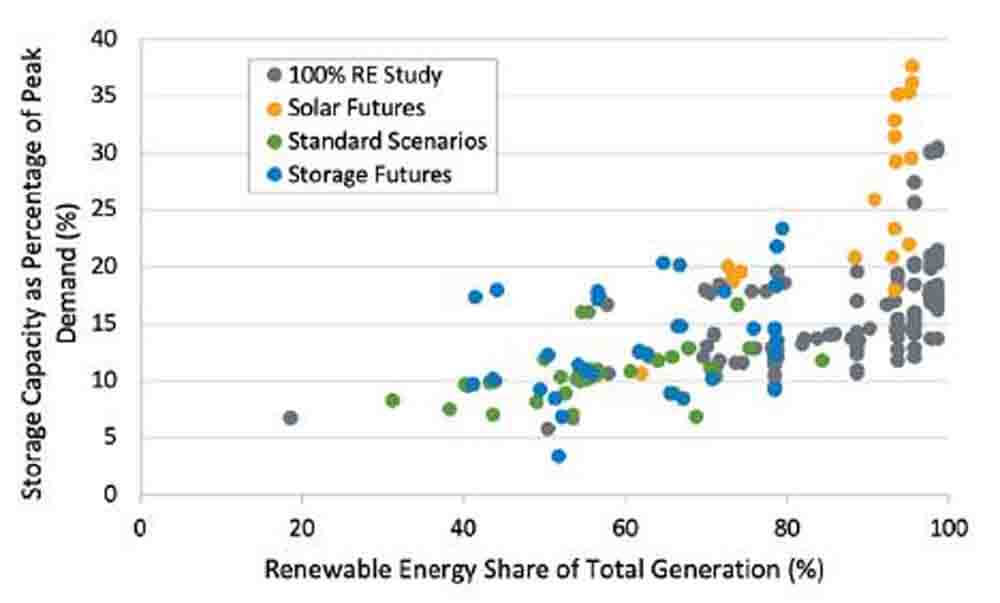 Energy storage system capacity as a function of renewable energy contribution
The graph shows the total energy storage market capacity as a function of renewable energy contribution under a range of assumptions and constraints across multiple research scenarios. Overall, these studies considered more than 200 scenarios, with the contribution of renewable energy ranging from 20% to 100%, showing the close relationship between renewable energy generation facilities and energy storage market systems deployed in a large number of scenarios, These scenarios have different assumptions and constraints.
How will the adoption of distributed (user-side) solar power generation facilities and battery energy storage system systems develop in the energy storage market in the next few decades. New features in the NREL distributed generation energy storage market demand model.
It is predicted that by 2050, customers in the energy storage market in the United States will use solar power generation facilities to deploy battery energy storage systems. Overall, in these scenarios studied, the future energy storage market potential of consumer-side energy storage systems is described and key drivers of adoption are identified.
In all study scenarios, distributed battery energy storage systems deployed in conjunction with solar power generation facilities have huge economic potential, and the deployment scale of battery energy storage systems deployed in the United States will range from 85GW/170GWh to 244GW/490GWh.
But the potential for customer adoption is much lower due to the long payback period. Lower battery costs and higher backup power value increase customer adoption in modeling.
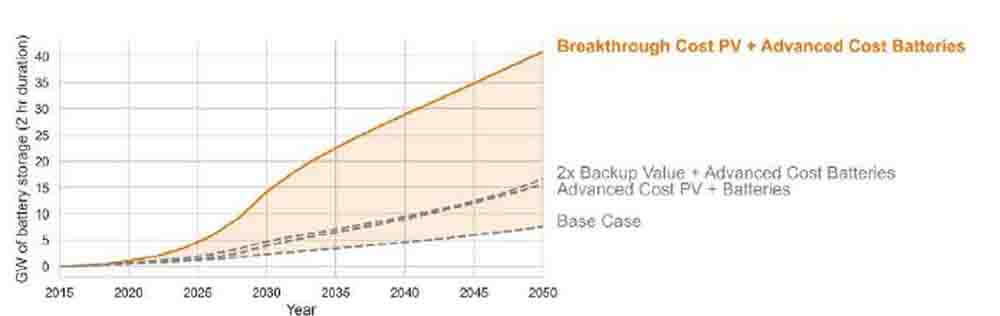 The projected adoption rate of distributed energy storage systems in the energy storage market increases over time as costs decrease, and increases significantly if solar power facility costs decrease.
The reduction in the cost of solar power facilities also significantly affects the deployment and adoption of solar-plus-storage projects, and in addition, the deployment of energy storage systems may be nonlinearly related to the cost reduction of solar power facilities.
In addition to the main scenarios, scenarios with breakthrough (very low) solar power facility cost forecasts and low battery costs are also evaluated. In this scenario, the projected adoption of distributed battery energy storage systems will exceed 40GW (82GWh).
Duration of energy storage systems may increase as deployments increase
In the process of providing fixed capacity, a key factor in determining the competitiveness of the energy storage system cost storage market is determining the minimum duration required. In much of the U.S., local energy storage market operators have determined that a 4-hour duration is sufficient to meet peak summer electricity demand.
As energy storage market deployments increase, the duration of periods of net peak load will grow, requiring more storage capacity (for longer durations) to supply electricity. The graph shows the net energy storage market demand for different amounts of energy storage systems during a three-day peak demand period in the reference 2050 energy storage market deployment scenario.
It also shows net demand with more or less installed capacity in the energy storage market. Increased deployment levels of energy storage systems expand peak periods, thereby increasing the energy storage capacity required to provide fixed capacity and continue to reduce net peak demand.
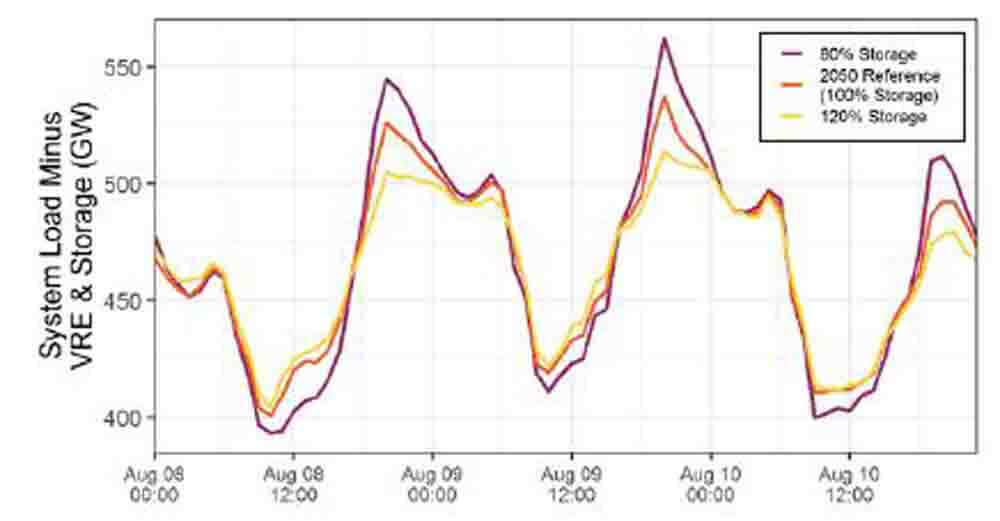 As energy storage deployments increase, periods of peak net load are also expanding, requiring longer-duration energy storage systems to ensure stable power supply
Increased deployment of solar power generation facilities can help offset this effect. However this benefit is limited, as in some cases shorter duration energy storage systems are expected to be de-rated (which also means lower value), which provides the energy storage market for the deployment of longer duration energy storage systems Provides additional incentives.
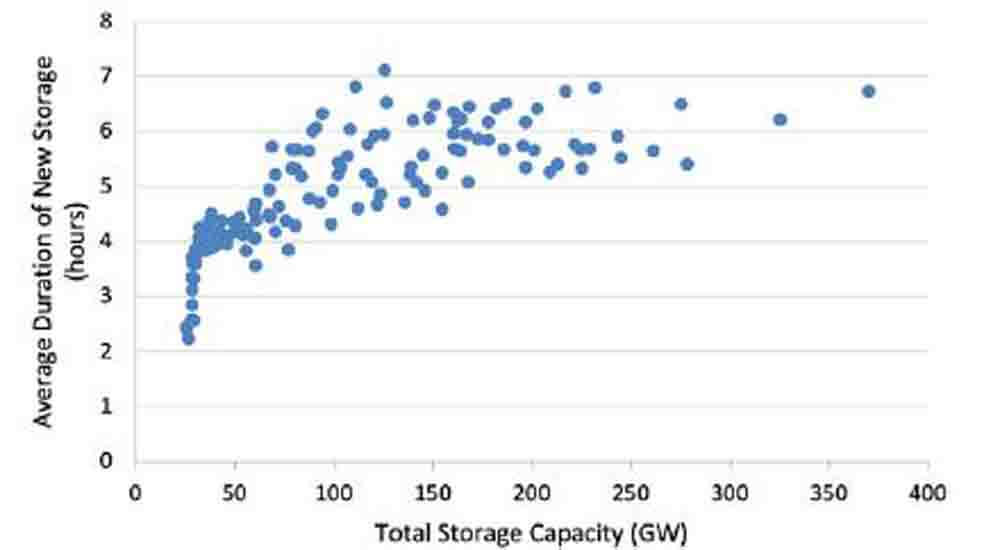 The average duration of energy storage system deployments increases with the total installed capacity of energy storage systems, up to about 200GW
The graph shows the average duration of deployment of new energy storage systems versus total energy storage market capacity with reference battery cost changes. Initial deployments are mainly 2-4 hour energy storage systems, due to the fact that they mainly occur during the shorter afternoon peaks in summer.
These peak times were maintained as the scaling effect of solar power facility deployment discussions. The duration of the energy storage system needs to be increased to meet longer duration peak periods.
This opens up more energy storage market opportunities for emerging technologies that can last longer or for existing long-duration energy storage technologies such as pumped hydro power generation facilities.
Seasonal energy storage system technology is particularly important
Evaluate significant but incomplete decarbonization scenarios for the energy storage market. However, these scenarios, and those assessed in related work, point to a potential role for multi-day or seasonal energy storage systems as the power system shifts to very high renewable energy contributions (over 90% renewables).
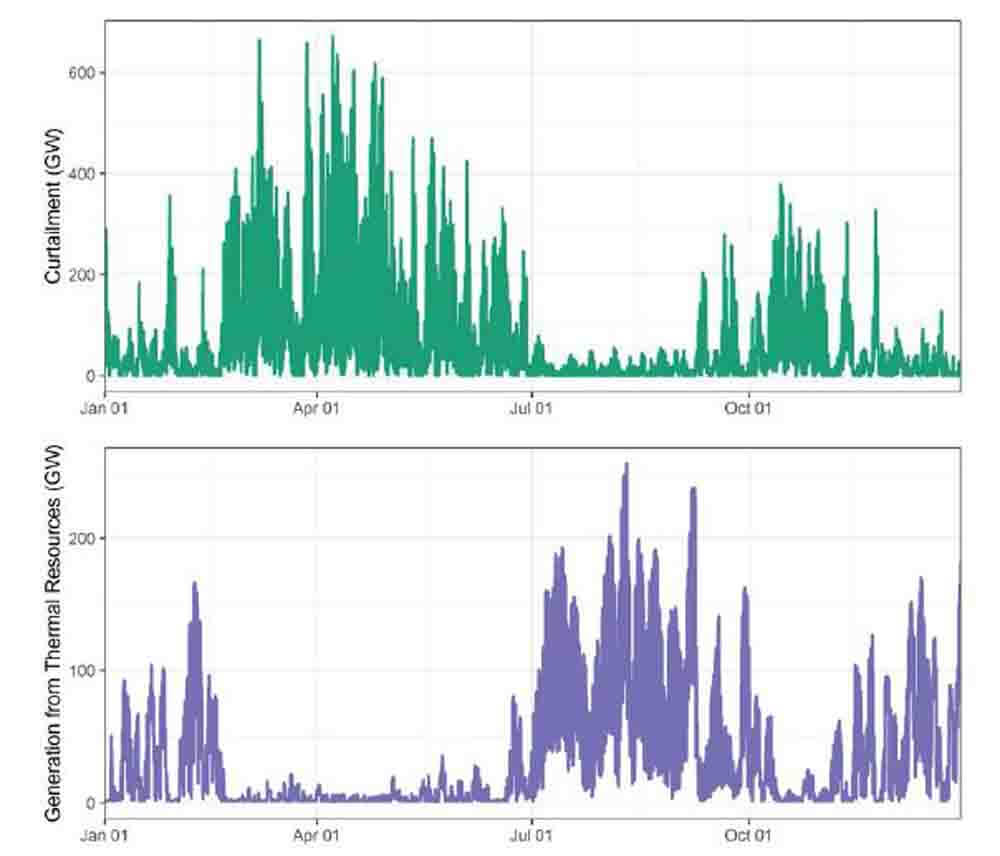 Seasonal mismatches in renewable energy supply and electricity demand indicate potential opportunities for seasonal energy storage systems. The graph above shows the heavy use of thermal energy storage systems in summer, while the application of thermal energy storage systems is minimal in the spring in the graph below.
During periods of relatively low summer wind output and relatively low solar output in winter, thermal energy storage resources are used in abundance.
The ability of renewables and diurnal energy storage to meet this demand is reduced as electricity supplies are saturated for much of the year, as illustrated by the reductions shown in the graph below.
Any additional diurnal energy storage systems in the energy storage market sit idle for most of the year, reducing their cost-effectiveness. Seasonal energy storage systems can provide an economical alternative to storing excess power generation in spring and fall and transferring it to summer and winter.
The figure shows the results of another set of cases in the energy storage market, evaluating the 100% clean energy scenario. In these cases, seasonal energy storage systems are simulated in the form of gas turbines using renewable fuels such as hydrogen.
In these scenarios, large numbers (400 GW+) of seasonal energy storage systems are deployed, proving the value of having a technology that can overcome seasonal mismatches in renewable generation and electricity demand systems. Other seasonal energy storage system technologies could also play this role if they are sufficiently cost-competitive.
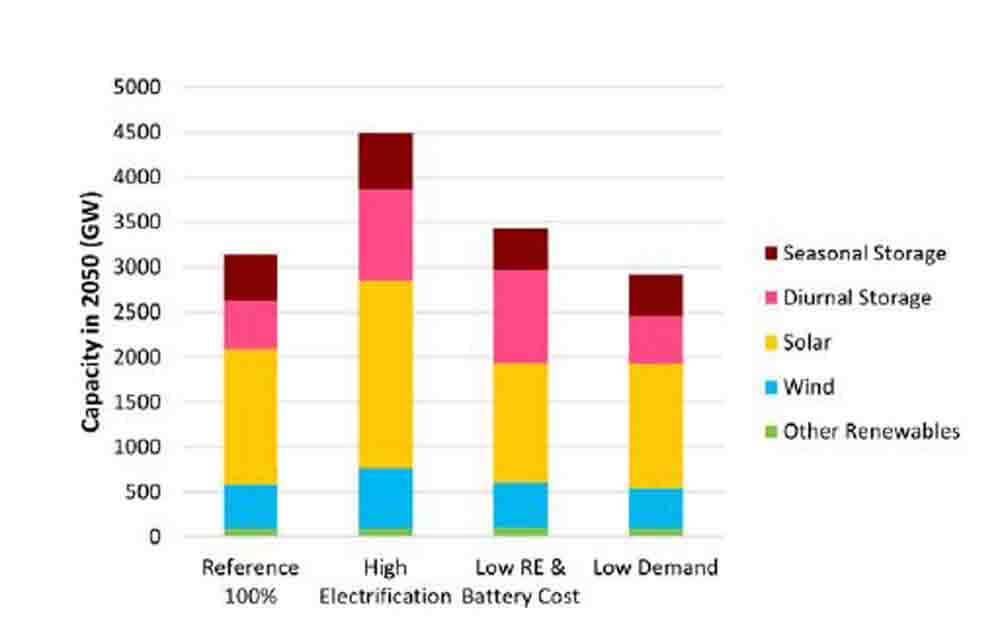 Installed capacity and electricity generation to reach 100% demand scenario in 2050
Conclusion
While it is indicated that the installed capacity of energy storage systems deployed in the energy storage market is expected to increase fivefold by 2050, there are still some uncertainties that may change the installed capacity growth and evolution trajectory of the energy storage market identified in this study. Its uncertainties include:
Energy storage system growth and compensation
Significant deployment of energy storage systems under various grid evolution scenarios. Even without decarbonization policies, energy storage is highly competitive as a new source of peak capacity, and many energy storage market forecasts point to significant growth.
However, it is still important to recognize that technological or policy changes may affect the growth of energy storage systems. Despite significant changes to the regulatory framework over the past decade, energy storage remains a challenging technology to properly assess and compensate for, especially in restructured markets. If energy storage systems are not fairly compensated, it may lead to suboptimal deployment in the energy storage market.
Technology evolution
Lithium-ion battery energy storage systems have dominated the energy storage system market in recent years. However, a great deal of R&D has been done to improve other energy storage market technologies. Multiple energy storage market technologies may compete with lithium-ion battery energy storage systems.
Especially for longer duration energy storage market applications. Stakeholders may benefit by considering future opportunities in emerging technologies and the next generation of existing technologies, such as pumped hydropower facilities.
Energy storage system as capacity resource
The importance of energy storage systems as capacity resources. This value, as well as storage deployment, depends on proper valuation and compensation of energy storage systems – which rely on market rules that reflect the ability of energy storage systems to provide stable capacity as storage and renewable energy deployments increase. Its rules can account for the impact of a market based on marginal prices on revenue to ensure that it is sufficient to support optimal installed capacity of energy storage systems.
The role of flexible load
In order to decarbonize the electricity sector at the lowest cost in the energy storage market, it remains important to utilize a variety of flexible resources, some of which may be less expensive than energy storage. A better description of demand response, the actual contribution potential and cost of flexible loads is essential to better understand the market opportunities for energy storage systems.
Energy storage system and renewable energy
As grid decarbonization goals increase, energy storage systems are an important enabling technology for deploying clean power generation. There are significant synergies between daytime energy storage and solar power facilities, but this may change due to a number of factors.
Potential large-scale heating electrification could shift peak loads across much of the U.S. into winter, which would create longer demand peaks and make it harder to meet market demand for energy storage and solar power.
This shift could increase the value of wind power and long-duration energy storage systems. Lower-cost, longer-duration energy storage systems and their ability to improve transmission utilization may also lead to more energy storage market synergy opportunities for wind turbine battery and energy storage systems.
Distributed energy storage system
Distributed energy storage systems have enormous economic potential in all energy storage market research scenarios, but customers may only be willing to buy them if they get a quicker return on their investment. Emerging value streams and evolving compensation mechanisms for distributed energy can incentivize greater adoption.
Furthermore, electrification may have a positive or negative impact on the adoption of systems in the energy storage market. For example, during winter power outages, a large-scale switch to electric heating can significantly increase the value of having backup power in a building.
Instead, the increasing adoption of electric vehicles and their potential to provide backup power may limit the adoption of distributed energy storage systems. To understand these nuances, more research on customer behavior in this area is needed.
Duration of evolving energy storage systems
Shows the general trend of the energy storage market with increasing duration of energy storage systems, given its ability to meet peak summer demand. The initial value of 4-hour energy storage systems is high, however as energy storage system deployments increase, longer durations generally become more competitive.
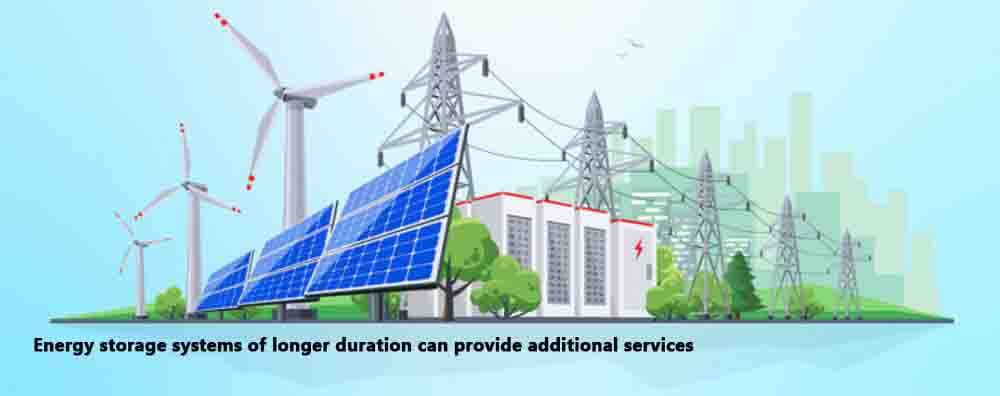
Although this trend is driven by a variety of factors, for example, it can even offset the capacity value of short-term energy storage systems. Energy storage systems of longer duration can provide additional services, such as grid resiliency or provide a complement or replacement for new transmissions.
The role of seasonal energy storage system
As power systems approach 100% clean energy, energy storage can play an increasingly important role, and it can play multiple roles in a transforming power system. Key seasonal energy storage technologies involve the production and storage of renewable fuels for a variety of applications in industry or transportation.
Therefore, seasonal power storage systems can share infrastructure costs with other applications. The costs of these seasonal energy storage technologies and the trade-offs related to efficiency and interaction with the time of shorter duration energy storage systems require further study.