Skip to content



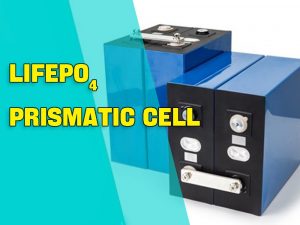
Compared with cylindrical and pouch lithium batteries, prismatic lithium batteries are more and more widely used in the field of electric vehicles due to their high packaging reliability and relatively simple structure. For more detailed comparisons, please refer to prismatic vs pouch cells, cylinder battery vs square battery articles.
In recent years, there have been many fire and explosion accidents related to power batteries, and the safety of power batteries has also received great attention. The short circuit of the battery cell may cause liquid leakage of the battery cell, the insulation failure of the power battery, or cause the power battery system to catch fire.
This post analyzes the cause of a low-insulation troubleshooting case of a prismatic lithium battery module, discusses the failure process and mechanism of the battery case corrosion, and proposes an improvement method.
Case analysis of low insulation inspection of prismatic lithium battery
Troubleshooting process
A power battery inspection found that the insulation value of a module was far lower than the standard value, only 0.113 MΩ. The inspection found that the bottom shell of the No. 1 cell of the module had obvious signs of electrolyte corrosion. The bus bar is well connected, and the pins of the module are normal and bent.
No abnormalities were found in the process data of the troubleshooting module. The electrical performance test of the faulty module found that its voltage and internal resistance parameters were normal, and the insulation was abnormal. The faulty module was disassembled, and the blue film of each battery cell was intact. The electrolyte at the bottom of the No. 1 battery cell leaked obviously. After tearing off the blue film, obvious corrosion points were found. No abnormality was found in the process data of No. 1 cell.
The measured negative-to-case voltage of the battery cell is 0.596 V (the specification is not less than 1.5 V), the voltage has not recovered after opening the case, the appearance of the two JRs is normal, the bottom is not damaged, and there is no overlapping top cover at the tab welding place; After the JR is removed, the measured resistance of the negative pole of the cell and the top cover is 0. The CT analysis of the top cover of the battery found that there was a metal foreign matter between the plastic in the anode pole and the top cover, and the anode pole was connected to the top cover.

Cause analysis
Check the manufacturing process of the top cover of the battery cell, and the pole, PPS incoming material and pole injection molding process are risky processes. There are two main reasons for the short circuit caused by the metal wire on the top cover of the battery cell.
The first is the introduction of injection molding parts: in the shape blanking process, the gap between the knife edges is too large, and the negative pole pier pressure produces copper particles; the PPS incoming material is mixed with stainless steel particles, and embedded in the PPS of the part during injection molding.
The second is the introduction of equipment: the drying machine and the injection molding machine are not closed for management and feeding, and there is a risk of inhalation of PPS raw materials by metal particles in the workshop.
Failure process analysis
The insulation layer of the top cover of the cell is mixed with metal shavings. The electric test of the top cover of the cell uses a PC500 V voltage test for 2 seconds. The standard test requiring an insulation resistance of not less than 200 MΩ is passed, and the 500 V voltage cannot break through the gap.
After the battery is welded to the chip, the aluminum block of the anode is heated to melt the insulating layer (PP material) on the surface, and the metal shavings flow to the edge of the anode with the melted insulating layer;
After the insulation layer of the negative aluminum block is melted and then cooled, the plastic solidifies and shrinks, leaving a gap between the pole and the top cover; The metal shavings move in the gap due to vibration, which occasionally makes the negative pole and the top cover sheet conductive. During the continuous charge and discharge process, the cell shell slowly corrodes, resulting in liquid leakage and low insulation value.
Corrosion mechanism
The corrosion of the lithium-ion prismatic cell is actually the process of forming an aluminum-lithium alloy from the aluminum shell, which needs to meet two necessary conditions. One is an electronic short circuit, that is, the aluminum shell has a anode with a low potential;
The second is ion short circuit, that is, the aluminum shell contacts lithium ions in the electrolyte. The anode column of the normal battery cell is separated from the casing by an insulating layer, and the casing is at a high potential. When there is metal shavings between the negative pole and the top cover and the short circuit occurs between the anode pole and the aluminum shell, the aluminum shell will have a corrosion potential condition, and the potential of the aluminum shell will be significantly reduced (the initial lithium insertion potential of the aluminum shell is about 1.4 V). At the same time, the aluminum shell is in contact with the lithium ions in the electrolyte, and the low-potential aluminum shell will electrochemically react with the lithium ions.

Cathode:L i x C6→6C+x L i++x e-
Anode:A l+x L i++x e-→Li x A l
Electrons are transferred from the anode to the aluminum shell, and lithium ions are embedded in the aluminum shell to form an aluminum-lithium alloy, which can be divided into three stages: the reduction of aluminum oxide in stage I; the formation of stage II; Phase III could theoretically take shape. As the degree of lithium intercalation increases, it reacts with oxygen and carbon dioxide in the air to form alkali metal salts, and the aluminum shell is gradually corroded. There is mylar coating insulation around the cell, only the bottom has positioning holes and closing gaps, so it is common to see corrosion at the bottom of the cell.
Precautions
1)Strengthen process control to reduce the risk of introducing metal foreign matter. The negative pier pressure blanking mold insert is made of high-strength steel, which reduces the gap between the knife edges and the generation of burrs; Increase the throwing shock time to ensure that the burrs are fully polished; For PPS raw material particles, a metal separator is added before packaging for separation and packaging. The suction pipe is bound to the dryer to reduce the risk of particle adsorption in the workshop.
2) Strengthen the test standard for the off-line insulation of the top cover of the battery cell. In this case, the factory electrical test data of the top cover of the faulty cell is traced to pass. It can be seen that the current test standard of 500 V voltage cannot penetrate the metal filings, the gap between the negative pole and the top cover sheet, and cannot detect such faulty cells. top cover.

On the premise of maintaining the DC500V hi pot voltage insulation resistance of 200 MΩ, an additional 1 500 V 2 s 2 mA high voltage resistance 100% finished product test has been done for positive verification. The CT results of the samples that failed the detection at 1 500 V showed the presence of metal wires.
Conclusion
Metal foreign matter can easily cause internal short circuit in lithium-ion batteries, and short circuit is the most common cause of thermal runaway. This shows the importance of metal foreign matter control in the production process of lithium-ion batteries. The issue of battery safety requires the joint efforts of all technical personnel to make the control of foreign matter in the battery production process better and better.