

What is voltage meter? What do the symbols on a voltage meter mean?
Voltage meters are used to measure voltage. The symbols on voltage meters indicate the range of the meter and are used to indicate the maximum voltage they can measure.
The lines in the symbol represent different voltages, from zero volts (0V) to high voltage levels such as 500V or 1000V. A higher number represents a higher level of voltage in an electrical circuit, so we may see any number on the meter if to build up enough charge over time by charging something like batteries with battery charger or equipment.
How does a voltage meter work? How accurate is voltage meter?
Voltage meters use electromagnetic induction to produce an alternating current signal that can be analyzed by a computer or microprocessor chip inside to determine both the magnitude and direction of any change in voltage across its movable contact points.
General-purpose analogue voltage meters are employed with voltages ranging from a fragment of a voltage to several kilovolts. Digital measurements may be manufactured with good accuracy, normally better than one percent.
Why do you need a volt meter? What is the function of a volt meter?
Voltage meters are used to measure the voltage of a battery, power supply or circuit. It is also used to check the voltage in an outlet. Voltage meters measure volts and amperes (amps) with respect to ground potential as well as volts and amps at constant current.

What are the two types of voltage meters?
Following are the two types of voltage meters:
A digital voltage meter. It is a type of meter that displays the accurate voltage in volts. Digital voltage meters can be used to measure voltage levels and indicate whether the current flowing through it is within an acceptable range.
An analog voltage meter. It uses a needle to show how much energy is flowing through its wire, which means analog voltage meters are less accurate than a digital model. However, they are cheaper and easier to use than their more sophisticated counterparts, so analog voltage meters are the better choice when people do not require high measurement accuracy. Analog models are still quite popular today.
All in all, the digital voltage meters and analog voltage meters are the common voltage meters in life, and many manufacturers continue making both types at present.
What is the difference between a voltage meter and a multimeter?
If one is going to be working with electricity, then voltage meters are enough to use. It can measure voltage accurately. Both voltage meters and multimeters can be used to measure voltage, but they have different features and functions.

A voltage meter is just an instrument used to measure voltage, while a multimeter is a comprehensive tool that can measure information other than voltage. The multimeter can calculate parameters, such as current, potential difference, capacitance, frequency, etc., and can also directly calculate circuit resistance. Since the multimeter has many applications, the multimeter is more expensive than the voltage meters in terms of price.
How do you use a simple voltage meter?
In order to use simple voltage meters, it is required to plug-in adapter for each outlet where it is plan on using it. Then simply connect one end of the adapter into one side of outlet and use its other end with another adapter.
Once everything’s connected correctly, turn off all but one switch at both ends; turn them back on again once they’re ready again. The simple voltage meters should now indicate exactly how much power is flowing through each device connected via these outlets—and if there’s an issue somewhere along those lines, then there will be little indication within this reading.
How do you plug a voltage meter into an outlet?
- Turn off the power of the device and unplug it from the outlet.
- Remove the cover from the voltage meters by lifting it up gently, then turn it over and pull out any stickers or labels that may be stuck to its surface with a wet paper towel or cloth.
- Locate a ground prong on one side of the voltage meters (usually marked with an “G”). This is where we’ll connect one end of either black lead wire into; make sure both ends have been cleaned before doing so!
How do I read voltage meters?
The steps of voltage meters reading can be summarized as:
- Determine the range of the voltage meters, and see the range value marked on the terminal;
- Determine the division value of the voltage meters;
- Read after the voltage is stable.

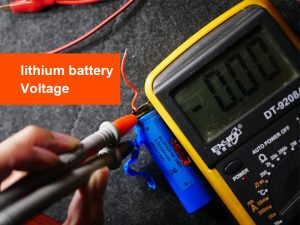
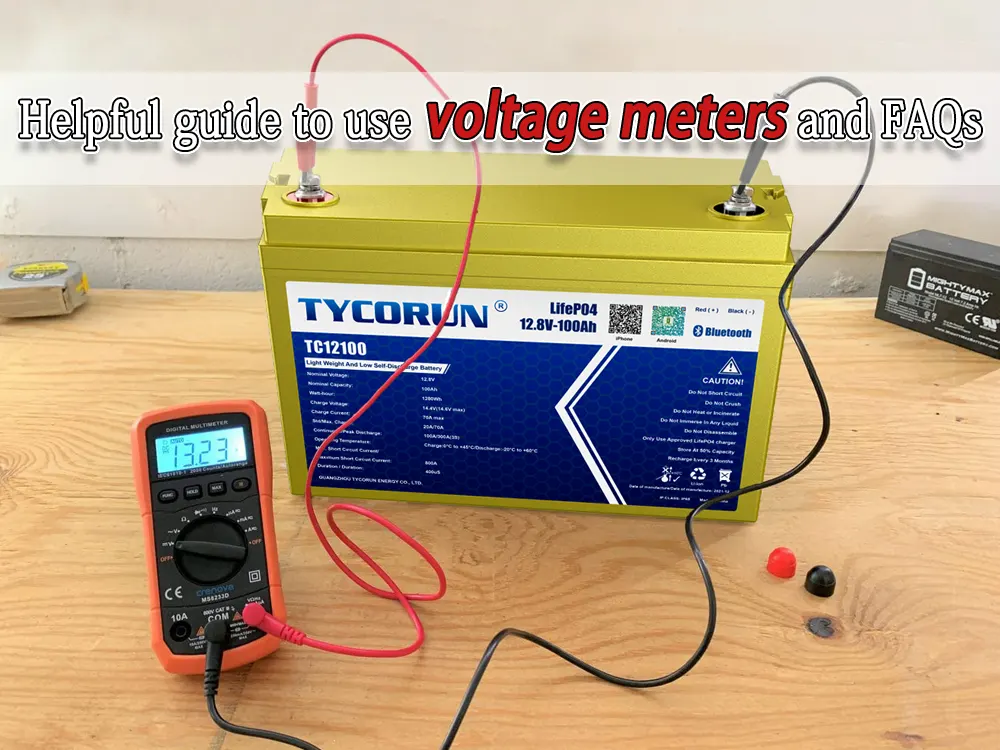
You can use voltage meters to measure lithium motorcycle battery voltage by following these steps:
- Make sure the voltage meter is on and connected to the lithium ion battery.
- Connect a wire from one of the batteries’ terminals directly to one side of the meter, and then connect another wire from your other battery terminal directly to another side of the meter as well.
- Reading both batteries’ voltages together and help determine if they are both producing enough power (or not).
When should a voltage meter be tested?
When it is not sure if the voltage meters are working properly. For example, if there’s a problem with the batteries or cables, then this could affect how much current is delivered to the instruments thus affect any measurements taken by them. Still need to check whether calibration adjustments have been made recently (and whether they were made correctly).
What voltage should a lithium battery sit at?
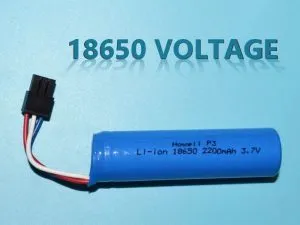
36 V is the safe voltage level and it is the human safety voltage. As for the normal operating voltage of a lithium-ion battery, the normal voltage of a ternary lithium cell is between 2.5 – 4.2v. Outside this voltage range, there will be some impact on performance.
Is voltage meter AC or DC?
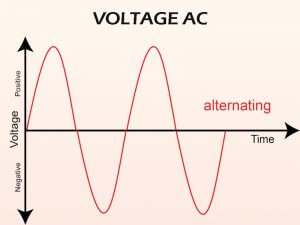
The voltage meters are used to measure voltage in both AC and DC. The difference between the two is that AC voltage has a waveform while DC voltage does not. Every time measuring an AC signal, some energy gets dissipated as heat due to Joule heating.
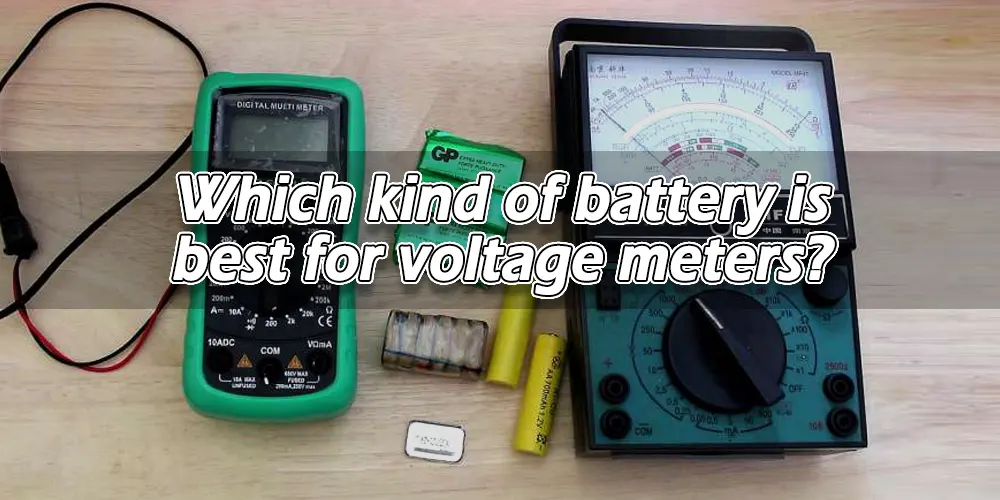
Which kind of battery is best for voltage meters?
A voltage meter will need a tiny battery to function if it is digital. Lithium ion batteries are the best kind of batteries to be used for the voltage meters and multi-meters, because they are portable and they have high energy density.
Where is voltage meter used in daily life?
A voltage meter is an important tool in the daily life for electricians and other professionals who work with electricity. Voltage meters can help to measure voltage levels accurately, which is crucial when troubleshooting circuits or performing maintenance on equipment. It’s also useful for DIYers who want to know what voltage levels are in their own homes.