Skip to content

The electronic devices market has been witnessing a huge growth over the last few years. The high demand for these products has led to increased competition between these companies; with each improving on their technology and specs.
Batteries are among the most important components of these products, therefore the need to keep improving and innovating. Enter smart battery technology…
With smart battery technology came the need to control the batteries and give users a better and safer experience. The concept is to monitor data, provide exact information and help users make decisions and stay safe. Smart lithium-ion battery technology is the result of years of research in this field. Benefiting from the extreme capacities of lithium batteries this technology will be the future of the industry.

What is smart battery technology
Smart batteries are developed to be mounted on a variety of products. This technology will combine three major components working together : a smart battery, a smart charger, and a Systems Management Bus which will coordinate between all parts.
For ordinary batteries, the battery status information provided is less or less accurate, and even some batteries do not have such functions. However, a smart battery with its management system can provide very accurate data to the host about the remaining energy and run time and how it has to be charged.
How does a smart battery work
A smart lithium battery has its own management system, it controls and monitors everything. This system has access to measurements allowing it to manage the capacity and inform the user about the status. The capacity is measured and displayed in mAh or in percentage.
For more efficiency and even safety, there is huge coordination between the battery, the device, and the smart charger. Recent devices are equipped with smart lithium-ion batteries to improve the runtime and provide users with accurate data.
For some vital products (like navigation and communication systems) where energy failure isn’t an option a smart battery could be a lifesaver.

What makes a battery smart
A smart battery is a battery equipped with its own management system. In general, it’s mounted on electronic devices such as laptops and smartphones, but recently some companies started to use this technology on bigger products like electric vehicles, solar panel, powerwall, kayak and so on, anything that requires batteries, even Lithium ion Golf Cart Batteries and lithium RV battery.
These batteries are equipped with internal sensors that measure many parameters like current and voltage. In addition to that, the management system, also known as BMS, monitors the temperature, the state of health and displays them through the device’s interface to the user.
Those features give smart lithium-ion batteries a huge advantage compared with older models that give non-precise data which leads to nonpredictable behavior. Providing information to the device and user contributes to making good decisions.
For example, the smart battery tells exactly when to plug the charger avoiding over discharge. In further applications, the BMS monitors the state of health, can detect and report any kind of damage so the servicing or replacement decision can be taken properly.
Knowing that the battery is overheating, can lead to sitting down the device to protect it and the user from fire or explosion.
How do you charge a smart battery
Charging a smart battery requires a smart charger for better performance. The BMS is designed to operate with specific configurations and has defined requirements of current and voltage.
The concept has three components: the battery, the BMS, and the charger, so in order to have the expected result the the battery, the BMS, and the charger should be united.
For the best performance, it is recommended to use the charger supplied with the battery and follow the battery manufacturer’s manual.
What is a smart battery charger
A smart battery charger or a high-frequency charger is designed to charge smart batteries. These chargers communicate with the BMS to control the power supply and monitor the operation.
It provides data to the user like the remaining time of charging, the actual capacity, temperature, and other data. The charging process is controlled by the BMS, and not the charger itself. This technology is mostly used on smart lithium-ion batteries which are used in multiple applications thanks to their high performance.
Smart charging protects the battery from overcharging and overheating, extends its life span, and makes the process safer and better for the user who has access to all information he needs and can know exactly when to unplug his device.

Can you leave a smart charger on all the time
A smart charger is controlled by a microprocessor to allow communication with the Battery management system and control the process. For lithium batteries, the charging mode is constant current and constant voltage mode.
When plugged in the first time, the charger determines the level of the battery and the amount of power necessary to charge it. This period is called the bulk charge and during it, the charger supplies high voltage.
When the battery reaches 80% of its capacity, the system switches to the absorption stage. In this stage, the current is reduced while the voltage is kept steady, the charging operation takes a longer time in these last 20% but it reduces the power and so the risk of overheating the battery.
So, the main point is to understand that a smart battery could stay plugged for the whole night or for a few hours after the charging is over. They have technology allowing them to avoid overcharging which can damage the battery.
However, it is recommended not to leave the charger plugged for longer than necessary even though it won’t overcharge.
Is a BMS necessary
A BMS or Battery Management System is an electronic system that manages rechargeable batteries. It has many features like controlling the power, monitoring its state and health, calculating and reporting data to be displayed to the user.
A battery pack equipped with a BMS is called a smart battery. The system also interferes during charging and makes sure the process is done properly preventing overcharge and overheating problems.
Smart lithium-ion batteries have BMS to control them. These batteries are known for their high capacities but also sensitivity to some factors like heat. The system keeps it in the safe operating range which preserves it and maintains its lifetime. Monitoring data allows users to interfere when necessary and take actions to protect themselves, their device, and the battery.

So, to answer the question of whether or not the BMS is necessary for a smart lithium-ion battery, the answer is an absolute yes. The management system has a role in the functioning of the battery by managing the power it delivers to the product and it makes sure that everything is safe.
This technology is used in many applications today and it has a major role in keeping electronic devices, power tools, electric vehicles, and even homes running smoothly and safely.
Are lithium ion batteries smart
Lithium batteries are considered smart batteries thanks to the printed circuit board they contain which controls their performance. A smart lithium-ion battery has 3 levels of control:
the first one is simple balancing that controls cells’ voltage. The second protects the cells from current variations during charge or discharge and it’s called PCM: protective circuit module. The third level of control is the BMS, this system has the features from the other levels and adds more things like monitoring the power and the health. These levels of control maintain the batteries for longer time and provide safe use.
Why do lithium batteries have 3 wires
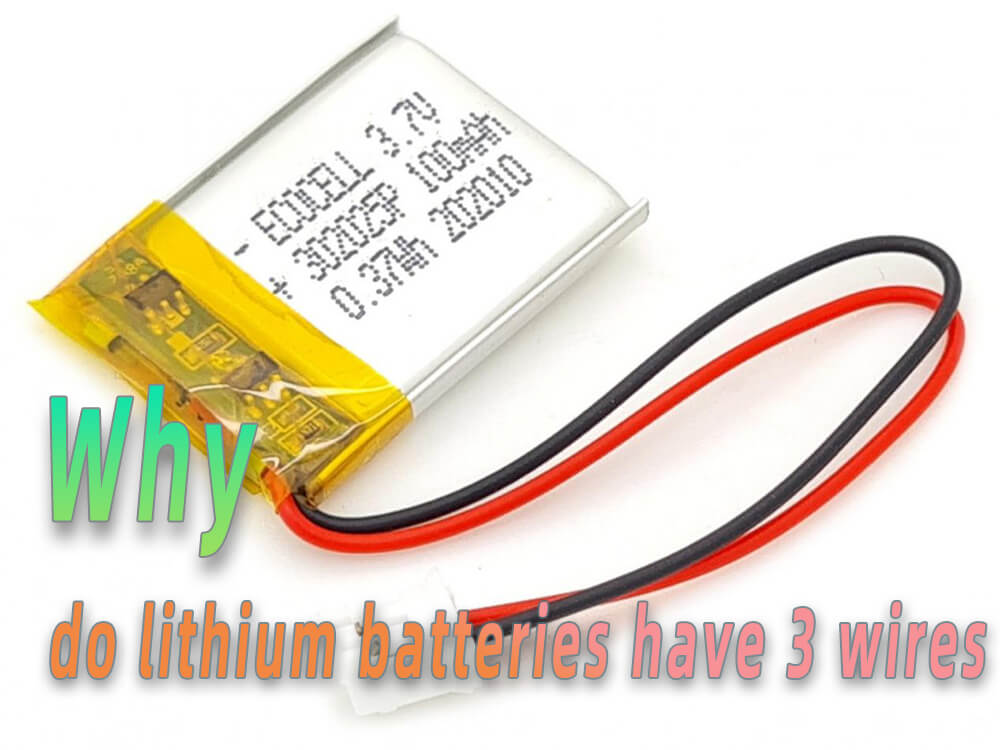
If using you use Lithium batteries you may notice that they have 3 wires or 3 pins and the reason behind that is very simple. There are actually two possible answers to this question.
In case the battery doesn’t have a protective board; the red wire will be positive; the black is the negative and the third is there to reconnect to the device’s motherboard which has the capacity to control the battery’s parameters.
In the case of smart lithium-ion batteries, the role of the third wire or pin is different. In this situation, it will be connected to the motherboard but not for control. Through that connection the battery communicates information to the device. In general, it provides data about power, state of charge, state of charge, health and temperature.
Conclusion
To sum it up smart batteries are a real breakthrough in the industry of batteries. Lithium battery manufacturers are racing to develop them in order to beat their competitors and provide users with long endurance, easy and safe to use products.
Lithium battery types are considered smart batteries and they’re designed to run multiple kinds of products thanks to their high capacities, fast charging, low self-discharge, and lightweight. But in order to perform in the perfect way, they need the BMS (Battery management system) to keep them in good shape.
The BMS controls power during charge and discharge, monitors sensitive data like state of charge, temperature, and even battery health. So in order to keep users, safe smart batteries are the best option to power the future.