Skip to content


The “quantity” of power batteries must be guaranteed, but also the “quality”. As the requirements for safety performance, cruising range, and charging speed of new energy vehicles are constantly improving. Which form of battery cell is most suitable for new energy vehicle applications is a hot topic at present.
The new energy vehicle market is forcing battery companies to continuously update and break through battery technology and launch innovative and high-quality battery products.
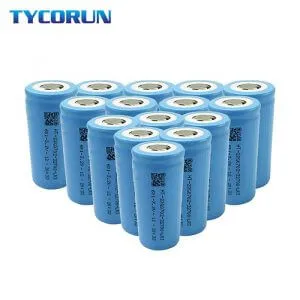
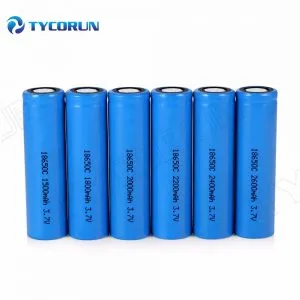
As far as the moment is concerned, prismatic batteries, pouch batteries, and cylindrical batteries have different advantages and are the three mainstream products in the current power battery market. Among them, cylindrical batteries have attracted market attention due to their advantages in cost, performance and safety.
This is mainly due to the structural characteristics of its monomer and battery pack. The volume of the monomer is the smallest, which is convenient for thermal management. It can flexibly use special-shaped spaces. The highly standardized form is conducive to platformization and iteration.
In addition, the cylindrical battery has a separate shell protection and an independent pressure relief device, which has multiple guarantees; the cells are arranged in a honeycomb shape, and the gap ensures a large enough heat exchange area between the monomer and the outside;
More importantly, its centrally symmetrical circular structure can effectively restrain the expansion of the internal pole piece during the entire life cycle, so that no deformation occurs on the outside of the cell.
From the market point of view, in April this year, Tesla delivered the first batch of Model Y vehicles equipped with 4680 batteries without poles to customers;
Recently, Tesla reported that its 4680 battery team has achieved a battery manufacturing capacity of 868,000 per week, which can support more than 1,000 Model Y vehicles.
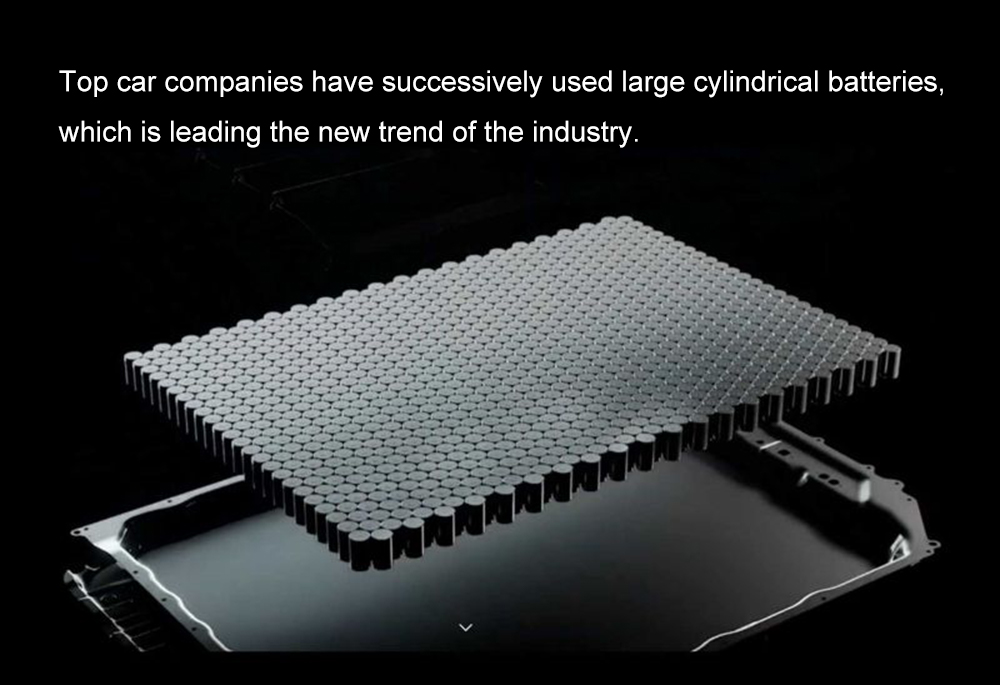
The BMW Group also announced that it will be the first to use 46 series large cylindrical full lug batteries in “new generation” models from 2025. Top car companies have successively used large cylindrical batteries, which is leading the new trend of the industry.
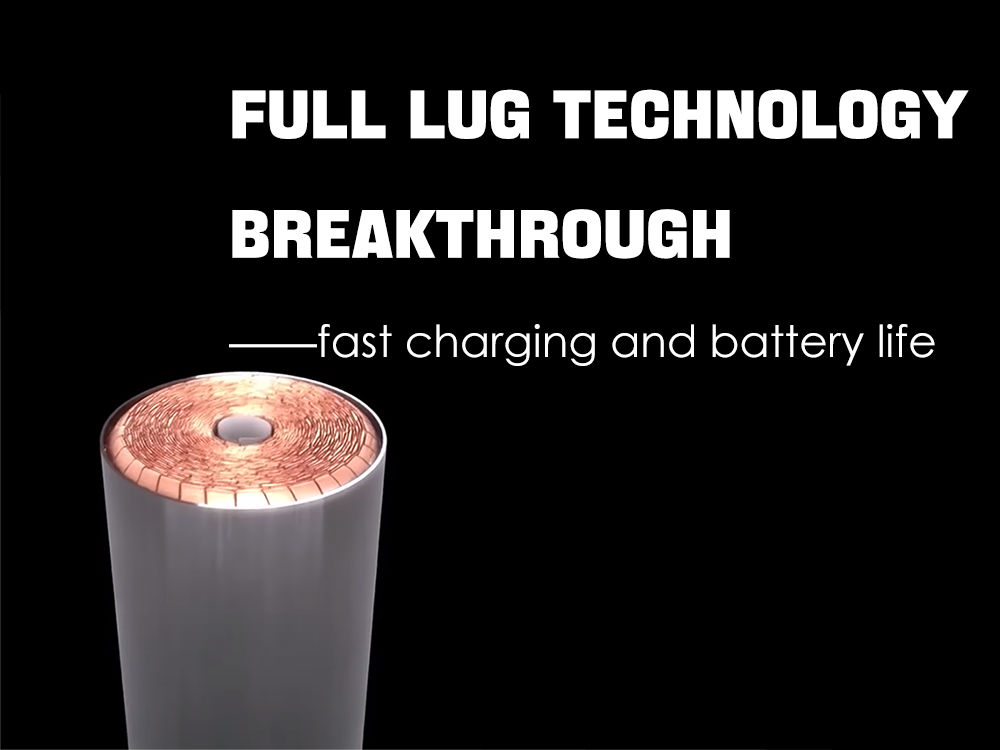
Full lug technology breakthrough
However, in the past period of time, cylindrical batteries were limited in application scenarios due to size and capacity issues. During the discharge process of the battery, the current is collected through copper foil and aluminum foil, and is exported to the external circuit through the tab.
Due to the existence of resistance, the charging and discharging process of the battery is not conducive to current conduction. When the battery is charged and discharged, it is very easy to cause excessive local heat, which poses a safety hazard.
In addition, due to the large size of the battery cell, especially in the process of charging and discharging with high current, significant ohmic heat will be generated, which will cause the temperature of the battery to rise.
The thicker and larger the cell, the more heat it generates and the more difficult it is to dissipate heat, which in turn affects the charging speed.
Therefore, how to solve the paradox of increasing the cell size and reducing heat generation becomes the key. After continuous research in the industry, the “full lug” technology has become the key to solving the bottleneck of power performance and safety issues of cylindrical cells.
Specifically, the full lug battery is a new type of battery that uses the full lug structure for connection and conduction. The battery pole piece and the collector plate are connected by laser technology.
The overcurrent capability between the pole piece and the cover plate is not lower than the pole piece itself, thereby greatly improving the battery overcurrent capability, reducing the heat generation of the battery, and breaking through the bottleneck of the cylindrical battery.

Under the breakthrough of full lug technology, top 10 18650 battery manufacturers in the world such as Panasonic, LG Chem, Samsung SDI and BAK Battery have confirmed the development of large cylindrical batteries.
It is worth mentioning that, as the first battery company in China to launch 4680 full lug large cylindrical batteries, BAK has begun planning a mass production base for large-size cylindrical batteries, and mass production is just around the corner.
From the perspective of the product matrix, BAK’s large cylindrical battery products include 46 series, 3x series and 26 series, etc. The cell height covers 70mm to 160mm, and the application range is very wide.
It is worth mentioning that BAK’s large cylindrical battery has been verified by many experiments, and its material system can solve the problem of energy density and thus battery life; The full lug design greatly reduces the internal resistance, which in turn has an important impact on safety.
BAK large cylindrical battery leads the industry
Previously, the top international energy magazine “Journal of Power Sources” published the article “Fast charging performance and optimal thermal management of full lug large cylindrical lithium-ion batteries under different environmental conditions”.
It is the first article in the lithium battery industry to use a real commercial full lug large cylindrical battery to verify the conclusion of the digital model.
The full lug large cylindrical battery used in this authoritative paper is provided by BAK. The author is based on the mature BAK full lug large cylindrical battery specially designed for automotive high-performance applications.
A thermal-electrical-electrochemical coupling model was established to explore the optimal charging time and thermal management strategy of the cell.
Under the harsh experimental conditions, the BAK full lug large cylindrical battery performed well: at 20°C, the battery can be charged from 10% to 80% in 11 minutes and 53 seconds; In an environment of minus 20°C, the 10%-80% fast charging time can be optimized to a level of 15 minutes and 58 seconds.

In general, the BAK battery achieved a fast charging time of less than 12 minutes from 10% to 80% SOC in this experiment, the fast charging performance can be tripled compared with the conventional single-pole ear cell, which is equivalent to a cruising range of 520 kilometers, demonstrating the great potential of BAK’s full lug large cylindrical battery.
In addition, during the fast charging process of the BAK battery, lithium precipitation did not occur.
In terms of structural design, under the design of full lug, BAK’s large cylindrical battery adopts the shell material of steel shell, and is equipped with a separate shell protection and independent pressure relief device.
Through the directional pressure relief technology, the BAK full lug large cylindrical battery can achieve zero heat dissipation at the vehicle level, ensuring the safety of the battery pack as a whole and the consistent quality of the battery throughout its life cycle, and the problem of thermal management has been greatly improved.
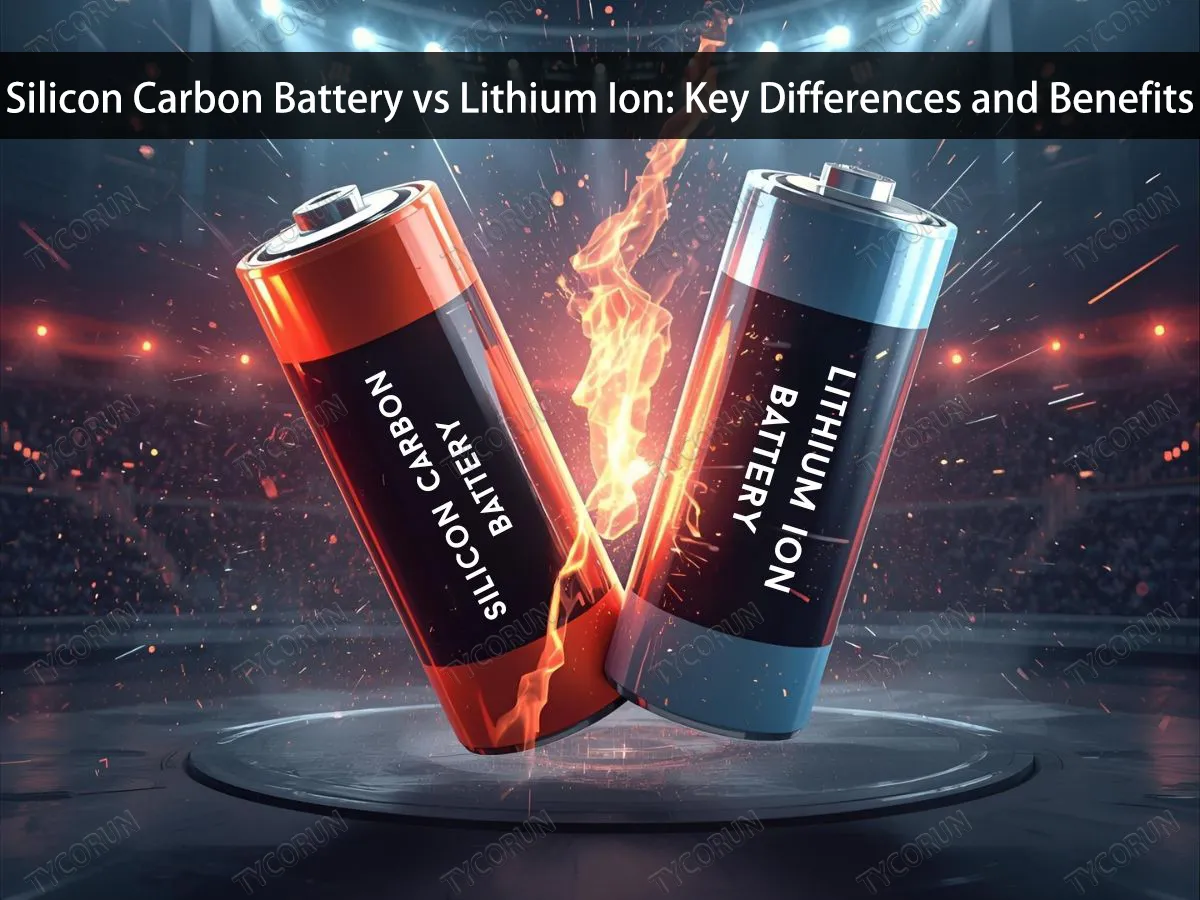
At the same time, due to the uniqueness of the full lug structure design, the large cylindrical battery is more bold in the exploration of the material system, high-nickel ternary cathode materials and silicon-based anode materials are more widely used in large cylindrical batteries, and their energy density has also been greatly improved.
In terms of cathode materials, the nickel content of the cathode of the BAK full lug large cylindrical battery has been increased from Ni50 to Ni90, and the capacity continues to increase.
The highest mass-produced capacity of 18650 batteries reaches 3.5Ah, and the highest mass-produced capacity of 21700 batteries reaches 5.3Ah, breaking through the capacity limit of mass-produced 21700 battery series again.
In terms of anode materials, BAK Battery started research on anode materials for silicon cylindrical batteries earlier.
At present, BAK silicon oxygen material has developed from the first generation of silicon to the third generation of silicon, and the first efficiency has been increased from 77% to 86%, basically matching the efficiency of the cathode. Under the exploration of new material systems, safety aspects cannot be ignored.
Compared with graphite materials, silicon-based materials will have a huge volume expansion during charging and discharging. Up to 300%, while cylindrical batteries usually use steel shells, which have high mechanical strength and good binding force, which can effectively inhibit the expansion of silicon and form a natural barrier.
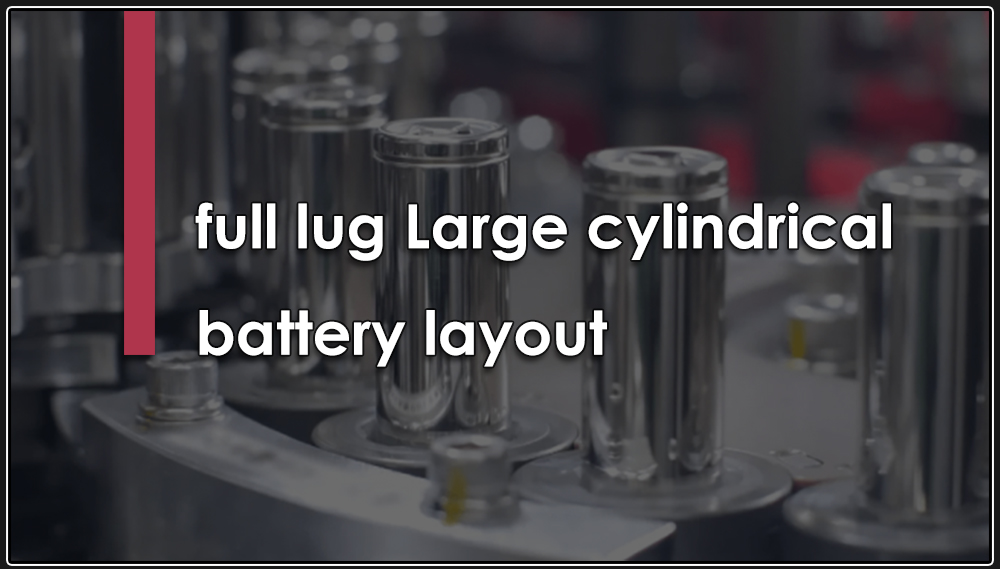
Full lug large cylindrical battery layout
The full lug large cylindrical battery can further improve the fast charging performance on the basis of ensuring safety and sufficient cruising range, making the experience of electric vehicles comparable to that of fuel vehicles.
In this case, the production capacity of large cylindrical batteries needs to match the current high-growth new energy vehicle market.
BAK Battery, as one of the earliest companies in China to research full lug large cylindrical batteries, has been the first to release full lug large cylindrical batteries in China since the beginning of 2021.
BAK Battery has a strong momentum in the research and development and marketization of large cylindrical battery technology, and orders and intended customers continue to increase. The product matrix of BAK large cylindrical batteries includes 46 series, 3x series and 26 series, etc.
Specifically, BAK 46 series batteries began to be delivered in batches last year, and the performance is in line with expectations. According to the different fast charging capabilities of 8-15 minutes, the current energy density of the batteries is between 280Wh/kg and 330Wh/kg.
The BAK 26 series is mainly based on 26105 aluminum shell batteries, which are currently in the B sample stage, and can be applied to a complete vehicle with a battery life of more than 700 kilometers, fast charging can reach 500 kilometers within 12 minutes, and the energy density will be as high as 290Wh/kg after mass production. The BAK 3x series is between the two, and it is a new platform developed by BAK in order to further comprehensively optimize performance, cost, system design and other factors.
In order to meet the upcoming wave of expansion of large cylindrical batteries, BAK Battery plans ahead of time. In the next few years, BAK will expand its global battery production capacity by 80GWh in two stages. At the same time, BAK will also continue to move towards the goal of carbon neutrality, build a zero-carbon factory to meet the needs of carbon emissions and carbon footprints, aim at industry-leading levels, continue to reduce carbon emissions, and actively explore the path of carbon neutrality throughout the battery life cycle.
According to incomplete statistics, as of 2022, nearly 60 companies are conducting research and development and pilot tests of cylindrical full lug batteries, and more than 10 companies have basically reached the stage of mass production; At the same time, upstream and downstream enterprises such as materials and equipment are also increasing the layout of materials such as high-nickel and silicon anodes to accelerate the introduction of equipment with full lug technology. From the perspective of the industry as a whole, the mass production of full lug large cylindrical batteries may usher in rapid growth in 2023.