People in the automotive industry are chasing batteries, and people in the battery industry are chasing lithium materials. The core raw material of the battery-lithium carbonate, The price of lithium carbonate has soared 10 times from 50,000 RMB/ton to 500,000 RMB/ton.
“With lithium, you can travel all over the world.” The backs of lithium carbonate companies have never been so rigid. The price of 50RMB is expensive, and you may not be able to buy it. In order to ensure supply, even the state has taken action.
In mid-March this year, some lithium salt companies were interviewed by relevant state departments to ensure supply. For the specific content of lithium salt enterprises, please refer to TOP 10 Lithium salt enterprises in China. At the same time, downstream manufacturers boycotted and refused to purchase lithium carbonate products above 500,000 RMB. The market has cooled down, and the transaction price of lithium carbonate has stabilized at around 450,000 RMB/ton, which is still very expensive.

How can it be so expensive? The surge in demand is one aspect, and the supply bottleneck is another—the raw materials for lithium carbonate in China mainly come from spodumene in Australia, South America and salt lakes in China. In particular, lithium resources imported from Australia and South America occupy the majority.
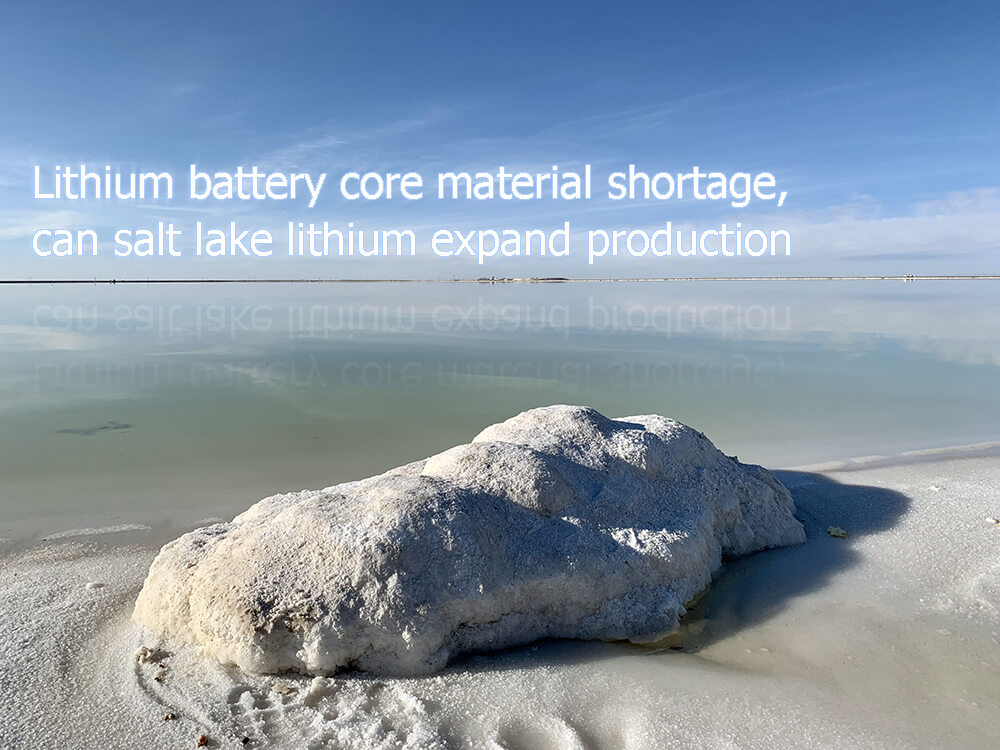
What about salt lakes in China? Why not expand production when demand is high to ensure supply from lithium ion battery companies?
Lithium carbonate prices rose 10 times in a year
Large cargo ships carry “white oil” to Shanghai and Guangzhou ports; giants: Ganfeng Lithium, Tianqi Lithium, and CATL are actively acquiring overseas lithium mines and salt lake resources, but it is still difficult to meet the rapid growth of power batteries. .
In 2021, China’s lithium carbonate demand is about 330,000 tons of LCE, and China’s supply is about 230,000 tons, with a gap of about 100,000 tons, of which 80,000 tons are imported from abroad. In 2025, China’s lithium carbonate demand will reach 600,000 tons of LCE, and the gap may reach 160,000 tons.
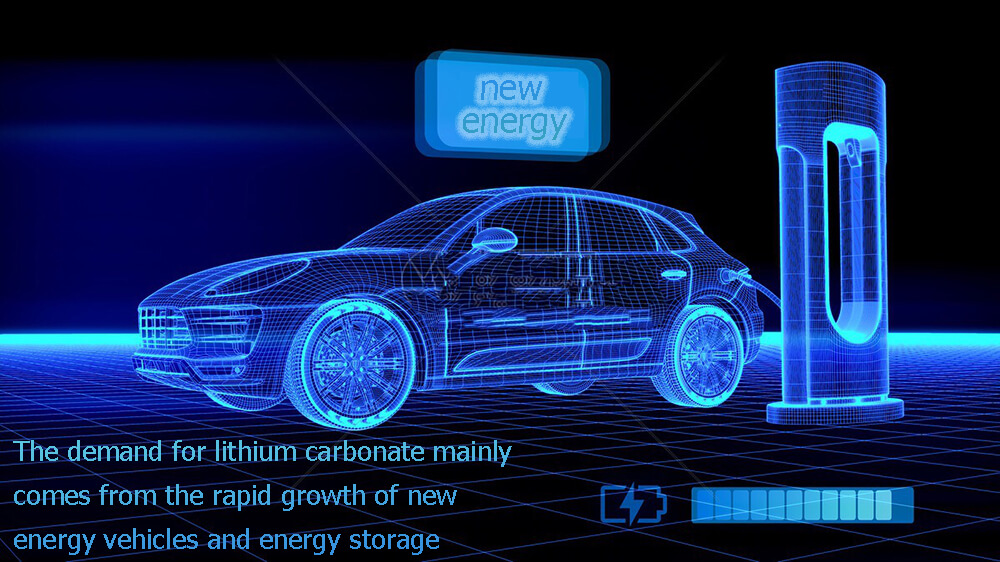
The demand for lithium carbonate mainly comes from the rapid growth of new energy vehicles and energy storage. Industry experts predict that sales of new energy vehicles will reach 5.5 million in 2022 and 9 million in 2025.
According to the forecast of the Zhongguancun Energy Storage Alliance, the total installed capacity of electrochemical energy storage will reach 35GWh in 2025, and the compound growth rate of the industry during the “14th Five-Year Plan” will reach more than 60%.
In 2021, the installed capacity of lithium iron phosphate batteries for new energy vehicles will surpass that of ternary batteries, accounting for an increasing proportion. The main increment of energy storage is also mainly lithium iron phosphate batteries.
Both lithium iron phosphate and ternary (NCM) materials use lithium carbonate, and lithium iron phosphate has a higher demand for lithium carbonate. Some Japanese and Korean battery companies use ternary (NCA) materials and lithium hydroxide, which is relatively small.
China lacks lithium carbonate, but it is not a lack of production capacity, but a lack of lithium resources.
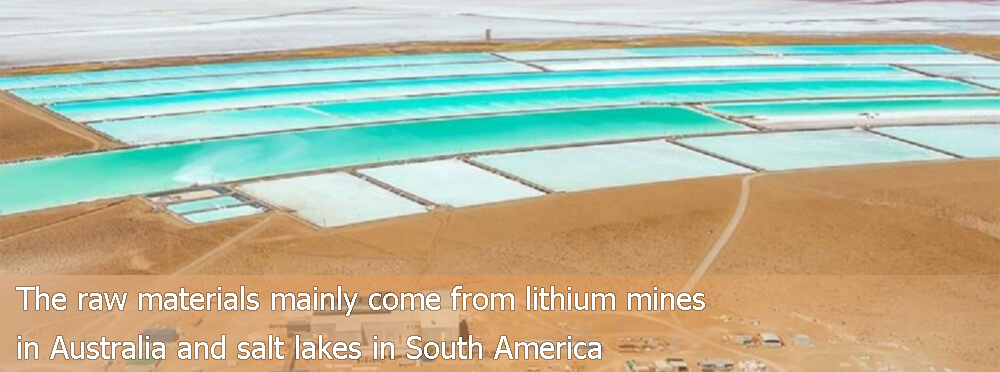
The supply of lithium resources is multifaceted. Most of them come from imports, and China’s foreign dependence exceeds 70%. Among the 230,000 tons of LCE output supplied by China, The raw materials mainly come from lithium mines in Australia and salt lakes in South America. With the continuous mining of spodumene in other countries, the lithium content will show a downward trend in the future, and the cost of lithium extraction will become higher and higher.
China has four sources: lepidolite, spodumene, battery recycling and lithium extraction from salt lakes.
China’s lepidolite is mainly distributed in Yichun, Jiangxi, and the resources are relatively limited.
The spodumene mine in Sichuan is located in a high-altitude area, and the initial infrastructure investment is large and time-consuming, and the mining scale is temporarily insufficient.
Last year, the lithium carbonate equivalent supplied by battery recycling was about 20,000 tons, which is relatively small. After 3 years, the battery will be retired on a large scale. The chairman of Guoxuan Hi-Tech believes that, by 2040, the total demand for raw materials for battery manufacturing and the total supply of materials for recycling batteries have reached a balance. Can’t count on it in the short term.
In this way, China’s salt lakes seem to be a great way to replenish lithium carbonate production as soon as possible.
New technology for lithium extraction from salt lakes emerges
64% of the world’s lithium resources come from salt lakes, which are an important source of lithium carbonate. Where did the salt lake come from? Dating back to about 100,000 years ago.
At that time, the crustal movement formed lakes. However, due to the arid climate and insufficient external water supply, a large amount of lake water was evaporated, and salt flats appeared around, forming salt lakes.
Salt Lake is a treasure. It deposits about 200 kinds of salt minerals. Humans have mined a large number of important raw materials such as halite, alkali, mirabilite and potassium, lithium, magnesium, boron and so on from the salt lake.
Lithium is only one of the salt lake deposits, and the content is different, the ratio of magnesium to lithium is different, and the technology of lithium extraction is also different.
| Major salt lakes in the world | |||
| Salt lake | Reserves (LCE ten thousand tons) | Lithium concentration(g/L) | Magnesium lithium ratio |
| Atacama | 813 | 0.14 | 6.4 |
| HombreMuerto | 282 | 0.05 | 1.37 |
| Salar de Uynui | 550 | 0.05 | 18.6 |
| Sliverpeak | 12 | 0.02 | 1.43 |
| Salar deRincon | 830 | 0.39 | 9.29 |
| CauchariOLatoz | 1800 | 0.069 | 8.6 |
| Sal de Vida | 114 | 0.072 | |
| Mariana | 190 | 0.03 | 7.6 |
| Olaroz | 640 | 2.4 | |
| Dong taijnar | 247 | 0.09 | 31 |
| Xi taijnar | 229 | 0.02 | 61 |
| Qarhan salt lake | 891 | 0.016 | 1838 |
| Zabuye salt lake | 160 | 0.1 | 0.01 |
| Yiliping salt lake | 157 | 0.022 | 91 |
| 33 | 0.02 | 65 | |
| Jazechaka salt lake | 339 | 0.563 | 0.70 |
| Longmucuo salt lake | 1.211 | 73.9 | |
The main salt lakes can be summed up in three characteristics:
(1) China’s salt lakes have large reserves, low magnesium-to-lithium ratios, and good endowments.
(2) Qinghai salt lake has low lithium concentration, high magnesium-to-lithium ratio, and poor endowment.
(3) Tibet’s salt lakes have a high lithium concentration, and most salt lakes have a low magnesium-to-lithium ratio and good endowment.
Salt lake lithium extraction technology currently has four technical methods: salt field enrichment method, membrane separation method, ion exchange adsorption method, and solvent extraction method. It is necessary to select the matching technical method according to the type and characteristics of salt lake.
“Drawing alkali in winter, drying salt in summer.” This is the most frequently said sentence by chemistry teachers, referring to the ancient method of enrichment in salt fields. This method requires the construction of salt fields and the digging of canals to divert brine. It is currently the most productive process for extracting lithium from salt lakes.
The technology is mature, the production cost is low, and it is widely used in South America. However, it has high requirements for brine quality and cannot effectively handle brine with high magnesium-to-lithium ratio, so it is not suitable for Qinghai Salt Lake.
Of course, the construction of salt fields poses a threat to the ecological environment, and Tibet has already banned it, so it is difficult to promote this law in China.
Membrane separation methods include electrodialysis membranes and nanofiltration membranes, etc., and require old halogen with a relatively high lithium concentration. Usually, the old halogen with a lithium concentration of 4-5g/L can be used before it can be used, and the total yield is also very low. Due to factors such as higher electricity costs, the membrane method is rarely used alone, and is generally used in conjunction with the adsorption method.
Ion exchange adsorption method has high selectivity and can directly extract lithium from original halide, which is simple and environmentally friendly.
A senior scientific researcher of lithium extraction from salt lakes said: “Adsorption method is the mainstream technology in China’s salt lakes, but after aluminum adsorption, the outstanding concentration is relatively low, so the follow-up must be added with membranes and then concentrated. The adsorption and membrane method used can produce about 20,000 tons of lithium carbonate per year.”
Since the lithium carbonate generated during the cycle will block the molecular sieve and cause failure, this method is not suitable for carbonate-type salt lakes.
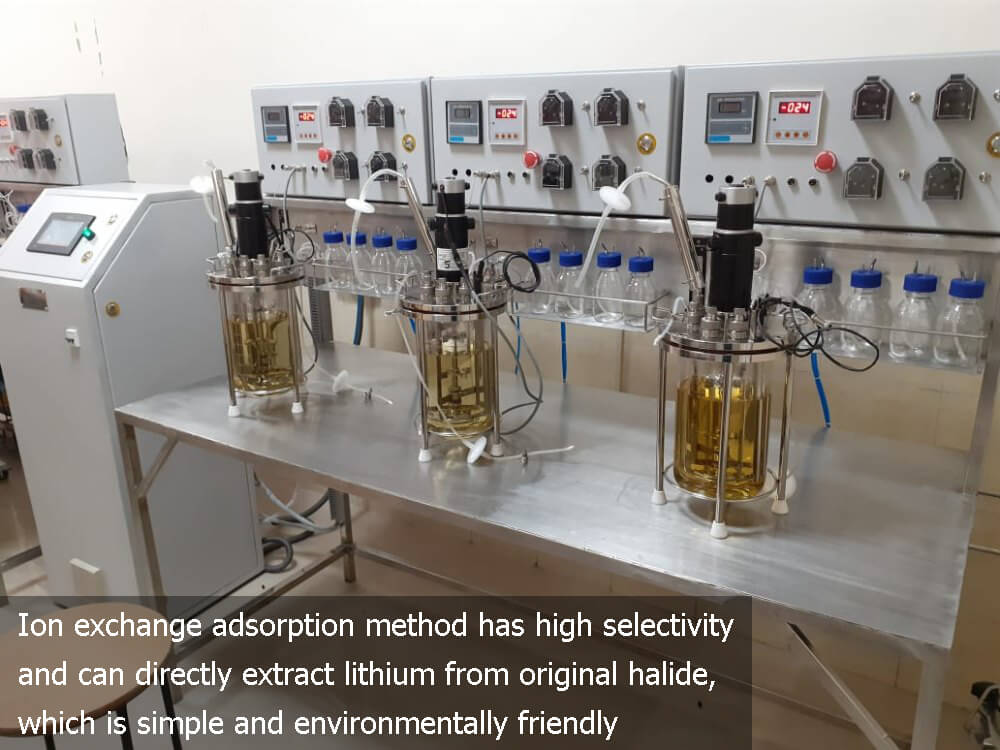
In general, the mainstream of lithium extraction technology from salt lakes is the adsorption method plus membrane process to extract lithium. The principle is similar to that of the water treatment industry, the technology is relatively mature, and it also has cost advantages.
An investor in a salt lake lithium extraction company said: “Taking the production of 10,000 tons of lithium carbonate as an example, the operating cost of the mainstream adsorption and membrane process is generally controlled at 30,000-40,000 RMB. The cost of repurifying and producing battery-grade lithium carbonate will increase by 8000-15000RMB. Cost is not an issue, neither is technology, energy is the real issue. “
In addition, the traditional solvent extraction method uses high acid, equipment loss, damage to the extractant, etc. cannot be avoided, and the backflow of the extractant pollutes the lake water, and the reputation is not very good.
However, new extraction techniques that are more environmentally friendly are now available, and future applications may increase significantly. The Institute of Processes of the Chinese Academy of Sciences has provided a new technology – carbonate type salt lake multifunctional chelation extraction – three-phase reaction lithium extraction technology. This technology has completed the pilot test in Tibet Salt Lake, and the comprehensive yield of the product is over 90%.
According to Lin Daoyong, general manager of Shanghai Yiding New Material Technology Co., Ltd., the partner of this technology: “To produce 10,000 tons of lithium carbonate, the fixed investment is more than 200 million yuan, the operating cost is 10,000-20,000 RMB/ton, and the electricity consumption is more than 6,000 kWh. Compared with the adsorption method, it has great advantages.”
This extraction technology is suitable for carbonate salt lakes, only Tibet Zabuye Salt Lake is suitable.
Another new technology of the Institute of Processes of the Chinese Academy of Sciences is the multi-component collaborative solvent extraction-water stripping clean lithium extraction technology, which has completed the pilot test in Qinghai Salt Lake.
Lin Daoyong, who also participated in the promotion and application of this technology, said: “This technology is environmentally friendly, and the only disadvantage is that the lithium concentration is high, 1g/L, which is more suitable for South American salt lakes. The lithium concentration of Zabuye and Namtso salt lakes is relatively high, nearly 1g/L, and other salt lakes have too low lithium concentration, at least 0.5g/L or more before they can be used, and later upgrades and iterations can even be used.”
The biggest advantage of the new extraction technology is that the amount of fresh water is less, and the second is that the cost of lithium extraction is lower than that of the adsorption method, and it is also friendly to the environment. If the new technology runs into mass production, it will help capacity expansion.
Limited capacity expansion
Such a good business, what is the current status of lithium extraction from China’s salt lakes?
| China’s salt lake production capacity | ||||
| Region | Salt lake name | Shareholder | Production capacity in 2021 (10,000 tons of LCE) | Production capacity in 2022 (10,000 tons of LCE)) |
| Qinghai | Qarhan salt lake | Zangge Mining Kodak Made Salt Lake Shares (Lanke Lithium Industry) | 2 | 3 |
| Qinghai | Yiliping salt lake | Minmetals salt lake | 1 | 2 |
| Qinghai | Xi taijnar | Qinghai Guoan | 0.5 | 1 |
| Qinghai | Dachaidan salt lake | Dahua Chemical | 0.3 | 0.3 |
| Qinghai | Dong taijnar | Dongtai Lithium Resources | 1 | 2 |
| Qinghai | balen mahai | Jintai Lithium Industry | 0 | 0.6 |
| Tibet | Jazechaka salt lake Longmucuo salt lake | Tibet National Energy Mining | 0 | 0 |
| Tibet | Zabuye | Tibet Mining | 0.5 | 1.5 |
Lanke Lithium’s original 10,000-ton/year industrial-grade lithium carbonate production capacity and 20,000-ton/year battery-grade lithium carbonate project have been completed in April 2021 and will gradually release part of the production capacity.
Minmetals Salt Lake currently has a lithium carbonate production capacity of 10,000 tons per year, and the planned lithium carbonate production capacity is 20,000 tons per year.
Guoan Lithium is engaged in the development of salt lakes and has a lithium carbonate production capacity of 10,000 tons.
Dahua Chemical currently has an annual output of 10,000 tons of lithium oxide, 2,000 tons of lithium hydroxide, 3,000 tons of carbonic acid and 25,000 tons of boric acid.
Dongtai Lithium Resources has an existing 20,000-ton lithium salt production capacity and a potential 10,000-ton capacity expansion plan. The project is still under planning and is actively advancing.
Tibet Guoneng Mining to be developed in the follow-up
The second phase of the Zabuye project is planned to build 96 million tons of battery-grade lithium carbonate per year and 2,400 tons of industrial-grade lithium carbonate per year. After its landing in 2023, it will form a lithium production capacity of 25,000 tons.
Among several salt lake lithium extraction enterprises, Lanke Lithium has the largest output in Qinghai Chaerhan Salt Lake. Starting from July 1 last year, the second phase of production capacity was released, with a daily output of 100 tons, and the total output last year was about 20,000 tons of lithium carbonate . This year, Lanke Lithium is expected to produce 30,000 tons of lithium carbonate, but there is no expansion plan in the near future.
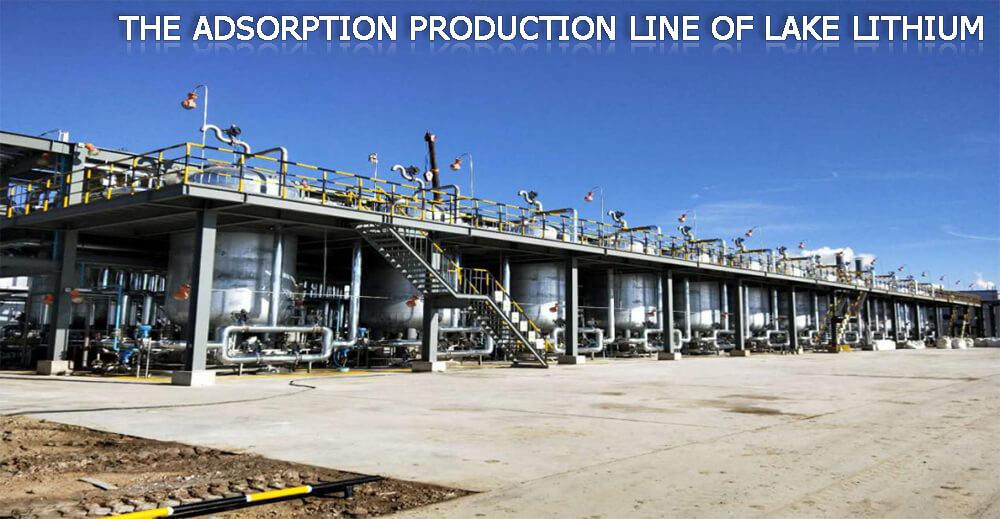
Minmetals’ Qinghai Yiliping Salt Lake first makes potash fertilizer and then extracts lithium, with an annual output of nearly 10,000 tons of lithium carbonate. The production capacity and output of other enterprises are relatively small.
In general, China’s salt lakes are rich in lithium resources, and the cost of lithium extraction is low. Although there is a lot of room for development, the current overall output is not high.
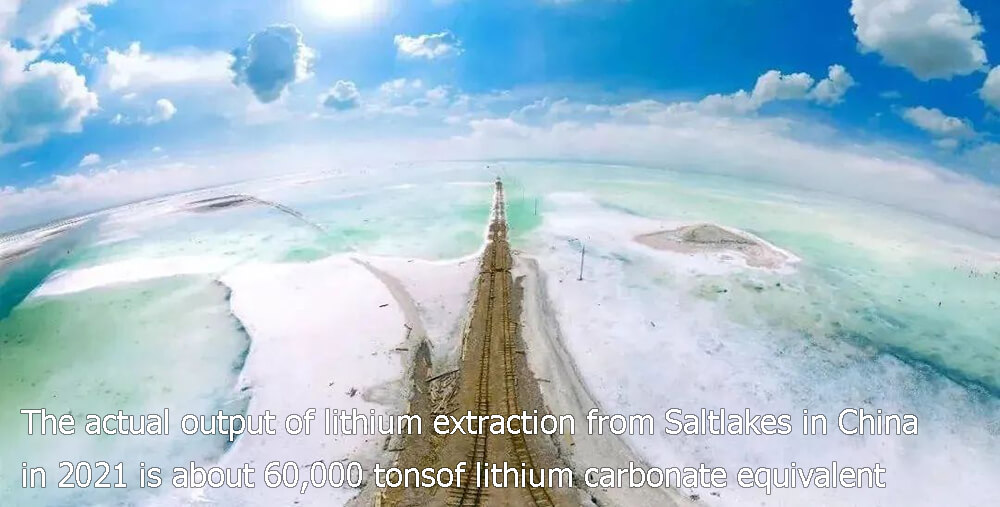
An investor of a salt lake lithium extraction company said: “In 2021, China’s salt lake lithium extraction output will be about 60,000 tons of lithium carbonate equivalent, it is estimated that the output in 2022 will be about 80,000 tons of lithium carbonate equivalent, and it is conservatively estimated that the output in 2025 will be about 120,000 tons of carbonic acid equivalent. Lithium equivalent.”
Most of the interviewees also agreed with this data, that the output of lithium extraction from salt lakes is indeed not high, and the growth is limited.
One of the reasons is that although Qinghai Salt Lake contributes the most, due to its poor endowment, it cannot be made into battery-grade lithium carbonate in a strict sense, and it is not the main force for future development.
At the end of 2021, the Qinghai government and the Ministry of Industry and Information Technology issued the Action Plan for Building a World-Class Salt Lake Industrial Base in Qinghai (2021-2035). But this action plan has not been released publicly, and support seems to be weak.
The second reason is that although capital is more willing to develop the Salt Lake in Tibet, there are still many uncertainties in large-scale development in the future due to the poor infrastructure conditions in Tibet, insufficient energy and power supply, weak government willingness, and ethnic issues. .
“Last year, I visited Salt Lake in Tibet. The road transportation was relatively difficult, and the power source was far away. I also found some complicated other problems, which were also affecting the expansion of production. I am not very optimistic about the extraction of lithium from the Salt Lake.” The author mentioned.
Expectations can not be too high
From the market point of view, the contribution of Qinghai Salt Lake is mainly industrial-grade lithium carbonate. Although most companies reprocess them into battery-grade lithium carbonate, strictly speaking, they have reached the quasi-battery level. The products can be used in low-end scenarios such as energy storage and low-speed vehicles. It is difficult to apply them to power batteries within two years. There needs to be a process for customer recognition, and there needs to be a power battery company willing to be the first to eat crabs.
From the perspective of the local government, the Tibetan government has no economic task pressure, and its main attitude is to maintain stability and not to provoke ethnic conflicts. Of course, there is also the issue of energy and electricity.
Although wind and solar energy storage can be solved, the cost of energy storage lithium batteries is very high. In order to extract lithium in salt lakes, a large amount of lithium carbonate must be used to make energy storage batteries.

Tibet is a pure land that almost every Chinese yearns for. I believe that most people do not want to see the colorful salt lake destroyed by large-scale development.
At the same time, Chinese lithium giants have accelerated their overseas expansion, and imported lithium resources have maintained rapid growth. China’s Jiangxi lepidolite mine and Sichuan spodumene mine are also accelerating the development. Moreover, the high prices of lithium, cobalt and nickel will help accelerate the development of the battery recycling industry and will gradually fill the gap between the supply and demand of lithium carbonate.
Lithium extraction from salt lakes, although it is beneficial to the contradiction between supply and demand of lithium carbonate, cannot put the expectation of supply and demand balance on salt lakes. In recent years, lithium extraction from salt lakes is still a beautiful and small business.
Conclusion
Four core conclusions can be drawn from this paper:
(1)At the current price, the profit margin of lithium extraction from salt lakes is very high, which is a good business. However, the actual output of lithium extraction from salt lakes in China is about 60,000 tons of lithium carbonate equivalent in 2021, about 80,000 tons in 2022, and a conservative estimate of 120,000 tons in 2025. The output growth rate is far less than the growth rate of power battery demand.
(2) Qinghai Salt Lake has poor endowment, and most of the lithium carbonate produced is of industrial grade or quasi-battery grade. It has not been widely used in commercial power batteries. In the future, it is necessary to approve the process or strengthen the development of Tibet Salt Lake with better endowment.
(3) The maturity of lithium extraction technology from salt lakes in China is relatively high. The mainstream technology is adsorption and membrane method, which has a low operating cost and can be applied to most salt lakes in Qinghai and Tibet. Some new technologies have emerged to further improve the efficiency of lithium extraction.
(4)The Tibetan government’s attitude towards the development of salt lakes by enterprises is not positive. Constrained by the poor infrastructure conditions, the high cost of electricity and energy, and the existence of local ethnic problems, it is difficult to invest in the development of salt lakes.