Skip to content


The energy revolution is accelerating
Wind power and photovoltaics are mandatory
The policy side of the 14th Five-Year Plan will continue to vigorously support the development of clean energy such as offshore wind power and photovoltaics.
China’s energy security has entered a critical period, and the low-carbon energy transformation has entered an important window period. It is proposed that by 2025, the proportion of non-fossil energy consumption will increase to 20%, and the proportion of non-fossil energy power generation will reach 39%.
Electric energy accounts for 30% of the final energy consumption. It is required to accelerate the development of wind power and solar green power generation, and comprehensively promote the large-scale development and high-quality development of wind and solar power generation.
Complementary advantages of wind power and photovoltaics
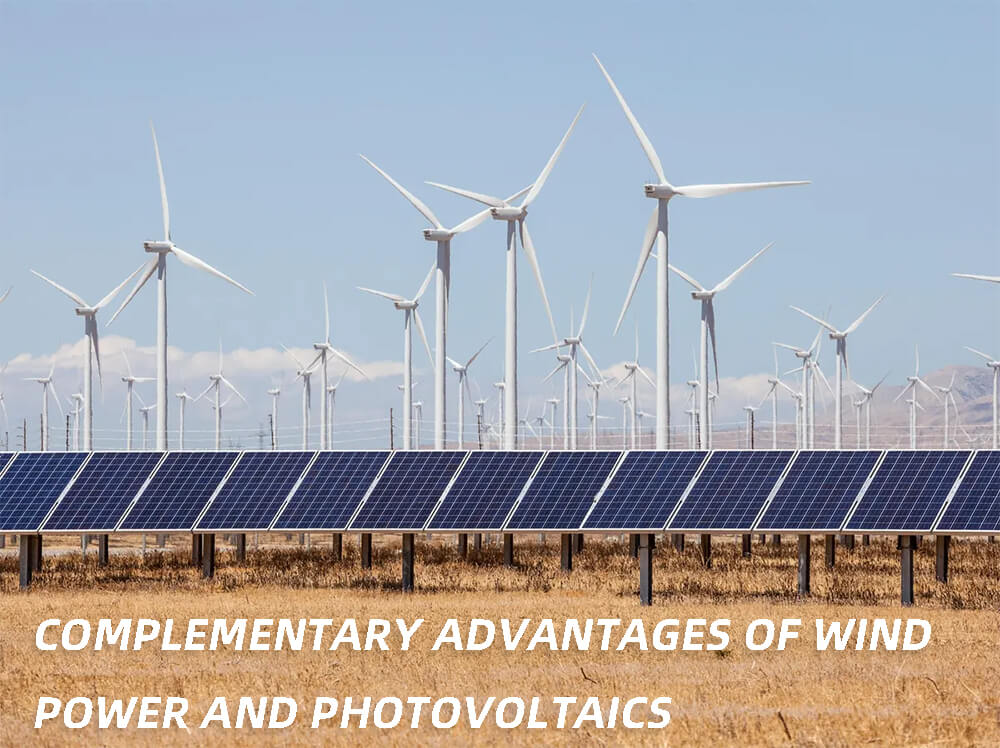
Wind power and photovoltaics have complementary advantages and are the right arm of the renewable energy system:
1) Based on the high utilization hours, the kWh cost of onshore wind power is lower than that of photovoltaics, and it is the form of renewable energy with the lowest power generation cost at present.
The kWh cost of onshore wind power in 2020 is 0.04 US dollars /kWh, a 54% reduction in cost over the past decade. Most regions in China can achieve the same price or even more competitive with coal power.
2) Wind power and photovoltaics are all intermittent power sources, and their output randomness and fluctuation are unfriendly to grid connection. Compared with thermal power, they have natural disadvantages. However, wind and solar complementation can reduce the impact on the reliability and stable operation of the power grid to a certain extent.
From the perspective of annual utilization hours, wind power and photovoltaics are more complementary; from the perspective of the daily output curve, there are seasonal differences, which need to be combined with other flexibility to adjust the power supply and connect to the grid.
3)The wind energy resources are abundant, especially the offshore development potential is great.
Abundant offshore wind energy resources
High-quality offshore wind resources and high power generation
Offshore wind energy resources are abundant and of high quality.
1) According to the data of the World Bank in 2020, China is the country with the largest sea wind development potential in the world, reaching 2982GW, of which 1400GW is stationary. As of 21, the cumulative installed capacity is only 26.4GW, accounting for only 2%, and the development space is very large;
2) There is no wind blocking object at sea, the wind speed is high, and the power generated by the fan is proportional to the cube of the wind speed (before reaching the rated power), so the power generation is high; 3) The offshore wind shear is small, avoiding blade vibration, fatigue and even breakage; 4) The sea breeze is stable , the fluctuation is small, and the requirement for frequency regulation of the power grid is reduced.
Offshore wind public bidding restarts
The construction period of sea wind is 2-3 years. Stimulated by the 21-year national subsidies and the decline, the public bidding of offshore wind power in 2019 reached 15.6GW, a year-on-year increase of 225%, and then the public bidding for 6.3GW in the next 20 years, a year-on-year decline of 60%, and only 5 in 21 years. A total of 2.48GW of projects were tendered, down 61% year-on-year.
The public bidding and bid opening of offshore wind power has accelerated the restart. In the first half of 2021, only the first and second projects of YUDEAN Yangjiang Qingzhou were tendered, and the winning bid was 8 months away from the tender. In the past 22 years, as of the end of April, Haifeng’s public bidding volume was 3.14GW (incomplete statistics).
Offshore wind inexpensive is imminent
In the initial investment cost of offshore wind power, wind turbines, foundations and construction account for a large proportion, which is the key to cost reduction. According to the data, the typical cost of offshore wind power is about 17600MB/kW, of which offshore wind turbines and towers, construction costs, and delivery links account for 45%, 27%, and 19% of the initial investment.

The plan is expected to add more than 50GW
According to the plan, the 14th Five-Year Plan is expected to add 50GW+ of installed capacity: 16.9GW will be added to the grid in 2021, and the new and cumulative installed capacity will surpass that of the United Kingdom, ranking first in the world. After the country’s subsidy retreated, the local government actively encouraged the development of sea breeze.
According to the approved projects in Jiangsu, Shandong (land subsidy), Guangdong (land subsidy), Zhejiang (planned land subsidy), Guangxi, etc., the total installed capacity of the 14th Five-Year Plan exceeds 50GW. We estimate that the newly installed capacity of China’s offshore wind power will be 6, 9, 10, and 15GW in 22-25 years, with a CAGR of 36%.
Large-scale trend of Landwind is accelerating
High installation certainty in 2022
Based on the rapid cost reduction in the industry, the average public bidding price of 3S and 4S units will drop to 2257rmb/KW and 2293rmb/KW in October 2021, a year-on-year decrease of about 30%.
The drop in wind turbine prices stimulated demand. In 2021, the public bidding volume was 54.2GW, of which onshore was 51.4GW, a year-on-year increase of 106%. In 22Q1, the tender was 24.7GW, of which onshore was 19.3GW, a year-on-year increase of 36%. The certainty of newly installed capacity of onshore wind power in 2022 is relatively high.
Policy support
About 100GW of the first phase of the Fengguang Base is progressing in an orderly manner, the second phase of the 14th Five-Year Plan has completed 200GW, and the 15th Five-Year Plan has completed 255GW. In October 2021, the state proposed to accelerate the planning and construction of a large-scale wind power photovoltaic base project in the desert Gobi region, with an installed capacity of about 100GW in the first phase.
As of the end of 2021, about 75GW of construction has been started, and the remaining projects will start construction in 22Q1 and are expected to be completed by 2023. The second phase of the scenery base is planned to build 200GW in the 14th Five-Year Plan (150GW for external delivery + 50GW for local self-use), and 255GW in the 15th Five-Year Plan.
The acceleration of large-scale
During the 14th Five-Year Plan period, the trend of large-scale wind turbines will accelerate. In 2020, Sweden, Canada and other countries have added an average of 4MW of new capacity, while China is only 2.2MW, lower than the global average.
The main reason is that in the subsidy era, the project rate of return is high, and the enthusiasm of each link in the industrial chain to upgrade the large MW technology is weak, and it is also objectively restricted by the technology research and development cycle of Chinese wind turbine manufacturers. Under the pressure of parity, the importance of cost reduction is highlighted, forcing the industry to speed up the industrialization of large MW wind turbines.
In 2021, the bidding model requirements are mainly 2.5-3MW, and in 2022, the requirements are increased to more than 4-5MW, and the high wind speed area is more than 6-7MW. It is expected that in the next 2-3 years, the onshore unit capacity will reach 10MW level.
22-25 CAGR of 36%
Under the clear goal of energy structure transformation, policy support such as large bases, thousands of villages and thousands of villages wind control plan & wind power partnership action, and the replacement of small by big and small are fully supported.
With the cost reduction of large-scale wind turbines, the price of wind turbines has dropped, and the yield of onshore wind power projects has increased significantly, driving the strong demand for wind power installed capacity. It is estimated that during the 14th Five-Year Plan period, the average annual installed capacity of onshore wind power will be about 60GW, with a compound growth rate of about 13.5% in 22-25 years.
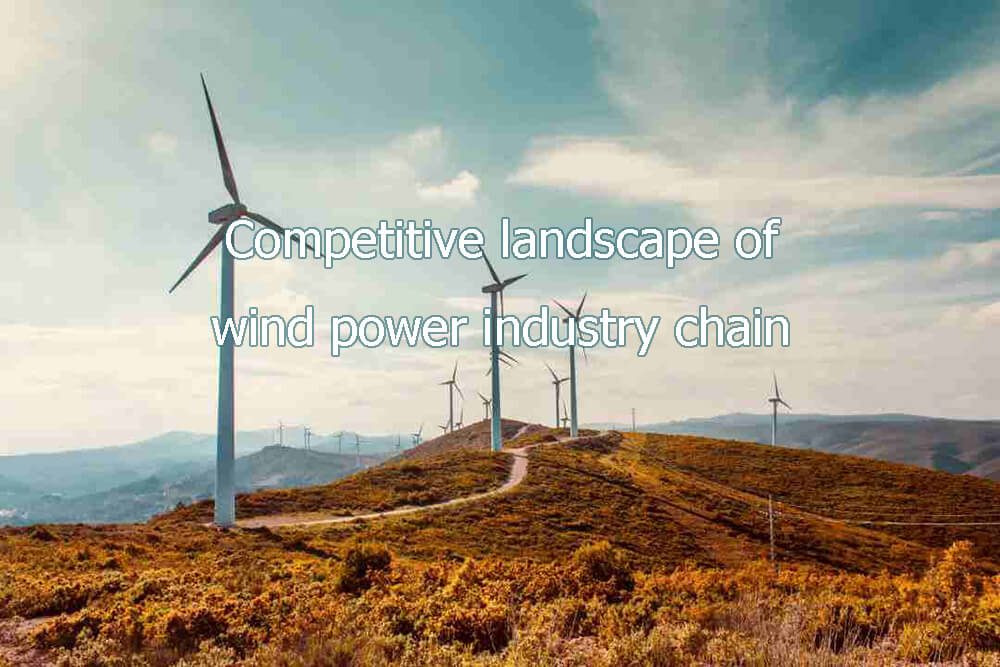
Competitive landscape of wind power industry chain
Submarine cable
In 2025, the market size will be about 37.5 billion RMB, with a CAGR of 46% in 22-25 years
With the expansion of the offshore distance and capacity of the sea breeze, the proportion of large cross-sectional area and high-voltage submarine cables sent will increase, and the unit value will increase significantly. According to the grid-connected offshore wind power projects, under the same capacity, the farther the offshore distance is, the higher the price of sending the submarine cable;
With the expansion of project capacity, the value of submarine cable per km has increased. The price of 220kV of 3×500mm2 is about 3.5-4.3 million/km, the price of 3×1000mm2 is about 7-7.5 million rmb/km, and the price of three-core 500kV exceeds 14 million rmb/km .
Dongfang Cable: Profound technology accumulation, leading profitability
High-end technology reserves take the lead in industrialization, and first-mover advantage builds a moat: the company has a deep accumulation of technology, and the speed of industrialization in the process of penetration into high-end products is leading the industry. The application of 500kV single-core and three-core AC submarine cable soft joint technology The first in the industry;
HVDC submarine cable took the lead in realizing industrialization, filling the gap in China, possessing ultra-high voltage DC submarine cable technology and production capacity, and the speed of industrialization was accelerated under the trend of far-reaching seas; China was the first and only company to master marine umbilical cable technology and realize industrialization.
Whole machine
Yunda ranked among the top 3 for the first time, and CR10 increased by 6pct to 97%
In 2021, 7.6GW was hoisted and ranked among the top 3 for the first time, and the overall concentration of the whole machine plant was improved. In 2021, China’s new wind power installed 55.8GW, a year-on-year -3%. China’s complete machine manufacturer CR3 accounted for 48%, which remained stable year-on-year.
Yunda’s ranking was +98% year-on-year, rising 2 places to third; Mingyang’s ranking slipped to fourth, but its hoisting capacity was +34% year-on-year; Goldwind and Envision’s hoisting capacity were 11.38/7.81GW, -8% year-on-year/- 22 %. The CR5 of the whole machine factory increased by 6.8pct to 71%, and the CR10 increased by 5.5pct to 97%.
Bearings
Complex working conditions and high technical content, Chinese production replaces the last link
Main shaft bearings above 3MW are monopolized overseas, and there is a large space for China’s substitution. In recent years, overseas leaders have accounted for more than 80% of the global market, and 70-75% of the Chinese market. Xinqianglian, ZWZZ, LZZ, etc. have achieved low-power mass production.
For high power, only Xinqianglian achieved technological breakthroughs and successfully developed 5.5MW and 6.25MW large-megawatt wind power spindle products. The three-row roller and double-row tapered spindle bearings have been supplied in batches to Mingyang Intelligent, Dongfang Electric and other customers.
Xinqianglian: Spindle bearings accelerate China’s substitution, and gross profit margins increase against the trend
In terms of gross profit margin, main shaft bearing > independent pitch > yaw pitch. In recent years, the yaw pitch is about 20-30%, the independent pitch bearing is about 35-40%, and the main bearing is 45-50%. In 2020, the gross profit margin of Xinqianglian main shaft bearing is 48.8%, and the gross profit margin of yaw pitch bearing is 22.3%, a difference of 26.5pct.
The annual production capacity of Xinqianglian slewing bearing products is about 60,000 in 20 years, and about 80,000 in 21 years. In 21, the wind power bearing project of more than 3.0MW is expected to reach 50% of the production load in 22 and full production in 23. The production capacity of gearbox bearings and components is expected to reach 30%/70% of the production load in 24/25 years, and full production in 26 years.
Towers
The pattern is relatively scattered, and the leader accelerates the concentration
The tower structure is scattered, the leading localized layout of production capacity, and the market share may be accelerated. The tower barrier is relatively low, and is limited by the transportation radius, and the pattern is relatively scattered. In 2021, the global market share of the top five companies in China is less than 25%.
The 14th Five-Year Plan plans to develop nine clean energy bases and four major sea breeze bases. The bases are mainly concentrated in the three north and eastern coastal areas. Leaders with supporting production capacity in the region have a competitive advantage, and their share is expected to be concentrated.
Tower height
The unit value of the onshore high tower is stable as a whole, and the sea breeze foundation link has a large space
Under the trend of large-scale, the height of the tower rises significantly, and the unit value is stable as a whole: the large-scale fan is mainly reflected in the three directions of high power + high tower + long blades. Tower height = blade length + 15m.
In the future, the diameter of the impeller and the height of the tower are expected to reach the level of 200 meters. Under the same capacity, the larger the fan capacity, the less the number of fans, but the higher the height. 3-5MW wind turbine, the unit GW weight is maintained at 70,000-80,000 tons.
Castings
The price of large-scale units will rise, and the market demand will be about 40 billion yuan in 25 years
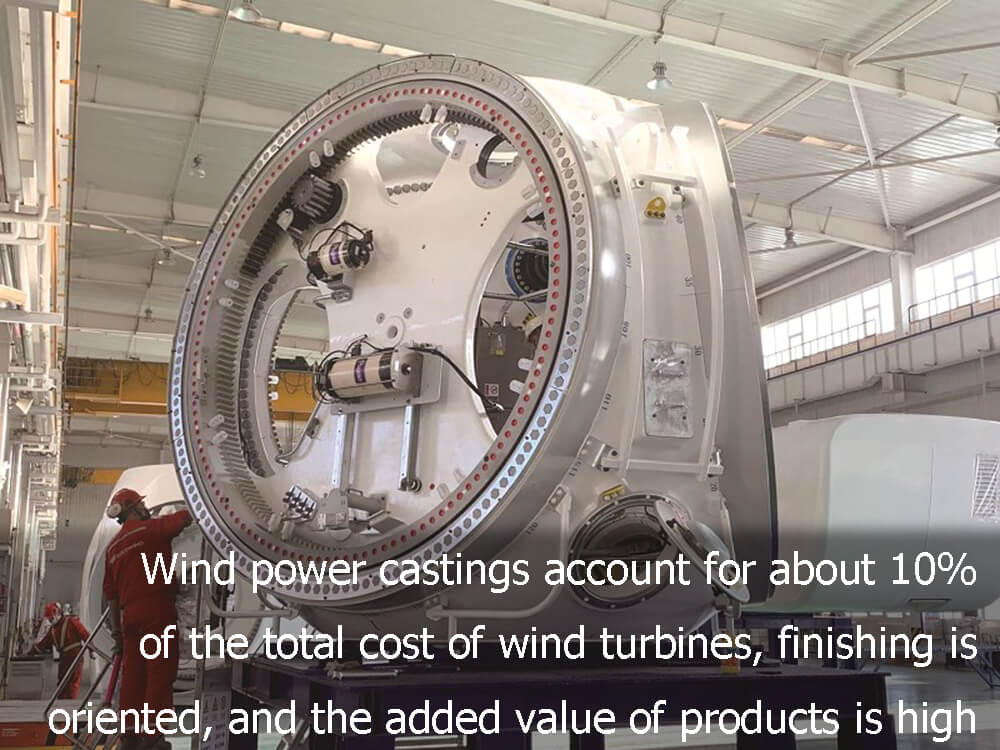
Wind power castings account for about 10% of the total cost of wind turbines, finishing is oriented, and the added value of products is high. Wheel hub, base, nacelle floor, gearbox parts (box body, torsion arm, planetary carrier), main shaft (switching from forging to casting after large-scale), etc. in fan parts
They are all casting products, accounting for about 10% of the total cost of the fan. Casting products are guided by customization and finishing, craftsmanship is the core barrier, and customers are bound by product quality.
Riyue shares: significant production capacity advantage, leading profit
Strengthen the finishing layout to achieve one-stop delivery and improve the company’s profitability. Since July 20, the company’s large-scale casting finishing capacity has been gradually released. It is expected to achieve a finishing capacity of 220,000 tons in 22 years.
A large-scale casting finishing project with an annual output of 220,000 tons is under construction, and it is expected to form a finishing capacity of 440,000 tons after it is put into operation to meet customers’ “one-stop” delivery needs.
At the same time, the gross profit margin of self-finished products is 10-15pct higher than that of outsourced finishing and blanks. The release of production capacity of self-finishing will help the company to obtain profits from the finishing process and improve the company’s profitability.
Spindles
The replacement of production in China has been completed. The structure of Jinlei and Tongyu Heavy Industry: Jinlei covers 1.5-8MW wind power spindles. In 21 years, the sales of Jinlei spindles are 147,000 tons, an increase of 18%, and the revenue is 1.51 billion yuan, an increase of 9%.
Sales of wind power spindles (excluding entrusted processing) correspond to 24GW of newly installed capacity, an increase of 26%, with a global market share of about 26% in 2021. Tongyu covers 1.5-5MW wind power spindles, and the spindle business revenue in 21 years is 910 million yuan, a year-on-year 37%.
Flange
In 25 years, the market space has exceeded 10 billion yuan, and Hengrun is the leader in the sea
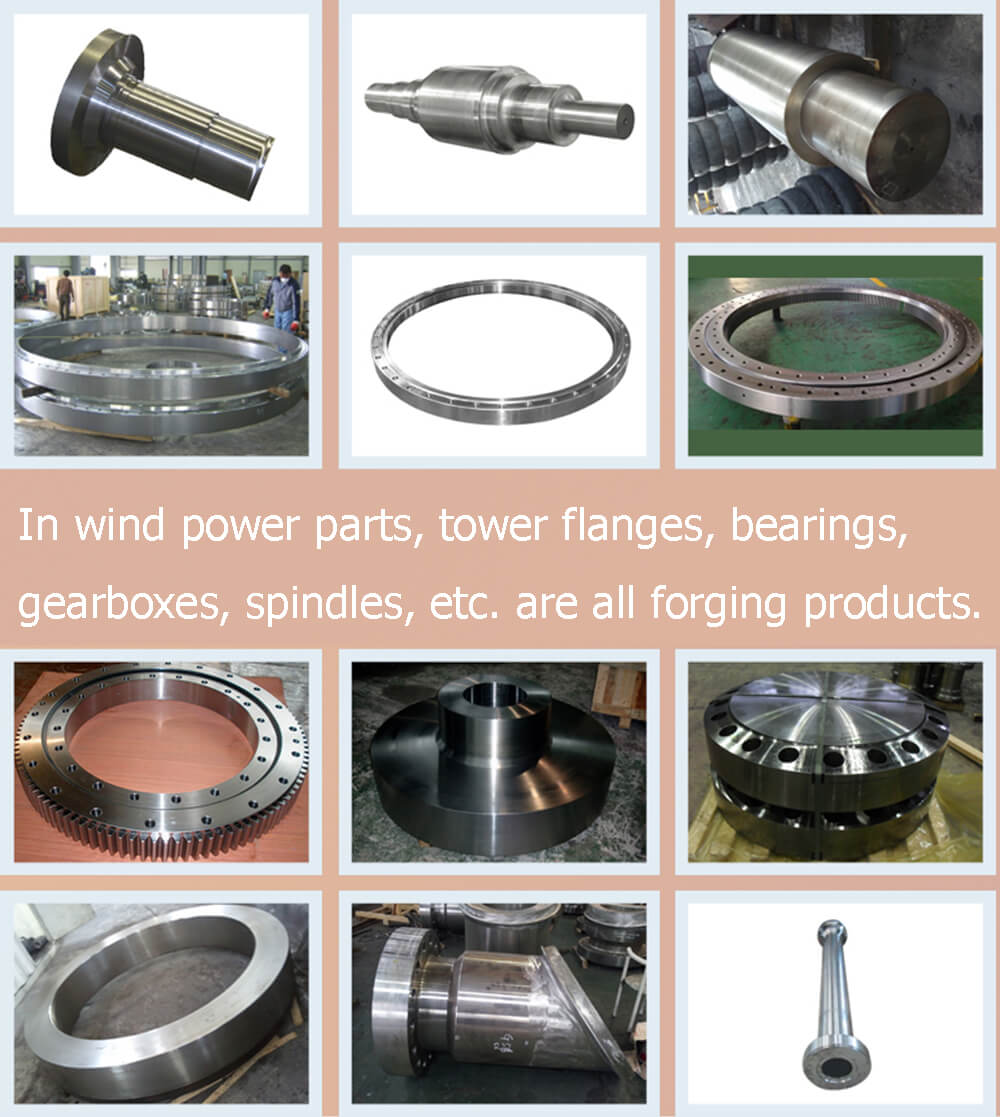
There are many types of forgings. The tower flanges, bearings, gearboxes, and spindles in wind power components are all forgings, and manufacturers have their own business priorities. Hengrun Co., Ltd. focuses on wind power tower flanges and offshore large megawatt finishing forgings.
Zhonghuan Hailu focuses on bearing forgings and flange forgings, Haiguo focuses on gearbox transmission products and tower flange products, Jinyuan Equipment focuses on gearbox forgings, and Jinlei focuses on spindles.
Blades
The competitive landscape is relatively fragmented, and the global players are diverse. China’s CR3 exceeds 67%: other countries’ companies LM (GE) and TPI occupy the global leader position, and the CR2 in 20 years is about 35%. There are 10 specialized blade enterprises in China, of which CR3 is about 65% in 20 years.
Sinoma Technology is the leader in China, and its market share has been No. 1 for 9 consecutive years and has continued to increase. It has a market share of about 30% in 20 years, and its leading position is stable.
Times New Materials, Zhongfulian State-owned holding company ranked second or third, Ailang Technology and Tianshun wind energy private enterprise ranked fourth or fifth.
Related articles: wind turbine battery, powerwall battery (home energy storage for solar and wind power)