Skip to content


The first stage of battery swap-difficult exploration period
When it comes to changing electricity, we must mention one person first. The first person in China to change electricity: Zhang Jianping.
In 2011, Zhang Jianping, who was the first to battery swapping for electric vehicles, at that time his company was called Dianba New Energy.
It is said that he is the earliest in China because Dianba New Energy was established in 2004, and Zhang Jianping’s power exchange business started in 2000, all the way from Lanzhou to Beijing to Shanghai, won the 2008 Beijing Olympic Games, the 2010 Shanghai World Expo and the Guangzhou Asian Games for the demonstration project of power exchange.
The biggest difference between a petrol car and a tram is the way of energy supply. How can you quickly install electricity into the battery like refueling, which largely determines the experience of using an electric car.
If you choose to charge, the experience will be poor for a long time. If it is slow, it will start from a few hours, and it will take half an hour to an hour for fast charging. Now the more batteries are installed, the longer the charging time, and the charging speed cannot be infinitely fast.
Replacing the battery is just the opposite. It can be done in a few minutes, even faster than refueling. The principle is no different from the four-wheel drive when I was a child.
The greater advantage of battery swapping is that it can separate the vehicle and electricity and reduce the purchase cost. Because the battery is the most expensive part of an electric vehicle, if the battery is planed out, the body will be much cheaper. life, vehicle operation efficiency and other advantages.
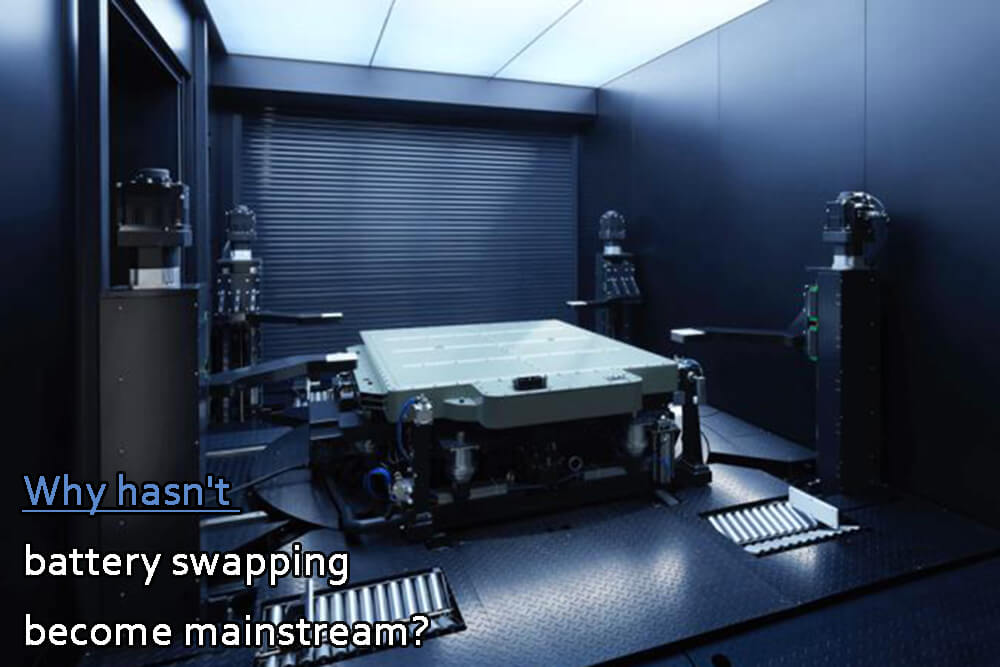
Why hasn’t battery swapping become mainstream
The 2008 Olympic Games opened the prelude to battery replacement, but at that time, most people had never heard of electric vehicles, and the entire industry was in the early stage of exploration and demonstration.
In 2009, China formulated a pilot program of “10 cities and 1000 vehicles” for new energy vehicles. For the first time, 13 cities participated, and then continued to expand to 25 and 88. During this period, various new models and new technologies blossomed, charging and replacement. Electricity also went hand in hand and entered a large-scale construction pilot.
In addition to the Dianba New Energy mentioned above, companies such as State Grid, Lifan Motors, Xinxiang Xinneng, BetterPlace and other companies have implemented battery swapping demonstrations in many places in China. Tesla also showed off a 90s in 2013. Replacing the battery was just a show, not implemented.
In 2011, the State Grid determined the development strategy of “mainly changing electricity, supplementing by plugging in charging, centralized charging, and unified distribution”, and carried out a series of pilot projects. For example, taxis are exchanged for electricity, sanitation vehicles are exchanged for electricity, Qingdao Xuejiadao is exchanged for power stations, and buses are exchanged for electricity; there is also an electricity exchange network that has begun to take shape in Hangzhou.
Here I would like to mention an old friend who is also an absolute predecessor in the power exchange industry – Nie Liang. In 2012, he was the general manager of Hangzhou Electric Vehicle Service Company, a subsidiary of State Grid. He has built more than 60 power exchange stations in Hangzhou. At that time, China’s largest battery swapping demonstration network.
Speaking of power exchange, BetterPlace, who was born in Israel, has to mention that it was a hot global entrepreneurial project at that time. Its founder Xia Jiaxi was even more famous. At the age of 25, he sold his software company Toptier to SAP for 400 million US dollars.
In 2007, Betterplace was founded, and Simon Perez, the former general manager of Israel, was brought in for its platform, and it raised US$850 million, and Renault of France cooperated with it to produce battery-changing models for it.
Its ambition is to implement the electric vehicle operation road of the battery swapping mode globally.
In 2011, BetterPlace signed a contract with China Southern Power Grid to build a power exchange experience center in Guangzhou. Unfortunately, the second power exchange station has not been built yet. BetterPlace filed for bankruptcy in Israel in May 2013 due to the difficulty in balancing the return on investment.
However, in the “Energy Saving and New Energy Vehicle Industry Development Plan (2012-2020)” released in 2012, China no longer mentioned the battery swapping mode, but established a charging-based energy supplement path.
The second stage of battery swapping-silent period
In 2013, companies that explored the power exchange model closed down or stopped investing. The big brother State Grid, which took the lead, also stopped implementing power exchange due to strategic adjustments. The power exchange industry entered a silent dormancy for 5-6 years and slowly retreated to a corner. No longer attracted attention, charging all the way to sing.

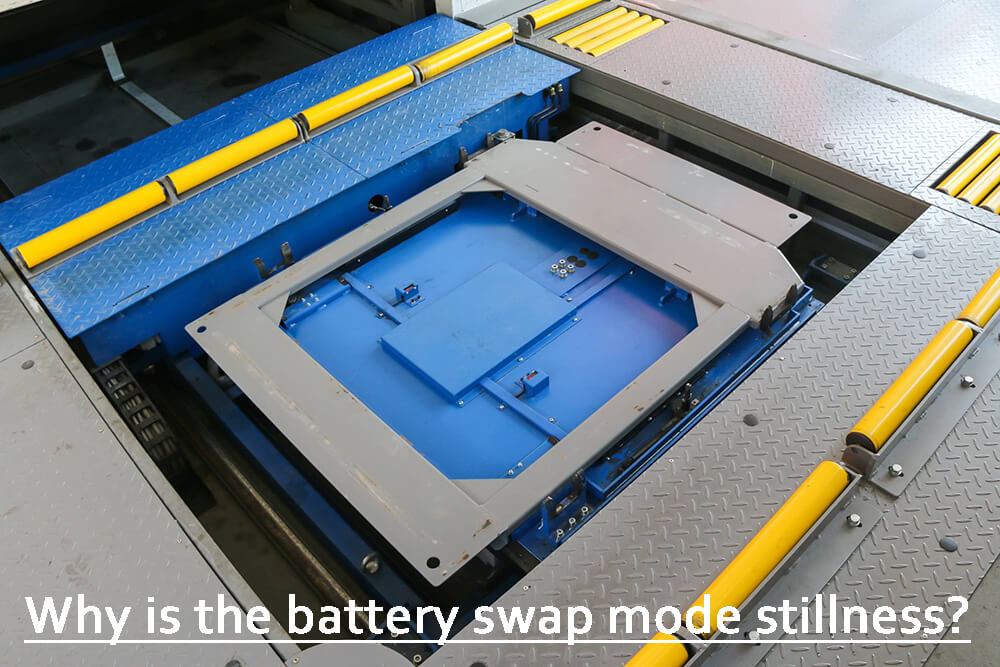
Why is the battery swapping mode stillness
In addition to the above-mentioned changes in policy guidance, another reason is that in 2014, State Grid announced the opening of social capital to enter the charging infrastructure market.
The entry of private capital has made the construction of charging piles soar. The current charging giant Te Call and Xingxing Charge were also established in this year.
But these are all external factors. The core reason is the power exchange mode itself, because the power exchange mode needs to form an operation ecology, and someone has to do the power exchange equipment and the operation of the power exchange station.
There are OEMs that develop matching battery swapping models, and there are companies or individuals willing to buy battery swapping vehicles. The difficulty of integrating this resource can be imagined.
Therefore, when the power exchange wants to land in a city, the operator of the power exchange station hopes that a car will land on the ground, the OEM hopes that someone will buy a power exchange model, and the buying company or individual hopes to have a suitable power exchange model and more power exchange stations.
Whether it is building a station, building a car or buying a car, it is not a small sum of money. These contradictions make the cold start of power exchange in any city very difficult, and it also involves the question of who will lead the coordination.
This triangle of interest makes it easy to fall into the dilemma of “Which came first, the chicken or the egg?” when changing electricity.
Another major factor is policy, because there are obstacles in various aspects such as announcement and declaration of battery swapping vehicles, vehicle supervision, battery traceability, subsidy settlement, insurance billing, vehicle scrapping, tax collection and so on.
Another factor is that everyone talks a lot. The battery replacement method and battery standards are not unified, and various models are not compatible with each other, which makes it impossible to quickly expand the battery replacement scale to reduce costs.
Charging is different. Because the standards are unified, all parties are independent from each other, and there is no need for complex coordination of interests. Operators can build as long as they have a place. This is also a major reason why charging stations can develop so fast.
During the period from 2014 to 2019, although the power exchange entered a period of silence, the fire was still retained, and some people persisted. In 2016, through the introduction of investment by Zhang Jianping, Dianba became a subsidiary of Aodong New Energy.
During this period, Aodong cooperated with BAIC New Energy to carry out the operation of battery swapping taxis in Beijing, Xiamen, Guangzhou and other places.
The aforementioned Nie Liang also left the State Grid later, founded Bertan Technology in 2014, and started his power exchange business. He continued to implement the sub-box power exchange model he believed in, and started the power exchange operation of online car-hailing and logistics vehicles, and now there are thousands of vehicles.
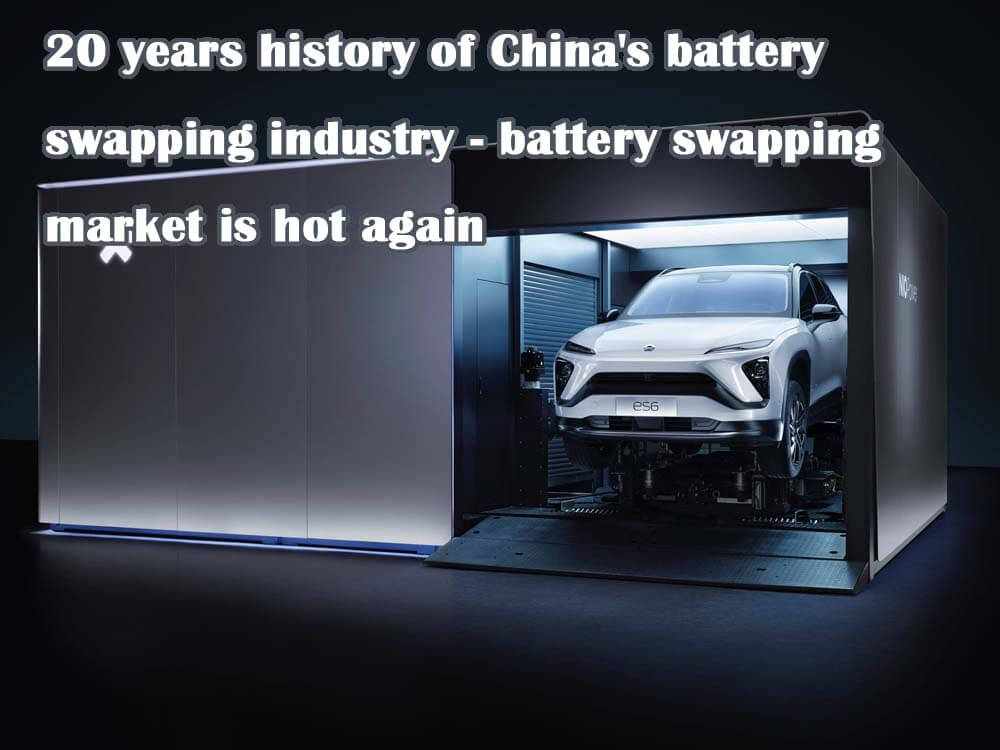
During this period, another major contributor to the popularity of battery swapping was NIO, which was established in 2014. NIO pushed the battery swapping model to the private consumption field.
In the past, electricity battery swapping were all aimed at online car-hailing, taxis, buses, logistics vehicles, etc., because these are relatively easy to achieve scale effects, and the excessive dispersion of private consumers will lead to a huge increase in costs.
NIO chose the most expensive self-built power exchange system, owning its own car, building its own station, and providing its own power exchange service. Although this choice has burdened NIO with huge cost pressures, of course, it also allows current NIO owners to enjoy With the exclusive power exchange service, power exchange has also become one of NIO’s exclusive moats.
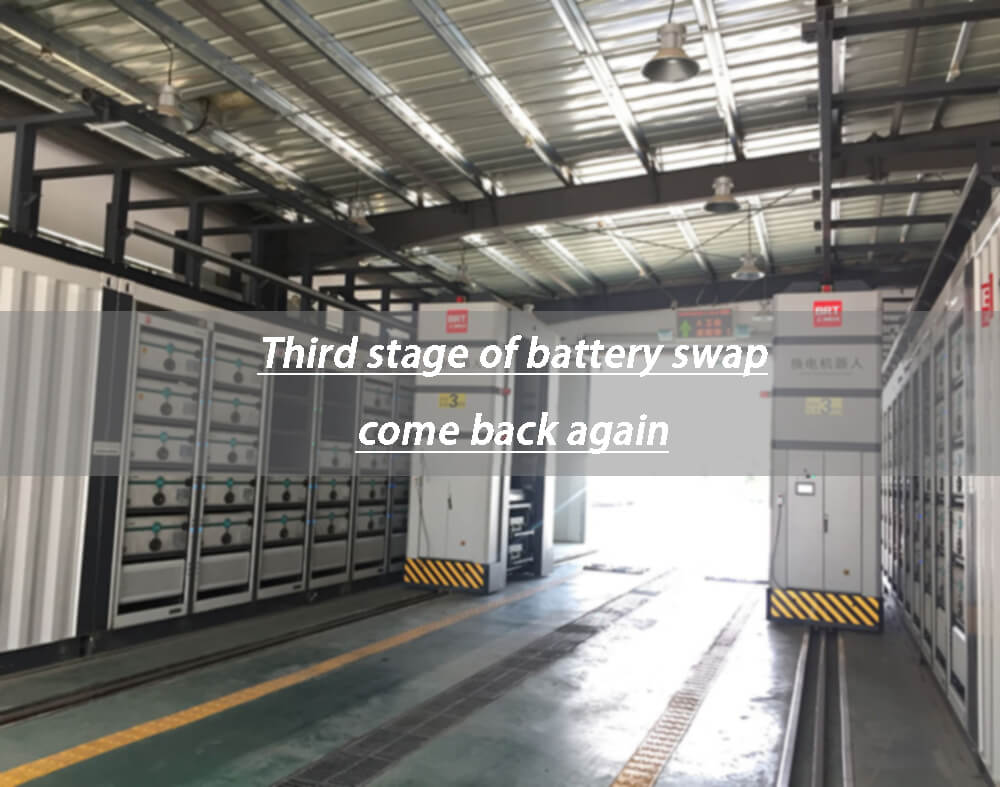
Third stage of battery swapping- come back again
A clear signal is the constant mention and push of policy.
In December 2018, four departments including the National Development and Reform Commission issued a notice on the Action Plan for Improving the Charging Support Capability of New Energy Vehicles (Fa Gai Energy [2018] No. 1698), proposing to “continue to explore electric vehicles in specific fields such as taxis and rental cars. Car battery swapping mode application”.
In October 2019, the National Development and Reform Commission revised and issued the “Industrial Structure Adjustment Guidance Catalogue (2019 Version)”, which clearly added the power exchange technology route to encouraged development projects (Item 16, Article 4).
In December 2019, the “New Energy Vehicle Industry Development Plan (2021-2035)” clearly stated that “reasonable layout of charging and swapping infrastructure…encourages the application of battery swapping models”.
In April 2020, the Ministry of Finance and other four ministries and commissions jointly issued a new policy on new energy subsidies, stipulating that new energy vehicles with a starting price of more than 300,000 yuan will no longer enjoy subsidies, except for vehicles that support the battery swapping mode.
In May 2020, as an important part of the new infrastructure, the battery swapping station was written into the “Government Work Report” for the first time. The original expression of “building charging piles” was changed to “increasing charging piles and swapping station facilities”.
The most practical policy promotion is in October 2021, when the Ministry of Industry and Information Technology decided to start the pilot application of the battery swapping mode for new energy vehicles in 11 cities including Beijing, Wuhan, Nanjing, Chongqing, Changchun, Sanya, Jinan, Tangshan, and Hefei. The goal of the first batch of pilot projects is to promote more than 100,000 battery swapping vehicles and more than 1,000 battery swapping stations.
In November 2021, the national standard “Safety Requirements for Electric Vehicle Battery Replacement” was officially implemented, which is the first general national industry standard formulated by my country’s automobile industry in the field of battery replacement.
In January 2022, ten national ministries and commissions jointly issued the “Implementation Opinions on Further Improving the Service Guarantee Capability of Charging and Swapping Infrastructure”, indicating that the promotion and application of the battery swapping model should be strengthened.
As a result, the market has become hot, and large companies such as SAIC, Dongfeng, Changan, GAC, Geely, GCL, Sinopec, and State Power Investment have flooded in all at once, including the battery giant “CATL”.
The company’s goals are also more aggressive. For example, NIO announced that it will target more than 4,000 battery swapping stations in 2025, Sinopec’s target of 5,000 battery swapping stations in 2025, GCL’s 6,000 battery replacement stations in 2025, and Aodong’s 2025 target of 10,000 battery replacement stations.
Why is battery swapping coming back
We analyze the reasons for 3 reasons:
First, strong policy support and corresponding obstacles are gradually removed. The most typical example is that in August 2020, Weilai Automobile issued 2 invoices for the separation of vehicle and electricity, which means that privately purchased battery swapping models have to be licensed, insurance, loans, etc., all have to follow.
Second, the economics and business model of battery swapping are becoming clearer. With the decline in the cost of the industrial chain, in some specific scenarios, the economics of battery replacement can gradually be calculated. For example, the taxi battery replacement of Aodong New Energy has achieved break-even in Guangzhou, Xiamen and other places.
Third, the exploration of the battery swapping mode is more in-depth and grounded. Previously, battery swapping was only used for operating vehicles in To B fields such as public transportation, taxis, online booking, and logistics. NIO has brought battery swapping to the private consumption field, and even established a BAAS model for battery asset operation, traversing a path that no one has ever taken.
It is foreseeable that with more and more enterprises participating in the application of the power exchange model in To B and To C, under the dual promotion of policy and market, the power exchange network will become more and more perfect, the economy will become more and more prominent, the purchase cost will become lower and lower, the user experience will become better and better, and the operation efficiency will become higher and higher…

Will the battery swapping be successful? I don’t think battery swapping is a single technical issue, it is a matter of many aspects such as regulations and policies, industrial ecology, and market recognition. Next, more companies and capital are needed to participate, to remove more obstacles, and to explore more possibilities.
Power exchange will also develop towards diversification, standardization and sharing, and will become a market of hundreds of billions or even trillions.
Today, I would like to thank those entrepreneurs and entrepreneurs who are desperate and persevering. Fortunately, their spring has come…