Skip to content
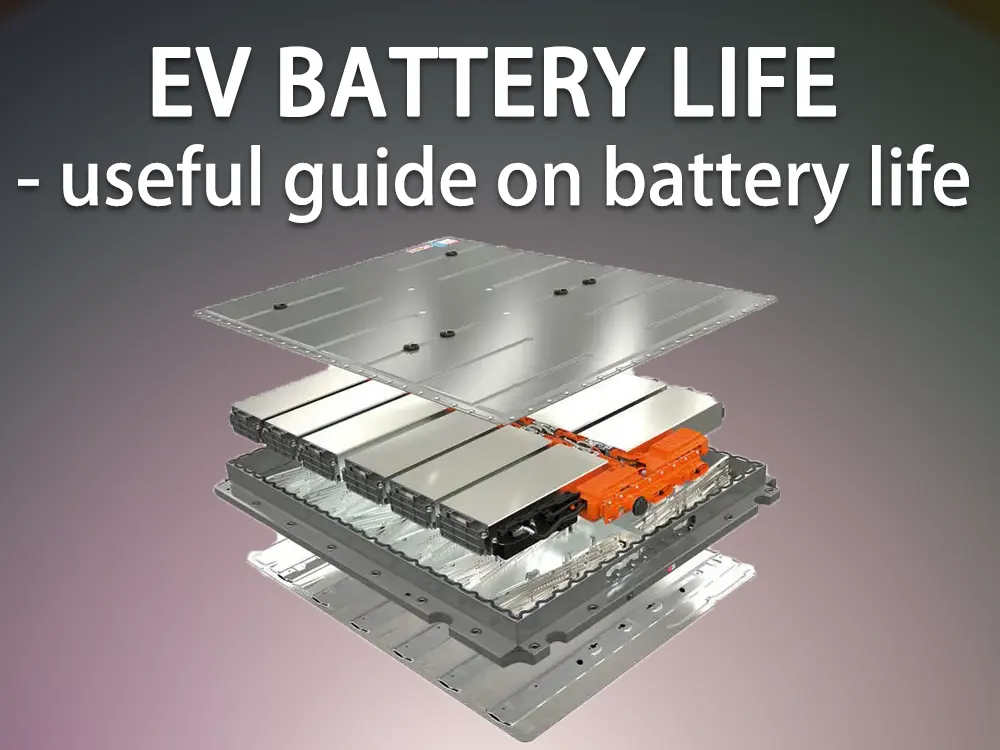


After the tram has been used for a period of time, the battery loses power faster and faster. Why? Every time I charge the battery, no matter how much it is charged, does it count as a consumption of cycle life? Here are some of the most common questions about EV battery life.
What does battery life mean
Battery life means to the period of time, or number of cycles, that a battery can maintain to meet specified performance requirements under normal usage conditions. EV battery life is affected by many factors, including the condition of the battery, charging and discharging patterns, temperature, etc. Here are some common EV battery life metrics:
Cycle life: Cycle life is the number of times a battery can perform a complete charge and discharge cycle. Each charge and discharge cycle will slightly reduce the battery capacity. Cycle life is usually measured by the number of charge and discharge cycles. For example, 1000 cycle life means that after the battery is charged and discharged 1000 times, its capacity will decrease to a certain percentage of the initial capacity.
Capacity fade: Capacity fade refers to the gradual loss of battery capacity over time and use. The rate at which battery capacity fades depends on many factors, including battery chemistry, temperature, charge and discharge rates, and usage conditions. Usually, the capacity fading of the battery will lead to the reduction of its stored electric energy after a certain period of use.
Storage time: Batteries also naturally lose energy when left unused for long periods of time. Storage time is the time a battery is able to maintain its capacity and performance when not in use. Different types of batteries (lithium iron phosphate battery, ternary lithium battery, lead-acid battery, etc.) have different self-discharge rates, and batteries with high self-discharge rates consume faster during storage.
Battery life is an important consideration, especially for applications such as EV battery life, portable electronics, and renewable energy storage systems. Understanding battery life can help users use and maintain batteries properly to prolong battery life and ensure continued performance and reliability.
Why does each charge and discharge cycle cause a drop in battery capacity
The slight decrease in battery capacity and EV battery life with each charge-discharge cycle is primarily due to chemical reactions and physical changes inside the battery.
Charging process
During charging, positive ions are released from the cathode material and metal deposits form on the anode material. These processes involve the movement of ions in the electrolyte and the interaction of electrode materials. However, since chemical reactions are inevitably accompanied by some side reactions, these side reactions lead to a slight loss of battery capacity.

Discharging process
During the discharge process, positive ions will move from the cathode to the anode, generating electric current to supply external devices. This causes the ions and electrons in the electrode material to recombine, restoring the chemical energy in the battery. However, these chemical reactions are not completely reversible, so during each discharge, a small percentage of ions fail to return to their original chemical state, resulting in a slight loss of battery capacity.
This loss of capacity during the charge-discharge cycle is called capacity fade of the battery. The rate at which capacity fades depends on the battery’s chemistry, design, and usage conditions. Although battery manufacturers usually try their best to reduce the rate of capacity fading, as the number of charge and discharge cycles increases, the battery capacity will gradually decrease, which will eventually affect EV battery life, performance and range.
Therefore, in order to prolong EV battery life and maintain a high capacity, users can take some measures, such as avoiding excessive charging and discharging, avoiding excessively high or low temperature environments, using appropriate battery charger and management systems, etc. Regular battery cycle testing and proper maintenance also help to monitor and protect the battery’s capacity, EV battery life and performance.
Why not overcharge and overdischarge
Excessive charging and discharging can negatively affect the health of the battery and EV battery life. Here are some reasons:
Chemical reaction damage:
The chemical reactions inside the battery take place during charging and discharging. When a battery is charged to a state of charge that is too high or discharged to a state of charge that is too low, these chemical reactions can become unstable or go awry, leading to changes in matter inside the battery, loss of electrolyte, and damage to the electrodes. These changes increase the battery internal resistance, reducing the battery capacity, EV battery life, and performance.

Electrochemical corrosion:
Overcharging or discharging can cause electrochemical corrosion of the electrolyte and electrodes inside the battery. This may lead to a change in the composition of the electrolyte, forming a solid electrolyte layer or a polarized film, hindering the transport of ions and electrons, and reducing EV battery life.
Heat generation:
Excessive charging and discharging can cause the battery to generate excessive heat. Excessively high temperature will damage the chemical materials and structure inside the battery, and accelerate battery aging and capacity fading. At the same time, over-discharge may also lead to the failure of the over-discharge protection mechanism inside the battery, further damaging the stability and safety of the battery.
Reduced cycle life:
Excessive charge and discharge will increase the cycle life loss of the battery. Each charge-discharge cycle results in a slight decrease in battery capacity, and overcharging and discharging accelerates this process, leading to faster EV battery life decay and performance degradation.
Therefore, in order to protect battery health and prolong EV battery life, it is recommended to avoid overcharging and discharging. Controlling the level of charge to a moderate level and avoiding putting the battery into a state of charge that is too low, as recommended by electric vehicle manufacturers, maximizes battery protection and provides reliable performance and range.
Does the battery count as one cycle life per charge?
No, one charge per battery does not equate to one cycle life. Cycle life means that the battery completes a complete charge and discharge cycle. A complete charge-discharge cycle is when the battery is used from one specific state of charge to another specific state of charge, and then charged back to the original state of charge.
Cycle life is usually measured in the number of complete charge and discharge cycles. Lithium battery manufacturer usually provides a cycle life index for the battery. Therefore, each charge is not directly counted as a cycle life. Cycle life is measured based on the number of complete charge and discharge cycles.
However, how and how much each charge is made can have an impact on EV battery life, so following manufacturer recommendations and best practices is still recommended to preserve battery health and prolong EV battery life.
How does the overcharge and overdischarge protection of EVs work?
The overcharge and overdischarge protection of electric vehicles is designed to protect the safety and performance of the battery system. These protection features are designed to avoid overcharging or overdischarging the battery, thereby extending EV battery life and ensuring proper vehicle operation. Here is some basic information about overcharge and overdischarge protection:
Overcharge protection:
Voltage monitoring: The BMS of the vehicle will monitor the voltage of the battery. When the battery voltage exceeds the safe range, BMS will take measures to prevent further charging to avoid overcharging.
Charging cut-off: BMS can stop charging after the battery reaches the set maximum voltage to prevent the battery from continuing to accept current. This prevents the battery from overcharging and reduces safety risks.

Overdischarge protection:
Voltage monitoring: BMS will also monitor the voltage of the battery. When the battery voltage drops to a safe level, the BMS will take measures to prevent further discharge to avoid over-discharge.
Power-off protection: When the battery voltage is too low, the BMS will cut off the connection between the battery and the vehicle to prevent further discharge. This helps protect the battery from damage caused by over-discharge.
Through these overcharge and overdischarge protection measures, electric vehicles can avoid the risk of overcharging or overdischarging the battery system, improve, and ensure the safe and reliable operation of the vehicle. However, while these protections reduce risk, users are still advised to follow proper charging and usage habits to maximize EV battery life and performance.
Does the battery with overcharge protection never fully charge?
Overcharge protection doesn’t mean the battery can never be fully charged. In fact, the battery management system (BMS) of an electric vehicle will monitor the voltage of the battery and stop charging when the battery voltage is close to the set maximum safe value to prevent overcharging. This ensures that the battery does not exceed a safe range.
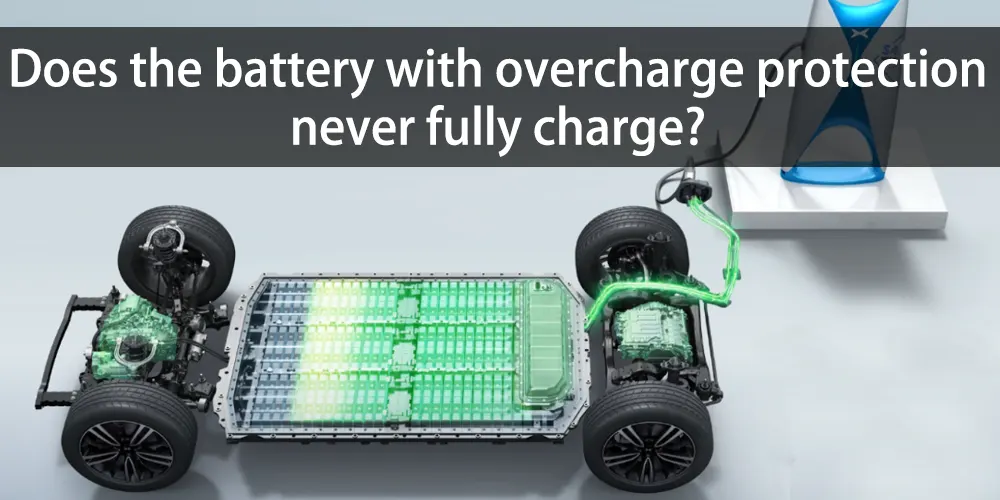
When the battery voltage approaches the maximum safe value, the BMS may reduce or stop charging to prevent continuous supply of current to the battery. This avoids battery overcharging, prolongs EV battery life, and reduces safety risks. Charging will resume once the battery voltage drops within a safe range.
Therefore, overcharge protection is designed to ensure that the battery remains within a safe range while charging, not to prevent the battery from being fully charged. When the battery power is close to 100%, BMS will take measures to control the charging speed or stop charging to protect the health and safety of the battery. This helps prolong EV battery life and ensures proper vehicle operation.
Does the battery power never reach 0 with overdischarge protection?
Overdischarge protection is designed to prevent the battery from getting too low to protect the health and performance of the battery. The BMS of the electric vehicle will monitor the voltage of the battery and take measures to prevent further discharge when the battery voltage drops to the set minimum safe value.
When the battery voltage drops to a set minimum safe value, the BMS may cut off the battery from the vehicle to prevent further discharge. This prevents the battery from being overdischarged from compromising EV battery performance and EV battery life.

However, that doesn’t mean the battery can never be used to 0%. The minimum safety value of the BMS usually leaves a certain margin, that is to say, although the meter shows 0%, there is still a safety margin in the battery to ensure that the battery will not be damaged by over-discharge to ensure that the battery remains within a safe range. When the battery power is close to the minimum safe value, the BMS will take measures to stop using the battery power to protect the health and performance of the battery.
Users are often advised not to drain the battery completely, but to charge the battery when it is low to protect the battery and prolong EV battery life. Doing this ensures that the battery is operating within the proper charge range and provides good performance and reliability.