Skip to content


Lithium ion battery
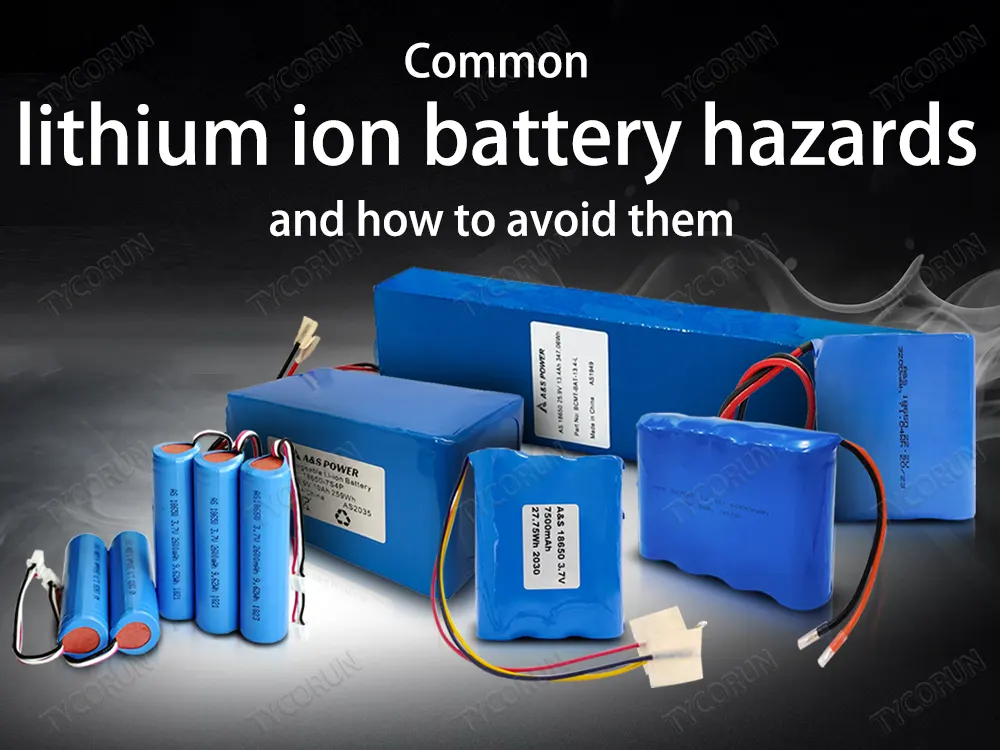
The growing popularity of Li-ion batteries is attributed to several factors.
As one of the best rechargeable battery types, users can recharge them hundreds to thousands of times, are relatively low cost, have high energy density, and are portable.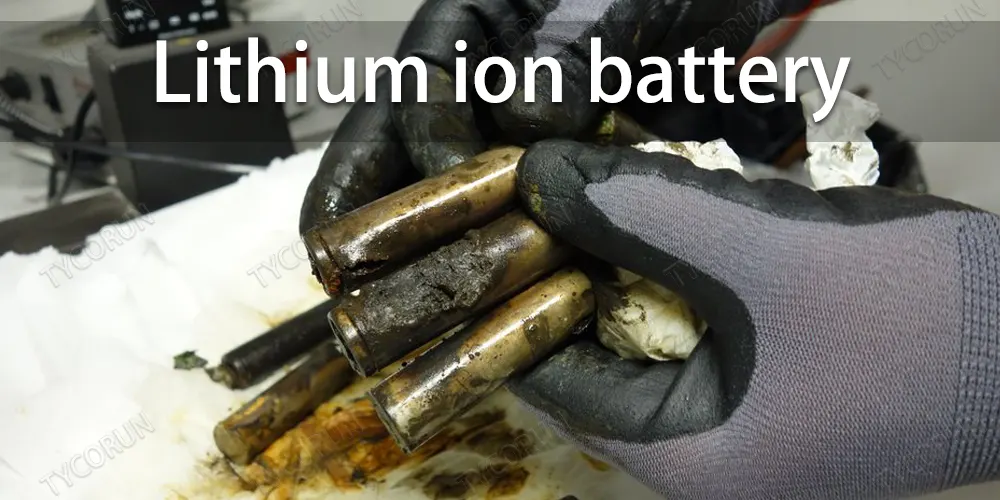
They are widely used in power tools, mobility products such as electric bicycles and electric scooters, robots and energy storage systems. However, like any battery, lithium batteries carry certain safety risks and lithium ion battery hazards can cause safety issues if not used or handled correctly.
Hazards associated with lithium ion batteries
Thermal runaway
One of the most obvious hazards of Li-ion batteries is thermal runaway. Thermal runaway caused by battery overheating is the main cause of fire in lithium-ion batteries, which often occurs during battery charging and discharging.
A lithium-ion battery is a whole composed of multiple single cells. When the battery temperature is in a state of continuous heating, a large amount of heat energy generated during the energy supply process gathers in the narrow battery box.
When it exceeds its normal operating temperature and tolerance limit, it will seriously damage the service life of the lithium-ion battery, and even cause the thermal runaway of the lithium-ion battery to catch fire or explode.
Improper use
Improper use is another major cause of lithium ion battery hazards. It is specifically reflected in several major reasons such as overcharging, overdischarging, and external short circuit.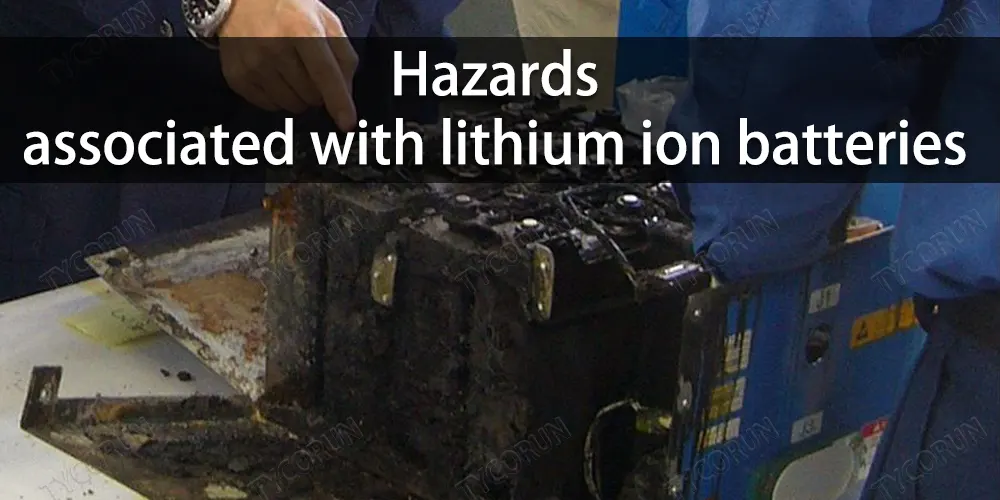
Compared with external short circuit and overcharging, overdischarging is relatively less harmful to lithium-ion batteries. The growth of copper dendrites during discharging will reduce the safety of batteries and indirectly increase the probability of thermal runaway.
Physical damage
Physical damage is also a common cause of lithium ion battery hazards.
When an electric vehicle has a traffic accident, it will produce different degrees of collision. And strong external force factors will also act on the lithium-ion battery at the same time, making the lithium-ion battery box deformed and damaged.
Parts of the battery itself were displaced or damaged, and the battery’s separator was torn causing an internal short circuit and flammable electrolyte to leak out.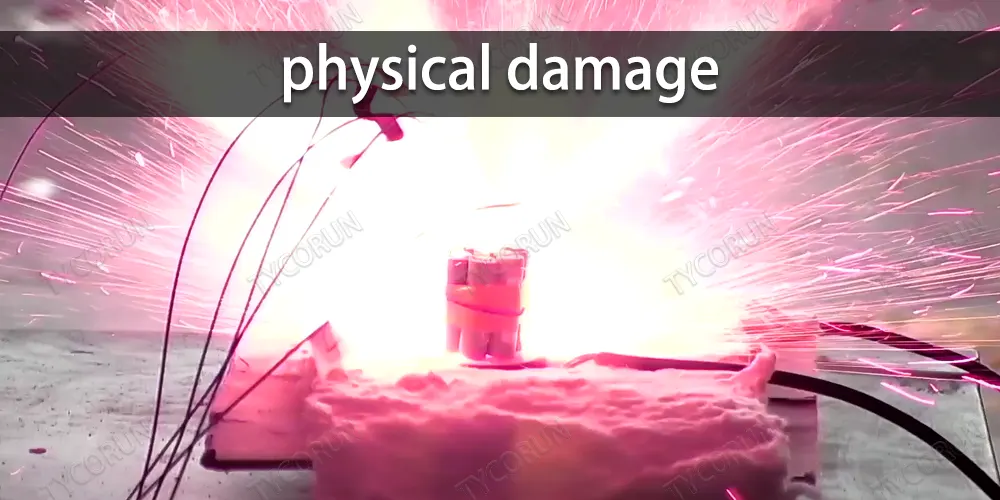
High temperature environment
Excessive external ambient temperature is also one of the causes of thermal runaway accidents in lithium-ion batteries.
When the external environment is too high, the heat dissipation of lithium ions themselves is intensified and cannot be effectively dispersed.
The accumulation of internal and external thermal pressure leads to the destruction of the temperature control system of lithium ions, which cannot achieve the proper protection effect, resulting in short circuit and thermal runaway.
Safety measures to prevent lithium ion battery hazards
Lithium batteries are safe when used and handled correctly. Here are some common lithium battery safety considerations:
Choose a good battery
When buying batteries, don’t blindly pursue battery life and cheapness, but choose lithium battery manufacturers with rich experience and certified battery products.
In order to make the safety more secure, you can choose to consider using a more stable lithium iron phosphate battery.
Proper storage and transport
During transportation, you should pay attention to moisture-proof, moisture-proof, avoid extrusion, collision, etc., so as not to damage the battery.
It is forbidden to store in a place with strong static electricity and strong magnetic field, otherwise it will easily damage the battery safety protection device and bring unsafe hidden dangers.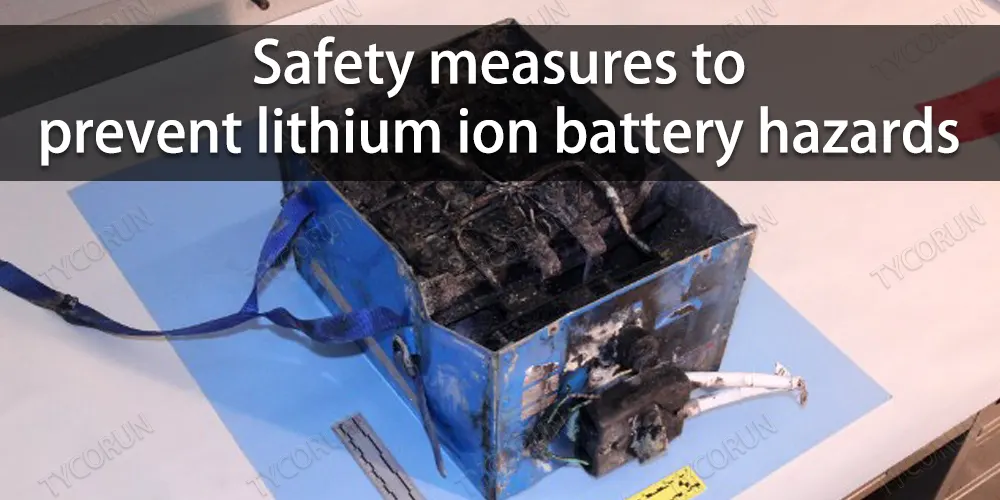
If the battery emits peculiar smell, heat, discoloration, deformation, or any abnormality occurs during storage and transportation, remove the battery immediately.
Avoid overcharging and deep discharging
Do not charge a lithium battery to a voltage higher than the maximum recommended, nor discharge it to a voltage that is too low. Overcharging or overdischarging may cause the battery to overheat.
Make sure to use battery charger and charging equipment that match the specifications of your lithium battery, following the manufacturer’s charging guidelines and recommendations.
Safe disposal of damaged batteries
If a large number of damaged lithium-ion batteries are not handled or handled properly, they will seriously pollute the environment, endanger human health, and may also cause safety hazards.
The recycling of used batteries can greatly reduce the negative impact on the environment. Take damaged batteries to a centralized battery recycling center instead of throwing them away.
Summary
In conclusion, lithium-ion batteries are convenient and useful, but can be dangerous if mishandled.
The risks associated with these batteries can be minimized by following the guidelines provided by the manufacturer and taking proper safety precautions.
Proper storage, transportation, and maintenance are critical to ensuring the safety of Li-ion batteries. By taking precautions, you can enjoy the benefits of lithium-ion batteries while minimizing the risks associated with their use.