Skip to content
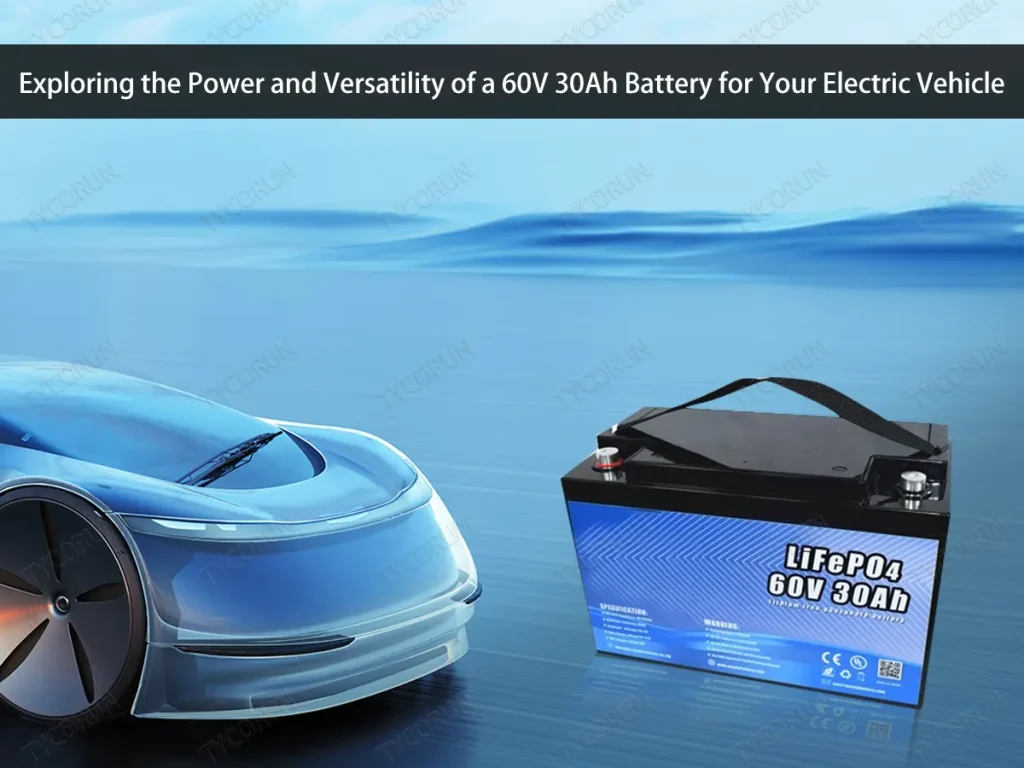

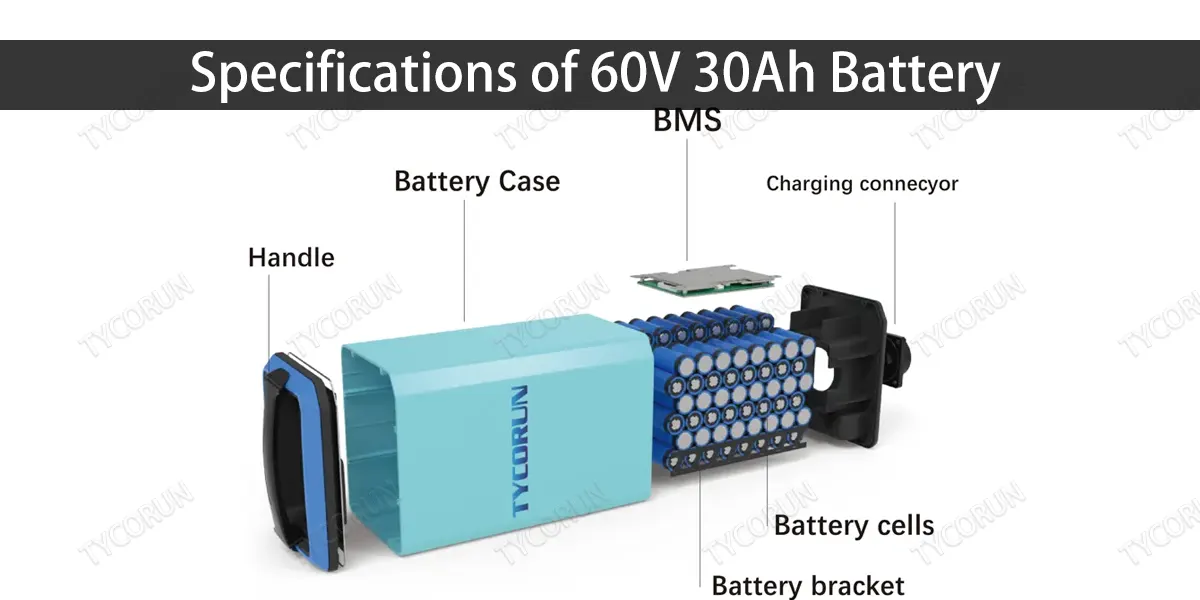
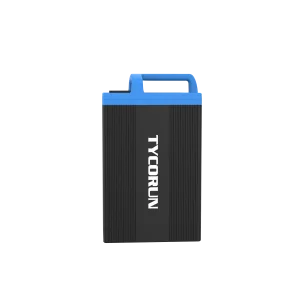
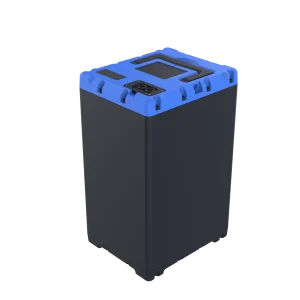
Voltage: 60V
Rated capacity: 30Ah (Ampere-hour)
Energy: 1800Wh (Watt-hour)
Weight: Varies depending upon the sort of cells used (around 12-18 kg)
Dimensions: Varies based on design and manufacturer
Cycle Life: 800 to 3000 cycles (depends upon the type of cells)
Charging Time: Normally 4-8 hours depending on the charger
Discharge Current: Generally around 30-60A steady, with peak currents up to 100A or more.

A 60V 30Ah battery works by storing electrical energy in a chemical form and subsequently chemical form it back into electrical energy when required. The battery consists of several
individual cells, each containing an anode, cathode, electrolyte, and separator. When the battery is discharging, lithium ions move from the anode to the cathode through the electrolyte, creating an electric current.

- NCM Battery
Energy Thickness: High
Cycle Life: Moderate (1000-1500 cycles)
Weight: Moderate
Prosperity: Moderate (requires a robust BMS)
Cost: Moderate to High - NCA Battery
Energy Thickness: Incredibly High
Cycle Life: Moderate (1000-1500 cycles)
Weight: Lightest among the three
Prosperity: Moderate (requires careful management)
Cost: High - LFP Battery
Energy Thickness: Lower than NCM and NCA
Cycle Life: Incredibly High (2000-3000 cycles)
Weight: Heavier
Prosperity: Incredibly High (naturally safer thermal stability)
Cost: Moderate
Choosing between a 48V LiFePO4 battery and a 60V battery depends on your specific needs.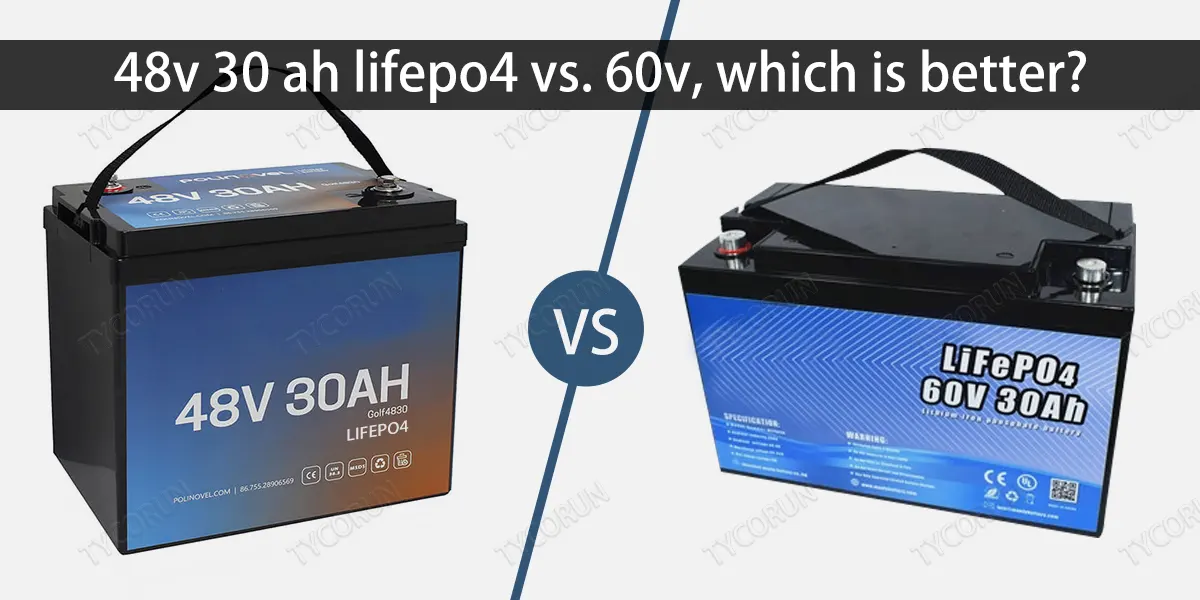
- Power and Execution: A 60V battery offers higher power output, making it suitable for applications requiring more speed and power, such as high-performance electric bicycles.
- Range: A 60V battery typically provides a longer range due to its higher voltage.
- Closeness: The choicealso depends on the compatibility of the battery with your vehicle’s motor and controller.
- Security: Both battery types are safeguarded, but LiFePO4 (used in the 48V battery) is known for its superior thermal and chemical stability.
- Cost and Weight: A 48V LiFePO4 battery is generally less expensive and lighter, but the 60V battery offers better performance and range.
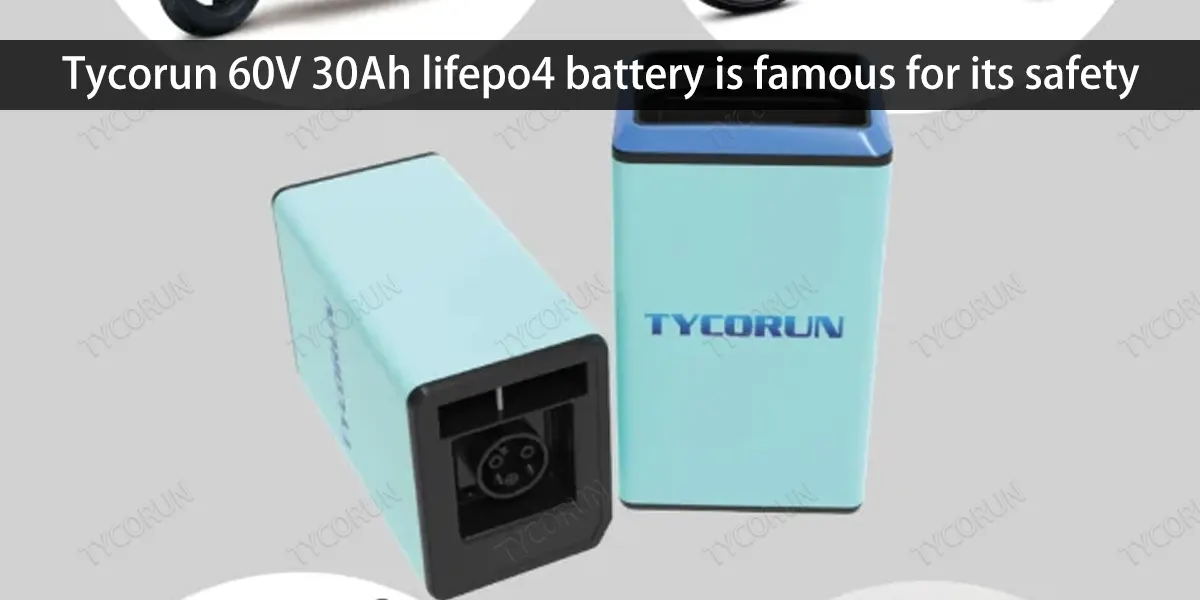
A 60V 30Ah LiFePO4 battery is a battery-fueled battery pack known for its security, long life, and strength. It’s perfect for electric vehicles, sun based energy limit, and other fame applications. With an apparent voltage of 60V and a restriction of 30Ah, it offers a nice by and large impact and energy storing, routinely getting through 2,000 to 5,000 charge cycles.
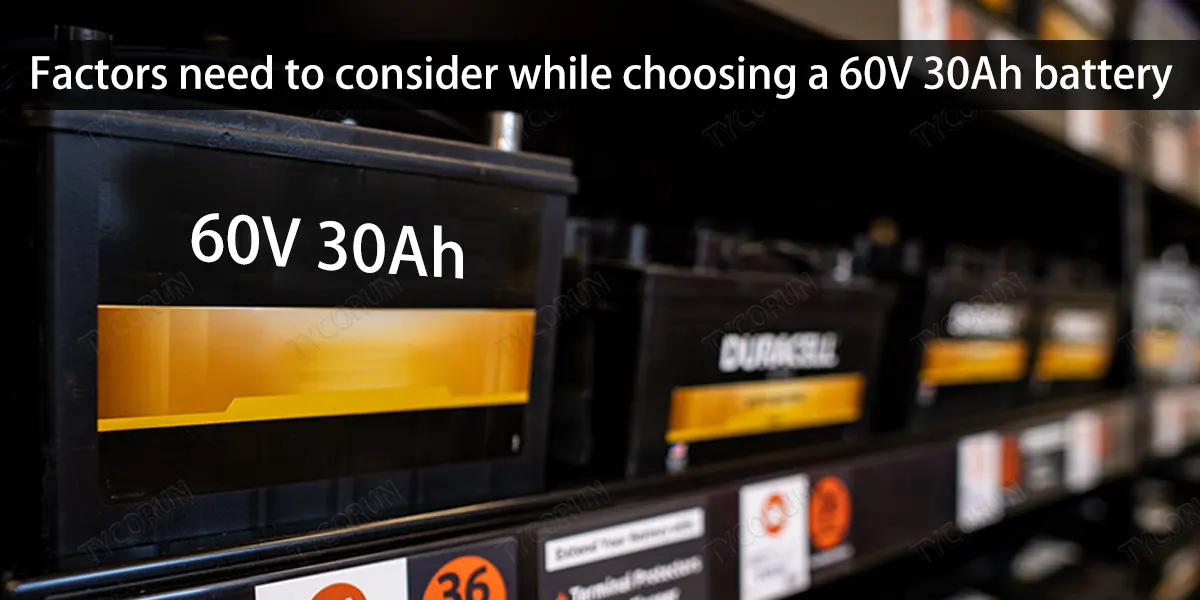 While picking a 60V 30Ah battery, a couple of factors ought to be considered:
- Cost: Batteries can be exorbitant, especially first class ones with longer cycle lives. Consider your monetary arrangement and the sum you will spend.
- Weight: heavier batteries can impact the performance and handling of your vehicle. If convenientce is a concern, choose a lighter battery.
- Range: the range is critical, especially for longer trips. A higher capacity (Ah) generally implies a longer range.
- Cycle Life: the cycle life concludes how long the battery will persevere. Pick a battery with a higher cycle life if life range is truly significant.
- Warranty: a good warranty can save you money and hassle in the long term. Look for a battery with a solid warranty period.
- Safety: safety features such as a robust BMS, thermal management, and basic protections against overcharging, over-discharging, and short-circuiting are essential.
- Compatibility: ensure the battery is compatible with your electric bicycle or vehicle.
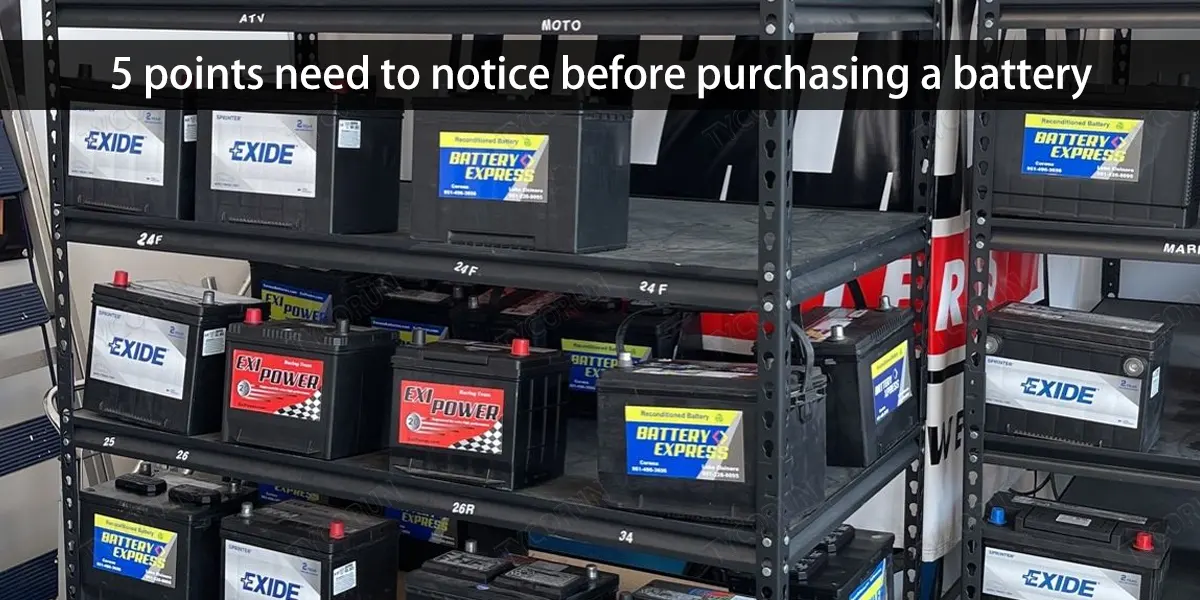
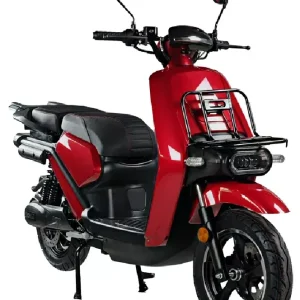
- Verify Compatibility: Ensure the motorcycle battery is compatible with your motorcycle’s motor, controller, and charger.
- Confirm Details: Double-check the battery’s specifications to ensure they meet your needs.
- Quality Certification: Choose batteries from reputable manufacturers with genuine certifications and quality control measures.
- Warranty and Support: Choose a battery with a good warranty and strong customer service.
- Battery Management System (BMS): Ensure the battery comes with an effective BMS to prevent overcharging, over-discharging, and other issues.