Skip to content
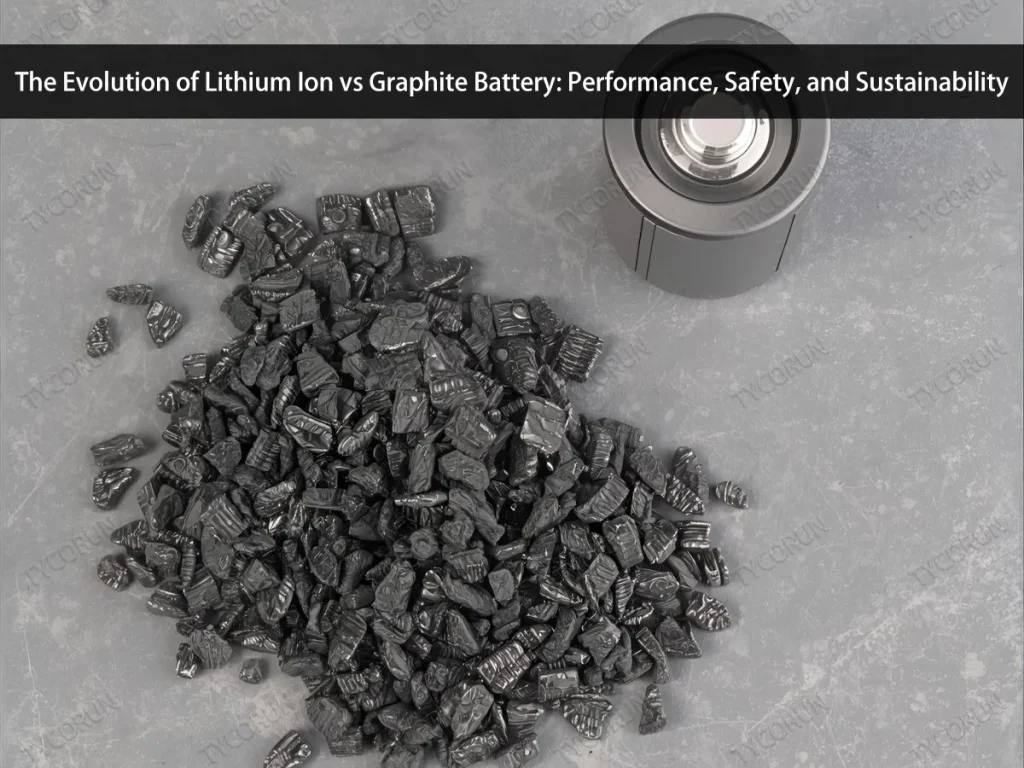
The Evolution of Lithium-Ion vs Graphite Battery: Performance, Safety, and Sustainability
In a world where portable and renewable energy sources are becoming more and more important, batteries are now the foundation of contemporary technology. From laptops and smartphones to electric vehicles, effective energy storage determines our way of life and work. Among the various technologies available, the lithium ion vs graphite battery debate is one of the most hotly debated in the industry. Graphite-based batteries are beginning to garner interest due to their potential to provide safer, more sustainable, and more affordable energy solutions, even though lithium-ion batteries have long dominated the market due to their high energy density and dependability.
The growing interest in lithium-ion vs graphite battery technology reflects a broader trend of energy storage innovation. Manufacturers and researchers are currently investigating how the two materials can work in tandem to produce longer lifespans and better performance. Knowing the differences between these two battery types and how they might change in the future provides important information about sustainability and energy efficiency.


What Are Lithium Ion and Graphite Battery?
Lithium-ion battery
Lithium-ion batteries are one of today’s most popular energy storage technologies, and they serve as the foundation for many discussions about lithium ion vs graphite battery. These systems create an effective electrical flow for a range of contemporary devices by transporting lithium ions between the anode and cathode via an electrolyte during charging and use. Its main advantages include high energy density, light weight, and fast charging, making these batteries popular in smartphones, laptops, electric vehicles, and renewable energy storage systems.
When comparing lithium-ion and graphite battery, lithium-ion also uses graphite as an anode, so the two are closely related despite their different technological focuses and applications. This explains why a lot of research is still being done on how variations in battery designs and materials can impact lifespan, performance, and safety while also creating chances for future battery innovations that are more ecologically friendly and efficient.
You can also read lithium ion battery anode material for more insight
Graphite battery
How Lithium Ion and Graphite Battery works?
Understanding how each battery operates is critical before evaluating the overall comparison of lithium-ion and graphite batteries. Both store and release electrical energy, but their underlying principles differ in a number of significant ways that impact performance and efficiency.

When a lithium-ion battery is in use, energy is generated by the movement of lithium ions from the anode to the cathode via the electrolyte, and then returned to the anode when the battery is recharged. This process allows the battery to be used repeatedly with minimal energy loss. In contrast, the energy storage mechanism in graphite batteries is primarily concerned with the flow of ions within the graphite carbon structure. Graphite has the unique ability to absorb and release ions in a stable manner, which reduces the risk of overheating and increases battery life.
While the fundamental electrochemical concepts of lithium-ion and graphite batteries are similar, the active materials and efficiency levels of the two systems vary. Lithium-ion is superior in terms of energy density and power output, whereas graphite is more thermally stable and safe. Understanding how both technologies work explains why each has distinct advantages in a variety of applications, ranging from portable electronic devices to electric vehicles and future energy systems.
The Differences Between Lithium-Ion vs Graphite Battery
Although both serve as energy sources for modern devices, lithium ion vs graphite battery differs significantly in terms of structure, performance, and intended use. Understanding these differences is critical for understanding why these two types of batteries were designed for different purposes, ranging from everyday gadgets to future energy storage technologies.
- Material composition
The most fundamental distinction between lithium-ion and graphite batteries is their main materials. Lithium-ion batteries use lithium in the cathode and graphite in the anode, whereas graphite batteries rely solely on carbon structures for conductivity. These material structures control how energy is stored and released during the battery’s operation. - Energy density
The most fundamental distinction between lithium-ion and graphite batteries is their main materials. Lithium-ion batteries use lithium in the cathode and graphite in the anode, whereas graphite batteries rely solely on carbon structures for conductivity. These material structures control how energy is stored and released during the battery’s operation. - Safety and Thermal Stability
Graphite batteries’ primary advantage is their safety. Compared to lithium-ion batteries, these batteries are far less likely to catch fire and are more resilient to high temperatures. Graphite’s high thermal stability makes it an appealing choice for applications that value operational safety. - Charging Speed and Efficiency
Lithium-ion batteries are known for their rapid charging and high efficiency. However, because graphite batteries’ carbon material is more stable and less prone to damage from heat or overcharging, they perform exceptionally well even after hundreds of charging cycles.
Advantages of Lithium Ion and Graphite Battery
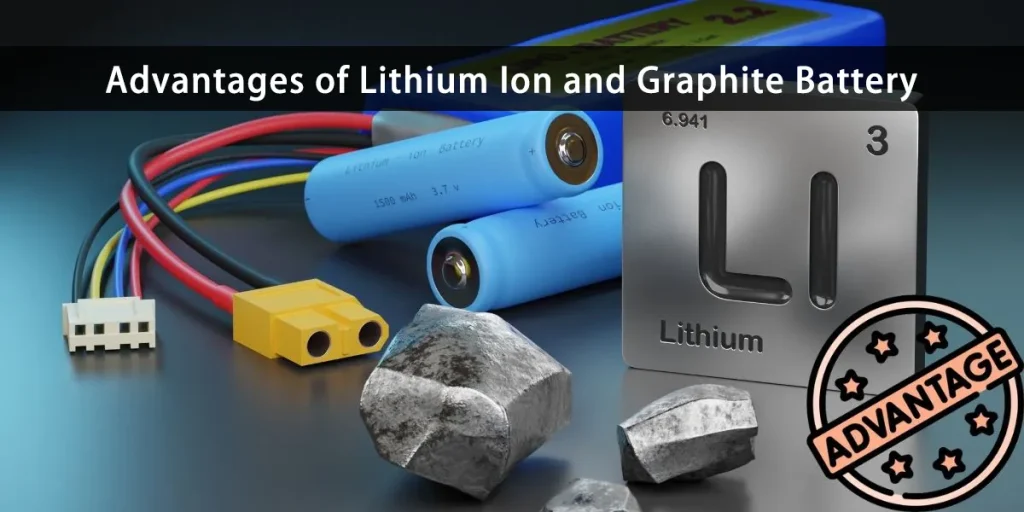
- High Power Output and Energy Density
The primary advantage of lithium-ion batteries is their ability to store large amounts of energy in a small space. Because of this, this kind of battery is utilized in electric cars and electronic devices that need to function well for extended periods of time. - Long Cycle Life and Efficiency
In the comparison of lithium-ion and graphite battery, both are known for their efficiency, but lithium-ion outperforms graphite in longer charging cycles without significant performance degradation. On the other hand, graphite is highly resistant to degradation, making it more long-lasting. - Thermal and Chemical Stability
Graphite batteries are more resistant to heat and extreme pressure. Compared to lithium-ion batteries, which run the risk of overheating if improperly managed, this is a significant benefit. Because of its stability, graphite is perfect for use in high-temperature environments and large energy systems. - Lightweight and Compact Design
Lithium-ion batteries are popular due to their lightweight and compact design. Lithium-ion batteries are obviously superior to graphite batteries when it comes to portable devices that need to be space-efficient, like laptops, cell phones, and drones. - Environmental Friendliness and Sustainability
From an environmental standpoint, graphite batteries have an advantage because their raw materials are plentiful and easy to recycle. Even though a lot of research is currently being done on safer and more effective methods for recycling lithium, waste management issues with lithium-ion batteries still exist. - Versatility in Application
The final advantage of lithium-ion batteries over graphite batteries is their flexibility of use. While graphite batteries are superior in stability and longevity for stationary or large-scale energy systems, lithium-ion batteries are appropriate for devices with high energy requirements and mobility.
Technical Challenges in Lithium Ion and Graphite Battery Performance
Although both have significant potential in the world of modern energy storage, lithium-ion and graphite batteries face a number of technical challenges that must be overcome in order to optimize their performance and durability. The following are some of the primary technical problems:
- Degradation and capacity loss: lithium ion that continue to move during the charging and discharging process can reduce battery capacity. Meanwhile, graphite batteries face a similar challenge: carbon residue buildup on the electrodes, which can impair long-term performance.
- Overheating and safety risks: Lithium ion battery can overheat or even catch fire if an internal short circuit occurs. However, even though graphite batteries are more thermally stable, using them at extremely high temperatures can reduce their conductivity efficiency.
- Energy Density Limitations: Although lithium-ion batteries are known for their high energy density, there are still limitations to increasing capacity without compromising safety. On the other hand, graphite batteries are less suitable for high-power applications like electric vehicles due to their lower power potential.
- Cost and Material Availability: Lithium-ion batteries require materials such as cobalt and nickel, which are expensive and difficult to obtain, while graphite batteries, although cheaper, still require a high purification process to maximize their efficiency.
- Charging Speed and Cycle Stability: Lithium-ion batteries charge quickly, but this speed can accelerate degradation if not properly regulated. On the other hand, graphite batteries have a slower charging speed but offer better charging cycle stability.
Which Battery Performs Better: Lithium Ion vs Graphite Battery?
Conclusion
It is possible to conclude that the comparison between lithium ion vs graphite batteries is not simply about which technology is superior, but also about how the two complement one another in meeting modern energy needs. Lithium-ion batteries continue to dominate due to their high efficiency, large capacity, and fast charging speed. However, graphite batteries are gaining popularity due to their increased safety, high thermal stability, and potential to become a more sustainable alternative.
In the future, advances in battery research are expected to combine the benefits of both technologies. Manufacturers can develop energy storage solutions that are safer, longer-lasting, and more efficient by combining the performance power of lithium-ion batteries with the eco-friendly properties of graphite, thereby supporting the global shift toward cleaner and more sustainable technology.
FAQS
Is a graphite battery better than lithium?
Both have their own strengths. Lithium-ion batteries deliver higher energy density and faster charging, making them great for portable electronics and electric vehicles. Meanwhile Graphite batteries, are safer and more stable, especially for long-term or large-scale energy use. So, which one is better really depends on the application.
Do all lithium batteries use graphite?
Yes, almost all lithium-ion batteries use graphite as their anode material. Graphite allows lithium ions to move smoothly during charging and discharging, which helps the battery last longer and perform efficiently.
Why is graphite important?
Graphite plays a key role in both lithium-ion and graphite battery technologies. It improves conductivity, keeps the battery stable under heat, and supports the development of safer and more sustainable energy storage systems.