Skip to content
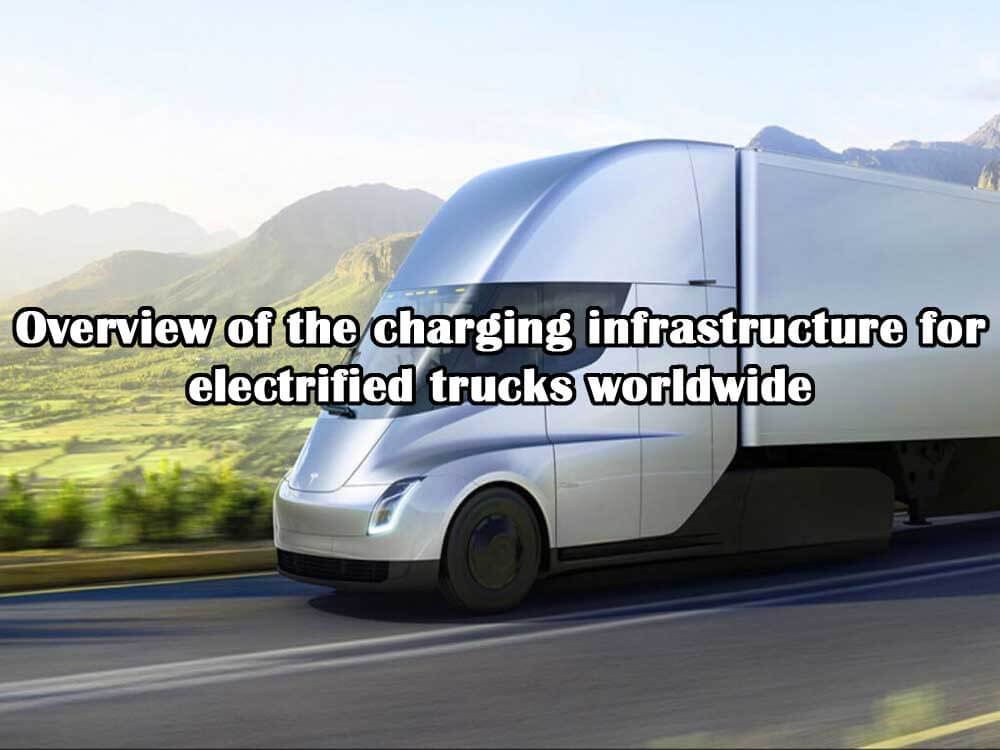
Before China began to try to replace heavy trucks, at the same time, Tesla, Europe and the United States also began to prepare a series of high-power charging infrastructure.
Unlike passenger cars, in the 2B business, the overall operational efficiency is the first consideration. Without the implementation of energy supplement facilities, the electrification of trucks cannot be promoted. Moreover, there is also a large market for electric car battery and ebike battery replacement.
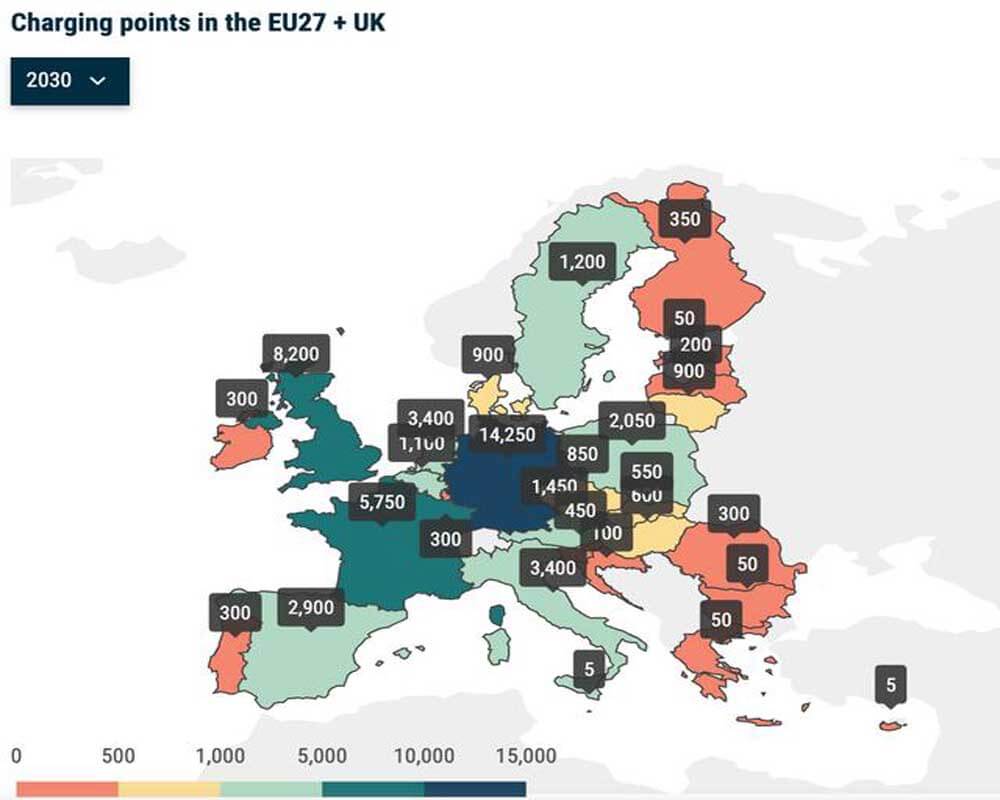
The article will also talk about the electric vehicle battery replacement mode. In the middle of last year, ACEA, representing the European automotive industry association, released an overview of demand for truck charging infrastructure, shown in Figure 1 below.
Electrification penetration of trucks is very low, with around 40,000 electric medium and heavy-duty trucks in service in Europe by 2025. By 2030, medium and large trucks will increase to approximately 270,000 units. For the corresponding charging infrastructure, according to ACEA estimates, 10,000-15,000 high-power public charging points will be established in the EU in 2025, and 40,000-50,000 charging points will be established in 2030. However, there is a large viable market for electric bicycle batteries, and the electric vehicle battery swap mode will be discussed later.
Based on actual demand, at least 40,000 low-power (100-kilowatt) public night-time charging stations located in truck parking lots along highways will also be required in 2030. The charging power for trucks is divided into three power categories: below 350KW, 350-500KW and above 500KW.
The construction of charging network facilities by car companies
From the current situation:
Europe
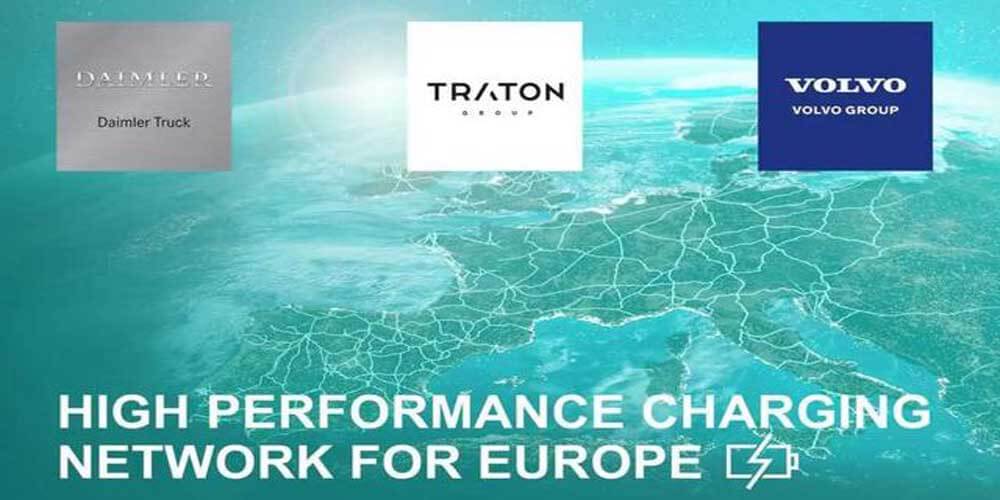
The three major European commercial vehicle manufacturers (Volvo, Daimler and the Volkswagen Group Scania and MAN brands) signed an agreement to establish a joint charging network in Europe in 2022.
A high-performance public charging network for heavy-duty long-haul trucks will be deployed and operated, with a total investment of EUR 500 million, with each company contributing EUR 167 million to the joint venture.
America
Daimler Truck North America, NextEra Energy Resources, and BlackRock Renewable Power Sign MOU on How to Solve Truck Charging Problems in America, the goal is also to form a joint venture to design, develop, deploy and operate a nationwide high-performance charging and hydrogen refueling network, scheduled to begin operations in 2022, with a capital investment of approximately $650 million to be split equally among the three parties.
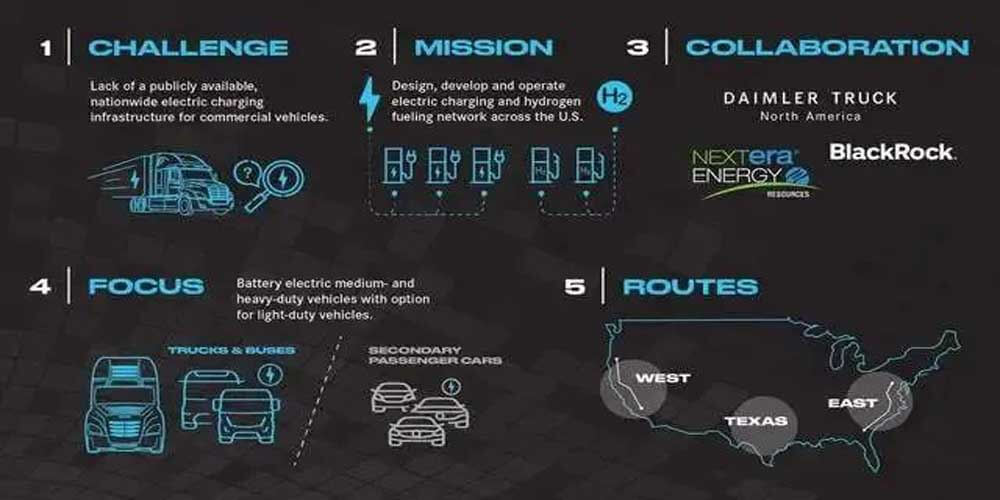
Tesla
Tesla is more realistic. Vehicle development and infrastructure are built simultaneously. From the current data, the maximum power of these charging piles developed for Semi Truck may reach 1.6MW, and the vehicle batteries are charged in parallel.
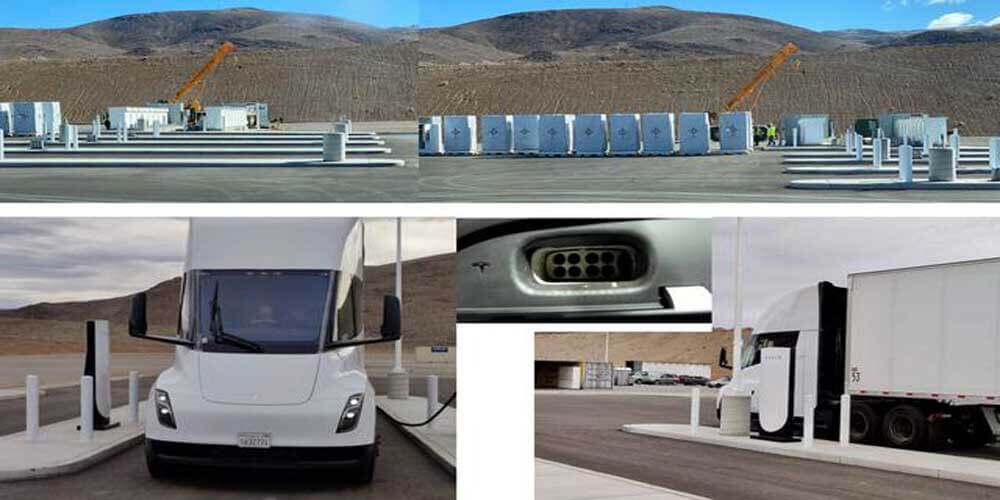
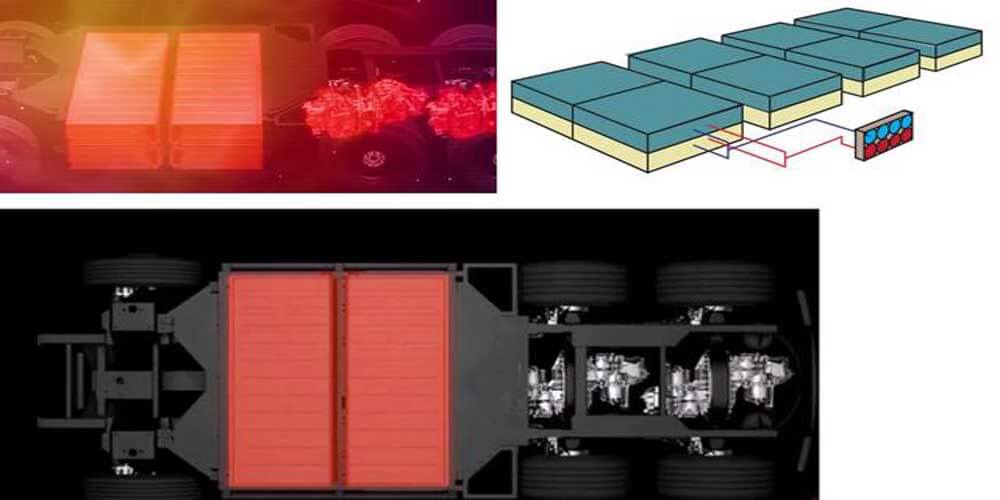
From the existing information, it is possible to charge 4 batteries of 800kWh batteries in parallel with 4 channels. According to the method of 400kW*4, the wiring design and overall logic of this system are not complicated. .
Remarks: From the point of view of the drive system, it can be seen that the complexity of this design is mainly electrical in that different battery packs can flexibly drive different drive systems.
Charging and swapping in the field of trucks
Like passenger cars, there are two different paths in the truck field: battery swapping and fast charging (slow charging is meaningless for trucks). On the path that has been implemented at present, more consideration needs to be made for fast charging of trucks (commercial vehicles).
(1) Power exchange: The first step has already reached some scenarios. In the context of medium and long distances, standardization also restricts power exchange to the next step.
(2) Fast charging: There will be more models covered by fast charging, and the bottleneck is still the charging station as mentioned above. Due to the load problem of the main highway, it may be necessary to get together with distributed power generation. It may be the best way to stack some photovoltaic and energy storage stations near the highway.
Even if the fast charge is more than 1MW, through the separate interface design, if the liquid cooling circuit is also designed in the car, it can achieve liquid cooling at both ends at the same time and reduce the weight of the charging cable. Through the parallel design, the biggest bottleneck of this road is the current fast charging characteristics of iron and lithium.

From the perspective of standards and paths, Europe and the United States have come a long way based on SAE J3105, and have made some reference and adjustments with passenger car charging. Due to high-power fast charging, automated processing may be achieved in one step in the field of charging, which is consistent with the idea of battery swapping.
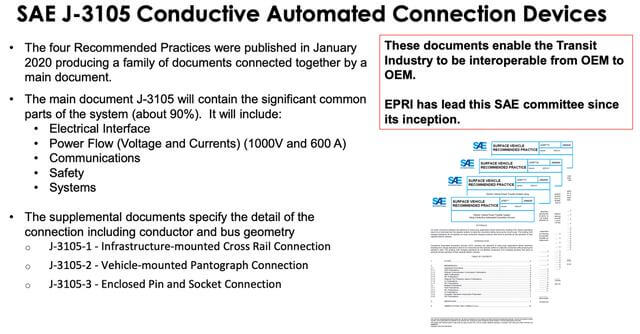
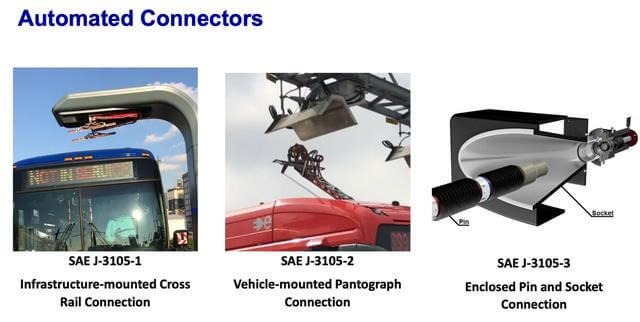
Since the penetration rate of electrification in trucks is relatively low, there is a lot of room for the next 3-5 years according to the current policy needs and technological maturity.
Operation mode and economic analysis of battery swap market
On January 18, 2022, CATL’ wholly-owned subsidiary, Times Dianfu, released the power exchange service brand EVOGO and the overall solution for combined power exchange. The battery swap mode has set off a new round of discussions.
The battery swap model, which has been questioned in the past, has become a hot spot in the society since 2020 with the help of policies. At present, many car companies and battery companies have deployed the battery swap market, such as BAIC Group, State Grid, and China Southern Power Grid. It has cooperated with CATL, Changan Automobile and Aodong New Energy to start the layout of the power exchange market, and the power exchange mode is becoming the trend of the industry.
In order to let people in the industry fully understand the battery swap mode, industry economy, future prospects, etc., after nearly a year of field research, the “2022 China Electric Vehicle Battery Swap Market Operation Mode and Economic Analysis Report” was launched.
The report is divided into seven chapters, providing comprehensive industry data for practitioners who want to understand the power exchange market from seven aspects, including global market, policy environment, market space, business model, power exchange economy, leading companies, risks and suggestions. and analysis reports.
Australia, Denmark, Israel, Canada and other countries have successively promoted the battery swap mode. One of the more representative companies is Better Place, which is headquartered in California, USA. The company first cooperated with Israel and built 38 swap stations in Israel.
Later, it successively cooperated with Denmark, Australia, Canada and other countries to promote the power exchange business. However, due to the huge construction cost and extremely low rate of return, Better Place declared bankruptcy in 2013, and the power exchange business was officially terminated.
After that, Tesla cut into the battery swap market and designed a version that supports both plug-in charging and battery swapping in its electric vehicle model “Model s”. However, Tesla eventually withdrew due to huge losses in the later period. power exchange market. Most of the power exchange models in overseas markets have ended in failure, but major countries are still conducting research on power exchange models.
The battery replacement mode started early in the Chinese market, but due to various problems in the later period, the market gradually entered a trough. However, since 2019, the power exchange model has gradually been paid more attention by the policy. April 23, 2020.
The Ministry of Finance and other four ministries and commissions jointly issued the “Notice on Improving the Financial Subsidy Policy for the Promotion and Application of New Energy Vehicles”.
In May, the swapping station was included as an important part of the new infrastructure, and was written into the 2020 government work report for the first time, and the “construction of charging piles” was expanded to “increase charging piles, swapping stations and other facilities”; The plan (2021-2035) clearly supports the development of the power exchange model. The construction of power exchange stations in the Chinese market has gradually received attention from the policy level. How will the future policy trends go, the second chapter of the report will conduct policy prediction analysis.
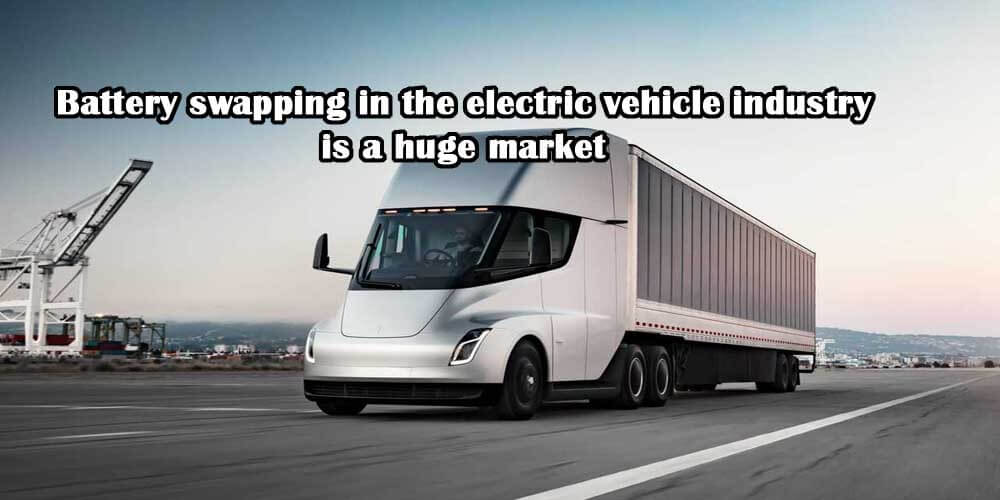
Battery swapping in the electric vehicle industry is a huge market. According to Li Bin’s estimate from NIO, assuming that a user rents a battery at a cost of 10,000 yuan a year, when the number of electric vehicles in the Chinese market reaches 200 million in the future, only the battery will be leased. The size of the market will reach 2 trillion yuan.
Data show that as of November 2021, my country has a total of 1,192 battery swap stations, doubling the number in 2020. It is estimated that by 2025, the number of power exchange stations in my country will exceed 20,000.
At present, the battery swap mode has been applied in the China online car-hailing market, taxi market, electric heavy truck market, logistics vehicle market, etc. .
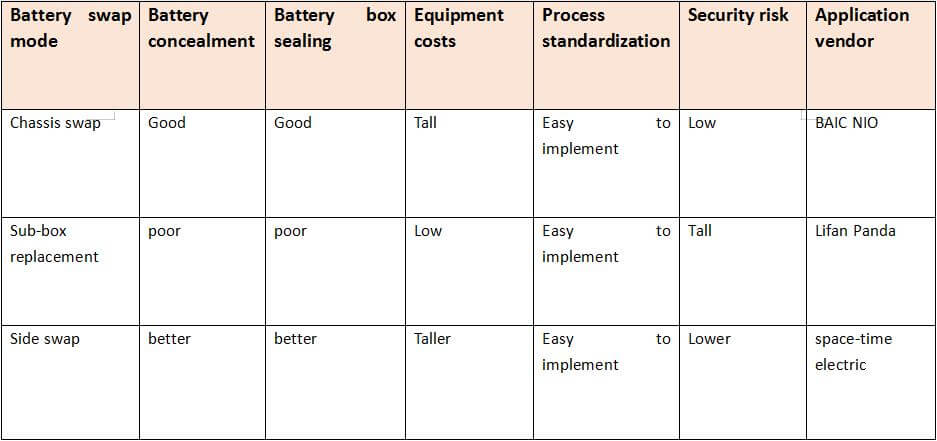
The power exchange modes adopted in these markets include three modes: chassis power exchange, side power exchange and module sub-box power exchange. Sexual enterprises include Weilai Automobile, Aodong, Bertan Technology, etc., while the space-time electric power exchange is to use side power exchange. Which model wins the market competition will be analyzed in detail in Chapter Four of this report.
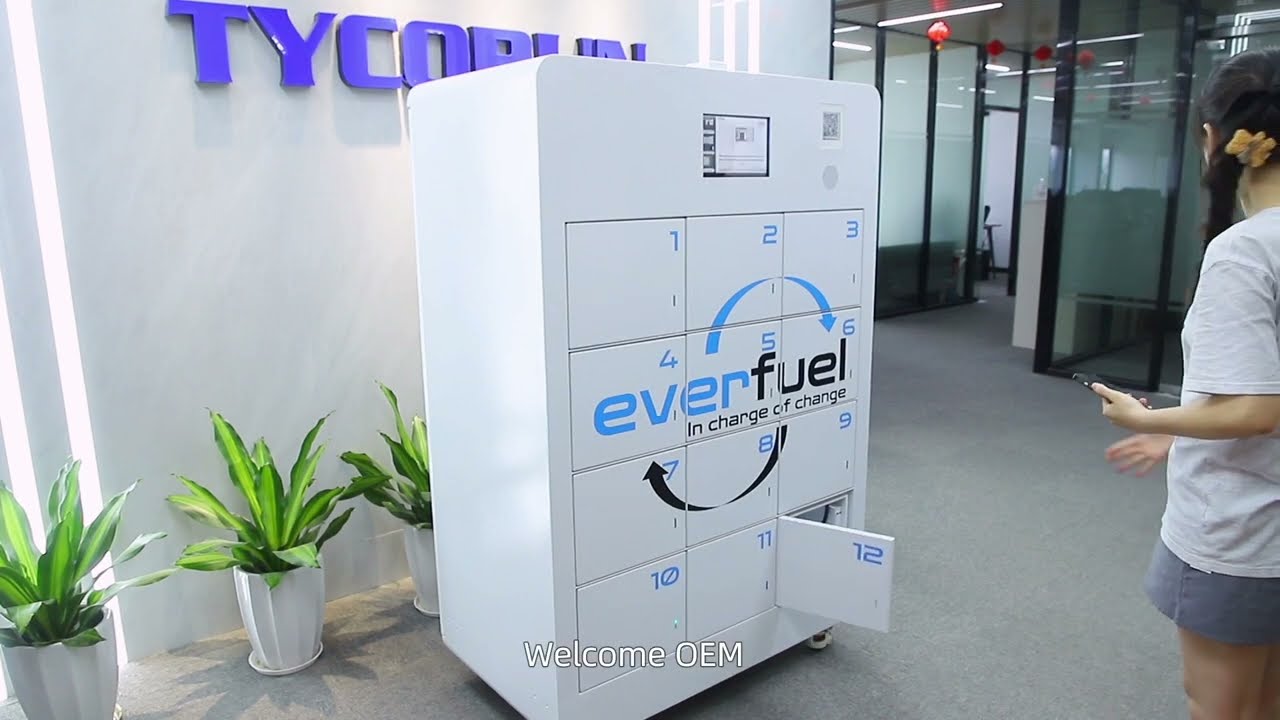
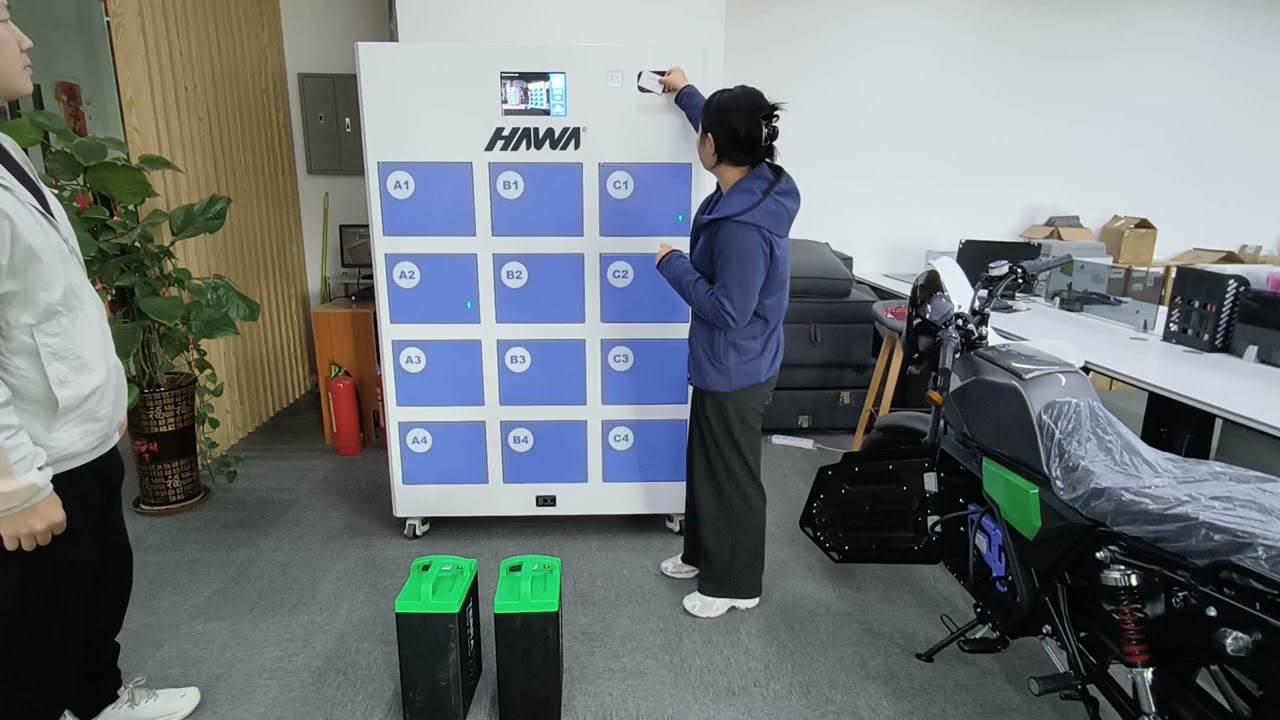
At present, the battery swap mode has been applied in China’s online car-hailing market, taxi market, electric heavy-duty truck market, logistics vehicle market, etc. Now you must be wondering how to use the battery swap system.


The power exchange modes adopted in these markets include three modes: chassis power exchange, side power exchange and module sub-box power exchange. Sexual enterprises include Weilai Automobile, Aodong, Bertan Technology, etc. while the space-time electric power exchange is to use side power exchange. Which model wins the market competition will be analyzed in detail in Chapter Four of this report.
One of the important reasons why the battery swap mode was difficult to popularize in the past was the poor economy. However, with the decline in battery costs and the increase in the number of electric vehicles, the economy of the battery swap mode is gradually reflected. Take the current hot market electric heavy truck battery swap as an example.
According to statistics, every 1,000 battery-replaced heavy-duty trucks can reduce 140,000 tons of carbon dioxide and 12,500 tons of pollutant emissions per year, and save energy costs by 5%-10% compared with fuel vehicles.
Swapping heavy trucks not only realizes zero-emission vehicle operation, but also uses the 3-5 minute battery quick replacement and “vehicle-electric separation” operation mode. According to the scale of 50 swapped heavy trucks, it will save 1160 yuan compared to traditional energy heavy trucks in three years. 10,000, and the economic benefits are significant.
The fifth chapter of the report will make a detailed analysis of the investment cost, operating cost, operating income, future space, etc. of the typical power exchange mode, so as to provide clear data support for enterprises to invest in the power exchange market, understand the costs and benefits.
Although the economy of the power exchange model is gradually emerging, and the potential market space in the future may be in the trillion level, the development of the industry still faces many risks, such as the safety risk of power exchange products, the risk of excessive investment costs, and the investment recovery cycle. Risk of excessive length, risk of product technical route change, etc.
In order to help companies fully understand the dynamics of leading companies in China’s electric vehicle battery swapping market, discover market investment opportunities, and avoid market investment risks, Chapter 7 of the report will conduct a comprehensive analysis to provide professional advice for companies to avoid potential investment risks in the industry.