Skip to content


Compared with the soaring price of lithium, what is more worrying is that many countries have attached great importance to lithium resources.
So will China’s new energy vehicle industry be constrained by the scarcity of lithium resources?
Lithium mine pricing power is not in China
At present, about 60% of the world’s lithium resources are in salt lakes, most of which are gathered in the South American Lithium Triangle: Bolivia, Chile, and Argentina.
The three countries together account for about 56%. These areas have better resource endowments, and the cost of extracting lithium from salt lakes is generally lower, about 30,000 RMB/ton to 40,000 RMB/ton.
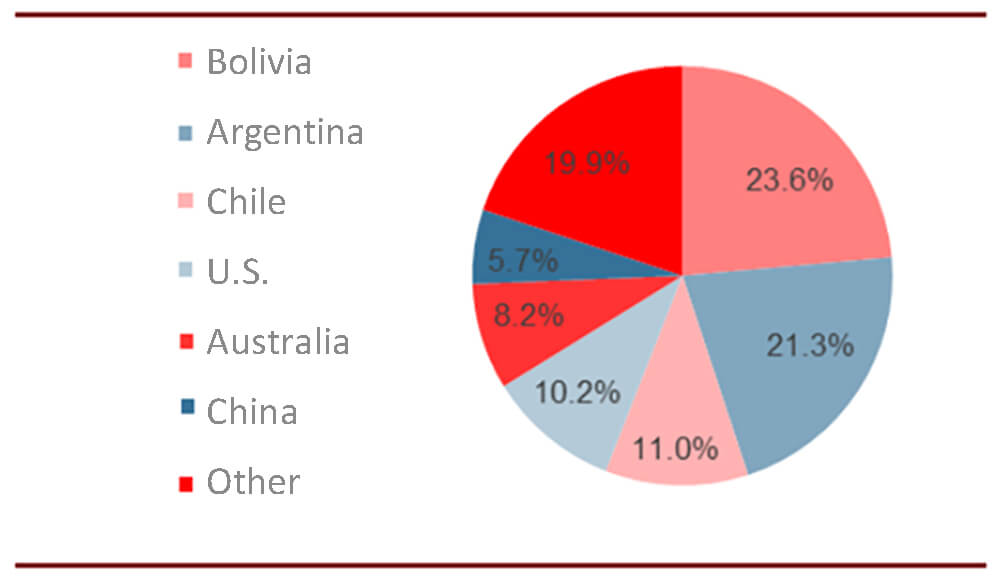
Although China’s lithium resources are abundant, accounting for 6% of the world’s total.
According to reports, as one of the largest salt lakes in the world, Chaerhan Salt Lake has proven lithium content of about 12 million tons, exceeding the total lithium content of other salt lakes in China.
However, due to the lack of high-grade ore deposits in China, the relatively large magnesium and lithium in salt lake brine, and low lithium content, there is a lack of high-quality lithium resources, and most of them are distributed in plateau areas such as Qinghai and Tibet, where the infrastructure is relatively weak and the mining conditions are poor.
This makes China’s lithium production capacity limited and highly dependent on imports. 70% of China’s lithium resources need to be imported.
In the case of insufficient supply and strong demand in China, the status quo of pricing power in other countries is unavoidable.
Is the scarcity of lithium resources a crisis
Under the current complex and changeable international situation, many governments have expressed the need to strengthen industrial protection.
Recently, on the grounds of national security, the Canadian government asked three Chinese companies, China Mining Resources, Shengxin Lithium Energy, and Zangge Mining, to divest their investments in key Canadian mining companies.
Among them, Sinomine Resources was required to withdraw its investment from Canadian Power Metals; Shengxin Lithium Energy was required to withdraw its investment from Chilean Lithium Industry, Zangge Mining was asked to withdraw its capital from Canada Ultra Lithium. And these three investments cover all lithium resources.
In addition, Argentina, Bolivia, and Chile are planning to join forces to establish an organization similar to the “Organization of Petroleum Exporting Countries.”
The purpose is to control the output of lithium mines and grasp the final pricing power.
At present, the shortage of lithium resources is still a pain point in the industrial chain. Industry insiders pointed out that if this pricing power has been controlled by countries other than China, countries with lithium resources may only need to play with prices, and they will enjoy the development dividend of new energy vehicles in the next few years.

Some people in the industry even believe that if Chinese companies do not realize the independent control of lithium resources as soon as possible, perhaps lithium mines will become the next iron ore.
Although lithium ore is described as “white oil”, lithium has never been a scarce resource on earth. At present, the world’s proven lithium ore reserves exceed 100 million tons, which can fully meet the demand.
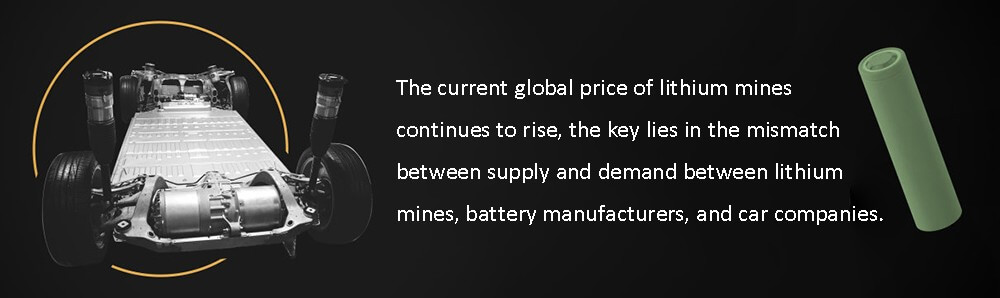
The current global price of lithium mines continues to rise, the key lies in the mismatch between supply and demand between lithium mines, battery factories, and car companies. But in recent years, new energy vehicles have developed rapidly.
From 2021 to 2022, it will take 2 years for new energy vehicles to complete the great leap forward in production capacity in the past 10 years.
According to data, sales of new energy vehicles will reach 6.5 million in 2022, a year-on-year increase of 83%.
This growth rate caught the upstream lithium mines off guard. Generally speaking, it takes 2 to 3 years for a lithium resource development project to be completed and put into production, and then another 2 years to reach production;
According to research, the average expansion of lithium battery midstream materials is 1-2 years, while the average expansion of lithium battery production is 0.5-1 year.
The mining and smelting of upstream lithium mines takes a long time, while the construction of lithium salt production capacity in the midstream takes a short time.
The time difference between the expansion of the two has led to an intensified mismatch between supply and demand.
Integration enhance new energy industry competitiveness
On the one hand, power battery manufacturers and car companies have always been affected by the price of power battery raw materials.
At this point, enterprises in China’s power battery industry chain have also begun to trace their roots and move to the upstream direction.
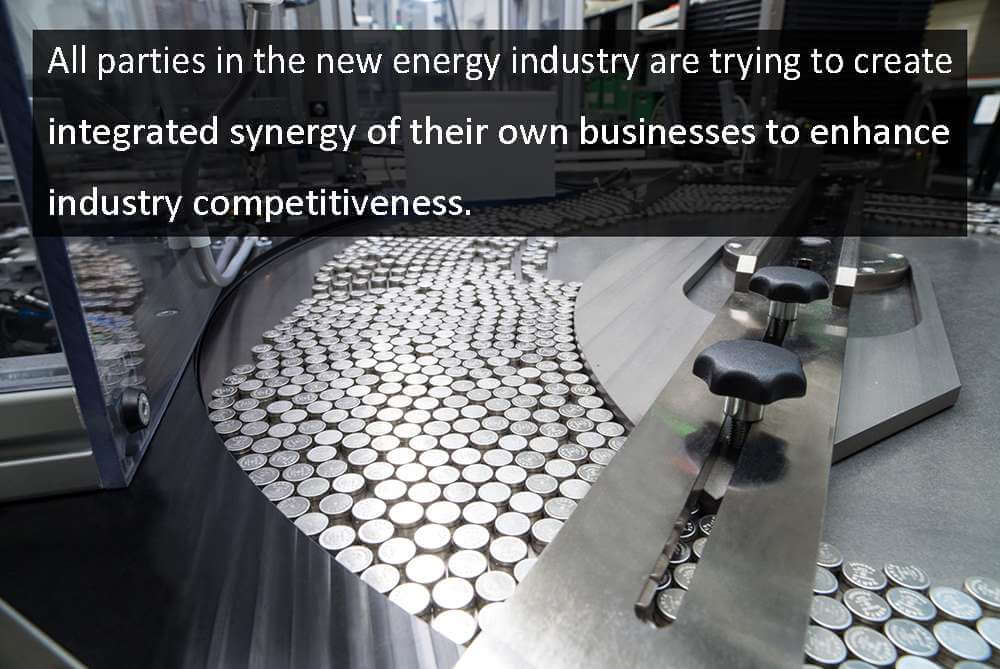
Whether it is the extension of processing/battery companies to the resource end, or the self-built processing capacity of mines or the cooperation with downstream companies to build factories, all parties in the industry are trying to create integrated synergy of their own businesses to enhance industry competitiveness.
As early as 2018, one of the top 10 lithium mining companies in China Tianqi Lithium spent 25.9 billion RMB to acquire a 24% stake in Chilean lithium giant SQM;
There are also car companies such as BMW, Volkswagen Group, General Motors, Ford, Tesla, Renault, Toyota, etc., with 21 investments in upstream raw materials for batteries, 16 of which involve the lithium industry.
This year, CATL in top 10 power battery companies in the world has successively released 5 tens of billions of investment projects.
According to statistics, a total of 94 billion RMB has been invested to deploy lithium battery base projects around the world.
Based on the current complex environment, Chinese companies are also accelerating the development of the level of mining and refining of lithium mines in China, including strengthening the construction of infrastructure such as power and equipment in areas rich in lithium resources, and increasing domestic lithium mine development capacity.
Once China’s lithium mining technology is improved and local self-sufficiency can be achieved, it will naturally form a check and balance situation, breaking the situation of high lithium prices and resource self-respect.
It is predicted that the self-sufficiency rate of lithium resources in China is currently about 30%, and it is expected to reach 50% in the future.
And this 20% change will bring profound changes to the supply side of lithium mines.
Lithium batteries, on the other hand, are recyclable.
After 8 to 10 years, there may be a lot of power battery recycling and reprocessing industries, so the dividend period of lithium mines will be around the next 5 to 6 years.
It is understood that the currently recognized and relatively mature recycling technology routes in the industry are three recycling technology routes: physical method, wet method and fire method.
Upstream mineral resource enterprises deploy battery recycling, which has technical advantages. Compared with other link entities, the metal yield is higher.
Representative companies include Huayou Cobalt, Ganfeng Lithium, Tengyuan Cobalt, and GEM in top 10 lithium battery recycling companies in the world, etc.
In the next few years, lithium battery recycling technology is expected to make breakthrough progress.
According to data, as of now, more than 15,000 power battery recycling service outlets have been established, and a power battery recycling system has been initially established.
According to estimates: in 2022, China’s lithium battery recycling lithium carbonate is about 40,000 tons, and in 2025 it will reach 150,000 tons.
In general, in the case of insufficient supply and strong demand in China, the status quo of pricing power in other countries is unavoidable.
The new energy industry chain will be under pressure, but there will be no ‘being hit in the throat’ phenomenon in the future.