Skip to content


The video comes from the network. Please contact us in case of infringement
What is battery current and what is amps, ah and kw
● Battery current is measured in amps;
● Amp is a unit of measuring battery current, which is equal to the amount of charge that flows through one amp every second;
● Ah is an abbreviation for ampere hours and 1Ah means that the device or equipment can work continuously for 1 hour when the power supply current intensity is 1A;
● KW (kilowatt) measures power output, while kW/h refers to how much power can be used per hour.
For example, if people have 2 kW worth of solar panels producing 10kW/h on the roof then they will be able to use 10kW worth of electricity each day without needing additional grid supply.
What is the best charging current
The best charging current varies with different battery types, because different batteries have different requirements. Generally speaking, the best charging current is 1/4 to 1/8 of the battery, and the voltage is about 1.2 times of the battery.
Here’s an example: If your battery has a capacity of 3000 mAh and you are using a charge rate of 0.2C, then this would mean that you should be charging your battery at 3000 / 5 = 600mAh/hour (or 0.6A).
What is a normal charge current
Normal charge current is the current that can ensure the safe and efficient charging of batteries. Generally speaking, it varies for different batteries and types. It’s measured in amps.
And for LiFepo4, normal charge current can help you determine how much power LiFepO4 charger is providing to LiFepO4 battery. The safe lifepo4 charging current should fall between 0.2-0.5C. Most energy storage devices are 0.2 C and power batteries are 0.5C.

What determines the charging current of a battery
The LiFePo4 charging current can be determined by its capacity and charging rate, which is the amount of energy that it can store in its cells.
There are two main factors to affect charging current of a battery like lifepo4 charging current: the number of cells contained within the battery pack, and their voltage output (voltage drop). These two factors together determine how much power the device needs in order to operate properly.
How do you measure the charging current of a LiFePO4 battery
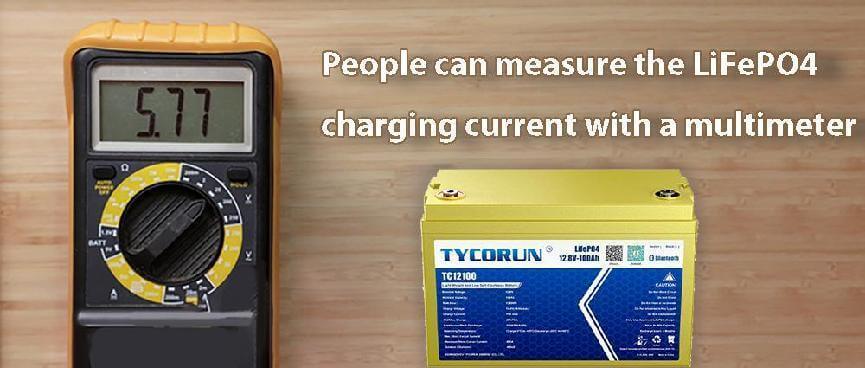
People can measure the LiFePO4 charging current with a multimeter. Some people measure LiFePO4 charging current with an in-circuit charger. They can also use a battery analyzer, oscilloscope, intellective BMS or other similar measurement device to measure the LiFePO4 charging current.
Moreover, we know that the LiFepO4 battery charging is done by either with constant current or constant voltage, therefore we can take the data from the following chart:
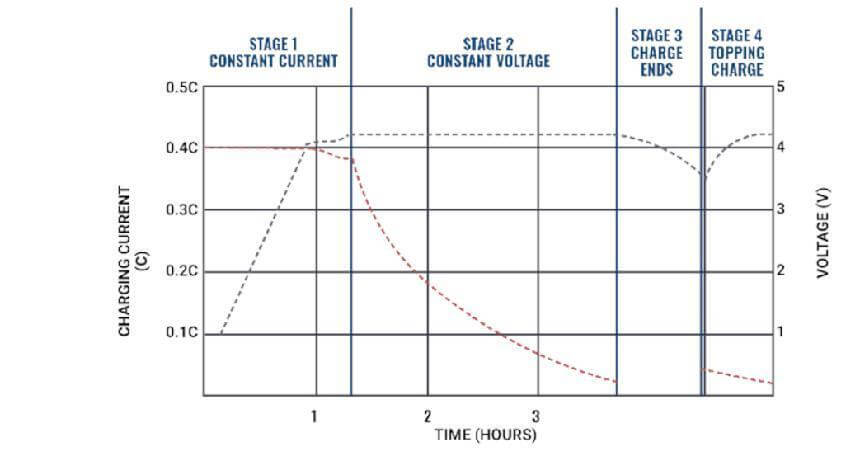
Table charging of LiFepO4 battery with constant current and constant voltage
Does BMS limit charging current
If overcharge occurs, the BMS will immediately cut off the power supply and stop charging to avoid damage to the battery life. LiFePo4 batteries require a BMS for the right LiFePo4 charging current and safe charging.
A BMS is a must for charging LiFepO4 batteries, as it can limit the LiFePo4 charging current and prevent overcharging. The BMS is also responsible for protecting the battery from being discharged beyond its limits.
Generally speaking, a qualified lithium iron phosphate battery pack will have a built-in BMS. However, the quality and function of BMS used by different battery manufacturers are different, and the degree of battery protection is not very good. Without BMS, the service life of the battery will be affected and there will be potential safety hazards.
What is charge C rate and Is 3C charging fast
Charge C rate is a measure of charging speed. It refers to the current value required for the battery like 18650 batteries to be charged to its rated capacity within a specified time. It is equal to the multiple of the battery’s rated capacity in value.
When people charge LiFepO4 battery for a right LiFepO4 charging current with a 3C charge rate, it can be charged in 20 minutes. Generally speaking, the lithium battery with 0.5C charge rate is already the battery with fast charging speed on the market.
The higher the C rate of a LiFepO4 battery charger for a right LiFepO4 charging current, the faster it can be charged. But more importantly it also needs special care when used in fast charge conditions as they may overheat which can cause damage to the battery.
It is generally not recommended to charge the battery for LiFepO4 charging current quickly. The charging rate of the battery cannot exceed 1C, and 0.2C is recommended. The faster the charging speed is, the greater the current is. So does LiFepO4 charging current. Excessive LiFepO4 charging current will damage the battery life.
How does the charging current affect the battery performance
The charging current including LiFepO4 charging current will affect the performance of the battery. The higher the LiFepO4 charging current is, the faster the charging speed of the battery will be.
However, under this situation the battery may be heat up, which will damage the battery structure or accessories, and easily break through the internal separator of the battery, causing the battery to catch fire. In addition, if the LiFepO4 charging current is not matched, the service life of the battery will also be shortened.
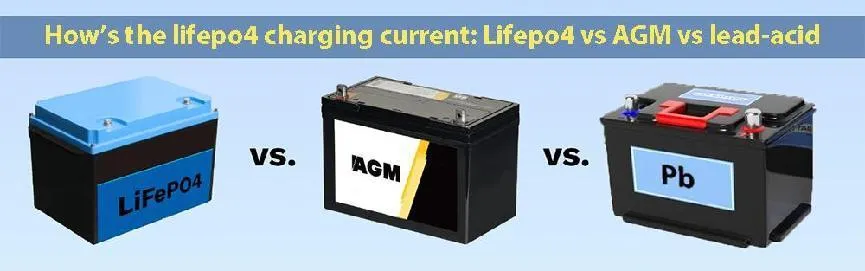
How’s the lifepo4 charging current-Lifepo4 vs AGM vs lead-acid
Lifepo4 is the best choice for a deep cycle battery in many applications including powerwall, rack mount battery, UPS solar system and golf carts because lithium-ion batteries are charged more quickly.
LiFePo4 charging current is higher charging current and discharge current than AGM or lead-acid batteries, which mean it can supply you with more power when you need it most. AGM batteries are good at discharging, but they take longer to charge than their lifepo4 counterparts.
Lead-acid batteries, on the other hand, don’t have as much capacity nor do they offer as high of an initial charge rate as lifepo4s do. All of these benefits make lifepo4s the ideal choice for people’s battery of devices. They’re also a great option if people want to power any other electrical device that needs a deep-cycle battery, such as solar panels or an electric car.
In comparison of AGM and Lead-Acid batteries, lithium batteries can provide higher LiFepO4 charging current than AGM batteries because of their different chemical composition and physical structure. A reasonable LiFepO4 charging current can be favorable to the battery performance and extend life.
Do LiFePO4 batteries charge faster than AGM and lead-acid
Yes. LiFepO4 batteries do charge faster than AGM and lead acid batteries. This is because the lithium ion in the lithium battery moves at a high speed, it is embedded into the two poles of the battery instantly.
FAQs about lifepo4 charging current
What’s the difference between charging current and discharging current
Charging current including LiFepO4 charging current refers to the current of the circuit during the battery charging process while discharging current is the type of current that is being discharged from the battery through the terminals of the material which is used for work. LiFePo4 charging current is higher than other batteries.
What is the relation between charge and current
Current is formed by the directional movement of electric charges. The more charge flows in unit time, the greater the current. The time rate of flow of charge in the electric wire is known as current. The unit of current is Ampere while the unit of charge is Columb.
How long does it take to charge a 100Ah LiFePO4 battery
As LiFepO4 batteries take less time to charge, It will probably take five hours to charge a 100 ah lifepo4 battery from 0 to 100% if using a 50amp charger.
Can I charge LiFePO4 with alternator and can MPPT charge LiFePO4
People can use the alternator to charge the lithium iron phosphate battery, as long as the special battery charger for lithium battery with appropriate specifications is used.
However, MPPT cannot charge lithium iron phosphate battery because it is just a charging controller. In the charging process, people need to use MPPT, but it cannot be used as the charging power supply.