Skip to content
With the fast-growing electric vehicle market, the demand for batteries is surging. Batteries are the key to unlocking the energy transition.
At the same time, batteries are material- and resource-intensive products that inevitably have social and environmental impacts throughout the value chain, including greenhouse gas emissions during battery material procurement, processing, and manufacturing.
Thus, bringing transparency to the battery value chain in the battery industry through the introduction of the battery passport is a crucial step towards establishing a sustainable battery value chain in a rapidly evolving industry.
This article will introduce the specific information, challenges and significance of the battery passport in detail.
What is a battery passport?
The battery passport is the digital twin of the physical battery, which records multiple contents including battery information, raw material information, ESG evaluation, supply chain data, etc.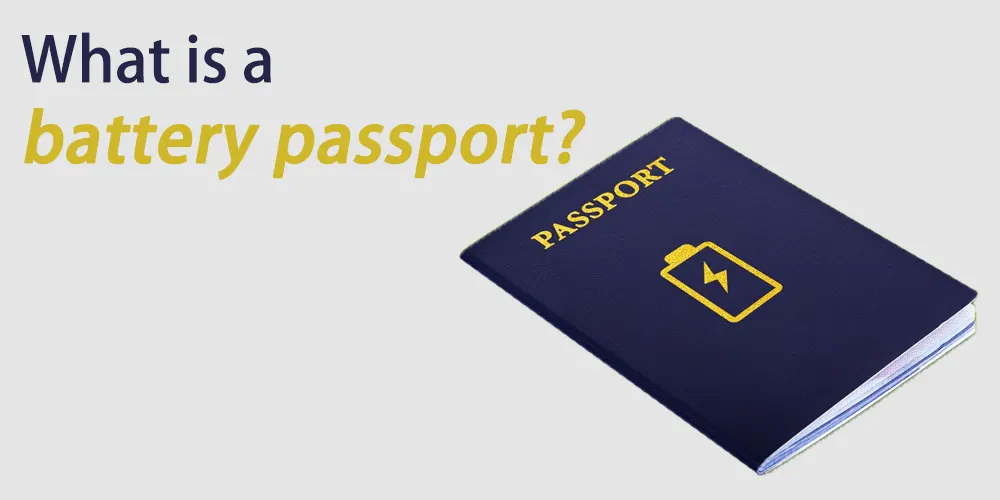
In the future, by scanning the QR code of the battery passport, consumers can view various information about the battery. The battery passport provides the necessary data support for consumers to choose green, low-carbon and responsible batteries.
Specific information of the battery passport
The battery passport can be divided into two parts: physical label information and passport digital information.
The content of entity label information can be summarized into three issues: product source information, end customer information, and product function information.
Some basic information such as: manufacturer, model, technical specifications, origin, etc., will inevitably appear in the physical label information of the battery passport.
At the same time, people will be able to access the passport digital information part of the battery passport through the QR code. It is basically confirmed that the passport digital information will be stored in the cloud instead of locally.
The digital information part of the battery passport will contain richer content, and some information is only available to authorized visitors. The content of passport digital information can be divided into four categories for the time being:
Product information open to everyone: including battery information, material information, environmental, social responsibility and corporate governance (ESG) information, and data source information.
Product-related information for interested persons: including positive and negative electrode materials, electrolyte type, safety instructions and other chemical-related content.
It also includes mechanical content such as battery teardown manuals and product drawings. Persons involved are not defined here, but should be participants in battery repair and recycling.
Regulatory agency compliance information: including product compliance and test certificates.
Battery dynamic data information open to battery manufacturers: It includes battery capacity (SOC) and life (SOH) information, and the collection of such dynamic information will be responsible for and uploaded by the BMS.
Through the proof of concept of the released battery passport, product information has four important components:
● Battery information (Battery)
● Material Information (Materials)
● Environmental, social responsibility and corporate governance information (ESG)
● Data source information (DATA)
Among them, the battery information (Battery) column contains a total of 21 groups of related product information:
Battery passport ID: Unique identification of the passport document (automatically generated)
Battery model: A brief description of the battery model, and possibly the corresponding EV
Battery serial number: The physical number on the battery
Battery status: The status of the battery referred to in this passport (primary, reused, recycled, etc.)
Electric vehicle manufacturer: The name of the OEM company (specifically the final assembly plant that puts the battery into the electric vehicle)
Electric vehicle assembly countries/regions: countries/regions where OEM plants are located
Battery manufacturers: The name of the company that produced the battery pack (possibly an EV manufacturer)
Battery production country: Country where the battery production facility is located
Cell manufacturer: The name of the cell manufacturing company
Cell production country: The country where the cell production facility is located
Manufacture date: actual time of battery manufacture
Battery type: cylindrical, soft case, hard case, other
Chemistry: A simple textual description of the core chemical elements of the battery
Number of cells: the number of battery cells in the battery pack
Weight: kg
Total energy: kwh
Energy density: kwh/kg
Rated capacity: Ah
Expected life: number of cycles
Voltage (min-nom-max): V
Temperature range: minimum temperature – maximum temperature (°C)
Future challenges for battery passport
The battery passport is a leap forward in the industry 4.0 transformation of the battery industry chain. It doesn’t seem difficult to find out the full set of data for a single battery.
But it is very challenging for all the batteries produced in the world to have such a passport of full life cycle data, and to ensure that the data is credible, safe, shared, and updated in real time.
First, there is a lack of internationally accepted uniform standards. There are standards both at the product level and at the enterprise level.
However, the technical parameters and factors of standards used by different companies, countries and regions are different, and how to achieve mutual recognition is a problem that must be solved.
The second is poor data accuracy. There are also challenges in how to ensure the integrity, accuracy and traceability of the information covered in the products of different enterprises during the recording process.
The third is the enthusiasm and implementation of battery manufacturers. Consider the cost and investment required for the promotion of the battery passport.
In the absence of mandatory policies and regulations, how to stimulate the enthusiasm and participation of battery manufacturers is also an important aspect to be considered.
Significance of battery passport
The battery passport aims to provide “all stakeholders involved in the whole life cycle” with detailed battery manufacturing history and usage information. Its significance lies in the following aspects:
Record the proportion of renewable energy and recycled materials used in the battery production process, which is convenient for purchasers to conduct carbon index entry audits and normalized assessments;
Record the health status of the battery, upload cloud data and issue a fault warning to the user in time to extend the service life of the battery and the equipped tools.
Retrace and score the historical information of the battery, accurately display the remaining capacity, and facilitate effective circulation in cascade utilization or secondary sales scenarios;
As battery passports become a global consensus in different tracks, more companies will take the lead in improving battery passport certification in specific regions and scenarios in the future, helping to implement a unified global standard.
Summary
This article mainly describes the new concept of battery passport. All relevant manufacturers upstream and downstream of lithium batteries need to make preparations, especially ESG and carbon footprint.
Battery passports will have the potential to create new opportunities and business models. Technologies such as big data, cloud, blockchain, etc. will have the opportunity to be widely used in the battery industry, and all of this has yet to be explored and practiced.