- Explain the differences between 14500 and 18650 batteries
- Compare both 14500 lithium battery and aa battery
- What is the mah capacity of a 14500 battery
- Can I replace 14500 with any other batteries
- Advantages and disadvantages of 14500 lithium battery
- Can we use lithium batteries instead of alkaline batteries
- Application of 14500 batteries
- Conclusion
Explain the differences between 14500 and 18650 batteries
The primary difference between a 14500-lithium-ion battery and an 18650 lithium-ion battery is their capacity. (If you want to know more about 18650 compares with other batteries, you can see 21700 battery vs 18650battery.)
When 18650 lithium-ion battery can offer 3000mah, 14500 lithium battery can offer only 900mah maximum. So, technically, we can assume that 18650 batteries can last 3 hours more than 14500 batteries.
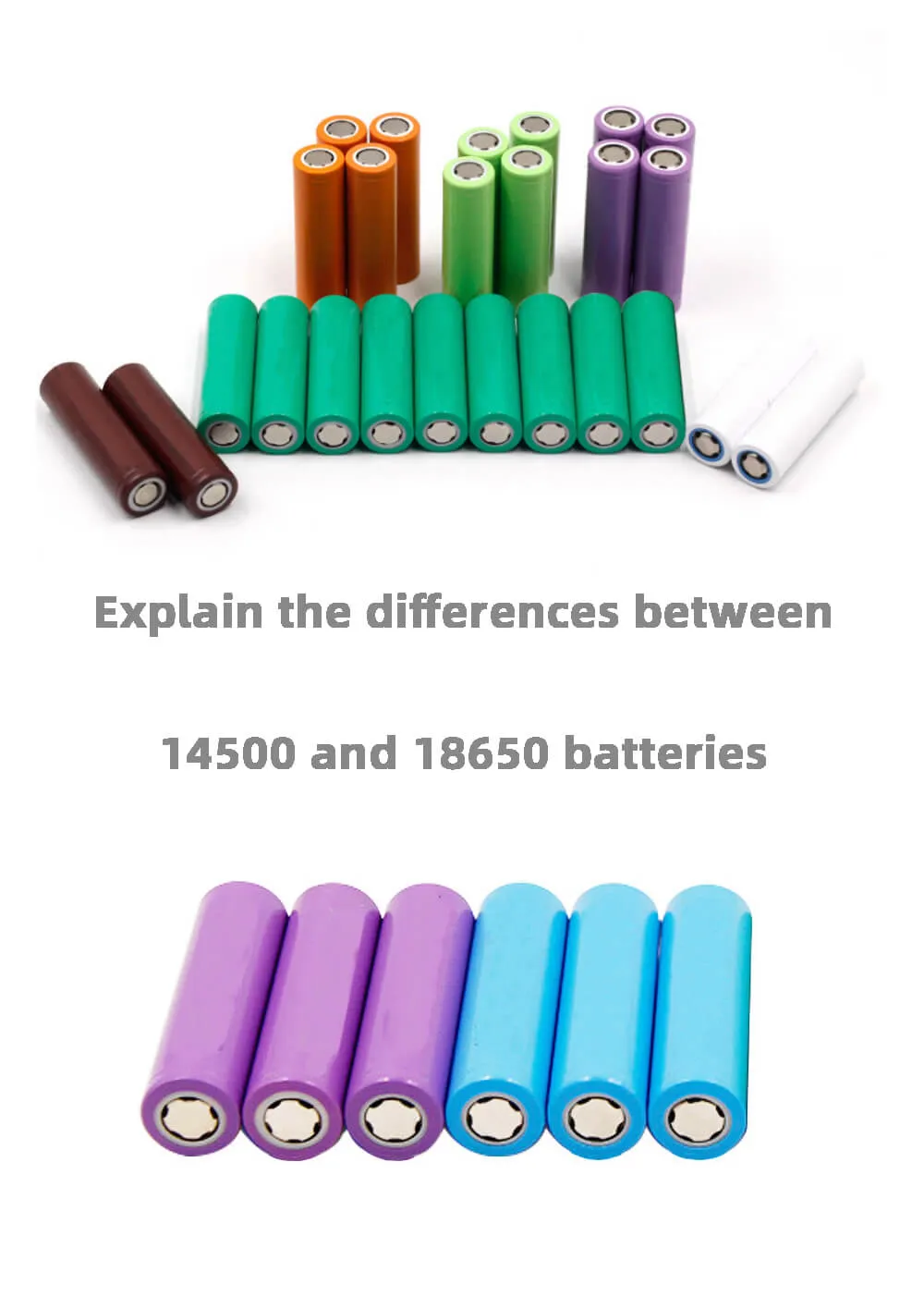
Looking at the physical property of the 14500 batteries, we can find that they will have a 14mm diameter and a length of 50mm. Similarly, a 18650 battery comes with a diameter of 18mm and a height of 65mm. The number zero denotes the cylindrical shape of the battery. The weight of a 14500 battery is 18g, and a 18650 battery is 45g approximately, which is almost double the 14500 batteries.
These two batteries are designed to be used in different environments and need to use per the capacity requirement. The battery 18650 is larger than 14500 and offers more capacity than 14500. So, a 18650 lithium-ion battery will have a longer battery life than 14500 batteries.
Compare both 14500 lithium battery and aa battery
Both 14500 lithium and an aa alkaline battery are almost the same size-wise. However, in terms of power output, both are different. All alkaline batteries come with a voltage output of 1.5v, but 14500 batteries come with 3.2v-3.7v approximately.
Another significant difference between the two is the rechargeable features of lithium batteries. Alkaline batteries are non-re-chargeable. Check its voltage specifications if you want to use 14500 lithium batteries for a flashlight.
What is the mah capacity of a 14500 battery
Depending upon the chemistry of the 14500-lithium-ion battery, the battery’s capacity will be between 600 to 1600mah.
Can I replace 14500 with any other batteries
You can use two 14250 batteries instead of a single 14500 lithium battery in some instances if the device’s battery compartment can accommodate the battery size. It is okay to use two 14250 batteries instead of a single 14500 battery, even if the voltage is double the value of the 14500 batteries, provided the circuit condition should accommodate the higher voltage without damaging the device.
But there are possibilities to get the LED damaged due to higher voltage unless the circuit and LED are designed to accept higher voltage. Generally, a battery with the same chemical material and the same rated voltage can replace with a lithium-ion battery, subject to the size of the battery compartment and the charger’s compatibility.

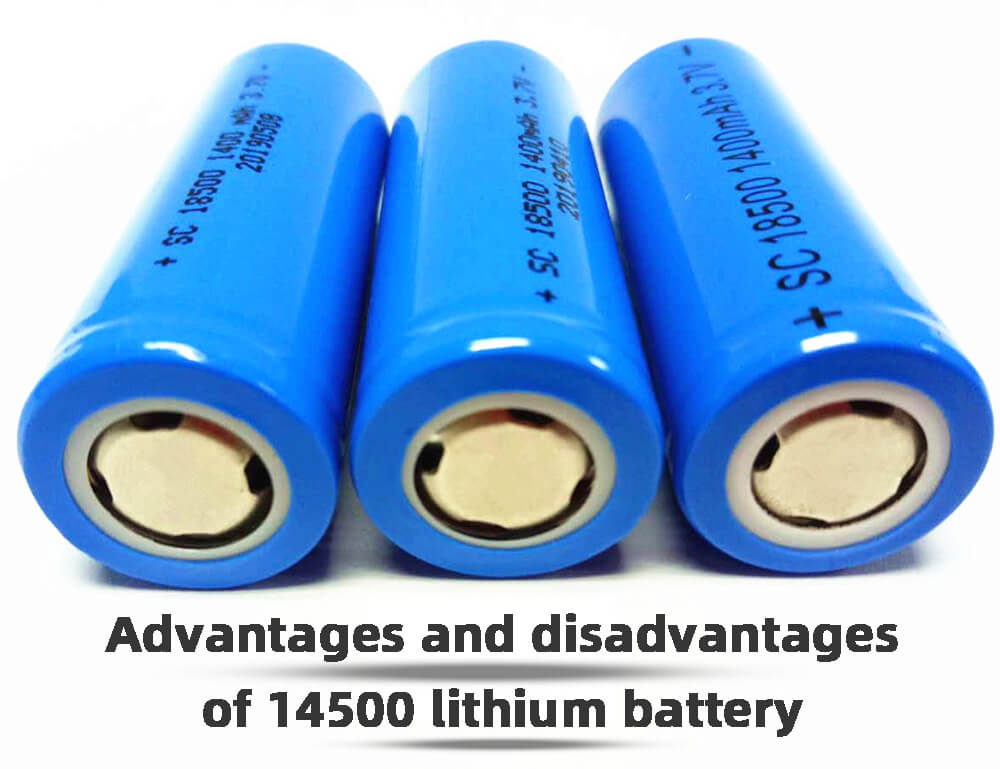
Advantages and disadvantages of 14500 lithium battery
Advantages
The 14500 lithium battery has many advantages compared to any aa-size alkaline, NiMH, or NiCad battery.
- Rechargeable: The foremost advantage of 14500 lithium battery is that they are rechargeable batteries. It can recharge using a smart recharger, USB recharger or lithium-ion recharger.
- Energy density: It has high energy density than any rechargeable battery.
- Weight: The lithium battery has a low weight compared with other rechargeable batteries.
- Voltage: These batteries come with 3 times more voltage than any aa NiCd or NiMH rechargeable batteries.
- Capacity: While checking with capacity segment, the 3.7v battery comes with 600-1600mah, which are ideal for use on remote-controlled toys, flashlights, remotes, clocks, or as camera battery and robot battery.
- Discharge & self-discharge rate: The battery offers stable discharge for an extended period. It has a low self-discharge rate; generally, within the first 24 hours, you can expect an approximate 3% self-discharge rate per month, which is very healthy. In the following months. The self-discharge rate is less than half of alkaline batteries.
- Memory effect issues: The battery has no memory effect issues. It does not need to be strictly like lead-acid batteries when the user recharges the battery before its power drains out completely. Lithium-ion batteries can be charged at any time without affecting the use capacity
- Battery life: Even though the performance of a 14500 lithium battery will decline with time, compared to other aa batteries, it offers extended life service. If the battery is recharged intelligently, it can get 500 to 4000 recharge cycles.
- Protection features: Some of the 14500 lithium battery come with protection features. The protection features manage the overcharging and overheating issues.
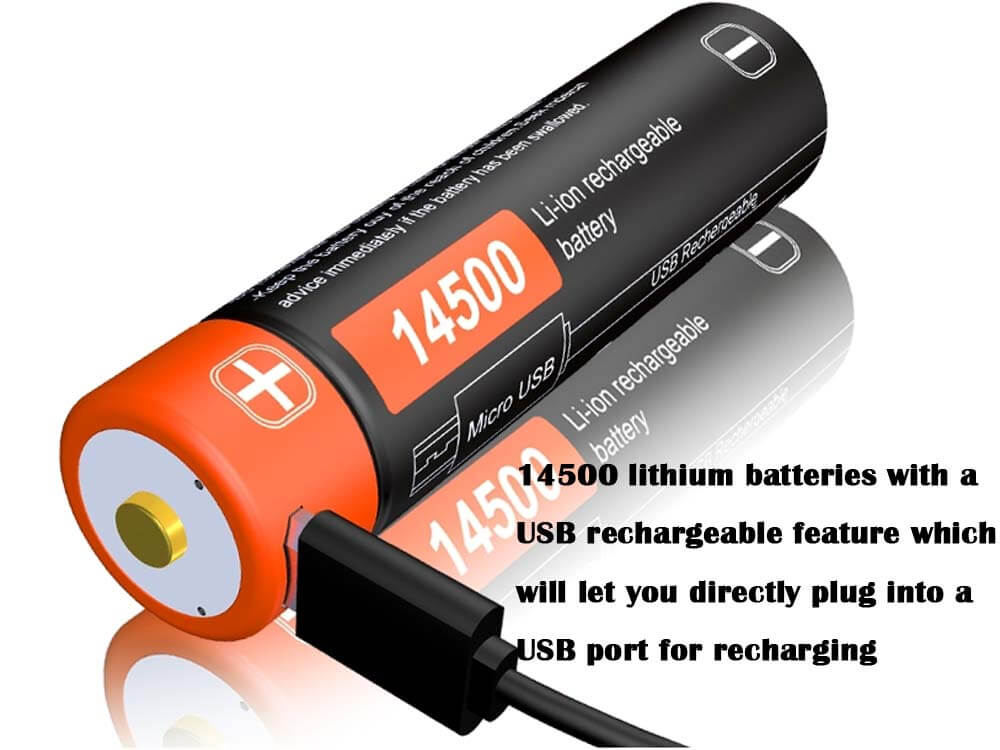
- Built-in USB chargers: You can also find 14500 lithium battery with a USB rechargeable feature which will let you directly plug into a USB port for recharging.
- Low maintenance: The 14500 lithum battery are available ready to use condition, and you can charge and use them without extended priming. No maintenance required.
- Eco-friendly: Since the battery is rechargeable, we can use it for an extended period, eliminating the disposal wastage like alkaline batteries. You can use it for a maximum period until the battery cannot recharge.
- Warranty: Most of the 14500 lithium battery carry a one-year limited warranty.
Disadvantages
Almost all disadvantages of lithium-ion batteries apply to a 14500 lithium battery.
- Special chargers: You have to use specially designed chargers for 14500 lithium battery for recharging in some instances.
- Price:The cost of lithium-ion batteries is relatively high, so the price is higher than many batteries. This requires users to measure its cost-effectiveness.
- Proper storage: When the battery is not in use, it requires proper storage in a cool environment to reduce the self-discharge rate and ageing issues. This is a problem that needs to be paid attention to when storing batteries.
Can we use lithium batteries instead of alkaline batteries
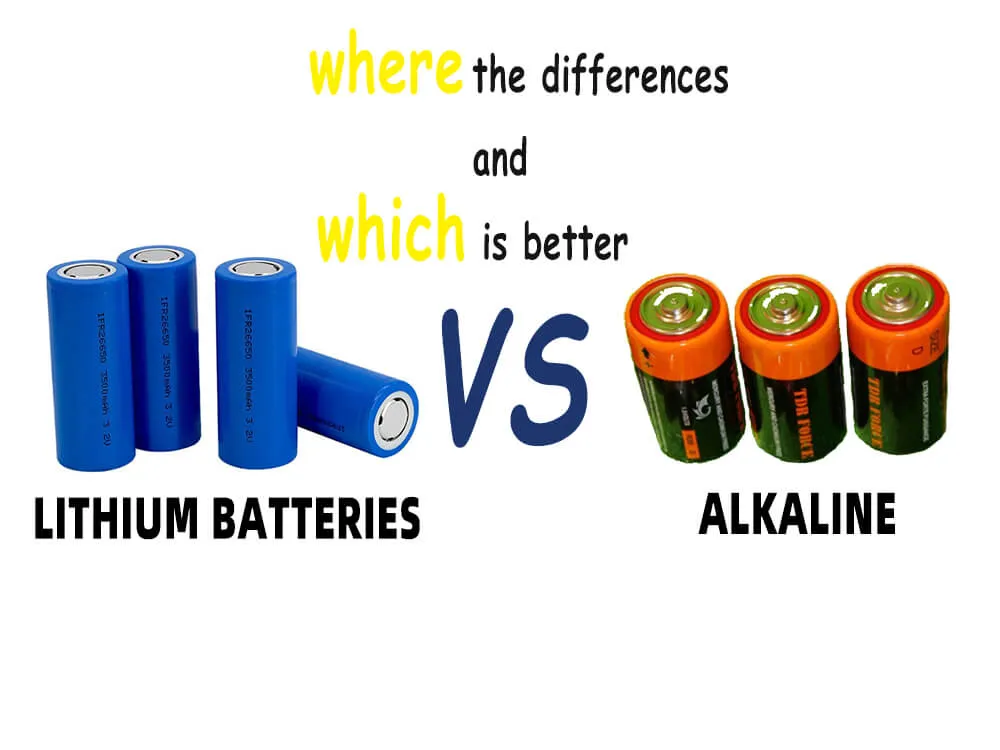
Lithium batteries are not an alternative to alkaline batteries. But, if the device is compatible with the mah and voltage of lithium batteries, you can use a lithium-ion battery on any device. Continuous discharge for an extended period is the main advantage of lithium-ion batteries.
The lithium-ion batteries are rechargeable. You cannot use any lithium batteries for your devices. But, if the power capacity and voltage are within the acceptable limit of your device, you can use a lithium-ion battery instead of an alkaline battery. Since lithium-ion batteries offer extended services and continuous discharge, they are ideal to use on medical equipment without needing frequent battery replacement.
Application of 14500 batteries
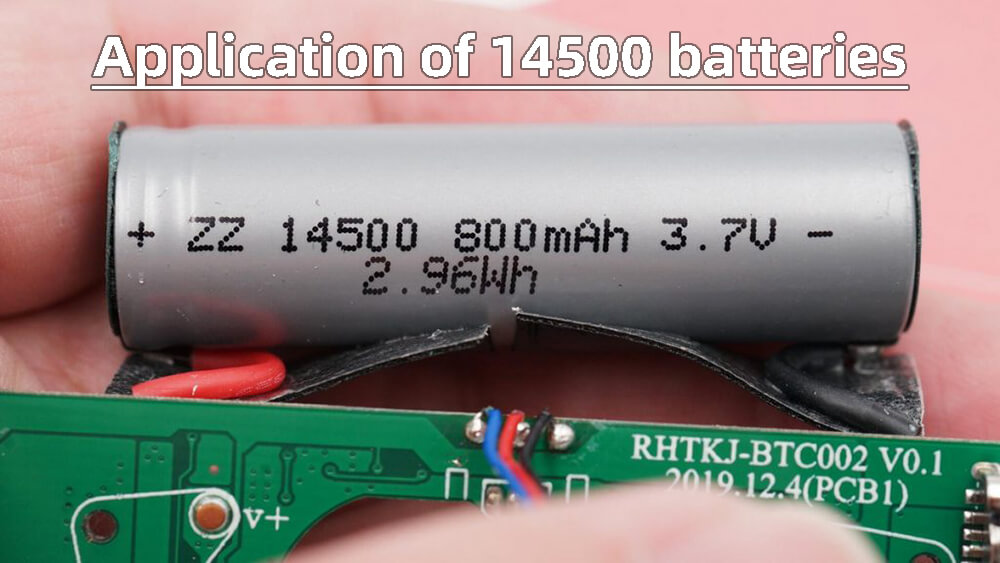
The 14500 lithium battery use mainly in flashlights as an effective alternative to aa disposable alkaline batteries. In addition to this, these batteries use in hearing aids, EKG monitors, medical devices, tollgate systems, utility metering, security devices, alarms, professional electronic equipment, automatic meter reading, utility metering, and memory back-ups systems, etc.
Conclusion
The flashlights using 14500 lithium battery will have better lumens. The flashlight will be brighter and long-lasting because it provides higher voltage. You can use 14500 lithium battery in a flashlight that operates with a single aa battery. Excess voltage can damage the flashlight LED.
So, it would be better to use a 14500 lithium battery instead of two unless the device allows using higher voltage. So, whatever be the situation, you must know the safety parameters of using a lithium-ion battery, you need these parameters to match your equipment and make your equipment more efficient.