

What is the discharge rate
The steady current in amperes (A) that can be drawn from a battery with a specified capacity (Ah) in one hour is referred to as the discharge rate (h).
What is a good battery discharge rate
In general, battery discharge rate is between 0.1C and 0.2C, e.g. lead-acid batteries, NiMH batteries. Lithium-ion batteries usually have a higher battery discharge rate, typically in the range of 0.2-0.5C and even up to 1C, 2C and 3C. Because of their high discharge rate, lithium batteries have emerged as a new force in the energy storage industry.Through China best top 10 energy storage lithium battery companies, you can learn about the progress of lithium batteries in the energy storage industry.
What is a high discharge rate? Is a higher discharge rate better?
High-discharge rate batteries can frequently be discharged quickly. In a high-discharge rate battery, the lithium ions are submerged in the positive electrode during charging but are entwined in the negative graphite during discharge.
The benefit of high-rate batteries is that they can support the regular operation of devices that need more power by delivering more power in the same amount of time than normal rate batteries. Another distinction that can be made is that a high-discharge-rate battery will have better temperature stability and tolerance than a regular discharge-rate battery.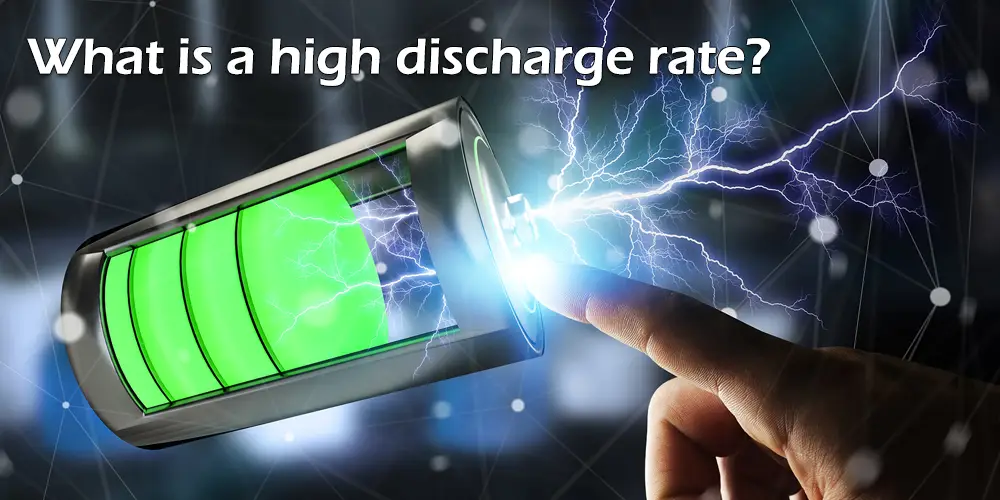
What is max discharge rate?
The highest continuous amperage that battery should be operated at is the maximum continuous discharge current, which is named the max battery discharge rate.
What is the discharge rate of lithium batteries?
Maximum Discharge Rates for Lithium-Ion are 2C and 3C. Avoid charging to 100%, it is reasonable and good for the health of the battery to keep the charge at 30%-80% .Proper charging and discharging is also an important step in battery maintenance.
What’s the chemical reaction when the battery discharges?
In lithium-ion batteries, lithium ions (Li+) act as a carrier of electrical energy, and chemically react with the positive and negative electrode materials, converting chemical and electrical energy to each other and realising the transfer of charge.When the lithium battery is discharged, the internal electric field turns and the lithium ion (Li+) breaks away from the negative electrode, follows the direction of the electric field and runs back to the positive electrode, turning back into lithium cobaltate molecules (LiCoO2).
The more lithium ions that run out of the negative electrode and transfer to the positive electrode, the more energy can be released from this battery. You can learn more about lithium battery cathode by checking our top 5 lithium iron phosphate cathode material companies in China.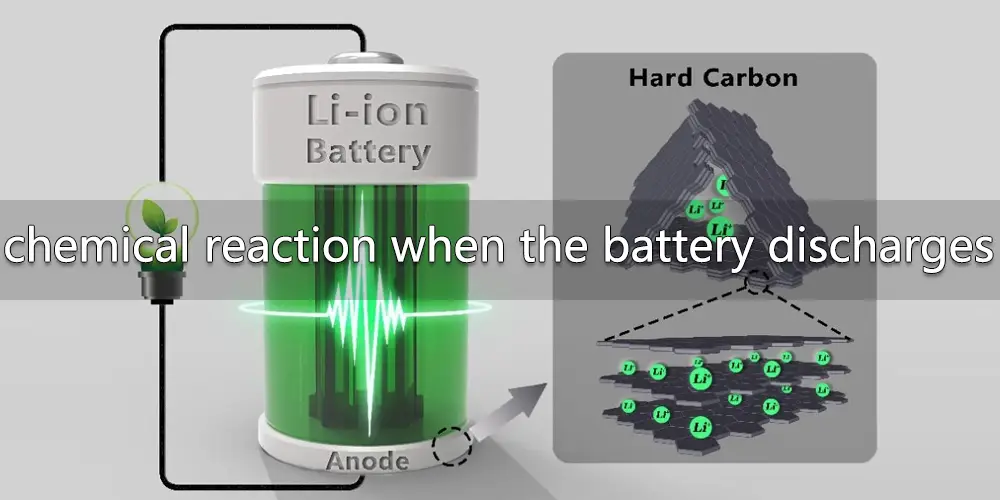
What determines the discharge rate?
In this case, the discharge rate is calculated by dividing the battery capacity (measured in Ah) by the entire time needed to charge and drain the battery. For instance, a 5000 mAh battery can theoretically be discharged to its cut-off voltage in 1 hours at a rate of 5 Ah/5A = IC.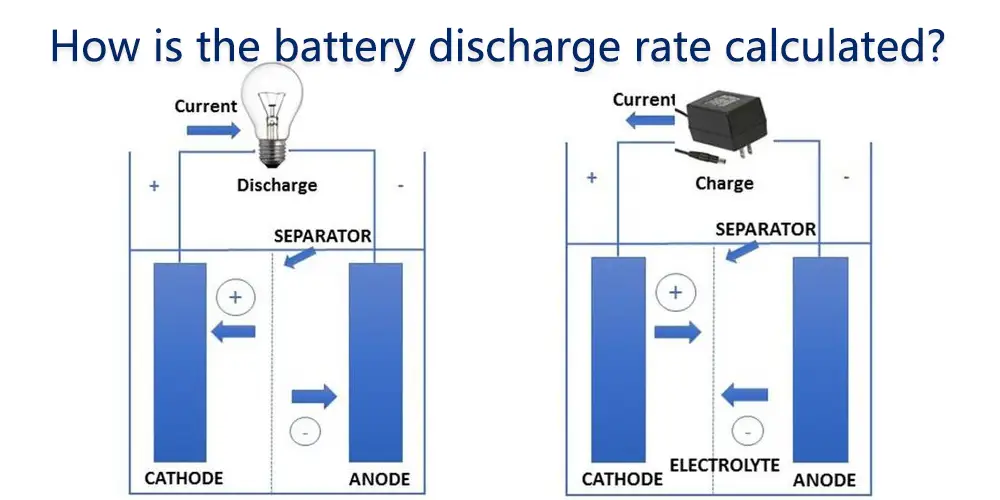
What does the 100C discharge rate mean?
Power increases the discharge rate (C-rate). 1C signifies the battery will be fully charged and discharged in one hour, 2C equals thirty minutes, and so on, with 10 C roughly equating to six minutes and 100 C roughly equating to three seconds.
The discharge current will completely drain the battery in one hour at a rate of one C. For a battery with a capacity of 100 Amp-hours, this translates to a discharge current of 100 Amp.
What causes the battery to discharge fast?
If the current power unit requires more power to support, the battery will discharge quickly. As well as when the battery is in standby.The discharge rate is also accelerated when the battery is damaged.
Why is battery discharge rate important?
A battery’s capacity to deliver the required current to the power unit it supports is significantly influenced by the rate at which it discharges. It is clear whether the battery satisfies the criteria for rapid discharge from the discharge rate statistics. The battery’s discharge rate has some bearing on the battery’s application range as well.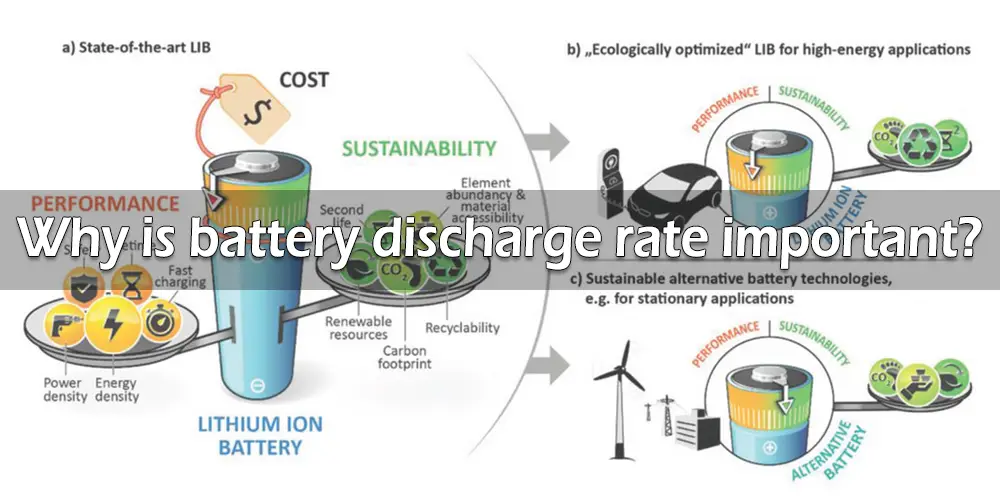
C-rates control how quickly a battery charges and discharges. It is common to describe a battery’s capacity as 1C, which suggests that a fully charged battery with a 1Ah rating should be able to provide 1A for an hour. When discharged at 0.5C for two hours and at 2C for 30 minutes, the same battery should deliver 500mA.If the discharge rate is too high, the discharge current of the battery will also increase, which can be a safety hazard and damage the battery after a certain limit has been exceeded.