Skip to content


Automotive battery recycling refers to the industry that recovers and processes used power batteries, such as 72V lithium-ion batteries,48V lithium-ion batteries, and 12V 100Ah lithium-ion batteries, from discarded electric vehicles and other equipment. Its main goal is to extract valuable and harmful materials in the battery, such as lithium, nickel, cobalt, and aluminum, so that they can be reused instead of sending them to landfill or incineration.
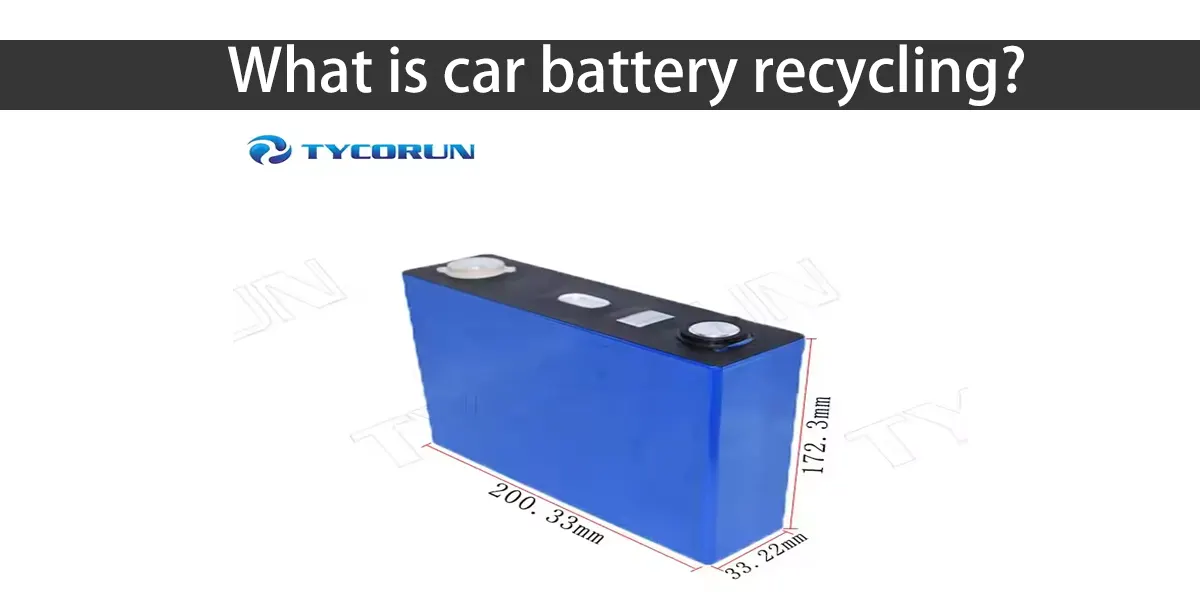
This process is crucial to environmental protection and sustainable use of resources because it can reduce the demand for mining of new materials while reducing the potential impact of discarded batteries on the environment.
Car battery recycling is crucial for the following reasons.
- Environmental protection: It can save valuable raw materials such as lithium, cobalt, nickel and manganese. The supply of these materials is limited, and mining them has a significant impact on the environment. Car batteries contain precious metals such as lithium and cobalt. Recycling can reduce the demand for new resources and reduce the impact of mining on the environment.
- Resource reuse: Proper recycling and disposal can prevent harmful chemicals from polluting the environment, thereby protecting the ecosystem and human health. Used car batteries contain harmful substances such as lead and cadmium. If not properly handled, they will cause serious pollution to soil and water sources. Through recycling, the leakage of these harmful substances can be effectively prevented and the ecological environment can be protected.

- Economic benefits: Efficient car battery recycling can help reduce the overall cost of battery production, making electric vehicles more affordable and sustainable.
- Regulatory support: Governments are gradually promoting relevant regulations to promote battery recycling and ensure sustainable development.
The EV battery recycling process involves multiple steps to ensure that valuable materials are recovered and hazardous components are safely managed.
- Collection and transportation: Used EV batteries are collected from various sources, including EV manufacturers, service centers and recycling drop-off points. These batteries are then safely transported to recycling facilities.
- Discharging: Before recycling, the battery must be fully discharged to prevent the risk of short circuits or fires during the recycling process. This step is critical to ensure safety.
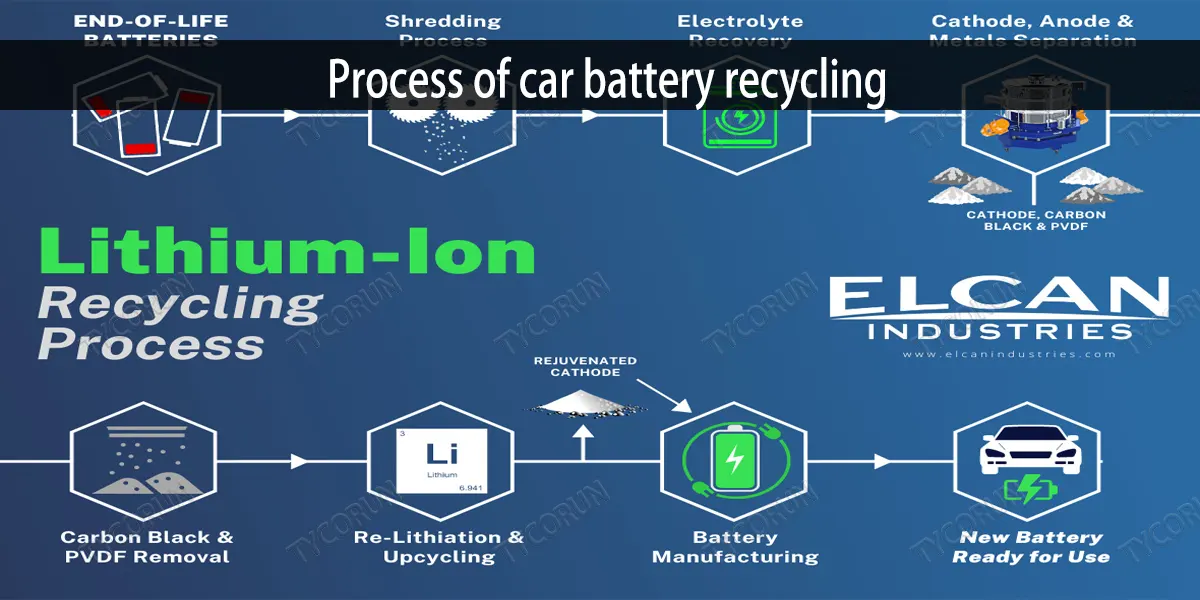
- Disassembly: The battery is disassembled to separate the individual components. This includes removing the battery casing, separating the electrodes and isolating the electrolyte solution.
- Material recovery: Recovered materials such as lithium, cobalt, nickel and manganese are extracted through various methods such as pyrometallurgy, hydrometallurgy and direct recovery technology. These materials can then be refined and reused to produce new batteries.
- Waste management: Manage non-recyclable materials and hazardous waste in accordance with environmental regulations to prevent contamination.
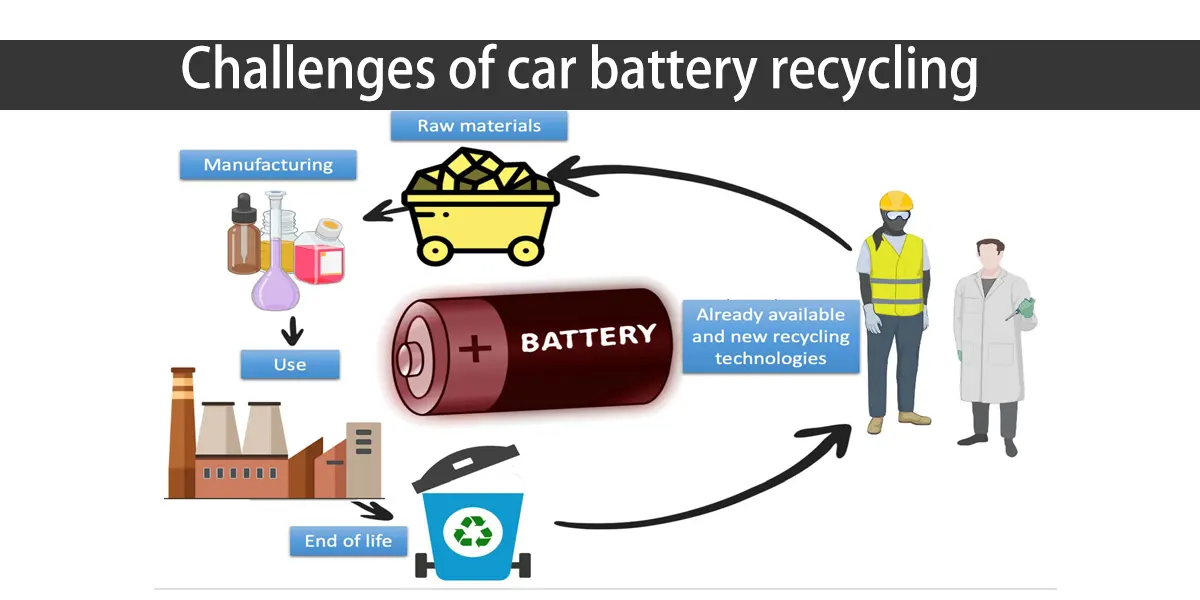
Despite the clear benefits of EV battery recycling, it still faces several challenges.
- Technical complexity: EV batteries are complex devices with a variety of chemistries and structures, making the recycling process technically demanding. Developing efficient and economical recycling methods is an ongoing challenge.
- Economic feasibility: Recycling costs can be high, especially when processing small quantities of batteries. Achieving economic feasibility requires scaling up operations and making recycling technologies more efficient.
- Regulatory compliance: Regulations for EV battery recycling vary from region to region. Understanding these regulations and ensuring compliance can create additional complexity for recycling companies.
- Consumer awareness: Many consumers are unaware of the importance of EV battery recycling and the proper way to handle them. Improving consumer awareness and engagement is critical to the success of recycling programs.
- Supply chain coordination: Effective EV battery recycling requires coordination across the supply chain, including manufacturers, consumers, and recycling facilities. Establishing this coordination is a major logistical challenge.