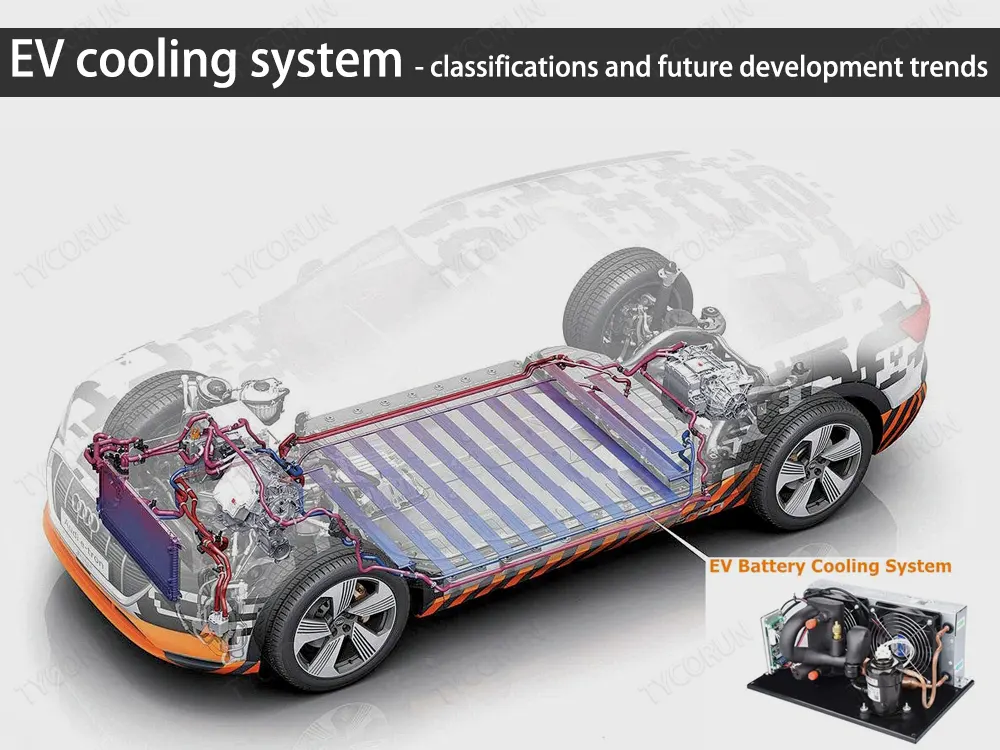

Causes and hazards of EV motor heating
EV motor as an energy conversion system with multi-physical field and strong coupling, the conversion efficiency is not 100%, in the process of converting electrical energy into mechanical energy, it will lose part of the energy, most of these lost energy is converted to heat and causes motor heating.
The loss inside the motor is mainly caused by the resistance of the winding coil, the reluctance of the magnetic material and the mechanical friction between the parts of the motor, which mainly includes the winding copper loss, the fixed rotor iron loss and the mechanical loss.

Materials with very low thermal conductivity such as insulating paint, insulating paper and air exist between the contact surfaces of key components such as motor windings, stators and shell, which increases the contact thermal resistance between various components of the motor and greatly reduces the efficiency of key components of the EV cooling system.
The high temperature rises inside the EV cooling system will not only shorten the life of the insulation material inside the EV cooling system, but also reduce the operating efficiency of the motor, increase the heat, cause the motor temperature to further rise, forming a vicious cycle, seriously affecting the life of the motor and the safety of the motor operation, thus affecting the performance of the electric vehicle, including vehicle with trolling motor battery or fish finder battery.
According to statistics, 30% to 40% of permanent magnet motor failure is caused by excessive motor temperature rise, therefore, the use of efficient EV cooling system and the control of motor temperature rise is the key to the development of high efficiency, high stability and high reliability of the motor.
The classification of EV cooling system is shown in the figure below, which mainly includes four types: air cooling, liquid cooling, evaporative cooling, and additional thermal circuit enhanced EV cooling system.
Air cooling system
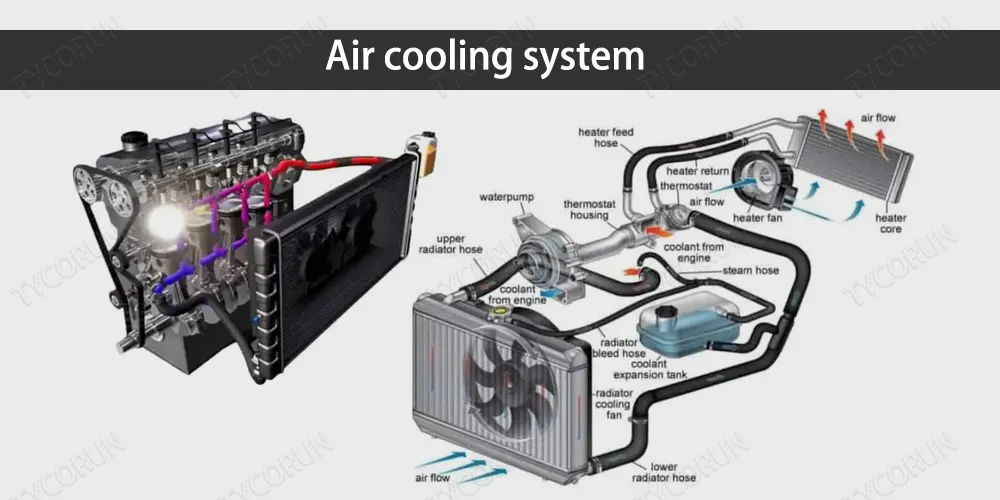
The air cooling system is usually equipped with fins on the surface of the casing to increase the heat transfer area and improve the heat dissipation efficiency. It has the advantages of simple manufacturing process, low cost and high reliability, and has been widely used in the field of heat dissipation for motors of small power density such as vehicle with power wheels battery.
The air cooling system can be divided into natural air cooling and forced air cooling according to whether additional devices to enhance air flow are used. Natural air cooling does not require additional power devices, and only conducts heat exchange through natural convection between the casing and the surrounding air.
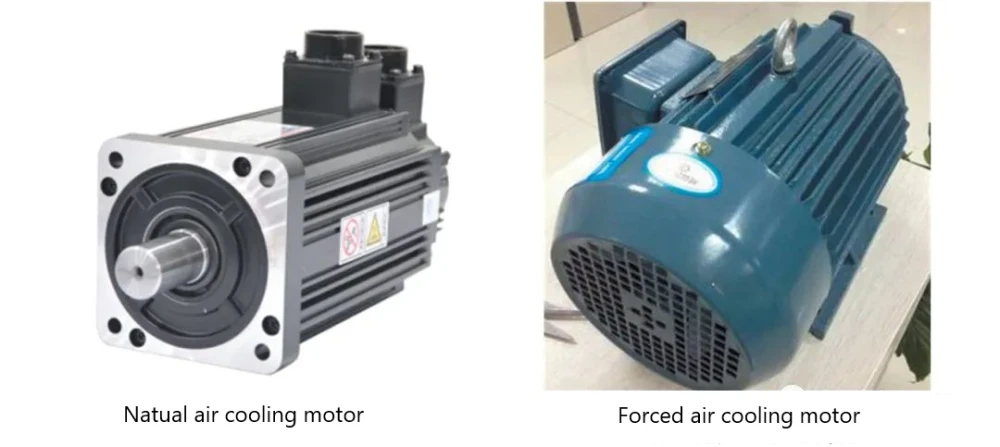
Forced air cooling usually uses a fan system to enhance the heat exchange between the EV cooling system and the outside air. The additional fan system improves the heat dissipation efficiency of the EV cooling system, but also increases the power consumption and noise of the EV cooling system to a certain extent.
According to the flow path of the airflow, the forced air cooling system can be divided into two types: external ventilation and internal ventilation. The external ventilation cooling system drives the cooling air flow on the outer surface of the casing through the fan to cool the motor.
And the airflow driven by the fan enters from the air inlet, cools the components of the motor along the airflow channel inside the EV cooling system, and then flows out from the air outlet.
Liquid cooling system
The liquid cooling system is an EV cooling system in which a sealed circulation channel is arranged inside the motor housing or inside the motor, and a circulation device is used to drive the cooling medium to circulate in the flow channel for heat exchange. According to the cooling medium, the liquid cooling system can be divided into two categories: water cooling system and oil cooling system.
Water cooling system
The water cooling system is a common EV cooling system, mainly set in the interior of the housing circulation channel, the flow channel structure mainly has three kinds of circular, spiral and axial, and a small part of the compound flow channel structure, its structure is shown below.
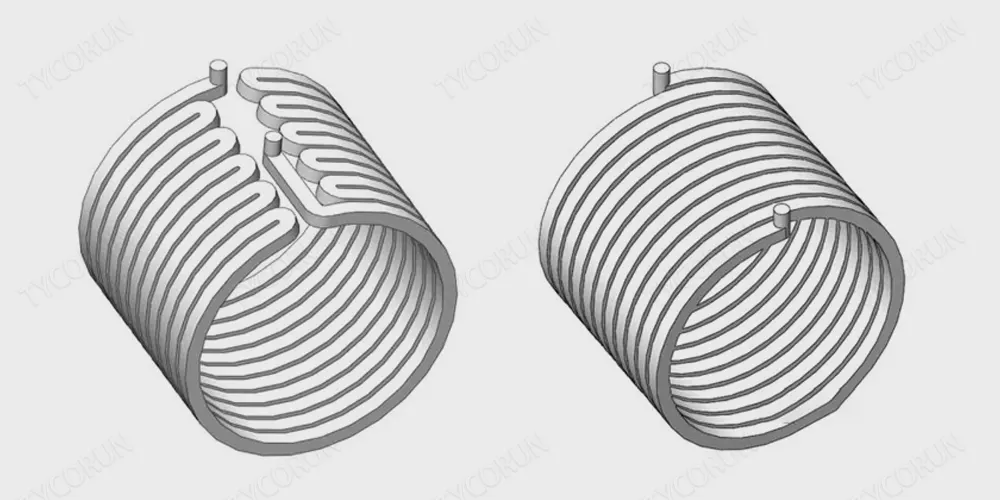
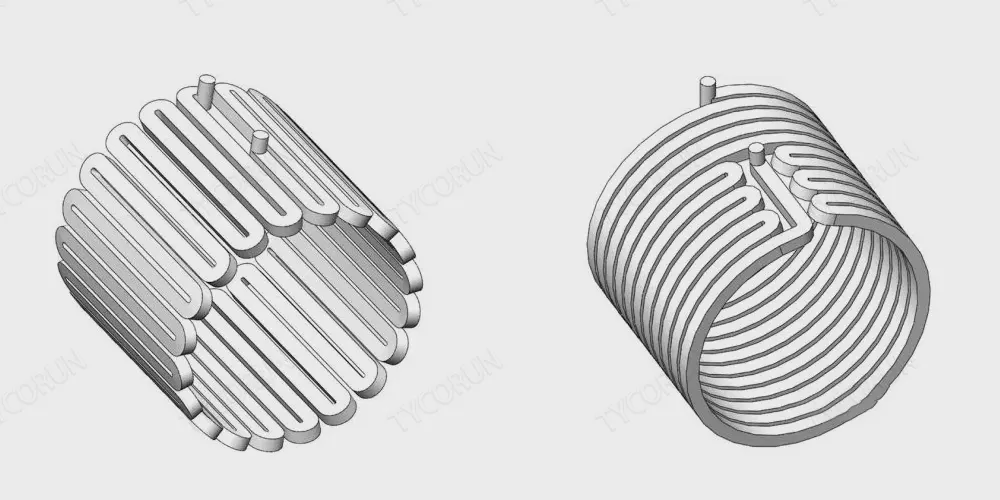
The circumferential cooling channel has a strong heat dissipation capacity, the spiral cooling channel has a small pressure loss, and the axial cooling channel has a small axial temperature gradient, which is suitable for motors with a long axial length.
Aqueous media have the advantages of no pollution, low cost, and high mass heat capacity and thermal conductivity, so they have been widely used. In order to overcome the disadvantages of high freezing point and low boiling point of the water medium, a water-ethylene glycol mixed solution is often used in actual use to lower the freezing point and improve the environmental adaptability of the water cooling system.
In addition, the water cooling system is prone to scale and corrode the casing during long-term circulation, so it is necessary to add anti-corrosion and anti-foaming additives in practical applications.

Oil cooling system
The oil medium has good insulation properties, can flow inside the motor, directly exchange heat with heat-generating components such as motor windings and stators, and can also circulate in the flow channel inside the casing. These two oil cooling methods are direct oil cooling and indirect oil cooling. Direct oil cooling can be divided into two types: oil immersion type and oil injection type.
The oil-immersed oil cooling is to immerse the stator and rotor of the motor in the cooling oil, which has a good cooling effect and can reduce the working noise of the motor, but the viscosity of the oil is relatively high, which increases the energy loss when the motor rotor rotates. The oil injection type oil cooling achieves efficient heat dissipation of the motor by spraying cooling oil onto the inner surface of the casing and the end of the stator.
The cooling medium of direct oil cooling, especially the oil-injected oil cooling, is in direct contact with the heat-generating components inside the motor, which can significantly reduce the heat dissipation thermal resistance of high-heat-generating components such as motor windings and stators, and has extremely high heat dissipation efficiency.
The oil cooling system requires a strict filtration system to filter the oil medium to prevent impurities in the oil from damaging the insulation layer inside the motor. The cost of oil cooling system is expensive, so its application scale is not as wide as that of water cooling system.
Evaporative cooling system
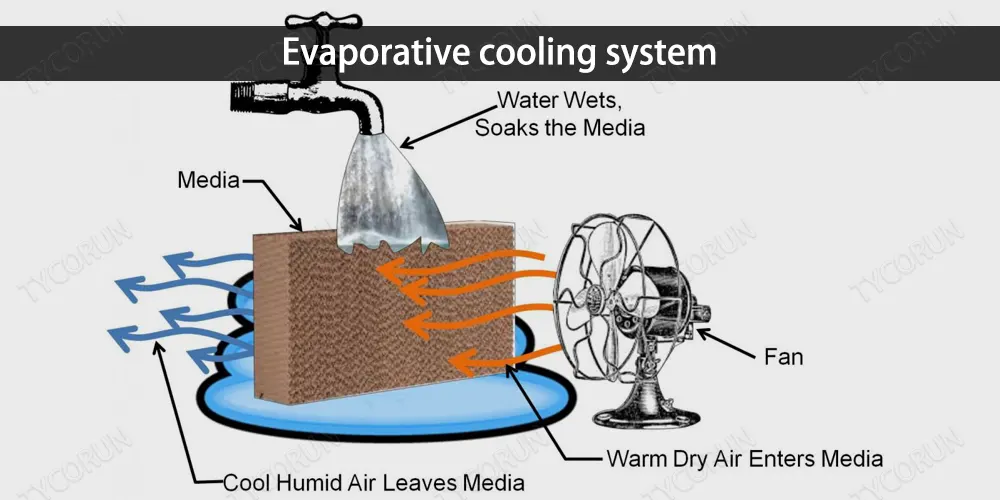
The evaporative cooling system utilizes the phase change cycle of the low boiling point cooling medium to achieve efficient cooling of the motor.
When the cooling medium with low boiling point and high insulation coefficient is in contact with the heat-generating parts in the motor, the cooling medium absorbs a large amount of heat and vaporizes, and the gaseous cooling medium is transformed into a liquid state when it is cooled in the condenser, and the gas-liquid phase change of the cooling medium is used to realize the efficient heat dissipation of the motor.
According to the boiling temperature of the cooling medium, evaporative cooling can be divided into low-temperature refrigeration evaporative cooling and normal temperature refrigeration evaporative cooling. According to the structure of the cooling system, evaporative cooling can be divided into tube cooling and immersion cooling.
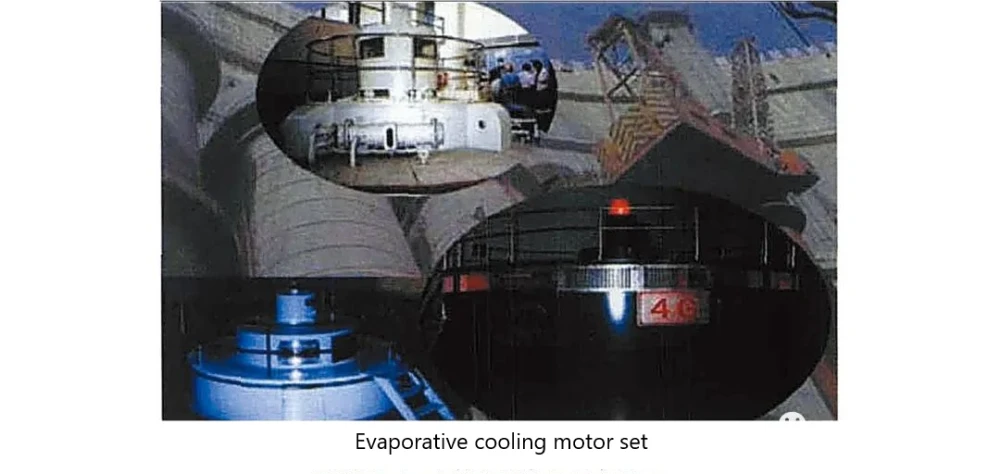
Whether the circulation system uses a drive pump or not, evaporative cooling is divided into two categories: self-circulation evaporative cooling and forced circulation evaporative cooling.
The evaporative cooling system independently developed by China has the advantages of high cooling efficiency, low energy consumption and high reliability, and has been widely used in megawatt-class turbogenerator equipment. At present, evaporative cooling technology still has problems in the selection of new cooling medium, the flow characteristics of gas-liquid two-phase flow and the calculation of heat transfer.
From the perspective of protecting the environment, traditional freon-based media cannot continue to be used, and new cooling media with good physical, chemical and insulating properties have yet to be developed. The heat transfer problem of gas-liquid two-phase flow lacks a mature theory, and a complete design calculation method has not yet been formed.
In addition, the structure of the evaporative cooling system is complex, and there are no application cases of kilowatt-level motor equipment using evaporative cooling technology. The development direction of evaporative cooling technology is to develop environment-friendly cooling medium, improve the calculation theory of two-phase heat transfer, and simplify and miniaturize the system structure.
Extra heat path enhanced cooling system
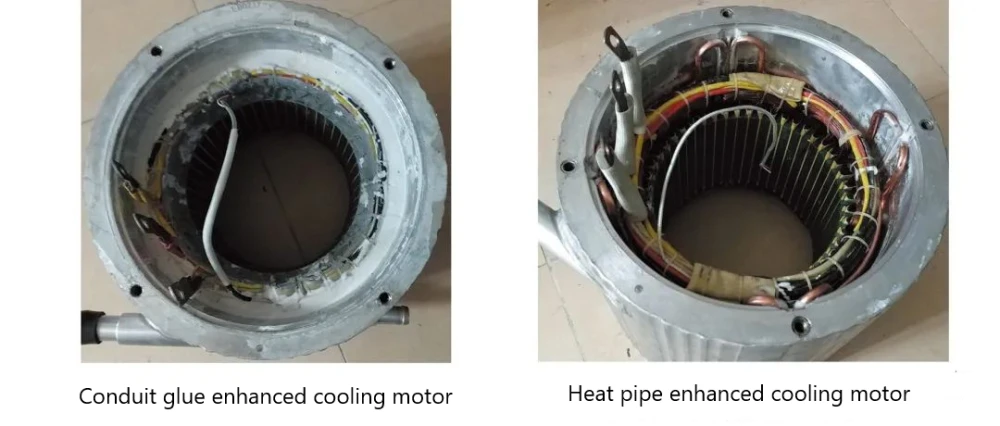
The enhanced heat dissipation system of the extra heat path is an enhanced motor heat dissipation scheme that establishes an additional high-efficiency heat path on the basis of the original air cooling and liquid cooling systems of the EV cooling system to improve the heat dissipation efficiency of the EV cooling system.
Due to the limitation of low thermal conductivity materials such as insulating paint, insulating paper and air inside the motor, the heat generated by the key heating components inside the motor, especially the end windings, cannot be quickly transferred to the cooling shell, causing a large amount of heat to accumulate in the key parts of the motor , forming a local high temperature zone.
Building an additional thermal circuit between the key heat-generating components of the motor and the cooling housing can quickly transfer heat to the housing, solving the heat dissipation problem of high-heating components inside the EV cooling system.
Insulation materials
Materials with high thermal conductivity and good insulation properties, such as thermally conductive resin, thermally conductive glue, and thermally conductive ceramics, are commonly used materials for constructing additional thermal circuits of motors. In addition, an additional heat conduction path may be provided inside the stator slot or the stator core to improve the heat dissipation efficiency of the motor.
Phase change thermal management technology
In recent years, phase change thermal management technology has developed rapidly and has been widely used in high-heat-flux electronic devices such as high-power LEDs, insulated-gate bipolar transistors (IGBTs), notebook computers, and smartphones. Phase change heat management technology mainly includes two categories: phase change heat storage technology and phase change heat transfer technology.
Phase change heat storage technology uses the phase change latent heat of phase change materials to store a large amount of heat, which can alleviate temperature shock and suppress temperature rise. Paraffin is a commonly used phase change heat storage material. Phase change heat transfer technology utilizes the gas-liquid phase change cycle of working fluid to realize high-efficiency heat transfer technology.
The heat pipe is one of the commonly used phase change heat transfer devices and it’s widely used as one of the EV cooling system. It mainly includes three parts: the shell, the liquid-absorbing core and the working fluid. The shell of the heat pipe is sealed and vacuumized.
The liquid-absorbing core is attached to the inner wall of the shell. The substance is vaporized and absorbs a large amount of heat when it is heated in the evaporating section, which causes the gas pressure in the evaporating section to rise and drives the working fluid to move to the condensing section. The liquid working medium after condensation returns to the evaporation section under the drive of the suction core.
Working principle of heat pipe
The application of phase change thermal management technology to the EV cooling system can effectively extend the stable running time of the motor, restrain the temperature rise of the motor and realize the efficient heat dissipation of the motor by building an additional phase change thermal path between the high heating parts and the cooling shell.

Phase change parts build additional heat paths
The heat dissipation scheme using phase change parts to construct extra heat path is a new idea for the development of high efficiency of EV cooling system. The phase change heat transfer element has the advantages of high thermal conductivity, low price and no external power, which can quickly transfer the heat accumulated by the heating parts of the motor to the cooling medium and improve the heat dissipation efficiency of the motor.
At present, most of the research on the heat dissipation scheme of phase change enhanced motor is to study its influence on the temperature rise performance of motor, and there is a lack of systematic research on the magnetic field distribution, efficiency and reliability of motor.
Development trend of EV cooling system
Air cooling, liquid cooling, evaporative cooling, and additional heat path enhanced EV cooling system all have their own advantages and application scenarios. According to factors such as the power of the motor, production cost, and installation space, selecting a suitable cooling solution is the key to improving the power density of the motor and operating efficiency, reliability and resilience to extreme environments.
Generally speaking, as the motor develops in the direction of high power density, high integration and high reliability, the EV cooling system is also gradually developing in the direction of high efficiency, high reliability and light weight.
The air cooling heat dissipation system has the advantages of simple structure, high reliability and low cost, and is mainly used in low-power motors with low calorific value and high reliability requirements. The liquid cooling system is the most commonly used heat dissipation method for medium to high-power motors, and has high heat dissipation efficiency.
However, the liquid cooling system requires an additional coolant circulation system, which increases the cost of the motor system and reduces the overall reliability of the system. The evaporative cooling system is an effective means to solve the heat dissipation of megawatt-scale high-power generating units, but its complex system composition limits its application in the field of kilowatt-level motor heat dissipation.
Optimizing the system structure of the evaporative cooling system and improving its integration are the main development directions of the evaporative cooling system.
To improve the cooling efficiency of air cooling and liquid cooling heat dissipation systems, researchers have carried out a lot of exploration and optimization. Using phase change materials or devices to improve the cooling efficiency of air cooling and liquid cooling heat dissipation systems is a new idea in the field of motor cooling.
Utilizing the extremely high thermal conductivity of the phase change device, the heat of the main heat-generating parts of the motor can be quickly transferred to the casing to avoid the accumulation of heat in the key parts of the motor, which is an effective means and a new direction to achieve efficient heat dissipation of the motor.
At present, most of the research on the enhanced heat dissipation scheme of the additional heat path focuses on its suppression effect on the temperature rise of the motor. Only the heat dissipation effect of this scheme has been verified, and there is a lack of systematic design and research from the motor design stage. It is worth noting that the temperature field of the motor is closely related to the electromagnetic field.
The temperature rise of the motor with the enhanced heat dissipation scheme of the additional thermal circuit is significantly reduced, and its electromagnetic efficiency must be improved.
At the same time, the excellent cooling effect of the extra thermal circuit enhanced cooling scheme can theoretically enable the motor to run stably for a long time under certain overload conditions and improve the power density of the motor.
Therefore, it is the main direction of its development to systematically study the influence of the additional thermal circuit enhanced heat dissipation scheme on the temperature rise suppression, magnetic field distribution and operating efficiency of the motor, and to verify and improve its reliability and integration.
Efficiency is the main development direction of the EV cooling system, and the enhanced heat dissipation scheme of the additional heat path is a new direction to realize the development of the motor heat dissipation system to high efficiency.
Based on the motor design stage, the development of a highly reliable additional thermal circuit integrated heat dissipation solution can not only improve the heat dissipation efficiency of the motor and suppress the temperature rise, but also improve the integration of the motor system, so that the motor will develop towards high power density, high integration and high reliability.