Skip to content



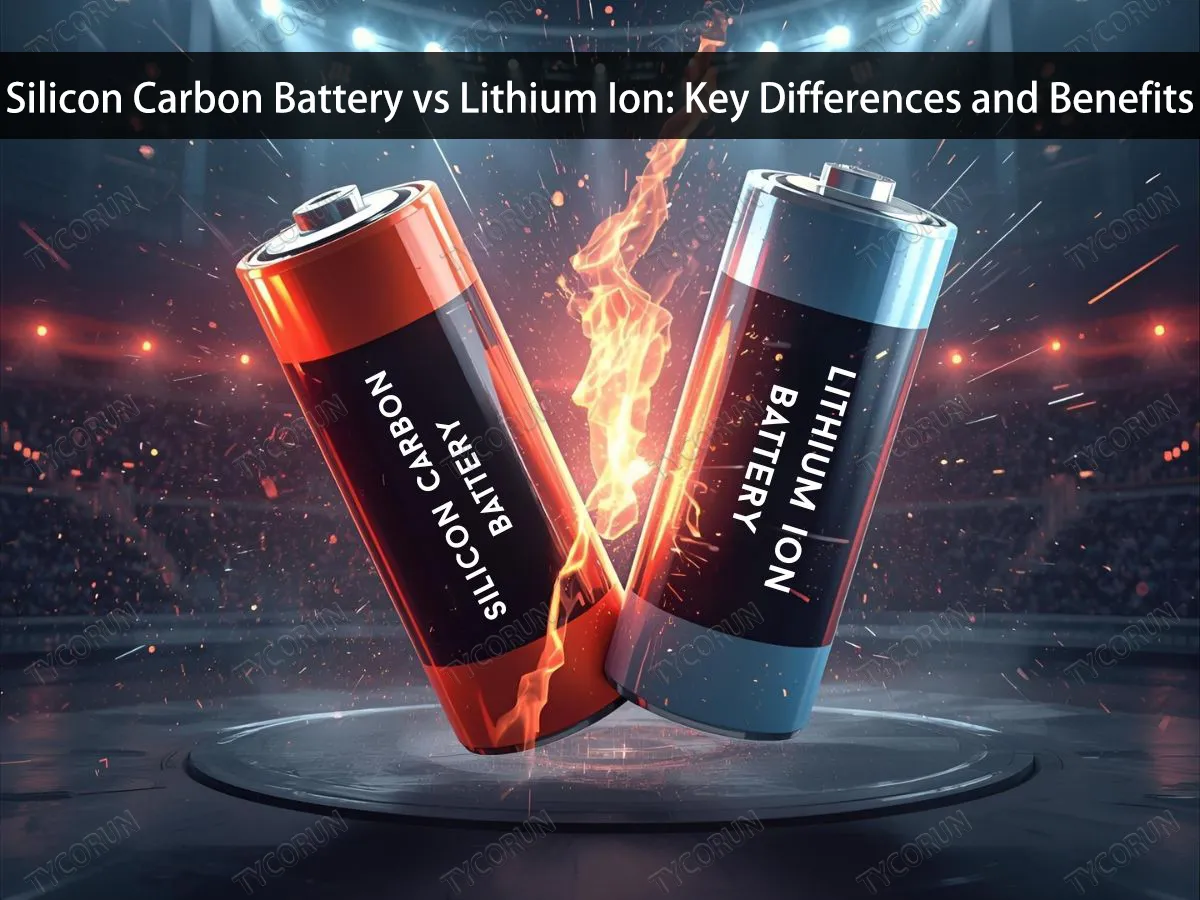
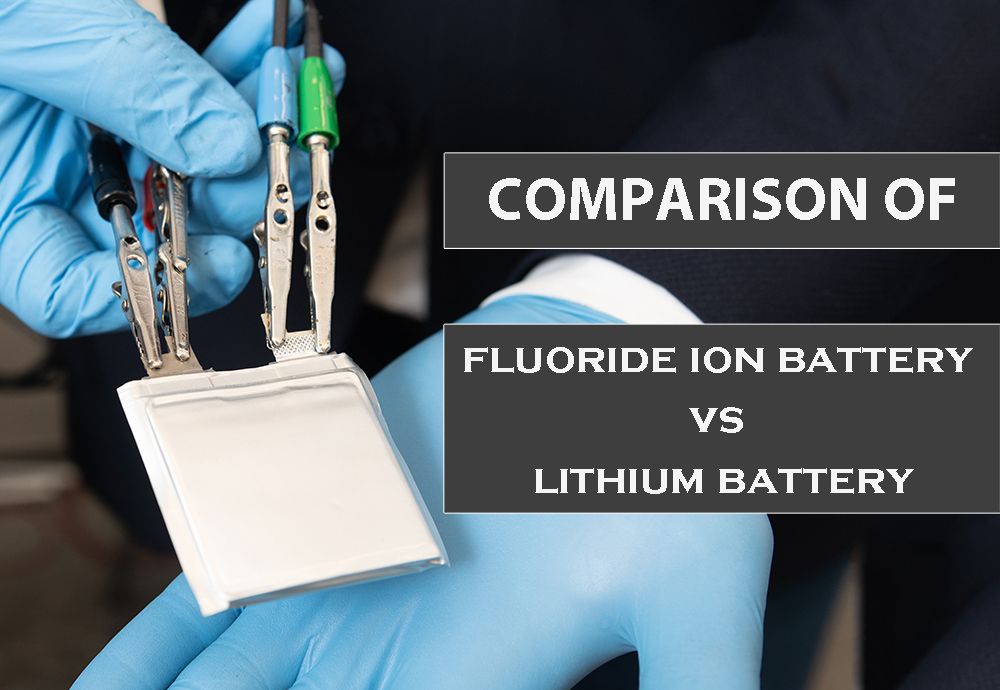
According to Japanese media reports, fluoride-ion batteries are not only newer and smaller than lithium-ion batteries, but also have a battery energy density 6 to 7 times that of lithium-ion batteries, and a cruising range of more than 1,000 kilometers. Based on the research status of fluorine ion battery, this post analyzes the future development direction of fluorine ion battery, and analyzes the commercial value of fluorine ion battery.
Comparison between fluorine ion battery vs lithium-ion battery
The global annual output of fluorine exceeds 3.5 million tons, and the mining volume is larger than that of lithium resources. Similarly, the distribution of fluorine resources is more friendly than that of lithium resources. The crustal abundance of fluorine is about 50 times that of lithium, and the pressure on the supply of raw materials is much lower than that of lithium-ion batteries. The fluorine industry chain is also more mature, which is conducive to the development of FIB.
In addition, fluorine can form a multi-electron redox reaction with other elements to produce higher volume and weight energy density, and the absence of dendrite phenomenon is also conducive to the improvement of battery safety. It seems to indicate that fluorine ion battery is more in line with social requirements and market demand as a power battery.
Research progress of fluorine ion battery electrode materials
From the perspective of first principles, the performance of any kind of battery is mainly determined by the physical and chemical properties of the electrode material, and fluorine ion battery is no exception. When the battery releases electrical energy, electrons move from a material with a high Fermi level (anode) to a material with a lower Fermi level (cathode).
At the same time, the fluoride ions escape from the positive electrode material and move to the negative electrode, and finally intercalate into the negative electrode material to keep the battery charge neutral. When designing a fluorine ion battery, the energy density, the reversibility of the (de)fluorination reaction and the feasibility of industrialization should be considered first.
In order to realize that the performance of fluorine ion battery exceeds that of lithium ion battery in an all-round way, the electrode materials used for fluorine ion battery should have: first, choose materials with lower molecular weight as much as possible; Second, the potential difference between the positive and negative electrode materials should be as high as possible within the electrochemical window of the electrolyte;
Third, the electrode material should have a good ability to intercalate and deintercalate fluorine ions, preferably the material with the smallest volume change after fluorination and defluorination, to alleviate the internal problems that lead to pulverization, loss of contact between the active material and the electrode, and degradation of the electrode/electrolyte interface. stress;
Fourth, the active material should exhibit little or no solubility in the electrolyte to prevent self-discharge and capacity loss; Fifth, the electrode active material should also have a certain degree of conductivity. Electrode materials with good conductivity can reduce processing difficulty and reduce the amount of conductive additives added. After meeting the above conditions, it is also necessary to have reasonable cost and reliable supply to ensure technological competitiveness. At present, most of the research is based on conversion reaction electrode materials and deintercalation reaction electrode materials.
Electrode materials based on conversion reactions: The first fluorine ion battery concept was proposed based on this type of material. When the fluorine ion battery composed of such materials is in the discharge state, the positive electrode is mainly composed of metal, and the negative electrode is composed of metal fluoride.
There are many types of metal fluorides. To meet the requirements of fluorine ion batteries, the ability of fluorides to conduct fluorine ions must first be considered. Among the many metal fluorides, there are two types of materials that deserve attention. When the temperature rises, the conductivity of fluoride ions is higher, mainly cubic alkali metal fluorides, such as CaF2, BaF2 and SrF2;
The other type is based on the ilmenite structure with the P3c1 point group. This type of material is mainly composed of rare earth fluorides such as LaF3, CeF3 and NdF3. Generally, the fluoride ions in the material can be increased by doping metal ions conductivity.
According to the potential, such materials are usually used as negative electrode materials for fluorine ion batteries, among which CaF2 is considered to be a potential negative electrode material due to potential and cost reasons. There are relatively few positive electrode materials that can be used as fluorine ion batteries. At this stage, few negative electrode materials show high fluorine ion conductivity.
It has been shown that the solid solution formed by introducing BiF3 into PbF2 has high ionic conductivity, and the positive electrode materials that are usually studied are mainly NiF2, FeF3, SnF4, CuF2, PbF2, BiF3, etc.
Among them, CuF2 is the most researched. Recently, some progress has been made in the fluoride research of Ni and Co. The life of the full battery in the solid-state fluoride battery at 150 ° C exceeds the cycle life of CuF2 as the positive electrode material. It has been found from some research reports that in order to maintain good cycle performance of the full battery, the current density of the battery is usually extremely small.
Electrode materials based on deintercalation reactions: This type of material is attracting more and more attention due to its high positive electrode potential and low volume change. Deintercalation reactions usually exhibit superior ionic conductivity and cycle life compared with conversion reactions.
High temperature (140–200 °C) is usually required to enhance the deintercalation reaction of fluoride ions in the solid phase, and the fluoride intercalation reaction has been experimentally demonstrated in all solid state battery. However, some reports have demonstrated that some materials can also achieve the deintercalation reaction of fluoride ions at room temperature.
Compared to the converted compounds, there is no clear indication that the defluorinated compounds would be less compatible with liquid electrolytes within a reasonable potential range. However, at high potentials, fluoride embedded in the oxide lattice of the cathode may present safety concerns due to the risk of oxygen release and exothermic decomposition.
Research progress of fluorine ion battery electrolyte: In fact, the solid electrolyte used in fluorine ion battery has many problems besides the solid-solid interface. First, high temperatures (>140°C) are often required to operate, and even at these temperatures they exhibit relatively low ionic conductivity; Second, solid electrolytes are basically not well compatible with most conversion materials;
Third, the high density of the solid electrolyte significantly reduces the specific energy of the solid battery, such as La0.9Ba0.1F2.9 replacing the liquid electrolyte, which reduces the energy density of the battery by about 42%–46%, even if a functional solid electrolyte layer with a thickness of 20mm could be fabricated, its energy density would still be nearly 35% lower than that of a similar liquid battery.
Now the research on the electrolyte of fluorine ion battery should focus on improving the liquid electrolyte, and the research on the liquid electrolyte of fluorine ion battery should focus on eliminating the influence of hydrogen, judging from the current research, no good solution has been found. At the same time, when improving the solvation effect of fluoride ions, it will also reduce the conductivity of fluoride ions. Some researchers proposed to develop optimized liquid fluoride electrolytes by using weaker Lewis acids as F solvation additives combined with SEI formation strategies.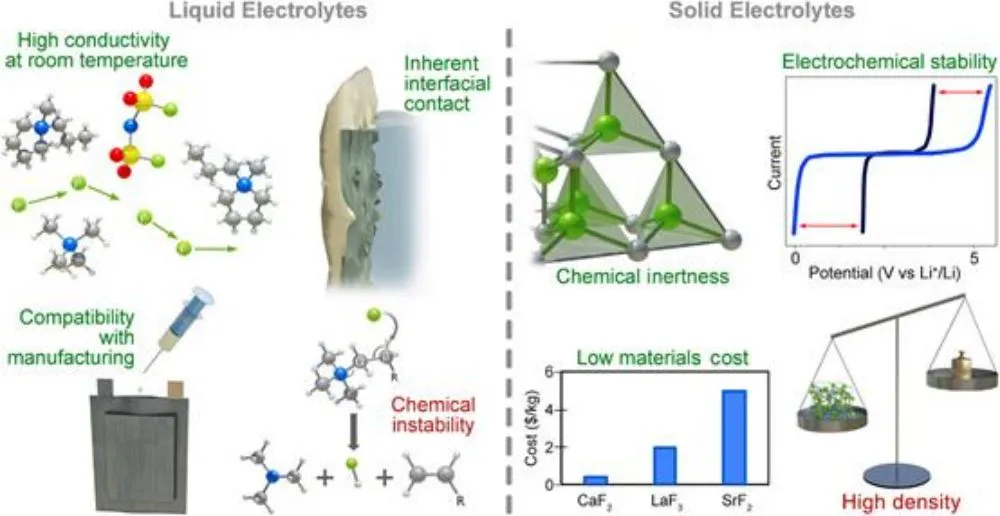
Technical and economic evaluation of fluorine ion battery
Fluorine ion battery is touted for its theoretically high volumetric and gravimetric energy density. Some scholars conducted an economical analysis of this technology by building a model, and compared fluorine ion battery based on conversion reaction and embedded type with LIB. The model shows that the fluorine ion battery based on the conversion reaction can achieve higher energy density than the NMC811 lithium-ion battery with the potential of lower cost. To achieve this goal, the successful development of liquid fluorine ion electrolyte is crucial.
Compared with the conversion reaction, the battery based on fluorine ion embedded has no advantage in energy density, and the energy density of fluorine ion battery using this kind of material in the project will not exceed 292Wh.kg -1. Future fluorine ion batteries based on deintercalation reactions could provide a lower-cost alternative to lithium-ion batteries; however, if the cost of the electrolyte exceeds $33/kg, it is completely uneconomical.
Conclusion
Theoretically, as a storage technology with higher energy density, fluorine ion battery has a good development prospect. Replacing lithium with fluorine can greatly reduce the cost of energy storage technology by using materials with higher abundance. From the perspective of technology and economy, the conversion-based FIB battery is easy to lithium battery in terms of energy density, and has a great cost advantage.
However, whether this attractive fluorine ion battery can be commercialized ultimately depends on the commercialization of liquid fluoride electrolytes. Future research on fluorine ion batteries should mainly focus on the development of safe liquid electrolytes. Judging from the current research, this kind of liquid electrolyte that can be used for fluorine ion battery is still in the research stage, and no breakthrough has been made. It can be predicted that the commercialization of fluorine ion battery still has a long way to go.
For more comparisons between new battery technologies and lithium batteries, please refer to lithium vs sodium battery, solid state battery vs lithium articles.