Skip to content


Role of battery maintainer vs charger
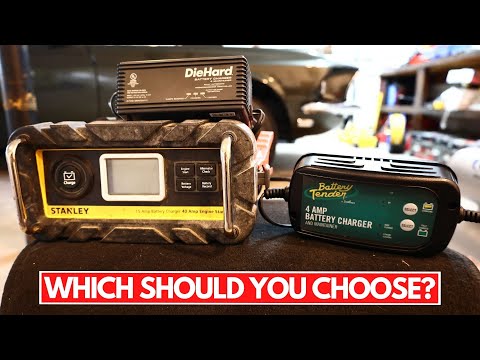
A battery maintainer’s basic task is to supply intermittent power to battery. It is mainly prepared for the lead-acid battery. It can be charged according to the battery state. When the battery voltage is lower than the ideal state, it will automatically charge the battery. A battery charger, also defined as a recharger, is a gadget that stores energy in a battery using power supply,let the battery can be used again. However, each battery has a matching charger.
What are similarities between battery maintainer vs charger
Battery maintainer vs charger are similar in appearance, both of which are designed to converts the home’s AC power into DC power to provide power for the battery. Battery maintainers can charge up lithium batteries that no discharge and long-time non operation to keep the state of charge. The modern trickle chargers may act as a maintainer.
What are the differences between battery maintainer vs charger
Intending to retain batteries charged in golf carts, cars, boats, and other devices is a comparatively great problem for individuals who often use them. The maintainer is mainly used as an auxiliary function to maintain the battery in a fully charged state.
When the battery voltage becomes low, the maintainer will automatically charge and automatically stop when it is fully charged. The charger is specially used to recharge the battery to full power in a fast and safe way. It will always use small current to maintain full power, but it may be overcharged.
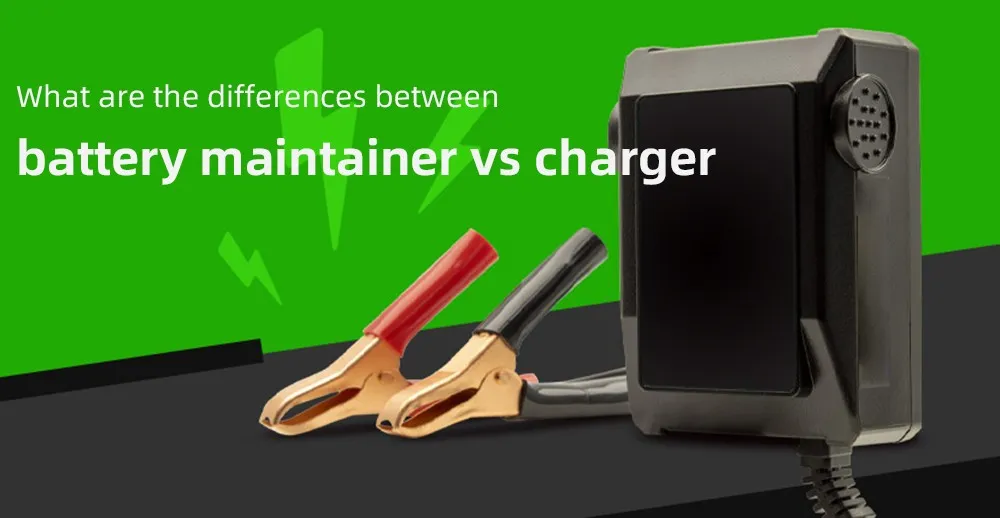
Among the key problems with chargers is that they need to be manually disconnected once the batteries are fully charged to prevent overcharging. This is the primary distinction among a battery maintainer vs charger. A maintainer does not need to be manually unplugged because it manages to turn off instantly once the battery is complete.
The main responsibility of a battery maintainer is to keep a device in proper working condition while it is being kept, generally for prolonged durations of time.
When should you use a battery maintainer
Typically, battery maintainer-equipped batteries serve as engine starters. The term “maintenance charge” relates to the reality that these battery packs cannot be charged if the machine is turned on. A maintainer would only aid you in retaining your battery charged if you abandon your vehicle parked for over two hours.
So, what causes the battery die when it’s not being use? This one is caused by a process termed as self-discharge. Anything connected to the battery, such as the laptop and gadgets in a car, could well pull very little electricity. The above response instructs us on the best times to use a rechargeable batteries maintainer.
Do lithium batteries need a battery maintainer
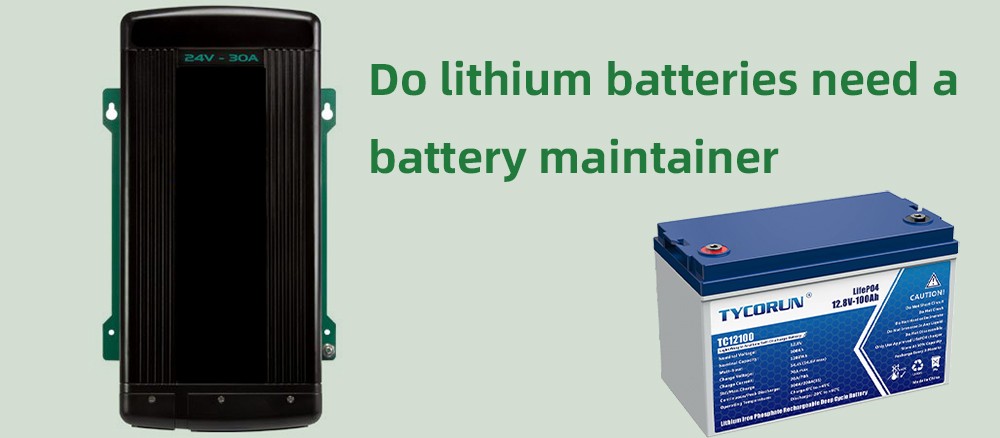
What exactly is the trend for lithium batteries in the battery maintainer vs charger debate? The quality of the lithium battery is a deciding factor in the usage of a battery maintainer.
A high-quality battery, for example, has an in-built battery management system (BMS), which makes it safe to use maintainer in these batteries. Furthermore, a maintainer designed for other types of batteries, such as lead acid batteries. Lithium ion batteries have no memory effect, and their self discharge rate is very low. They discharge 3.5% each month, so they do not need maintainers.
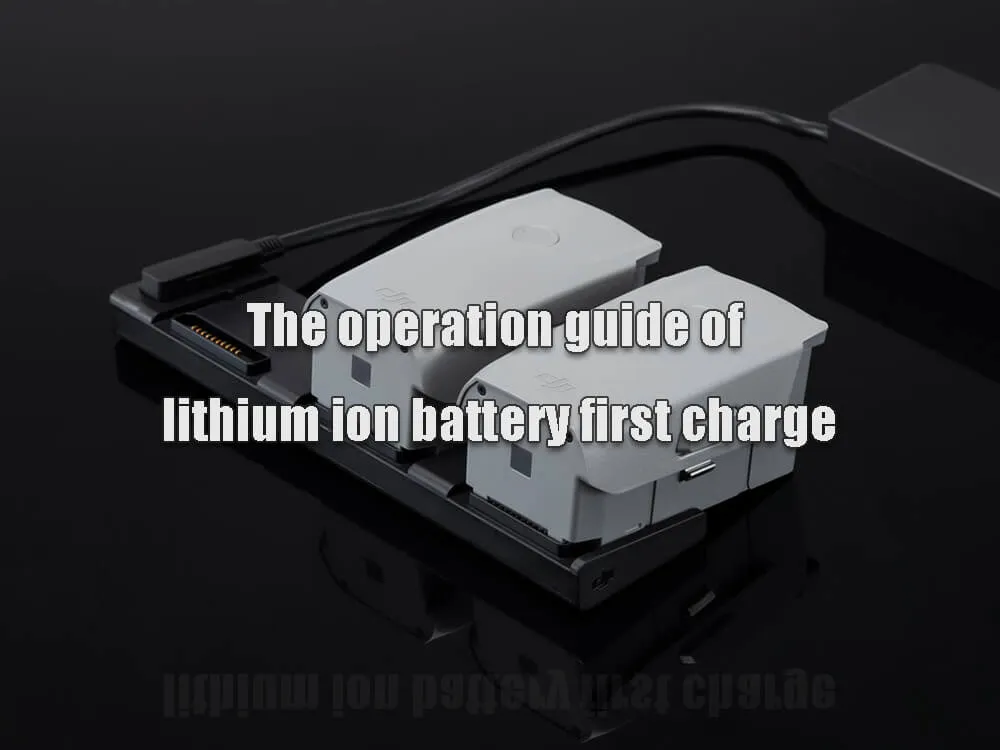
From the perspective of protecting the life of lithium battery, the charging of standard lithium battery usually goes through four steps: trickle charging (low-voltage pre charging), constant current charging, constant voltage charging and charging stop. If the lithium ion battery is not used for long-term storage, it only needs to be recharged every 5 months. Try to maintain the battery power at 35~50%.
Can we use battery maintainer as a charger
Considering each of the battery maintainer vs charger points, maintainers shouldn’t be used as charger, because maintainer only provides small current, it is not applicable to large batteries.
Battery maintainer is generally not used as a battery charger because it greatly increases the whole charging process and greatly reduces efficiency. It is generally used as an auxiliary charge. When we look at the differences between a battery maintainer vs charger, we can evidently perceive that the maintainer does not serve as a charger.
Therefore, chargers are used when batteries are drained or batteries needs to be repaired. battery maintainer is suitable for users who use batteries once a week or once a month.
Can we leave a battery maintainer on all the time
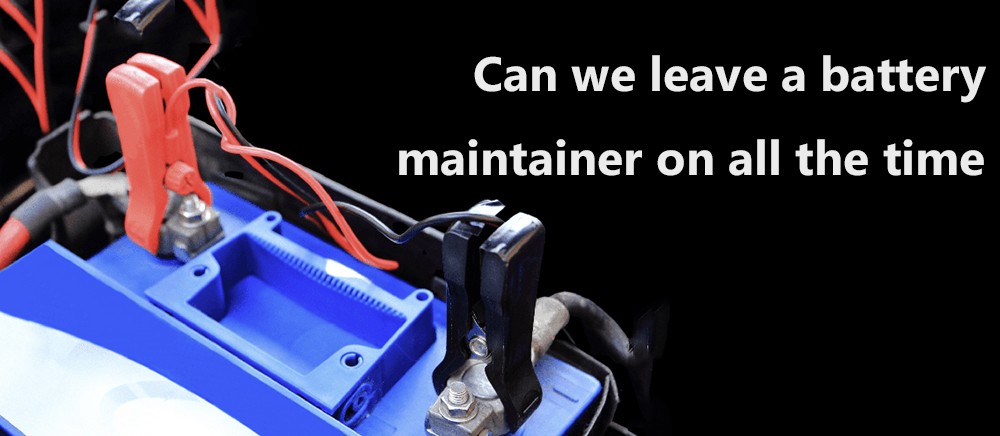
We can leave our maintainer on all the time. Battery maintainer is the option for long-term use. Prevent the battery from powering down quickly, which can help maintain the power of your device. The maintainer will stop charging when the battery is fully charged. There is no need to worry that the battery will be overcharged.
The charger of ordinary batteries will not stop charging, but keep the battery fully charged by small current charging. Overnight utilization of the maintainer, but it is not recommended to use the charger overnight to avoid battery loss caused by overcharge. The maintainer is mainly used to keep the battery power, prevent the battery from being dead or over discharged, and keep the voltage in an ideal state.
How to choose charger for lithium battery
Following are important points to remember while choosing charger for li-ion battery.
Chemistry of the battery
Each battery has a unique chemistry, and chargers are designed to accommodate that chemistry. So, before selecting a charger, ensure that it is compatible with the chemistry of the li-ion battery. There are also many kinds of lithium ion batteries. The most common ternary lithium battery and lithium iron phosphate also use different chargers.
Charging current
Charging current is a critical factor that influences the health of your lithium-ion battery. Can check the battery size used, one can easily make a good choice of charger that provides the required charging current. Too large or too small charging current is bad for the battery. To ensure the safety of battery charging, please use the current matching the battery size.
Ah ratings of batteries
The ampere-hour rating, or Ah rating, is associated with the charge storage capacity of a specific battery. The charging time of the lithium-ion battery pack is 6-8 hours, usually 0.2-0.5C. If you choose a fast charging charger, long-term use will improve the efficiency but will also consume the battery.
Charging voltage
The charging voltage should be controllable. The charger voltage must be bigger than the battery voltage, but charging voltage is too high or too low, will also affect the battery.
Safety features
When selecting a charger, safety features should be emphasized. Battery chargers that provide overvoltage and overcurrent protection, for example, are preferable to basic feature chargers.
If a charger is required for a costly battery, these factors become even more important, like the lithium-ion battery charger, there are four charging modes, which are used to protect the battery.