
The comprehensive utilization of power batteries mainly includes cascade utilization and regeneration utilization. Generally speaking, China’s cascade utilization is still in the exploratory stage, mainly focusing on demonstration projects, and has not yet formed a complete business model. The recycling mode based on dismantling and recycling is currently the battery recycling technology with the highest direct economic benefits.
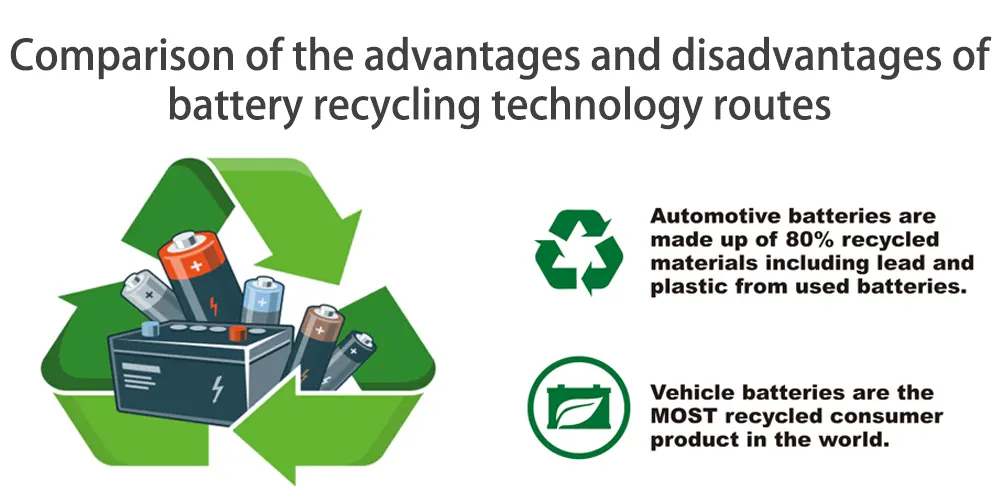
Comparison of the advantages and disadvantages of battery recycling technology routes
The power battery recycling technology refers to the centralized recycling of scrapped power batteries, the recovery of nickel, cobalt, manganese, copper, aluminum, lithium and other metals in the battery through process technology, and then recycling of these materials.
Compared with lithium iron phosphate battery, ternary lithium battery has high rare metal content, high recycling value, short cycle life, poor thermal stability, and are more suitable for dismantling and recycling. The recycling process of electrolytic materials in battery recycling technology mainly includes physical recycling, wet recycling, and fire recycling.
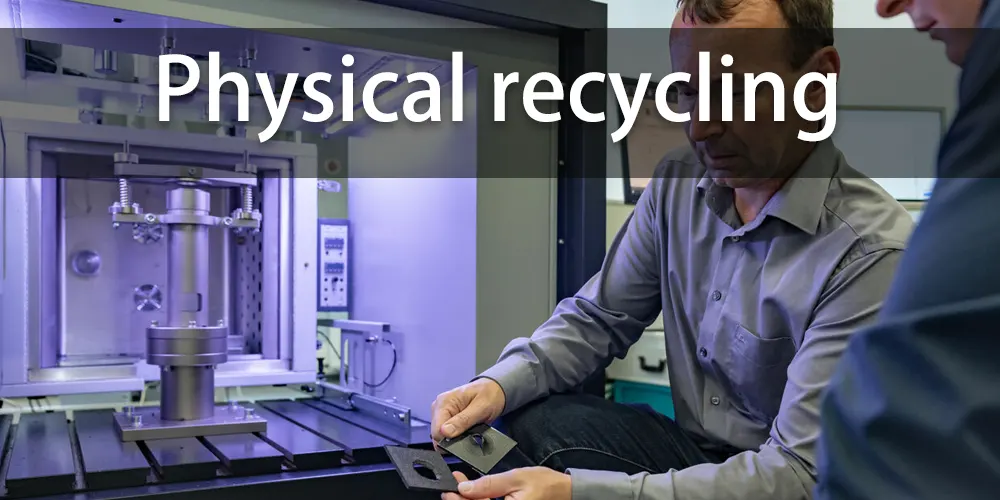
Physical recycling is the process of crushing, sieving, magnetic separation, fine crushing and classification of the internal components of waste power batteries to obtain valuable products, and then proceed to the next step of recycling. The core process is material restoration after crushing and screening, which is a relatively pure physical process.
The advantage is that it can be disassembled with all components, fully automatic, and pollution-free, and the lithium iron phosphate battery can be recycled, which is economical. The disadvantage is that it is labor-intensive and it is difficult to recover other valuable metals.
Wet recycling is to disassemble and pretreat waste batteries and dissolve them in an acid-base solution to extract some valuable metal elements, and then extract the remaining valuable metals through ion exchange and electrodeposition. It mainly includes three methods: chemical precipitation, solvent extraction and ion exchange. The core process of the wet method is to add chemical reagents to the electrode powder for leaching and extraction.
The advantages are low equipment and operation requirements, many chemical reaction options, high product purity, and high recovery efficiency for heavy metal substances in batteries. The disadvantage is that the process is long, the recovery process involves corrosive solvents, and there are problems such as waste liquid pollution.
Fire recycling refers to the direct recovery of various battery materials or metals without using a medium such as a solution, mainly including mechanical separation and high-temperature electrolysis. Generally, it is necessary to peel off the battery shell, mix the battery core with coke and limestone, and undergo reduction roasting to obtain metal lithium, cobalt, nickel, aluminum, etc. to form a carbon alloy.

Fluorine, phosphorus, etc. in the electrolyte are solidified in the slag, which can be used as additives for building materials or concrete. Then carry out deep processing, and the whole process is completed at high temperature. The core process of the fire method is high temperature pyrolysis to obtain metal oxides.
The advantage is that the process is simple, and heavy metals such as mercury, nickel, and zinc can be recovered. The disadvantages are low yield, high energy consumption, and certain waste pollution.
Wet recycling is the mainstream route of current battery recycling technology
From the comparison of the current battery recycling technology routes for recycling, wet recycling has a high recovery rate of metal elements and high purity of re-prepared products, which has become the mainstream technology route in the industry.
The cost of wet recycling is mainly composed of chemical reagents and energy costs. On the one hand, hydrometallurgy needs to consume a large amount of chemical reagents, which makes the cost of hydrometallurgy of enterprises affected by price fluctuations of chemical reagents such as sulfuric acid and sodium hydroxide. On the other hand, wet recycling is a high-energy-consuming industry, and the energy costs of enterprises are generally high.
The battery recycling technology process types of wet recycling mainly include inorganic acid leaching, organic acid leaching, alkali leaching, reducing leaching and enhanced leaching.
Although traditional inorganic acids such as hydrochloric acid, sulfuric acid, and nitric acid have been widely used as leaching agents, their disadvantages such as equipment corrosion and secondary pollution limit their further promotion.
Organic acids have been widely explored in recent years because of their good biodegradability and low secondary pollution. In addition, some organic acids can also chelate with metal ions, which is helpful for the further separation and purification of metals.
In recent years, the alkaline leaching process based on ammonium/ammonia compounds has also been developed. The mechanism is mainly that ammonium ions coordinate with metals, so that some transition metals can be selectively leached under alkaline conditions. At the same time, the leaching and selective separation of metals are realized.
Some scholars have found that when the transition metal elements in the battery are in a low-valence state, they have higher solubility in water, and reducing the oxidation-reduction potential, pH and temperature can help to obtain easily soluble low-valent metals. Therefore, reducing agents such as hydrogen peroxide, sodium bisulfite, glucose and ascorbic acid were added to the leaching system, and a new reductive leaching process was developed.
In the leaching process using traditional wet battery recycling technology, in order to improve the leaching rate and metal recovery rate, methods such as ultrasonic and mechanochemical methods will be added. It is used to accelerate the convective mass transfer between solid and liquid, and at the same time act on the surface of metal crystals to promote the dissolution of materials, so as to achieve the purpose of increasing the leaching rate.
Prospects for the development of power battery recycling technology
The issue of recycling decommissioned power lithium batteries is imminent, at the current point in time. Informal recycling channels and non-compliant recycling methods disrupt the order of the industry. Environmental issues, the safety of lithium battery recycling technology, and the economics of resource recycling are the pain points in the development of top 10 power battery companies.

At the government level, it is necessary to accelerate the promotion of legislation on the use of power battery recycling technology and strengthen the regulatory process.
At the industry level, it is necessary to establish a sound standard system in the field of battery recycling technology. The battery industry system is not yet sound, and the problem of recycling channels is still prominent.
In addition, it is necessary to speed up the formulation of standards for the power battery recycling technology industry in the subdivisions of management specifications, cascade utilization, and recycling, in accordance with the principle of urgent use first.
Focus on the establishment of recycling service outlets, residual capacity assessment, rapid detection and sorting, harmless crushing and sorting, and the compilation of standards such as the carbon footprint of recycled products.
Strengthen the full life cycle management of power batteries, promote the establishment of a unified standardized system covering the entire process of battery design, production, use, recycling, etc., and take subsequent recycling into consideration at the early stage of battery design.
Conclusion
In short, with the continuous breakthrough of battery recycling technology in the future, the standardization of industry management, and the improvement of recycling layout, the power battery recycling technology industry will gradually become a high-prosperity and high-development industry.