Skip to content
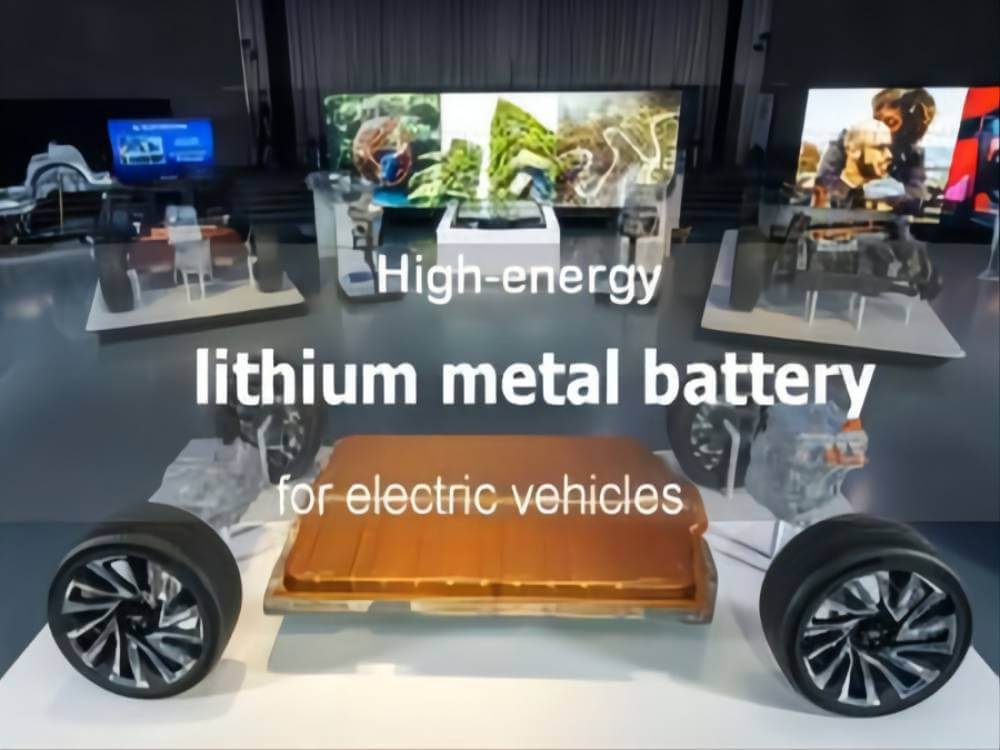


Research background
The electric vehicle (EV) market requires batteries with high energy density and low cost. Among the existing rechargeable battery technologies, lithium-ion batteries have the highest energy density, such as lithium golf cart batteries, lithium RV battery. In terms of cost, the price of commercial lithium-ion batteries is relatively low. However, to achieve mass marketization, it is crucial for BEVs to achieve a range of more than 500 kilometers, and the cost of the car is less than 40,000 $.
Unfortunately, lithium-ion batteries based on graphite anodes and lithium transition metal oxide anodes are almost impossible to achieve such high energy densities.
Presentation of results
Recently, an article entitled “Opportunities and Challenges of High-Energy Lithium Metal Batteries for Electric Vehicle Applications” on ACS Energy Lett.
In terms of energy density and cost, lithium metal battery has a huge advantage over existing lithium-ion battery, providing huge opportunities for long-range and low-cost electric vehicles. In this paper, the researchers discuss the requirements and challenges of high-energy density lithium metal battery in future electric vehicle battery packs and system applications, and highlight the latest advances in these areas.
Illustrated reading
In order for electric vehicles to successfully replace traditional internal combustion engine vehicles, driving distance and price are the most important factors to consider, and another important factor is battery life. As lithium metal battery energy density increases, more energy can be stored in battery packs of the same size or weight. Due to the longer drive range per charge, the cycle life requirements for lithium metal battery may be reduced. For EV applications, lithium metal battery requires a cycle life of at least 500-1000 cycles.
The long cycle life of LIB is the formation of a stable solid electrolyte intermediate phase (SEI) layer on the graphite anode, which prevents the electrolyte from further decomposing and spalling during cycling. However, unlike graphite, the lithium metal anode exhibits large volume and morphological variations during repeated plating or stripping processes.
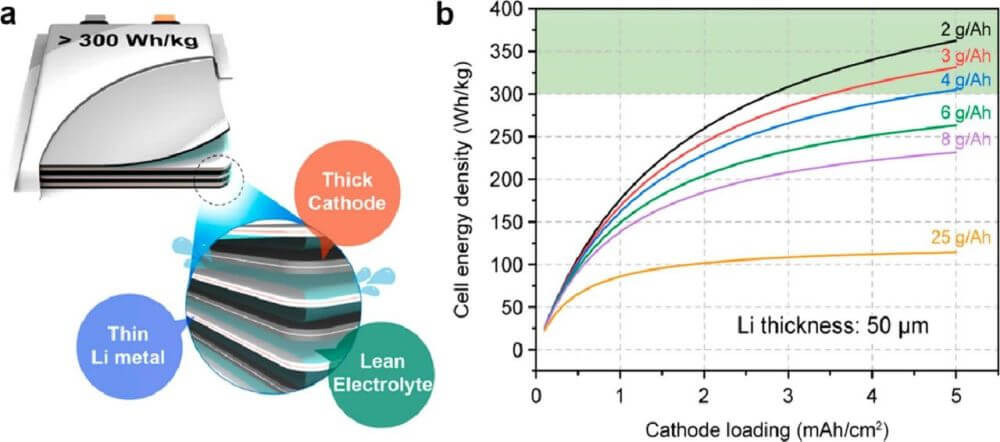
Three key parameters for bag batteries
Operating temperature range
Temperature has a great influence on lithium metal battery, and the electrochemical reaction kinetics and ion conductivity will vary with temperature changes. In extreme conditions, safety issues such as fires, gas releases, and explosions can be caused.
Microtherm. It has been found that the performance of the battery will decay rapidly below 0 °C. This attenuation is thought to be due to lower ion conductivity, higher charge transfer resistance, and lower Li ion diffusion at low temperatures. At low temperatures, lithium plating occurs on the anode electrode.
High temperature. When operating at high temperatures, lithium-ion batteries age quickly, reflected in the rapid decline in battery capacity and performance. Side reactions between the cathode and the electrolyte and changes in the inactive electrode assembly are critical for aging degradation at high temperatures.
Quick discharge and charging
The high magnification capability of the battery is critical to the performance of an electric vehicle. For any EV, regenerative braking or “refueling” of a fast pulse discharge and continuous charging energy storage system is required. One challenge in the high-speed operation of lithium metal battery is the generation of heat, which increases the battery temperature, thereby accelerating the aging of the battery. On the other hand, the morphology and recyclability of the lithium anode depends on the current density of stripping and plating.
Battery volume changes. First, the matrix-free deposition and dissolution of lithium causes the lithium anode and the entire battery to expand and contract periodically during charging and discharging. A change in the lithium anode causes a change in the volume of the entire battery by about 15%. As the thickness of the cathode increases and the excess of lithium, this relative volume change decreases. In order to apply lithium metal battery technology to electric vehicles, the battery pack needs to be properly designed to accommodate this periodic change in battery volume.
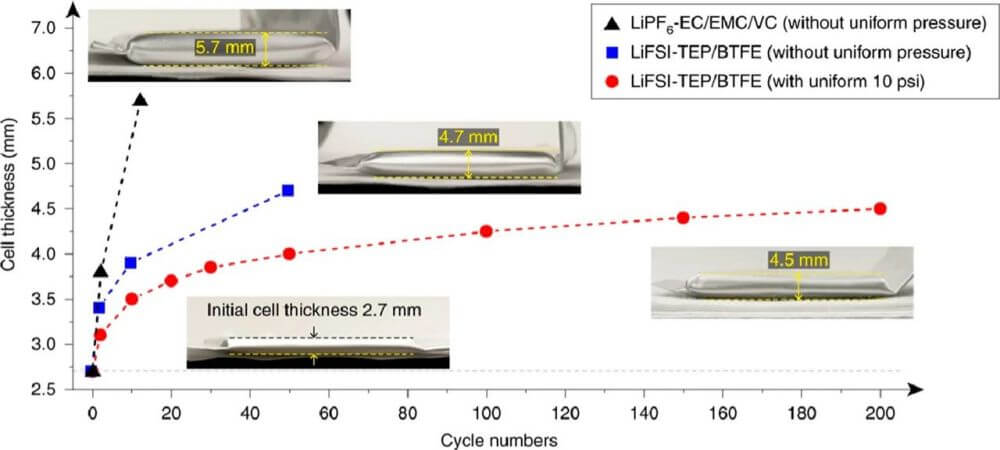
Expansion of bag batteries in different electrolytes
Expansion of bag batteries in different electrolytes. Another problem is the irreversible expansion of the battery after a long cycle. The root cause is the growth of a loose powdered lithium structure formed due to the accumulation of SEI and “dead” lithium particles insulated by SEI, which is the result of the irreversible continuous reaction of lithium and electrolyte.
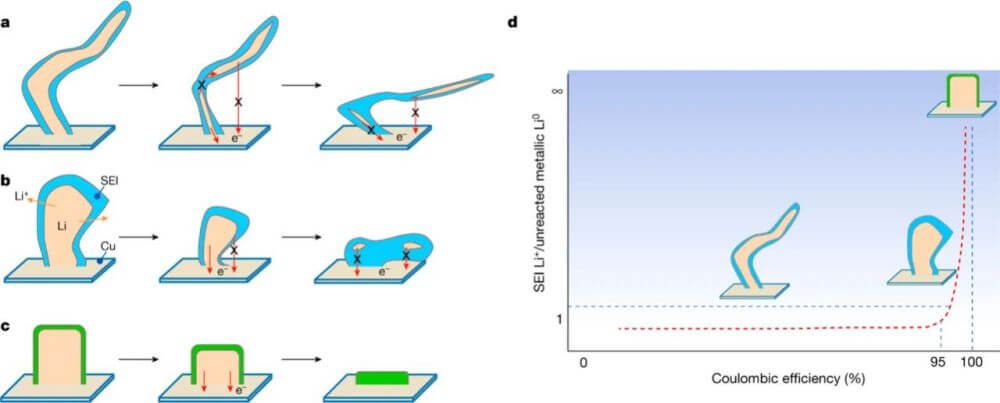
Result of an irreversible continuous reaction of lithium and electrolyte
Security
The fire safety of lithium metal battery is a major consideration for electric vehicles. Lithium metal battery with high energy density and high flammability are sensitive to a variety of conditions, including vibration, collision, overcharge or over discharge, external short circuit, high temperature, etc.
Abusive conditions will destabilize the structure and cause internal short circuits, triggering a chain reaction and leading to thermal runaway, creating serious safety issues such as smoke, gas jetting, combustion and even explosions. Spontaneous battery failures and internal short circuits can also lead to safety hazards. In addition, the formation of loose SEI and crushed “dead” lithium after repeated cycles can also pose a safety problem.
High safety performance lithium metal battery solutions for electric vehicles
Lithium metal battery challenges stem mainly from structural changes in lithium and unstable SEI during circulation. The solution strategy focuses on three main directions, including electrolyte engineering, lithium interface engineering and lithium structure engineering.
Electrolyte engineering. Different electrolytes have different stability to lithium and greatly affect SEI properties and lithium deposition morphology, resulting in significant differences in cyclic coulomb efficiency and lithium metal anode expansion. In addition, the electrolyte determines the operating temperature range of LMB, high magnification performance, and the safety of the battery.

Liquefied electrolyte of lithium – metal anode
Certain lithium halide, Cs and Rb salt additives can achieve dendrite-free lithium deposition under different working mechanisms, improving safety. In addition, in addition to conventional solvents, a liquefied electrolyte for lithium metal anode has been developed.
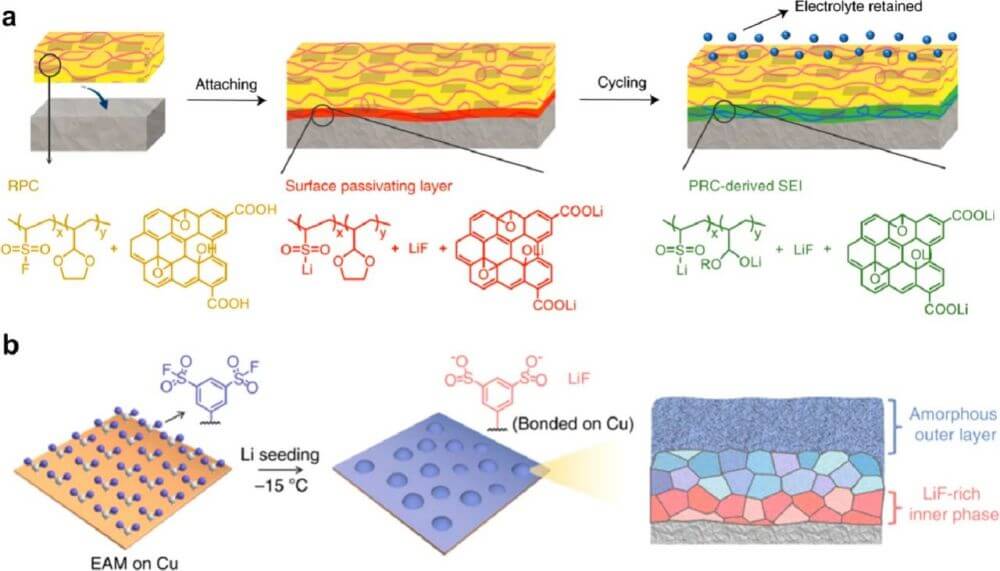
Efficient dendrite-free circulation of lithium anodes
All-solid-state batteries (ASSBs) are likely to be more expensive to manufacture than LMBs with liquid electrolytes. Therefore, the development of lithium metal-based ASSBs is still at an early stage. If you want to know what the solid state battery companies have, you can click the link to find out.
Interface engineering. Ideally, the SEI on lithium should be thin and uniformly dense, highly elastic, highly ionic, but poorly electrically conductive. It can withstand large volume changes and allows Li+ to pass through quickly while preventing electrolyte decomposition, enabling efficient dendrite-free circulation of the lithium anode. SEI, which forms naturally by electrolyte decomposition, can hardly meet all of these requirements. Therefore, surface coating with a protective layer or artificial SEI on the lithium anode is an effective method.
Lithium structure engineering. To minimize volume variations in the negative electrode of lithium metals, some 3D collectors or stable main structures with pre-stored lithium have been introduced. Increase the active lithium surface of the collector and body structure to reduce the local current density, thereby improving the magnification performance and inhibiting the lithium dendrite through ion flux homogenization.
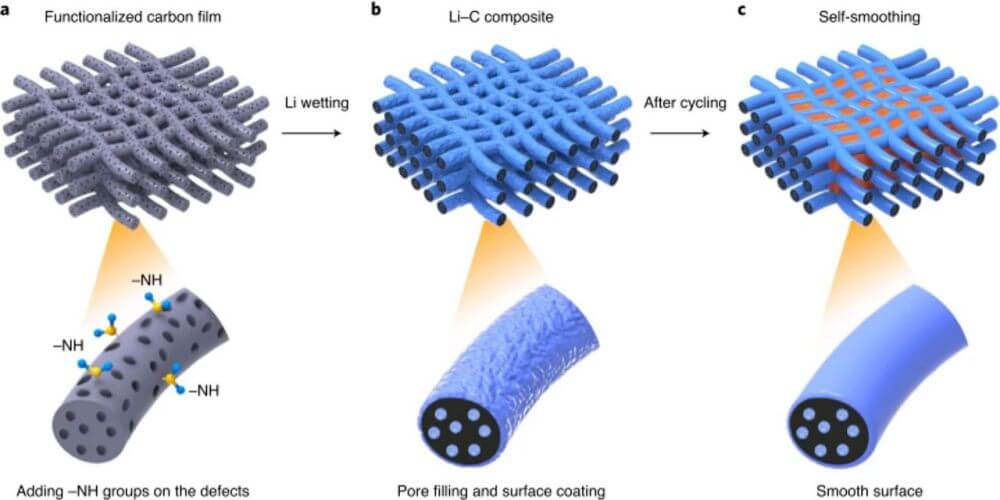
Self-slip behavior of lithium deposition in anode of Li-C 3D structure
Battery assembly strategy
For electric vehicle applications, lithium metal battery is always assembled in module form, including hundreds or thousands of large batteries. Therefore, a battery management system is required, which is essential for the safe operation of the battery. For lithium metal battery, the researchers believe that the battery management system should include at least three functions, including advanced pre-detection, pressure management, and thermal management.
Advanced pre-detection. The battery health monitoring features currently used in electric vehicles are far from being able to detect impending battery failures. However, for battery packs made of lithium metal-based batteries, it is necessary to have non-destructive online monitoring technology to find batteries that are about to fail. Impedance measurement has been proposed as an effective method, but more systematic studies are still needed.
Stress management. It has been found that optimal pressure also depends on the electrolyte. Therefore, the battery pack structure with pressure management system is designed to monitor or control the pressure within the optimal range not only improves the battery performance, but also facilitates the safe operation of the battery pack.
Thermal management. Management of single batteries and battery pack thermal runaway to prevent potential battery or battery pack safety hazards during storage or operation. The main contents of research and development include temperature distribution, sensors, heat transfer and battery management system control, etc.
Summary and outlook
High-energy lithium metal battery is expected to be used in long-range and low-cost electric vehicles, but face serious challenges in achieving long life, low volume variation, high safety, and reliable operation at extreme temperatures.