 Skip to content
Regarding agm battery, we have compared agm battery vs lithium, and concluded that in many application scenarios such as marine and solar system, AGM cannot replace lithium ion marine battery, and lithium ion solar battery, etc., So if we compare agm battery vs lead acid, what will be the result, please continue to read.
What is a lead-acid battery
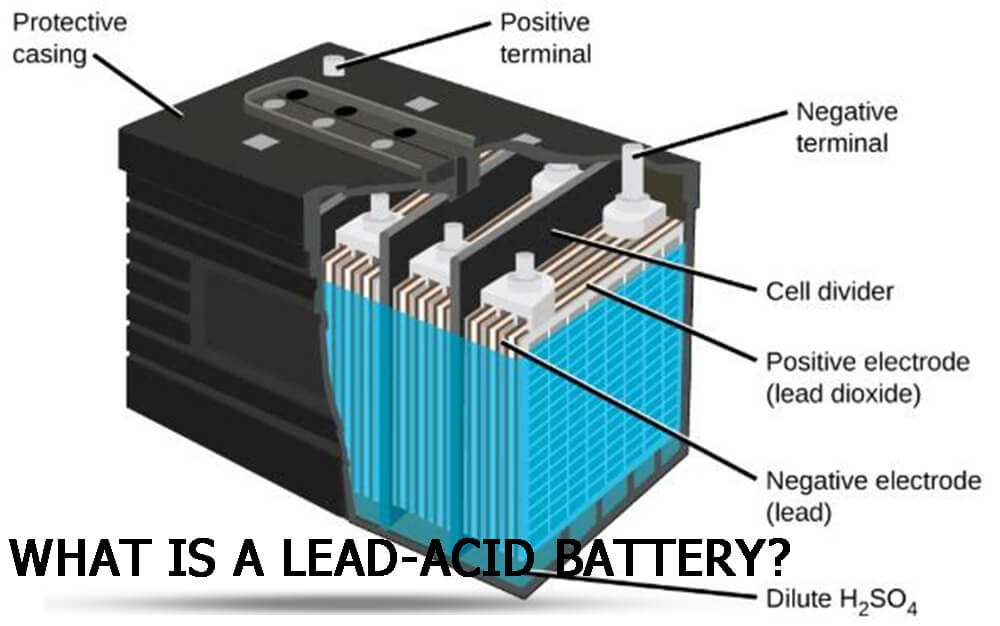
The setup of most batteries features an electrode immersed in an electrolyte. In the case of lead-acid batteries, two electrodes are positive and negative, are engaged in sulfuric acid (the electrolyte). The cathode is lead doxide, while the metallic lead is the anode.
Lead-acid batteries are the first rechargeable batteries invented, classified into two types; flooded lead-acid batteries and valve-regulated lead-acid batteries. Of these two classifications, the flooded lead-acid batteries are cheaper than the valve regulated types but require more maintenance and ventilation. This setup is the foundation of the comparison of agm battery vs lead acid.
What is an agm battery
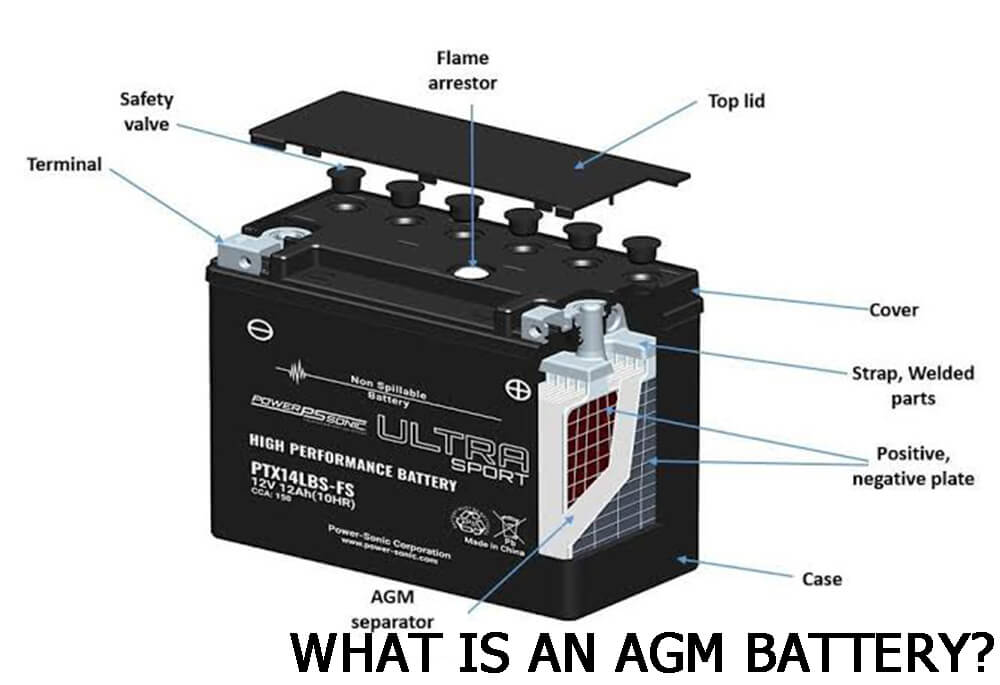
AGM battery, otherwise called absorbent glass mat battery is a valve–regulated lead acid battery. VRLA battery means a battery other than vented lead-acid battery that uses a pressure relief valve to seal the battery and is known to be of two primary types: agm battery and gel cell battery. It is also a sealed lead battery, described as one that absorbs a certain amount of electrolyte in the plate separator, making the negative and positive electrodes proportional in order to promote the reorganization of oxygen within the battery.
Differences between agm battery vs lead acid
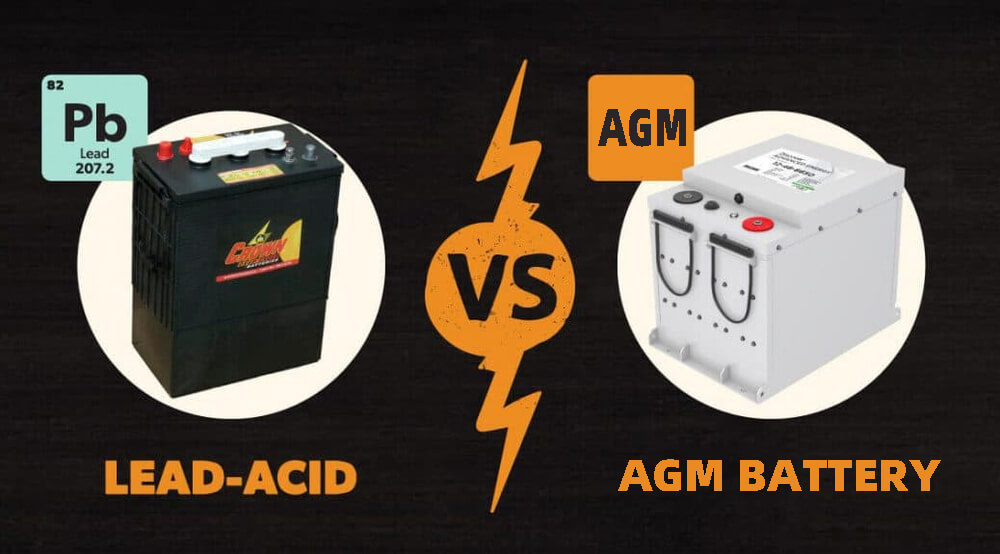
The contrast, agm battery vs lead acid still holds, even though AGM batteries are typified as forms of lead-acid batteries. They differ in varying conditions, one from the other by contrasting features highlighted below.
Working principle
The working principle of batteries is dependent on their construction. AGM batteries are constructed like most batteries, having electrode plates and electrolytes. However, the distinguishing feature is the addition of a fibreglass mat well fitted between the electrode plates to absorb the electrolyte. The tightly packed mat within the electrodes helps the battery’s resistance to vibration; it also prevents spillage. This property precipitates the discussion on agm battery vs lead acid.
The amount of electrolyte is about 90% of the battery capacity, to allow oxygen escape through the pores not occupied by the electrolyte. AGM batteries tend to remain free and non-spillable, holding and suspending the electrolyte mixture, like a sponge with tiny glass fibers, while maintaining evenly distributed contact with the active lead material on the plate.
However, the construction of flooded lead acid batteries is slightly different and is a significant component considered when agm battery vs lead acid is discussed.
It is structured like the AGM battery, in which an electrolyte and electrodes are present. However, this older model does not have an electrolyte–absorbing mat; as such, the electrolyte is in direct contact with the lead electrodes.
In giving the contrast, agm battery vs lead acid, various features, including temperature tolerance, spill-proof and service life, establish the difference between this set of batteries. These properties are further described.
Temperature tolerance
The rate of electrolyte exposure to temperature changes depicts the dissimilarity between AGM batteries and flooded lead-acid batteries. The glass mat present in AGM batteries shields the electrolyte from the direct effect of climatic changes, it improves cold start capability, power consumption and longevity.
Therefore, the battery does not contract or expand in response to cold and hot temperatures. However, this is not the same for flooded lead acid batteries. The absence of a mat exposes the electrolyte, whose contraction and expansion (in response to the corresponding temperature) stimuli can damage the battery plates, break open the outer jacket and cause leakage (fluid spillage) or cause battery failure due to rapid liquid evaporation (in hot regions).
Service life
AGM batteries are structured to have a long lifespan, which is related to the number of cycles. They have a low discharge rate which ensures that they do not consume power swiftly when compared to flooded lead acid batteries. Therefore, in the contrast,agm battery vs lead acid, while AGM batteries can last nearly 300 – 800 cycle times, its counterpart (flooded lead acid batteries) last about 350 cycle times.
Internal resistance
When the resistance is high and excessive heat is generated, a battery loses power. However, there is an increase in voltage supply and overall utility for batteries with low resistance. AGM batteries have a low internal resistance, ensuring these batteries produce an increased voltage output for long periods. This is an essential feature in the deployment of AGM batteries in automobiles and a strong reason for the need to clarify agm battery vs lead acid.
Charging time
In comparing agm battery vs lead acid charging time, agm batteries have been found to charge faster (at least 5 times more) than flooded lead acid batteries. In addition, since power is not significantly dissipated due to the low internal resistance in agm batteries, these batteries experience quick charging, unlike flooded lead acid batteries.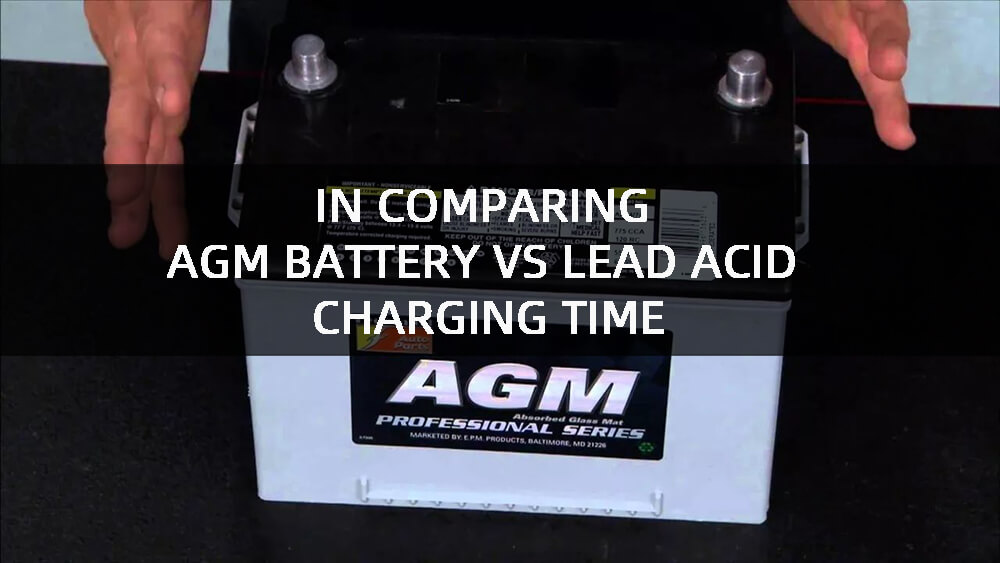
Discharge
The percentage of battery capacity drained is a function of the battery depth and is useful in describing agm battery vs lead acid. The depth of discharge is related to the battery life. The depth of discharge indicates the releasable capacity of this battery.
The self-discharge rate is related to the solubility of the cathode material in the electrolyte and its instability (easy self-decomposition) after heating. For example, agm batteries have a depth of discharge of around 80%, compared to flooded lead acid batteries with 50%. In proving agm battery vs lead acid, this implies that agm batteries will have a reduced release rate and a longer usage time, while flooded lead acid batteries would have a reduced usage time.
Overcharging
In fixing agm battery vs lead acid, agm batteries are sensitive to overcharging. This is because the battery is totally sealed, and when overcharged, there is no way the heat generated escapes. In addition, the electrolyte content is also used up, and since it is irreplaceable, the battery packs up.
However, flooded lead acid batteries are not sealed, allowing for heat dissipation; the fluid content could also be replaced. They withstand overcharging better, which is important in discussing agm battery vs lead acid.
Maintenance
In the match agm battery vs lead acid flooded battery, agm batteries have been found to require little or no maintenance, not requiring constant checkups. However, in contradistinction, conventional lead-acid batteries require a castable every six months to prevent the build-up of sulfation, thus requiring constant checkups and repair whenever necessary, and they are often placed in a metal box to provide basic protection for the battery.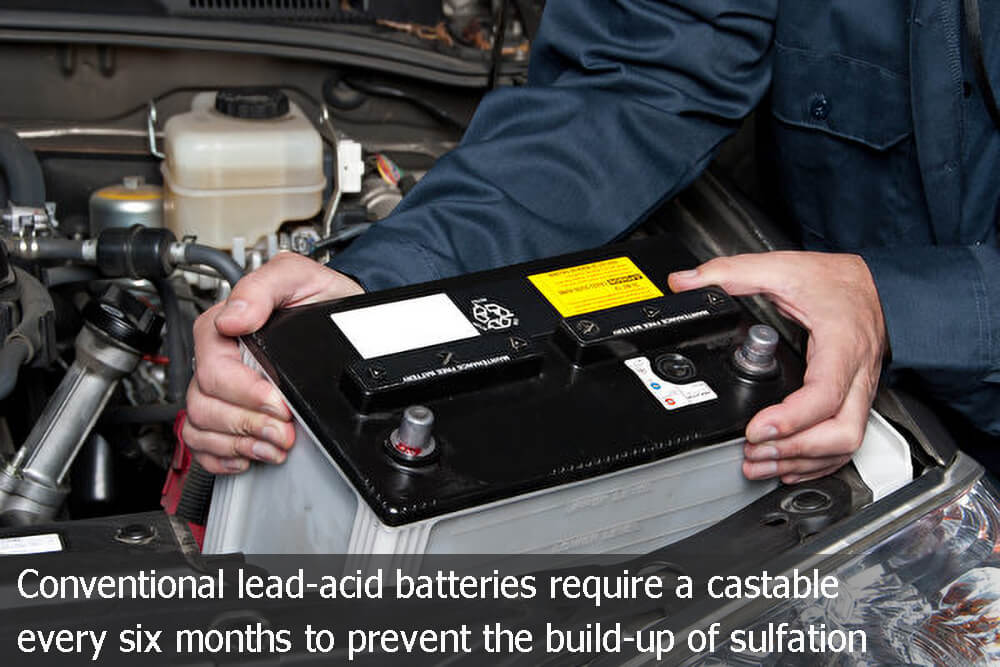
Similarities in agm battery vs lead acid batteries
Actually agm batteries and lead acid are pretty much the same as far as the fundamental elements of batteries. They are both made up of lead electrodes immersed in an electrolyte (sulfuric acid). Therefore, the chemical reaction of both batteries yields a mixture of gases (oxygen and hydrogen) as byproducts – similarity in agm battery vs lead acid.
Which is better-agm battery vs lead acid
In comparing agm battery vs lead acid flooded battery, the chief factors in determining the better battery are the lifespan and degree of safety, durability and resistance to harmful stimuli.
Pros and cons of agm batteries
●Pros of agm batteries
AGM batteries are sealed batteries and are built as no maintenance; there is, therefore, no need for a consistent checkup of battery health; an advantage in agm battery vs lead acid.
Furthermore, AGM batteries are spill-proof because the fiberglass absorption will absorb sulfuric acid and prevent battery spillage, ensuring that the batteries perform better. In addition, the batteries are less prone to environmental conditions like heat and cold. They also charge five times faster and are preferable in agm battery vs lead acid.
●Cons of agm battery
These batteries are sensitive to overcharging and undercharging, affecting their effectiveness. They offer the best utility when used in equipment that requires a renewable energy source (power).
Pros and cons of lead acid batteries
●Pros of flooded lead acid batteries
They are best used as backup power supply systems; they are cheaper than AGM batteries and are highly reliable, as they are not that sensitive like agm battery, to overcharging like AGM battery and thus sometimes preferred in agm battery vs lead acid.
●Cons of flooded lead acid batteries
These batteries are prone to leakage and are termed high maintenance batteries because of the free-flowing fluid within the jacket. This signifies that they could be damaged easily, should any precipitating factor (environmental changes like heat and cold) be present.
Now, in a bid to solve the selection challenge in agm battery vs lead acid flooded battery, AGM batteries are found to have a lifespan of 4 – 6 years, with flooded lead acid batteries having about 2 years. The former is more resistant to temperature changes than the latter and thus last longer.
However, this poses some level of safety as people are not directly exposed to the produced gases, as the gases are recombined into liquid in the battery, compared to flooded lead acid batteries. AGM batteries still retain their considerable life span. These properties often prove that AGM batteries are better in agm battery vs lead acid.
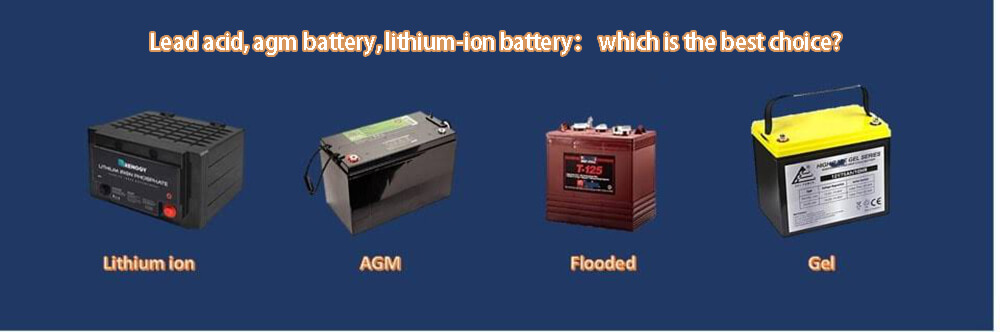
Lead acid, agm battery, lithium-ion battery-which is the best choice
In deciding the best solar battery, pitching agm battery vs lead acid is incomplete without considering lithium-ion batteries. Lithium-ion batteries are known for their long lifespan (shelf life) and light weights, so much so that even when compared to AGM batteries, can provide instant high power, and offer great utility because of their remarkably high capacity, low discharge rates, more considerable discharge depth, low weights and ultimately, a remarkable longer lifespan.
This resilience makes lithium-ion batteries the better choice compared to AGM batteries and other forms of lead acid batteries there might be.
FAQs about agm battery vs lead acid batteries
Are agm batteries worth the extra money
This is mainly determined by the utility expected by the battery. In most automobiles and other equipment, AGM batteries outperform other lead acid batteries, providing protection from spillage and damage to vehicle parts, long lifespan, performance, and maintenance. Since AGM batteries have low internal resistance, they allow large currents to flow. And this feature makes AGM batteries highly reliable.
When compared with the downside of flooded lead acid batteries, all these prove that AGM batteries are, without a doubt, worth the extra money for a purchase and prove the superiority of agm batteries as opposed to lead acid Battery.
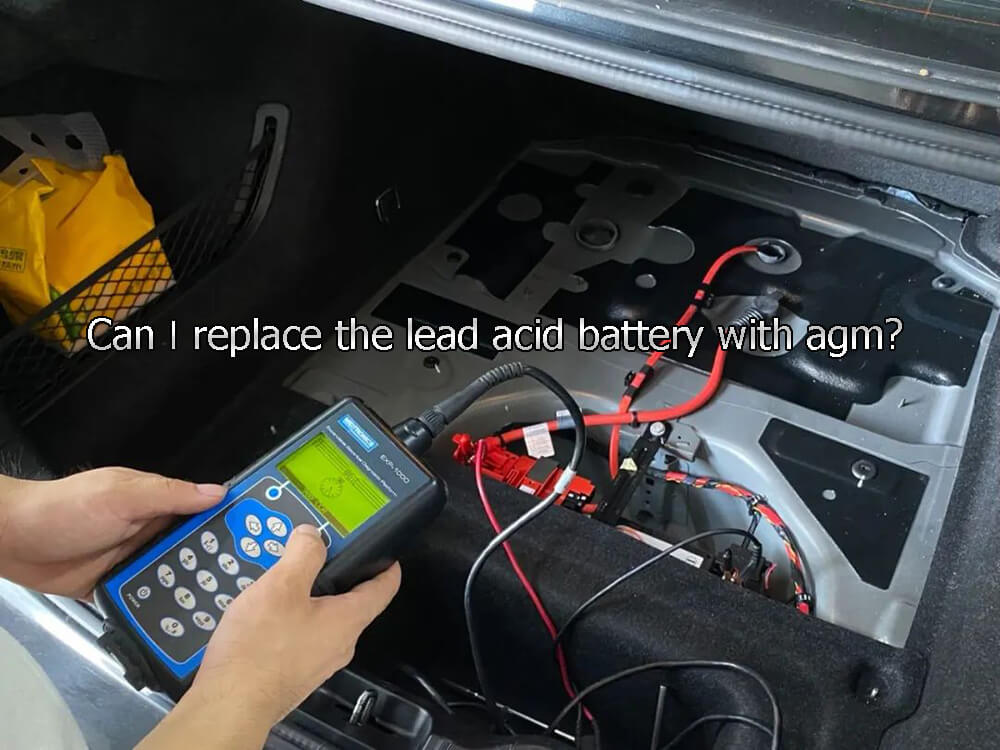
Can i replace the lead acid battery with agm
In answering agm battery vs lead acid, AGM batteries can replace flooded lead acid batteries as these batteries have the same chemical constituents. In addition, both batteries have identical charging voltages, although one could argue that AGM batteries offer more utility as they charge at faster rates due to the reduced internal resistance.
The relevant parameters such as voltage and current size should be considered when thinking of replacing lead acid batteries with AGM batteries. This information can be provided by the battery manufacturers.
What Causes agm batteries to fail
The primary factor that precipitates battery failure is the charging culture; hence overcharging, undercharging, and extreme discharge can cause a battery to fail.
When AGM batteries are overcharged, the electrolyte is consumed. Overcharging causes the temperature to rise, which can easily make the separator out of control and damage the battery.
It is also essential to ensure that the battery charge is not entirely used up before the next charge; as a rule, they should be charged as they hit the 50% mark, at most when at 30% capacity. At 20%, the battery is at a greater risk of failure.
In conclusion, the battle agm battery vs lead acid is intriguing. However, the scales are slightly tipped in favour of AGM batteries due to inbuilt properties that ensure they provide maximum utility.






2 thoughts on “The discussion of agm battery vs lead acid – which is better”
Great content, it will help in my business Thanks for sharing useful information.
You have made some really good points there.
I checked on the web tto find out more about the issue and found most people will go along with your views onn this web site.
Comments are closed.