Skip to content

On the evening of April 25, EVE Lithium Energy as one of Top 10 power battery companies in the world released its 2021 annual report. The company’s revenue was about 16.9 billion RMB, a year-on-year increase of 107.06%, and its net profit was about 2.9 billion RMB, a year-on-year increase of 75.89%. Among them, the power battery revenue was 10 billion RMB, a year-on-year increase of 146.25%.
Although revenue and net profit have risen, EVE’s battery gross profit margin has declined. In 2021, the gross profit margin of lithium batteries will drop by 7.11 percentage points to 19.02%. At the same time, the cost of raw materials increased by 145.8% year-on-year.
Some brokerages said that due to the sharp rise in the price of upstream raw materials for batteries, EVE Lithium’s profitability was under pressure. This is not an exception, the upward pressure on raw materials is being transmitted downward.
At present, the price of lithium carbonate, the core material of lithium iron phosphate battery, hovers below 500,000 RMB/ton, and more than 20 Chinese car companies have raised prices, ranging from thousands of RMB to tens of thousands of RMB.
However, the battery needs a certain production cycle from mining to raw material smelting to processing into battery packs. This has also led to a frenzy in the battery-related industry in 2022.
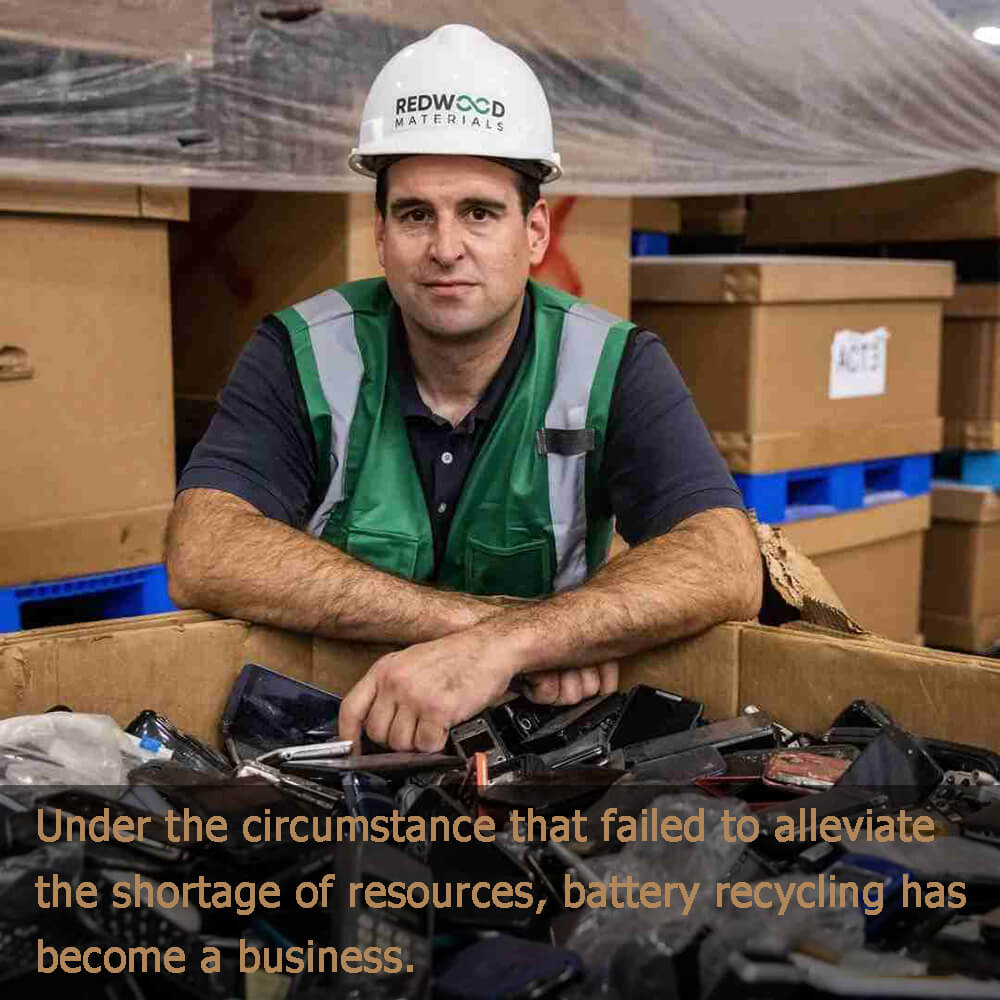
Under the circumstance that failed to alleviate the shortage of resources, battery recycling has become a business.
The deputy general manager of Hunan Shunhua Lithium Industry Co., Ltd. said that the waste batteries currently circulating on the market are mainly ternary batteries and lithium iron phosphate batteries. “Because of the nickel, cobalt, manganese, and lithium metal elements contained in ternary waste batteries, the market’s scramble for ternary batteries is far greater than that of lithium iron phosphate.”
It is understood that the recycling price of the two batteries is generally based on the metal element price of Shanghai Nonferrous Metals Network, and is recycled according to a certain discount factor.
“At present, the price of ternary old batteries has been seriously inverted. In the past, the discount factor was 80%-90%, and the current discount factor is close to 140%; the waste lithium iron phosphate battery was even recycled for free at first, but now the discount is 6- Calculate with 30% off, and spend money to buy it.” Zhao Weiduo said.
The price of lithium iron phosphate cathode waste powder was about 4000RMB/ton at the beginning of last year. In February this year, it directly rose to about 80,000 RMB/ton, a 20-fold increase, far exceeding the 10-fold increase in upstream battery-grade lithium carbonate last year.
At the same time, data shows that there are currently 40,600 power battery recycling-related companies in China, and 24,400 battery recycling companies will be registered in 2021 alone, a year-on-year increase of 635.17%.
However, in the three batches of “Industry Standard Conditions for Comprehensive Utilization of Waste Power Batteries for New Energy Vehicles” announced by the Ministry of Industry and Information Technology, only 47 companies have the qualifications for battery recycling. More monks and less porridge.
Zhao Weiduo said: “At least 70% of the current battery recycling companies are engaged in trade, and many companies only play the role of second-hand sellers of used batteries, buying and selling at high prices.
As many industry insiders have said: whoever has the source of used batteries at present can do this recycling business.
This is just a chaotic corner of the power battery recycling industry.
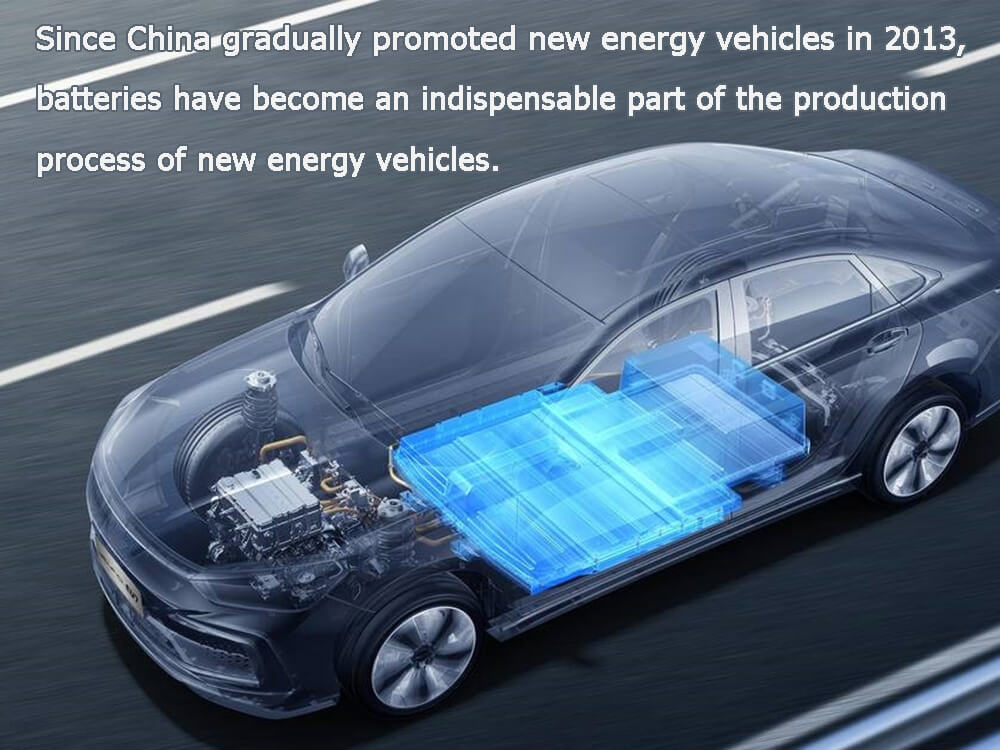
Since China gradually promoted new energy vehicles in 2013, batteries have become an indispensable part of the production process of new energy vehicles. Generally speaking, the power battery of a car generally has a service cycle of 5-8 years (5 years for passenger cars and 8 years for compulsory retirement of buses). When the battery capacity decays to 60% – 80%, it needs to enter the ranks of retirement.
According to data, 2020-2021 is exactly the retirement year for the first batch of new energy vehicle batteries. Data shows that in 2020, the cumulative decommissioning of power batteries in China is about 200,000 tons (about 25GWh).
Although the road has not yet come, many difficulties are already ahead.
Recycling is the destination of power batteries
Lithium-ion batteries are generally considered to be more environmentally friendly than lead-acid batteries that contain heavy metal contamination.
But the coin always has two sides.
“In the production process, new energy vehicles not only have no carbon emission reduction advantages over fuel vehicles, but even generate more carbon emissions due to power batteries. In addition, improper disposal of scrapped batteries can also cause serious environmental hazards and safety hazards. ” said the general manager of Suzhou Bocui Circulation Technology.
It is understood that the power battery contains lithium iron phosphate, lithium manganate, lithium cobalt oxide, nickel cobalt manganese (ternary) and other elements. If used batteries are landfilled, incinerated, composted, etc., the metal elements and compounds in them will cause serious pollution to the atmosphere, water and soil.

Therefore, it can be expected that under the background of carbon neutralization, it will be scrapped into mud and dust, and recycling and regeneration will be the fate of waste batteries.
On October 24, 2021, the State Council issued the “Carbon Peaking Action Plan before 2030”, proposing “Ten Actions for Carbon Peaking”, among which the circular economy to help reduce carbon emissions clearly requires the promotion of retired power batteries, photovoltaic modules, and wind turbine blades. and other emerging industries waste recycling.
The state has also issued a series of policies to implement the “Interim Measures for the Administration of Recycling and Utilization of New Energy Vehicle Power Batteries” and “Administrative Measures for the Echelon Utilization of New Energy Vehicle Power Batteries”.
At present, the first batch of new energy vehicle power batteries have entered the scrapping stage, and a larger wave of battery retirement is already on the way. In 2021, the sales of new energy vehicles in China will reach 3.521 million, and the batteries of these vehicles will be retired in 5-8 years.
In 2030, the recycling of ternary and lithium iron phosphate batteries will become a 100 billion market. Among them, the total recycling space for ternary battery metals will reach 60 billion yuan at an average price, and the market space for the cascade utilization and recycling of lithium iron phosphate batteries is estimated to be more than 48 billion yuan, adding up to a market size of over 100 billion RMB.
What’s more, the upstream resources of power batteries are currently in short supply. Industry insiders also said that although the recycled lithium resources only account for about 5% of the market, it is far from enough to make up for the market gap.
“In the short term, although the ability to alleviate resource shortages is limited. In the long run, with the arrival of the decommissioning of power batteries, the amount of recycled resources will continue to rise;
When the new energy market matures and the growth rate decreases after many years, the proportion of recycled resources will also start to rise. ” said an employee of Ganfeng Lithium
At present, the recycling and utilization of power batteries mainly include two methods: cascade utilization and recycling.
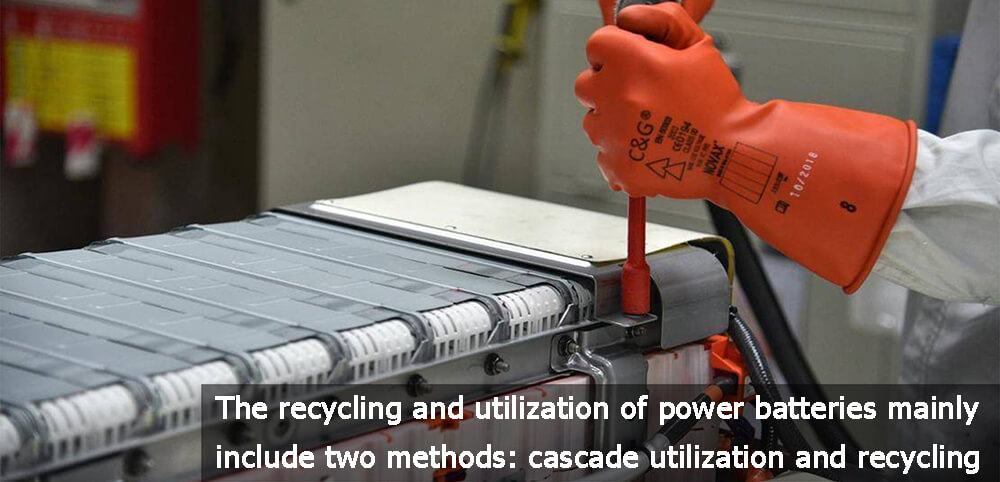
Generally speaking, with the increase of charging times, when the power battery attenuation is greater than 20%, the battery can no longer meet the needs of the vehicle. The cascade utilization is mainly to use the batteries with higher residual capacity for energy storage, low-speed electric vehicles with low mileage requirements and other fields, and downgrade the use.
Recycling is to recover lithium, cobalt, nickel and other metal elements by fire method (calcination after crushing) and wet method (immersion extraction), and become the raw materials for battery manufacturing.
Due to the different metal elements contained in the power battery, the ternary battery contains more metal elements, which are generally directly recycled. The lithium iron phosphate battery is prioritized for cascade utilization, followed by regeneration and recycling.
At present, the extraction rate of nickel, cobalt and other metals in ternary batteries in the industry can reach 98%, and the recovery rate of lithium carbonate can reach 90%.
The recycling battery industry has not yet reached the outbreak time
Under the dual stimulus of policy and market, a group of players have poured in. The challenge of the current battery recycling industry is how to get used batteries.
Since batteries are sold from battery manufacturers to car companies, and car companies are sold to consumers, the property rights of batteries have been transferred many times, which also leads to the easy dispersion of scrapped batteries.
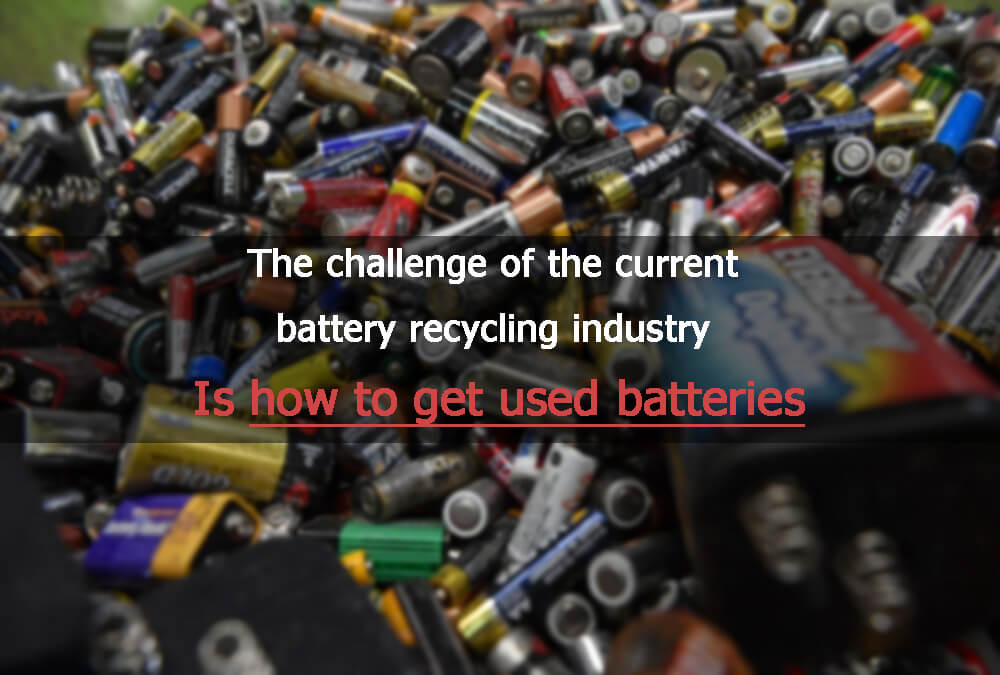
BYD’s employees said that there are currently four main sources of battery recycling: defective batteries in production (generally, the defective product rate of battery production is 5%-8%); in addition, there are batteries on experimental vehicles of car companies; batteries; and real retired batteries.
Although the country has also set up relevant battery recycling outlets, nearly 70% of used batteries fall into the hands of second-hand traders and small workshops, and only about 30% of used batteries flow into regular recycling outlets.
“Trade players have grabbed a lot of money. Some large battery recycling companies such as GEM and Bump Cycle, a subsidiary of CATL, also get a lot of goods from traders.” Industry insiders said
Zhao Weiduo of Shunhua Lithium Industry said: “They just make quick money, regardless of environmental protection issues, if they continue to allow small workshops to develop, potential pollution may occur, and they will embark on the old road of “development first and then governance” of lead-acid batteries.”
It is understood that there are two types of irregular players, one is pure second-hand sellers, who sell them at high prices; the other is small workshops without formal qualifications, which will simply dispose of old batteries, crush and sort the used batteries. The waste powder is sold to downstream recycling enterprises.
“Although the state has announced a white list of relevant battery recycling companies, it is only a guiding document and is not enforced. This waste battery recycling industry needs to further establish a perfect development model and mechanism.” An industry insider said.
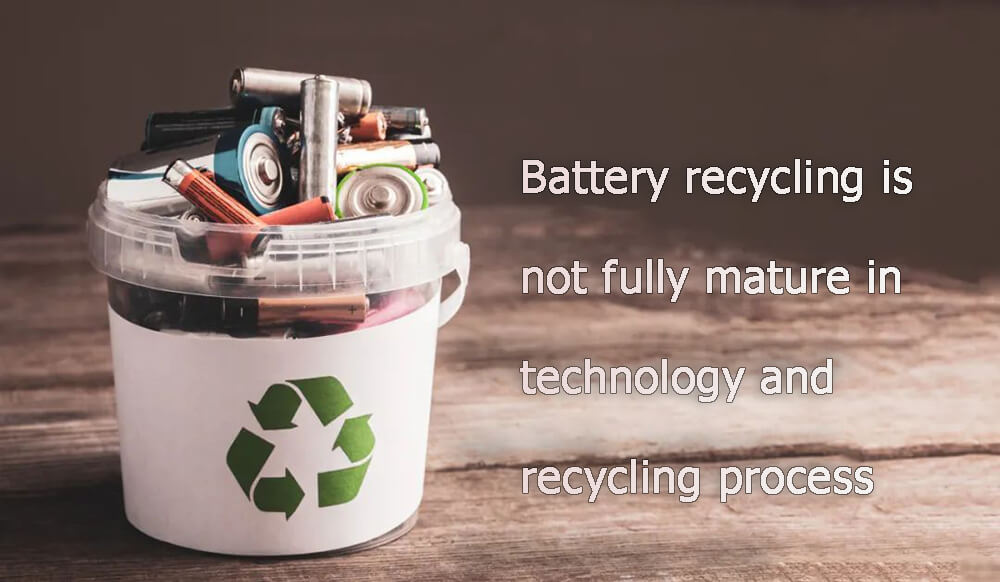
In addition to looting used batteries, battery recycling is not fully mature in technology and recycling process.
Taking cascade utilization as an example, from a technical point of view, in the process of cascade recycling, the BMS management mechanism such as battery capacity and battery attenuation is not perfect, which makes the sorting of cascade batteries difficult.
“Many used batteries have different years and product models. As a result, on the one hand, the detection cost remains high, and on the other hand, product consistency cannot be guaranteed. Therefore, the use of echelon battery products is still in the exploratory stage. Small-scale energy storage is fine, but large-scale energy storage is difficult.”
From a market point of view, it is also difficult to establish a reverse logistics mechanism for battery echelon products. After all, consumers are more willing to use new batteries than retired batteries.
In addition, the recycling points of retired battery products are relatively scattered, and the collection and transportation costs of battery recycling enterprises are relatively high.
“The industry is still in its infancy, and there is still a lot of room for evolution and improvement. After all, battery materials have been different in the past five years and will be different in the next five years, which means that recycling objects and recycled products change every year, which also means , the recycling process equipment and legal requirements will also change greatly.” said Lin Xiao, general manager of Suzhou Bocui Recycling Technology.
Diversified enterprise layout first
At present, there are four main types of companies doing battery recycling in China, covering the upstream and downstream of the battery industry:
First, battery material manufacturers, such as ternary material factory Huayou Cobalt, GEM, Ganfeng Lithium, etc., have mines in the upstream and production in the downstream, so it is not difficult to start battery recycling.
GEM has signed vehicle battery recycling and disposal agreements with more than 280 car companies and battery companies, and has an annual recycling capacity of 130,000 tons, ranking the forefront of the industry. Ganfeng Lithium also established Ganfeng Cycle in 2016 to start recycling waste batteries and materials.
The second is battery manufacturing companies. For example, CATL completed the acquisition of “Bangpu Cycle” in 2013. At present, the lithium battery recycling business has become one of the three core businesses; it has cooperated with Yutong, SAIC, BAIC, Geely and other car companies for recycling. Used power batteries are transformed for energy storage.
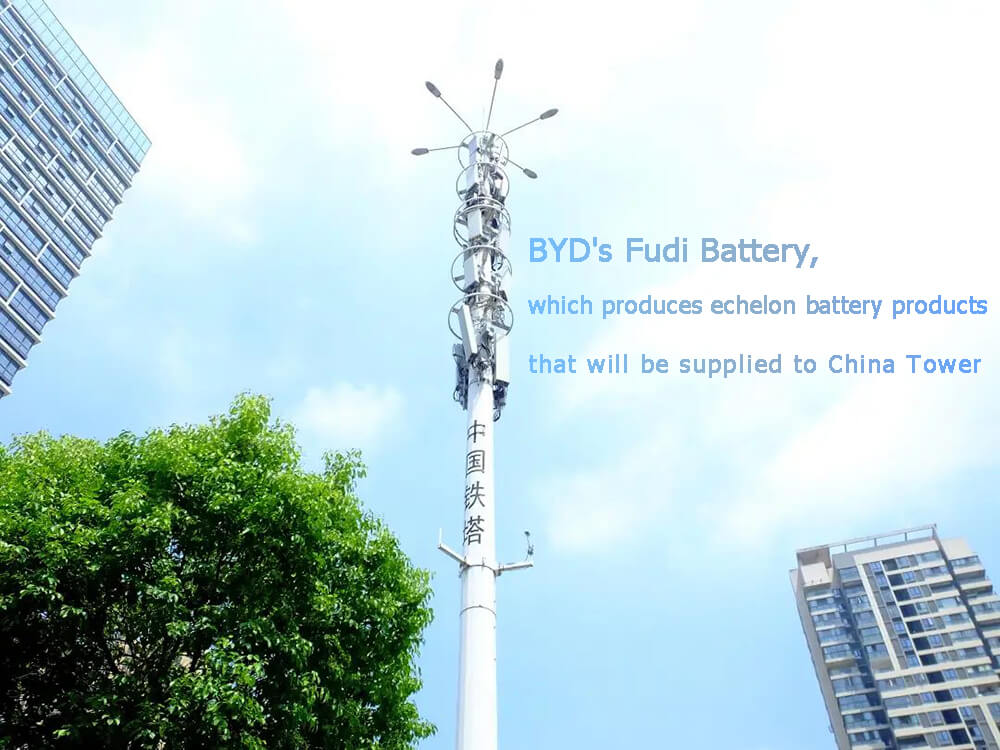
The third is car manufacturers, such as BYD’s Fudi Battery, which produces echelon battery products that will be supplied to China Tower, a battery-using enterprise. An employee of Fudi Battery said: At present, BYD’s echelon battery production capacity is about 1.5GWh per year, and it is also planning a waste battery recycling project, with a target production capacity of at least 10,000 tons.
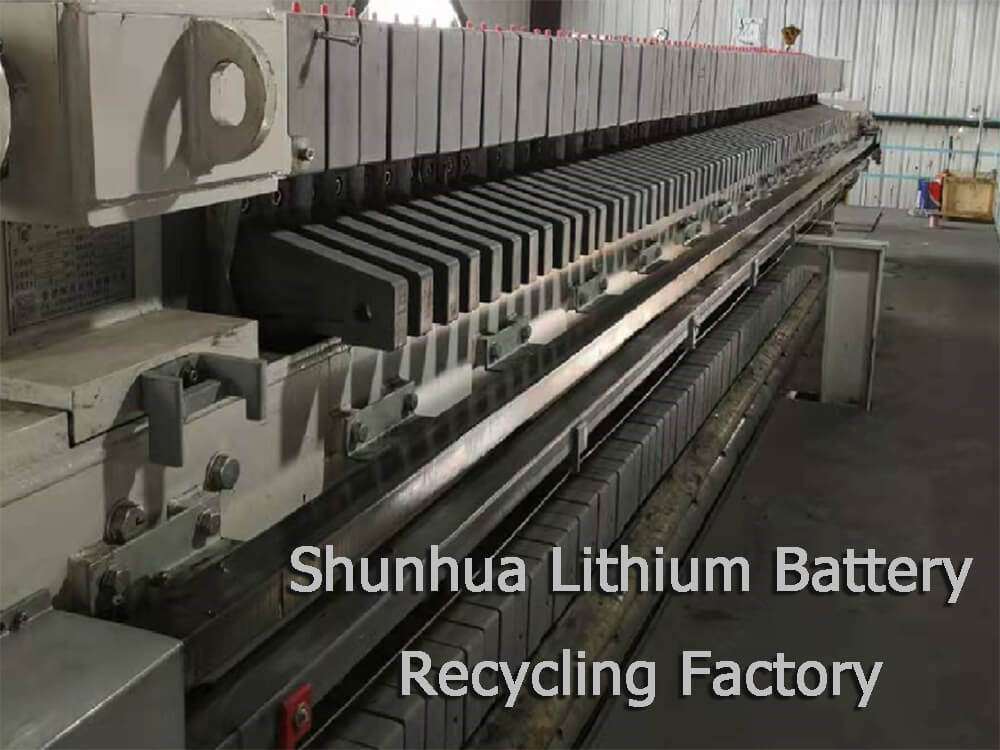
Fourth, third-party environmental protection companies specializing in battery recycling, such as Shunhua Lithium and Bocui Cycle mentioned above.
In some European and American countries, the main body of battery recycling is more clear and fixed. For example, the recycling of used batteries in the United States will be dominated by authoritative third-party battery recycling organizations, while in Europe, battery recycling is legally recognized as belonging to battery manufacturers and car companies. The extended responsibility of Japan is to encourage car companies to invest in battery recycling.
In contrast, the main body of battery recycling in China is more diversified. “In the future, a linkage and closed-loop B2B model of battery manufacturers, car companies, and recycling companies may be formed. Third-party recycling companies will become the social responsibility sharers of car companies and battery manufacturers. It is expected that a virtuous circle will form around 2030.” Shunhua Lithium Industry Zhao Weiduo said.
Although the current industry has not really exploded, it should be recognized that, as an important part of the automotive industry, battery recycling requires the participation and cooperation of upstream and downstream industries to avoid environmental pollution to the greatest extent and achieve resource recovery. After all, what we do with the battery’s past is what we do with our future. Regarding environmental pollution, we have also discussed the topic of carbon emission. If you are interested, you can read this article for related information.