Skip to content
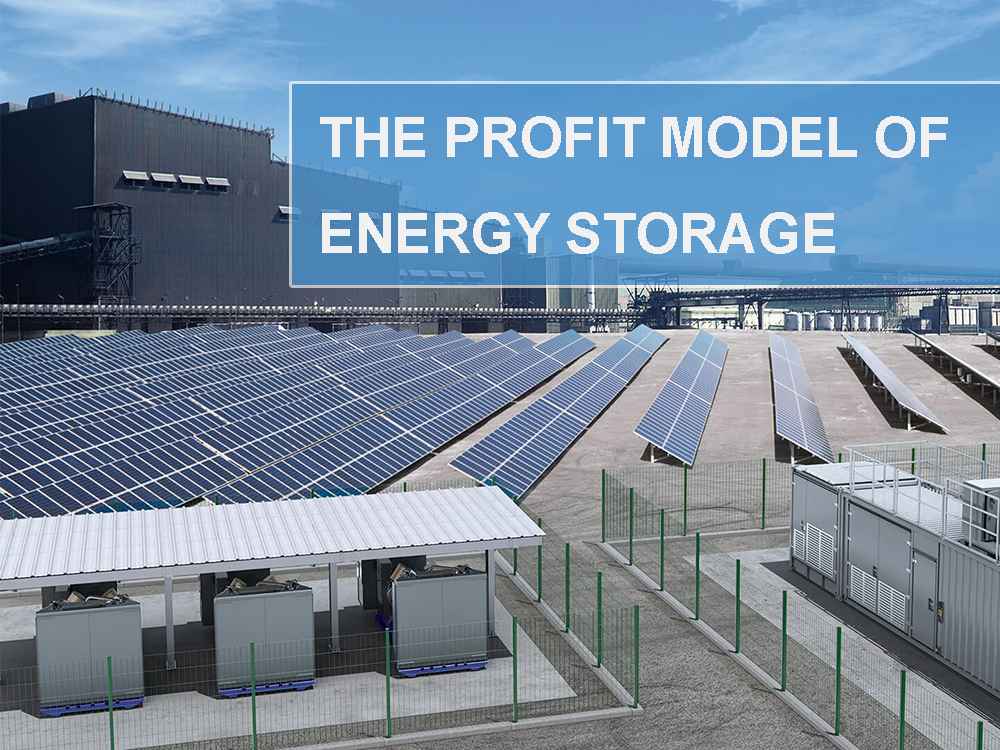

Energy storage can only be profitable on the basis of participating in electricity market trading and setting relevant electricity prices. The introduction of the Basic Rules and the Regulatory Measures has brought new light to the expansion of the energy storage business model.
In the new power system, energy storage will become a crucial link, which is a necessary guarantee for new energy consumption and grid security. It will be widely used in the power supply side, grid side and user side.
Power side: On the one hand, it helps traditional power stations to reduce peak load and valley load, reduce power abandonment and improve power generation efficiency, on the other hand, it helps renewable energy power stations to generate electricity from renewable energy smoothly, realize grid connection of renewable energy, and reduce wind and light abandonment through power peak shaving.
Grid side: including peak shaving, frequency modulation, voltage regulation, reserve capacity, black start and other services to maintain the safe operation of the power system, alleviate grid congestion, save investment in new power grids or delay the expansion of distribution networks.
User side: household energy storage system helps terminal customers to realize self use of electricity and arbitrage of peak valley price difference, industrial and commercial energy storage can improve power supply reliability, and terminal micro grid can realize capacity cost management on the power side.
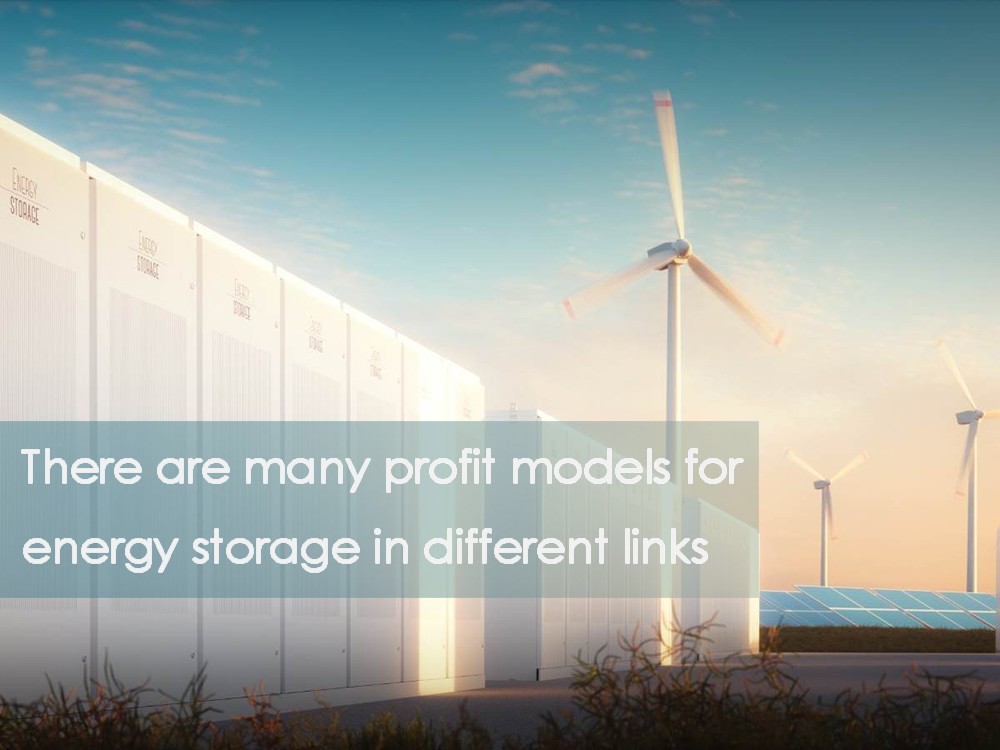
There are many profit models for energy storage in different links. To sum up, there are three main modes of deploying energy storage to increase revenue: helping power operators and end users in all links to reduce costs and increase efficiency;
Delay infrastructure investment; Direct income is obtained through arbitrage of peak valley price difference, participation in auxiliary service market, spot power market, etc.
Power side
Power peak shaving: the peak shaving and valley filling of power load is realized by energy storage, that is, the power plant charges the battery during the low peak period of power load, and releases the stored power during the peak period of power load.
Capacity provision: power generation capacity is provided through energy storage to cope with peak load of power generation and improve the operating efficiency of traditional generator sets.
● Profit model: improve power generation efficiency to increase revenue; Peak valley price difference arbitrage.
Renewable energy grid connection: Energy storage is configured in wind and photovoltaic stations based on power station output prediction and the energy storage charging and discharging dispatching can smoothly control the random, intermittent and fluctuating renewable energy power generation output to meet the grid connection requirements.
Peak shaving of renewable energy power generation: store the amount of wind and electricity discarded from renewable energy and then move it to other periods for grid connection, so as to improve the utilization rate of renewable energy.
● Profit model: reduce waste wind and waste light, and improve power generation efficiency; Peak valley price difference arbitrage.
Ancillary services
Frequency modulation: The change of frequency will affect the safe and efficient operation and life of power generation and electrical equipment, so frequency regulation is very important.
Energy storage (especially electrochemical energy storage) has high frequency modulation speed and can be flexibly converted between charging and discharging states, so it becomes a high-quality frequency modulation resource.
Standby capacity: Standby capacity refers to the active power reserve reserved to ensure power quality and safe and stable operation of the system in case of emergencies besides meeting the expected load requirements.
Black start: When a major system failure or system-wide power failure occurs, the generator set without self-starting capability is restarted without the support of the power grid, gradually expanding the system recovery range, and finally realizing the recovery of the entire system.
● Profit model: Participate in the electricity market, market income.
Power grid side
Alleviate power grid congestion: the energy storage system is installed upstream of the line. When the line is blocked, the energy storage system can store the energy that cannot be transferred into the energy storage device. When the line load is less than the line capacity, the energy storage system will discharge to the line.
● Profit model: improve the efficiency of power transmission and distribution, delay investment
Delay the expansion and upgrading of transmission and distribution equipment: In a transmission and distribution system where the load is close to the capacity of the equipment, the energy storage system can be used to effectively improve the transmission and distribution capacity of the grid through a small installed capacity, thus delaying the construction of transmission and distribution facilities and reducing costs.
● Profit model: delay investment.
The user side
Capacity management:
Industrial users can use the energy storage system to store energy at low power consumption and discharge at peak load, so as to reduce the overall load and reduce the capacity charge.
● Profit model: service charge.
Improve power supply reliability: In case of power failure, the energy storage system like powerwall battery can supply the stored energy to the end user to avoid power interruption in the process of fault repair, so as to ensure the reliability of power supply.
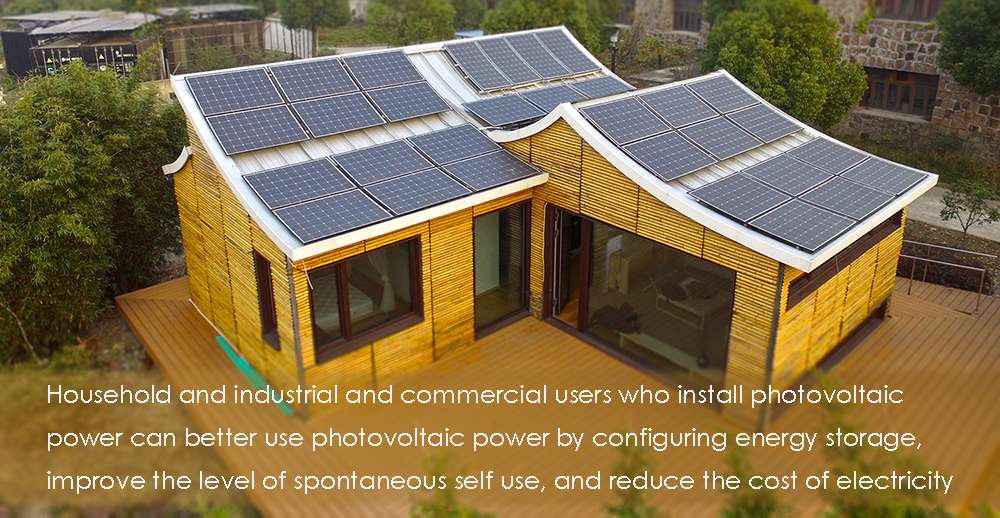
Power for self use: Household and industrial and commercial users who install PV can better use PV power by configuring energy storage, improve the level of self use and reduce the cost of electricity.
Peak valley price difference arbitrage: In the electricity market where peak and valley prices are implemented, the energy storage system is charged when the price is low and discharged when the price is high, so as to realize the arbitrage of peak and valley price difference and reduce the electricity cost.
● Profit model: saving electricity cost and arbitrage of peak valley price difference.