Skip to content
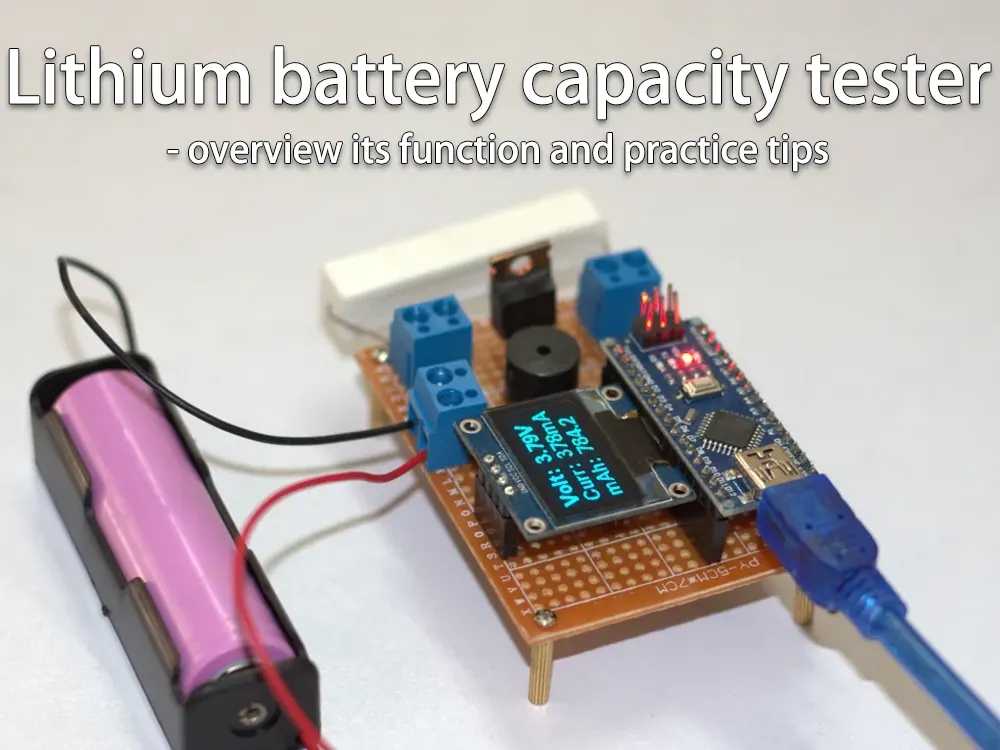


Different capacity testers are used for different batteries. This guide is for those professionals and enthusiasts who want to learn about lithium battery capacity tester.
In this guide, one will learn about what a lithium capacity tester is, how it works, its uses and best practices for their use.We have also discussed the difference between a capacity tester and a multimeter, and related materials regarding it.
What is a lithium battery capacity tester?
To understand what a lithium battery capacity tester is, one has to understand battery capacity first. Battery capacity is the ability of a battery to store energy, the ability to supply a particular quantity of current at a steady rate to a particular end voltage for a particular period.
A battery capacity tester is an electronic device that measures the ability of a battery to store energy. For example, if I want to know the precise capacity of power wheels battery, I can use the capacity tester to find out.
A lithium battery capacity tester determines capacity by filling the battery with energy and then monitoring how long it takes to empty that energy. It is necessary to understand its use only to test the remaining capacity and not the voltage of the battery.
Since all batteries have direct current, the device works by applying a load and monitoring the voltage response from the battery. It will show the results regarding the leftover power in the battery.
How does a lithium battery capacity tester work?
Several methods are used to test the capacity of a battery. One of the simplest ways has three basic steps.
The first step is charge testing when the energy goes into the battery. Fully charge the battery at this step while it is under load and measure voltage and current.
The next step is discharge testing when the energy comes out of the battery. Measuring the power going in and out of the battery by the capacity tester gives results for the capacity of the battery.
The conducting elements of the tester are attached to the positive and negative terminals of the battery, and the current is measured when released.
Various lithium battery capacity testers are available in the market.
The general overview of the function is as follows:
1. Connect the terminals of the battery with the tester and secure connections.
2. Set parameters such as cut-off voltage, discharge current rate, and test time. These factors depend on the type of battery and testing requirements. If you are unsure about the sort of battery you have, please contact us.
3. The tester measures the current and the voltage during the discharge process. This data is used to measure the capacity of the battery.
4. After collecting data, capacity is calculated by integrating the measured time and current. The tester measures the energy-storing capacity of the battery.
5. The tester displays the results for the capacity of the battery after measuring and analyzing the data.
Depending on the type of tester, you can find out more information regarding the battery’s performance, health status, and applicability.
Practice tips for using a lithium battery capacity tester
Numerous Lithium battery capacity testers are available in the market and have specific instructions and guidelines for use.
For safe operations and precise and accurate results, it is necessary to follow best practices and safety precautions during calibration, maintenance operation.
The tester should be fully functional and compatible with the type of battery. The tester should be firmly placed for an accurate reading. Do not clean it with any wet cloth, otherwise, it will be damaged.
Here are some recommended best practice tips for lithium battery capacity testing using a tester to ensure accurate results:
● Calibration: For accurate and reliable results, calibrate the tester regularly according to the manufacturer’s instructions. Following calibration intervals specified by manufacturers ensures consistency and precision in the results.
● Safety Precautions: Always use appropriate personal protective equipment while carrying out operations. The tester should be compatible with the battery. To prevent potential hazards and risks, follow the manufacturer’s guidelines. Some batteries produce gases and fumes, so ensure proper ventilation during testing.
● Maintenance: When the tester is not in use, keep the tester in a cool and dry place. Keep it clean and free from dirt for better performance. Replace damaged tester leads and probes, or they will affect results and yield uncertain measurements.
By following these tips and utilizing a lithium battery capacity tester, you can troubleshoot and monitor your battery’s capacity, ensuring maximum performance and longevity.
Difference between a lithium battery capacity tester and a multimeter
A lithium battery capacity tester and a multimeter are used to test the performance of a battery. The difference lies in the design and its specific function.
A multimeter is an electrical device used to measure voltage, resistance, and current, also known as a voltage-ohm-milliammeter (VOM). These provide an overview of the battery’s performance of various types.
A multimeter is not specifically designed to test the capacity of a battery. The results obtained from these devices are used to troubleshoot several electrical circuit problems, measure general electrical measurements, and check continuity.
On the other hand, a lithium battery capacity tester is a specialized electrical device designed to test the capacity of a lithium battery. It provides detailed results about the battery’s performance, overall health, overall capacity, and remaining capacity.
Difference between lithium battery capacity testers for cells and battery packs
Lithium battery pack consist of various cells. Two types of capacity testers are designed to test individual cells and the whole battery pack. The difference between the two lies in their design and functionality.
Lithium battery capacity testers for battery packs are designed to calculate the capacity of the battery pack.
These testers are more powerful and capable of handling higher voltages and currents as various cells are attached in series or parallel in a battery. They may have additional features to give detailed results on the capacity and performance of the overall battery.
Lithium battery capacity testers for cells are specialized to test the capacity of only a single cell.
These can vary in shape and size depending on the type of cell for which they are used. They can handle low current and voltage compared to those used for whole battery packs and give capacity results for individual cells.
Can a lithium battery capacity tester be used for other types of batteries?
Lithium batteries show different results from other types of batteries because their chemistry is different. Lithium battery capacity testers are specified for lithium batteries.
For instance, ternary lithium battery and lithium iron phosphate battery can be tested with a lithium battery capacity tester.
But some specified testers are designed to test others too. It depends on the compatibility, capability, and design of the tester.
Some testers are available that can measure capacity for various types with accuracy. These testers have selectable modes for several types. Check the manufacturer’s guidelines when using multiple-type batteries.
How do I interpret the results of a lithium battery capacity tester?
Keep the tester firm and steady in a position for a precise and accurate reading. Different testers have different outputs depending on their model and specifications.
Some show graphs, and some display values in digital form. If your tester displays results in the form of a graph, you can easily interpret the results.
On the scale, when the pointer points towards the green section, that means your battery is in good condition. When it points in the middle section, it means it is still usable. If it points towards the red, that is the time when you may need to replace or recharge your battery.
Another method is comparing the calculated capacity of the battery with the rated capacity given by lithium battery manufacturer. If the results are the same or close to each other, it means the battery is in good health.
Conclusion
To achieve maximum battery system reliability, a well-established maintenance plan and periodic capacity testing are important.
Along with that, routine inspection, cell float voltage readings, temperature readings, internal ohmic values, float current readings, and well-conditioned indicators also play vital roles in battery maintenance.
Utilizing a lithium battery capacity tester for capacity testing is a more scientific method of determining the battery’s capacity. This test should be performed periodically but not extensively.
You can troubleshoot and monitor your battery’s capacity by consulting this guide. Everything is mentioned in this guide that you need to know about lithium battery capacity testers.