Skip to content
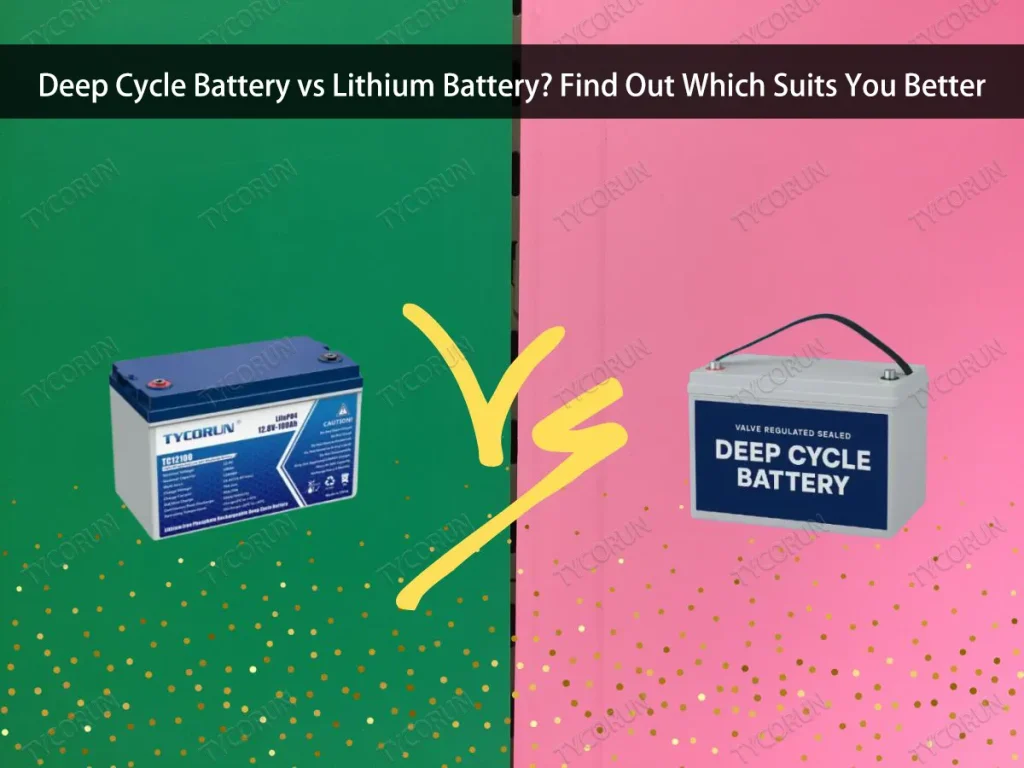
Deep Cycle Battery vs Lithium Battery? Find Out Which Suits You Better
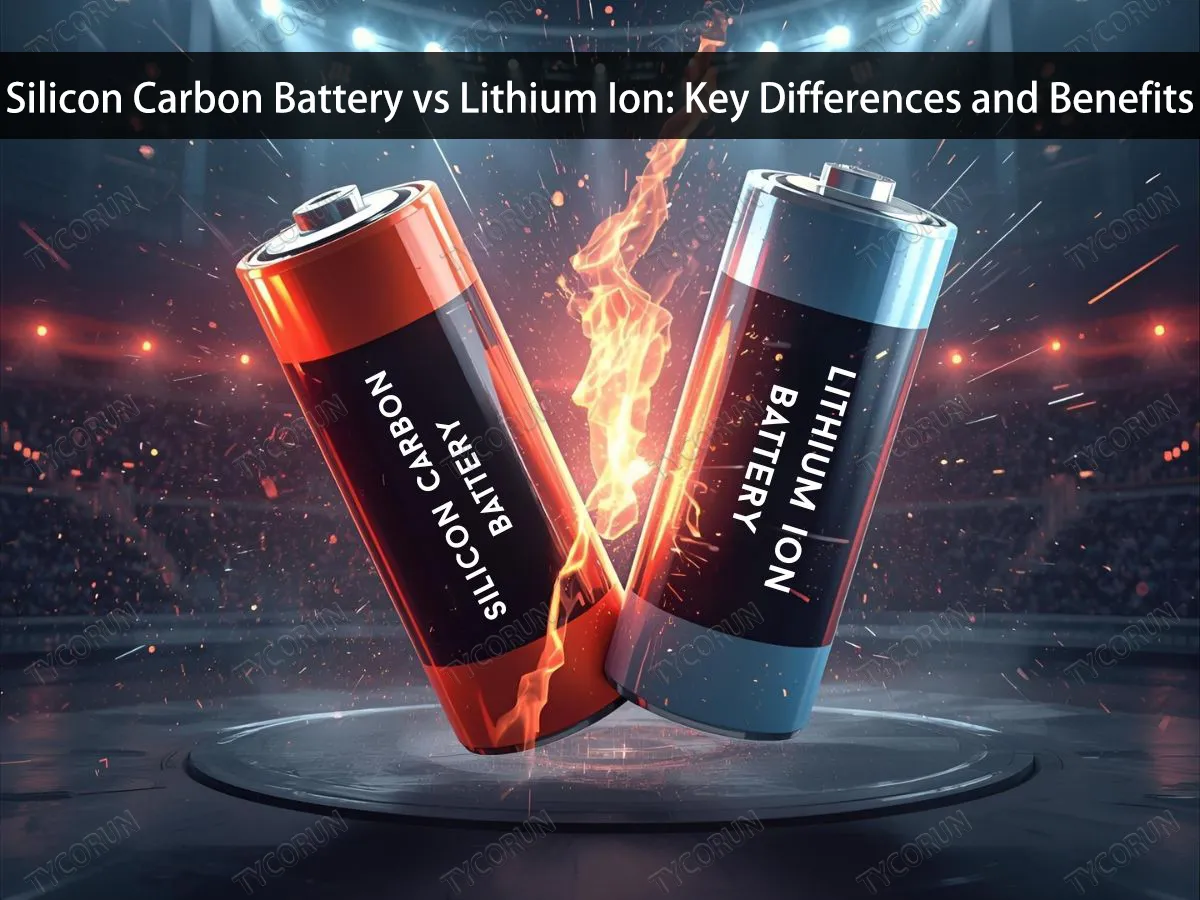
When it comes to modern energy storage, the topic of deep cycle battery vs lithium comes up a lot. Both types have their advantages, but they also have distinct characteristics depending on what you need. Deep cycle batteries have been trusted for years in boats, off-grid systems, and recreational vehicles because of their durability, while lithium batteries, being newer, stand out for their efficiency, lighter weight, and longer lifespan.
Relying solely on technical specifications does not fully explain the real difference between deep cycle battery vs lithium. It is equally important to understand how each battery performs in actual use and which one aligns best with your energy requirements-whether that is for portable electronics, solar power systems, or backup energy setups.


Understanding Deep Cycle Battery and Lithium Battery
Before discussing the debate between deep cycle battery vs lithium battery further, it is important to understand the basic characteristics of each type of battery. Although both serve as energy storage devices, there are significant differences in their efficiency, technology, and working principles.
Deep cycle battery
Deep cycle batteries are made to deliver consistent power for an extended length of time. This kind can release energy gradually without quickly losing capacity, which makes it popular in boats, small electric cars, and solar power systems. However, compared to lithium batteries, deep cycle batteries have a shorter lifespan and need routine maintenance.
Lithium battery
Lithium battery provides more contemporary and effective performance. Lithium technology allows for faster charging, more stable capacity, and a much lighter weight. This is the reason deep Cycle battery and Lithium are frequently compared by users looking for long-term and practical energy storage solutions.
Typically, deep cycle and lithium batteries are different in their lifespan and energy efficiency. Deep cycle batteries are appropriate for conventional systems that do not require high performance, while lithium batteries are better for contemporary applications that demand high power and stability over extended periods of time.
You can also read lithium ion deep cycle battery for more insight
How Deep Cycle Battery and Lithium Battery Works?
To really understand the deep cycle battery vs lithium battery debate, we must first understand how these batteries store and release energy. Although they serve the same purpose, the internal mechanisms of these two types of batteries differ significantly.
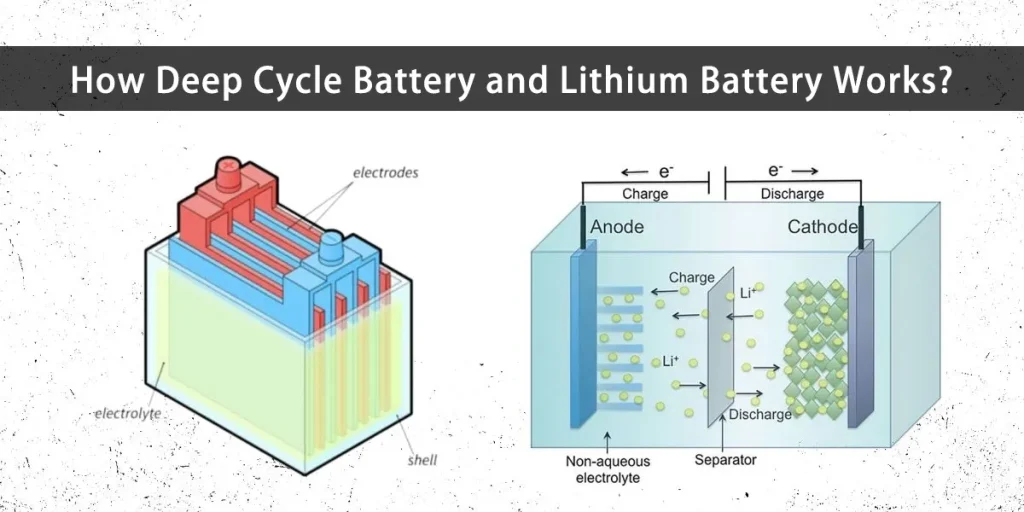
Deep cycle batteries typically use lead-acid technology. Inside, a chemical reaction between lead and a liquid electrolyte generates electrical energy. Instead of releasing energy for brief bursts of heavy loads, these batteries are made to do so over an extended period of time at low currents. For this reason, deep cycle batteries are frequently utilized in boats or off-grid solar systems that need consistent power all day long.
Meanwhile, lithium ions are transferred between the positive and negative electrodes of lithium batteries. This method is significantly more efficient because almost no energy is wasted during charging or discharging. Furthermore, lithium has superior temperature control, ensuring consistent performance even under harsh circumstances.
Deep Cycle battery vs Lithium Batteries: Key Differences Between
Understanding these differences is important so that users can determine the choice that best suits their needs, in terms of efficiency, service life, and long-term costs. Here are some of the main differences between deep cycle batteries and lithium batteries that users most often consider:
- Structure and Material: Lithium batteries employ lithium-ion technology, which is more advanced, lighter, and more effective than deep cycle batteries, which are typically based on lead acid.
- Weight and Design: Compared to deep cycle, lithium is significantly lighter and smaller, which facilitates installation in cars, solar panels, and portable electronics.
- Energy Efficiency: Deep cycle batteries typically lose more power during charging and use, whereas lithium batteries can deliver energy with an efficiency of up to 95–98%.
- Service Life and Charging Cycles: Lithium batteries can withstand 3000–5000 cycles of charging without experiencing appreciable performance deterioration, whereas deep cycle batteries typically last 500–1000 cycles.
- Charging Time: Deep cycle batteries take longer to reach full capacity than lithium batteries, which charge considerably more quickly.
Pros and Cons of Deep Cycle Battery and Lithium Battery
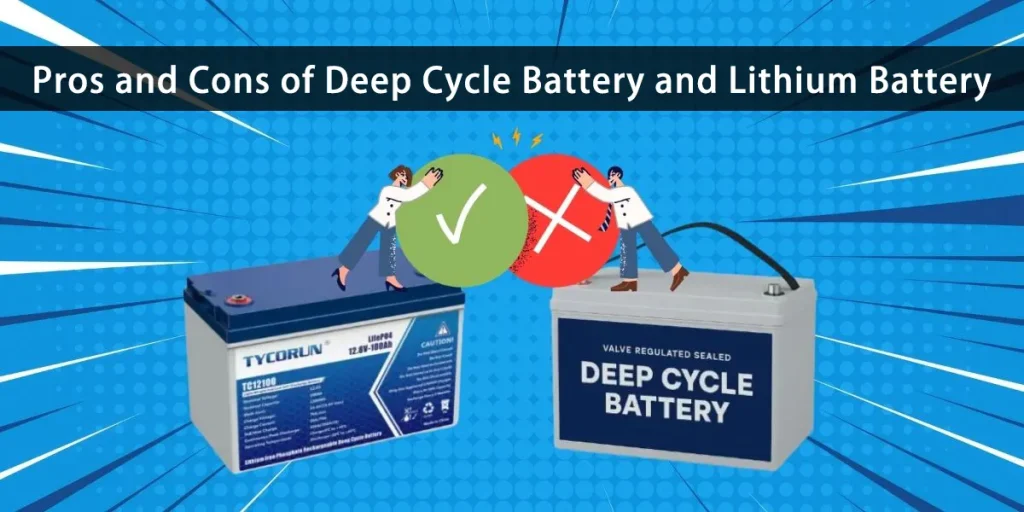
In the deep cycle battery vs lithium battery debate, it is also important to understand their pros and cons so that users can make an informed decision.
- Deep cycle battery
Pros: Deep cycle batteries are more reasonably priced initially and have been shown to be long-lasting for conventional uses like boats, off-grid solar systems, and recreational vehicles. They can also deliver steady power over an extended period of time.
Cons: These batteries are less effective and have a shorter lifespan than lithium batteries. They also tend to be heavier and need regular maintenance, such as cleaning the terminals and checking the water. - Lithium battery
Pros: Lithium battery is lightweight, require little maintenance, have a long lifespan of up to thousands of cycles, fast charging times, and high energy efficiency with virtually no power loss.
Cons: Although lithium batteries are more affordable in the long term, their initial cost is higher because some varieties need temperature control and extra security measures.
Application Suitability
The decision between deep cycle battery vs lithium battery is frequently influenced by the specific application for which they are intended. Because deep cycle batteries can provide steady power for extended periods of time and can withstand regular, non-intensive use, they are typically better suited for conventional systems like off-grid solar panels, boats, or recreational vehicles.
However, lithium batteries are better suited for contemporary uses that demand high efficiency, reliable operation, and user-friendliness. Large-capacity solar power systems, electric vehicles, and portable electronics that need lightweight, quick-charging batteries are all excellent uses for lithium.
In general, comparing deep cycle batteries to lithium batteries shows that selecting the best battery requires considering the type of application, power requirements, frequency of use, and priorities of initial cost versus efficiency and long-term durability.
Which Battery Is Better for Your Needs?
Debating deep cycle battery vs lithium battery really comes down to the user’s specific needs and priorities. Because of its longevity and capacity to deliver steady power for extended periods of time, a deep cycle battery might be the best option if you are searching for a battery with a lower initial cost for less demanding applications.
However, lithium batteries are better if you value efficiency, low weight, long service life, and ease of maintenance. For contemporary systems like electric vehicles, massive solar panels, or devices that need reliable performance and quick charging, lithium is perfect.
Safety and Practical Considerations
When debating deep cycle battery vs Lithium battery, safety and ease of use are also important factors to consider. Here are some things to consider:
- Safety of use: When used as directed, both kinds of batteries are safe to use; however, the risks associated with Deep Cycle and Lithium batteries vary. Lithium batteries need a protection system (BMS) to avoid short circuiting or overcharging battery, while deep cycle batteries use liquid electrolytes that can leak and corrode.
- Maintenance and usability: Lithium batteries are essentially maintenance-free, making them more suitable for daily use, whereas deep cycle batteries need regular maintenance, such as cleaning the terminals and checking the water level.
- Use in extreme conditions: Deep cycle batteries are more vulnerable to harsh environments and need special attention to stay safe and long-lasting, whereas lithium is more stable against changes in temperature and power.
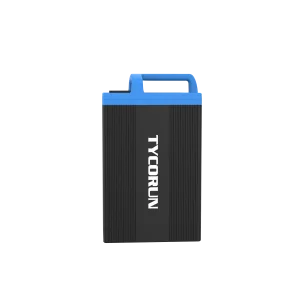
- Overall practicality: A comparison of deep cycle batteries and lithium reveals that deep cycle batteries are still dependable for basic, conventional applications, but lithium is better for intensive, modern use when safety, maintenance, and durability are taken into account. TYCORUN lithium batteries are a reliable choice for maximum performance and safety because they are designed with cutting-edge technology, high efficiency, and comprehensive long-term protection.
Conclusion
The debate over deep cycle battery vs lithium battery demonstrates that both play an important role in modern energy storage systems. Deep cycle batteries are renowned for their long lifespan and capacity to deliver a steady power source. Because of its dependability and simplicity of maintenance, this kind of battery has long been utilized in recreational vehicles, boats, and off-grid solar power systems. In contrast to more recent technologies like lithium, deep cycle batteries are typically heavier, need more frequent maintenance, and are less efficient.
Meanwhile, lithium batteries provide a more modern solution, with efficient performance, low weight, quick charging, and a longer lifespan. For modern applications like solar panels, electric cars, or portable electronics that need high power and long-term stability, this technology is perfect.
Therefore, when comparing deep cycle batteries to lithium batteries, the user’s needs and priorities will determine which option is best for them-whether they want high efficiency and long-term usefulness, or more affordable initial costs and traditional reliability.
FAQS
Are lithium batteries better than deep cycle batteries?
In general, lithium batteries have higher efficiency, longer life, and are lighter in weight. However, deep cycle batteries are still the right choice for conventional use with stable power requirements and lower initial costs.
How many years do deep cycle batteries last?
On average, deep cycle batteries can last between 3 and 6 years, depending on maintenance and frequency of use. With proper care, some types can even exceed that lifespan.
Can a lithium battery replace a deep cycle battery?
Yes, lithium batteries can replace deep cycle batteries in many applications such as solar power or electric vehicles. However, make sure that the system and voltage used are compatible so that the replacement is safe and efficient.