 Skip to content
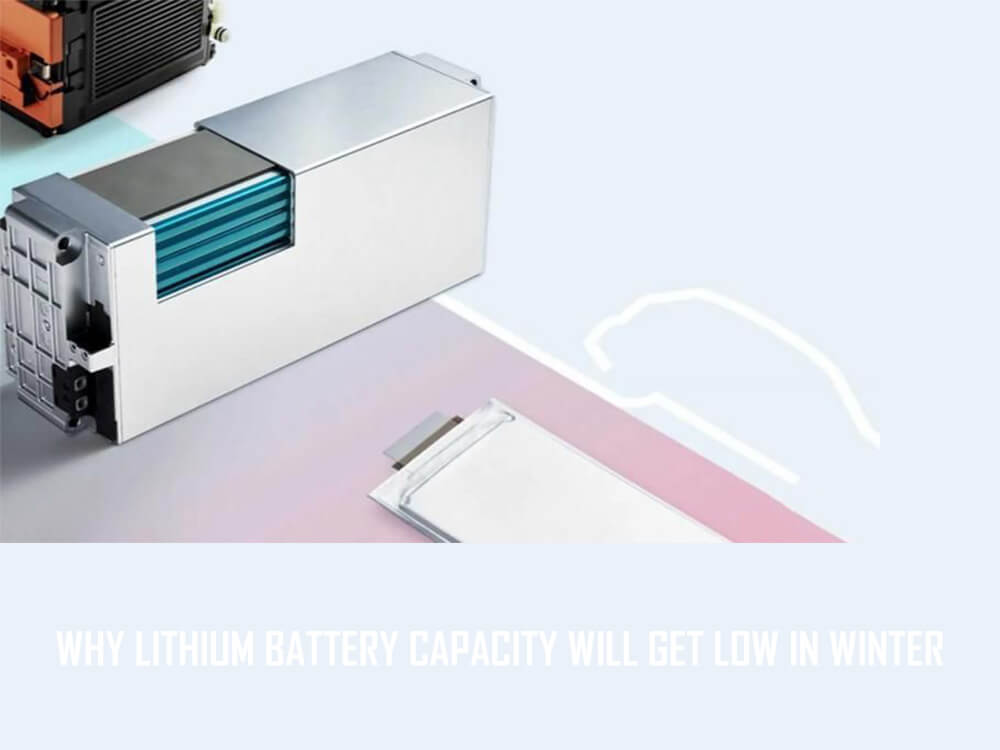
Since entering the market, lithium ion battery has been widely used for its advantages such as long life, large capacity and no memory effect. There are some problems in lithium ion battery at low temperature, such as low capacity, serious attenuation, poor cycle rate performance, obvious phenomenon of plating of lithium and unbalanced lithium removal.However, with the development of the application field, the constraints brought by the low temperature performance of lithium ion batteries are becoming more and more obvious.
It is reported that the discharge capacity of lithium-ion batteries at -20℃ is only about 31.5% of that at room temperature. The operating temperature of traditional lithium-ion batteries is between -20 ℃ and +55℃. However, in fields such as aerospace and military electric vehicles, batteries are required to work properly at -40. Therefore, it is of great significance to improve the low temperature properties of lithium ion batteries.
Factors restricting the low temperature performance of lithium ion batteries
At low temperature, the viscosity of electrolyte increases and even partially solidifies, leading to the decrease of the conductivity of lithium ion battery. The compatibility between electrolyte, anode and separator becomes worse at low temperature.
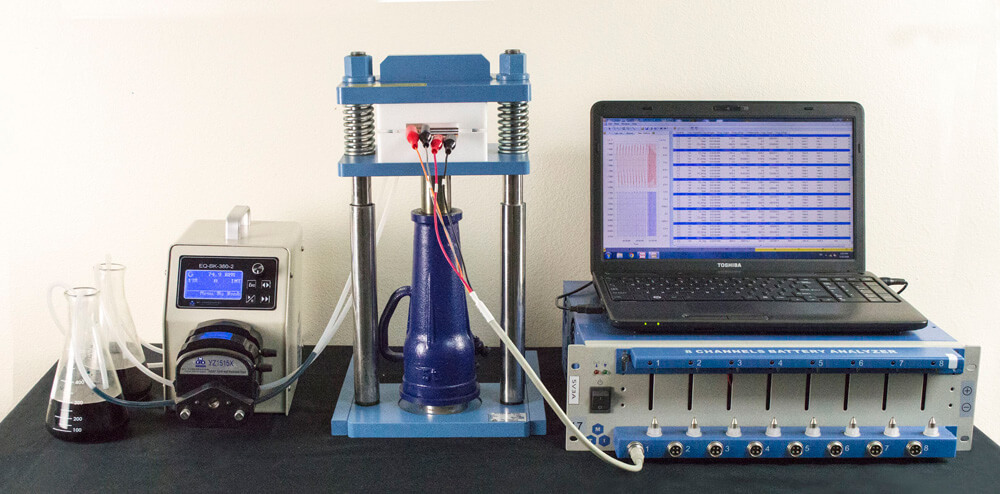
In low temperature environment, the anode of lithium ion battery is seriously precipitated, and the precipitated metal lithium reacts with electrolyte, and the product deposition leads to the thickness of solid electrolyte interface (SEI).
At low temperature, the diffusion system of lithium ion battery decreases and the charge transfer resistance increases significantly.
Factors affecting low temperature performance of lithium ion batteries
① Electrolyte has the greatest influence on low temperature performance of lithium ion battery, and the composition and physical and chemical properties of electrolyte have an important influence on low temperature performance of battery.
The problems faced by the battery cycle at low temperature are: the viscosity of the electrolyte will become larger, the ion conduction velocity will slow down, resulting in the mismatch of the electron migration velocity of the external circuit, so the battery will appear serious polarization, and the charge and discharge capacity will sharply decrease. Especially when charging at low temperature, lithium ions can easily form lithium dendrites on the surface of anode, resulting in battery failure.
The low temperature performance of the electrolyte is closely related to the size of the conductivity of the electrolyte itself. The conductivity of the electrolyte is large and the ion transfer is fast, so more capacity can be played at low temperature. The more lithium in the electrolyte dissociates, the more migrations and the higher the conductivity. The higher the conductivity, the faster the ion conduction rate, the less polarization, the better the performance of the battery at low temperature.
Therefore, high conductivity is a necessary condition to achieve good low temperature performance of lithium ion batteries.
The conductivity of electrolyte is related to the composition of electrolyte. Reducing the viscosity of solvent is one of the ways to improve the conductivity of electrolyte. The good fluidity of the solvent at low temperature is the guarantee of ion transport, and the solid electrolyte film formed by the electrolyte at the anode is also the key to affect lithium ion conduction at low temperature, and RSEI is the main impedance of lithium ion battery at low temperature.

②The major factor limiting the low temperature performance of lithium-ion batteries is the rapidly increasing Li+ diffusion impedance at low temperature, rather than SEI membrane.
Low temperature performance of cathode materials for lithium ion batteries
Low temperature performance of cathode material with layered structure
Layered structure is the first commercially available cathode material for lithium ion batteries, which not only has the incomparable rate performance of one-dimensional lithium ion diffusion channel, but also has the structural stability of three-dimensional channel. The representative substances include LiCoO2, Li(Co1-XNix)O2 and Li(Ni,Co,Mn)O2.
Xie Xiaohua et al. took LiCoO2/MCMB as the research object and tested its low-temperature charge-discharge characteristics.The results show that the discharge platform decreases from 3.762V(0℃) to 3.207V(-30 ℃) with decreasing temperature. The total capacity of the battery decreased from 78.98mA·h(0℃) to 68.55mA·h(-30 ℃).
Low temperature performance of spinel structure cathode material
Spinel structure LiMn2O4 cathode material, because it does not contain Co element, so it has the advantage of low cost, no toxicity.
However, the variable valence states of Mn and the Jahn-Teller effect of Mn3+ lead to the structural instability and poor reversibility of the component.
Peng Zhengshun et al. pointed out that different preparation methods have a great influence on the electrochemical performance of LiMn2O4 cathode materials. Taking Rct as an example, the Rct of LiMn2O4 synthesized by high temperature solid-phase method is significantly higher than that synthesized by sol-gel method, and this phenomenon is also reflected in the diffusion coefficient of lithium ions. The main reason is that different synthesis methods have great influence on the crystallinity and morphology of the products.
Low temperature performance of cathode materials for phosphate system
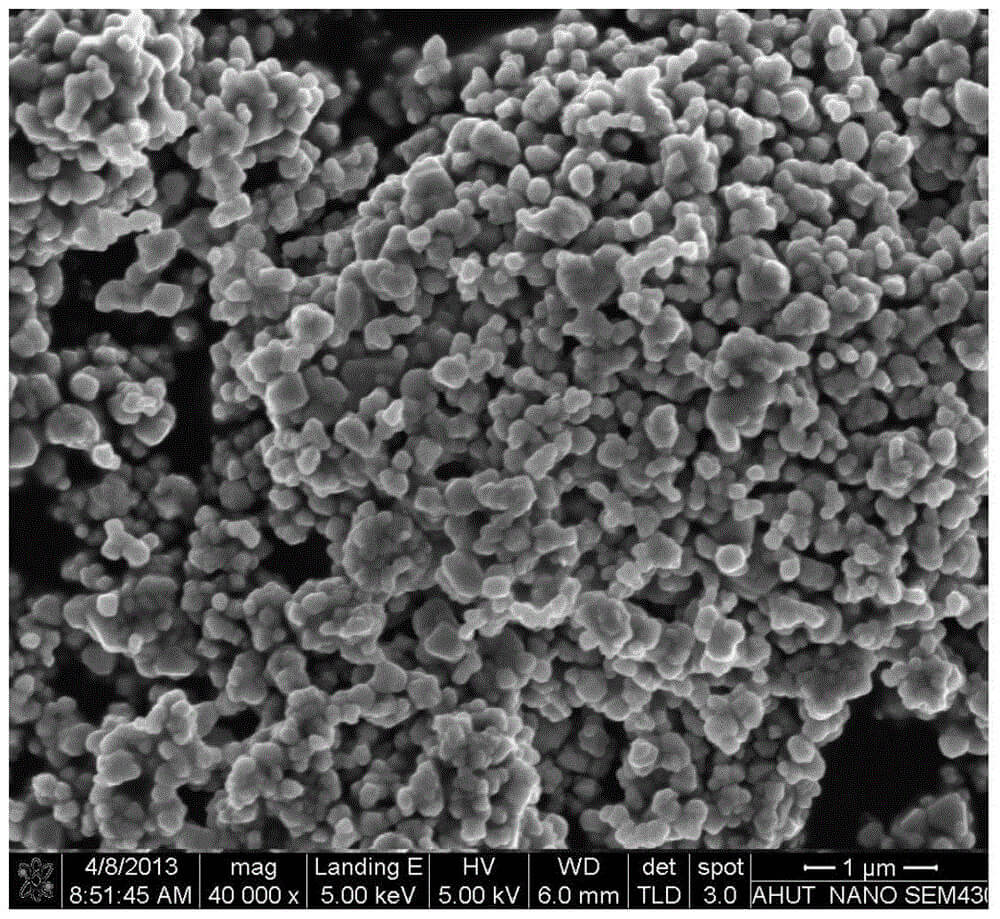
LiFePO4, together with ternary materials, has become the main cathode material for power batteries due to its excellent volume stability and safety. The low temperature performance of lithium iron phosphate is mainly because its material itself is an insulator, low electronic conductivity, poor diffusion of lithium ions, poor electrical conductivity at low temperature, so that the internal resistance of the battery increases, the influence of polarization is large, the battery charge and discharge is blocked, so the low temperature performance is not ideal.
When studying the charge-discharge behavior of LiFePO4 at low temperature, Gu Yijie et al. found that its Coulombic efficiency decreased from 100% at 55℃ to 96% at 0℃ and 64% at -20 ℃, respectively. The discharge voltage decreases from 3.11V at 55℃ to 2.62V at -20 ℃.
Xing et al. modified LiFePO4 with carbon nanoparticles and found that the electrochemical performance of LiFePO4 was less sensitive to temperature and its low temperature performance was improved after the addition of carbon nanoparticles. After modification, the discharge voltage of LiFePO4 decreases from 3.40V at 25℃ to 3.09V at -25 ℃, decreasing by only 9.12%. The cell efficiency is 57.3% at -25 ℃, which is higher than 53.4% without carbon nanoparticles.
LiMnPO4 has attracted a lot of interest recently. LiMnPO4 has the advantages of high potential (4.1V), no pollution, low price, large specific capacity (170mAh/g) and so on. However, due to the lower ionic conductivity of LiMnPO4 than LiFePO4, Fe is often used to partially replace Mn to form LimN0.8Fe0.2Po4 solid solution in practice.
Low temperature performance of anode materials for lithium ion batteries
Compared with the cathode material, the deterioration of low temperature of the anode material of lithium ion battery is more serious, mainly for the following three reasons:
When the battery is charged and discharged at low temperature, the polarization of the battery is serious, and a large amount of lithium metal deposits on the surface of the negative electrode, and the reaction products of lithium metal and electrolyte generally do not have conductivity.
From the perspective of thermodynamics, the electrolyte contains a large number of C — O, C — N and other polar groups, which can react with the negative material, and the SEI film formed by the electrolyte is more susceptible to low temperature.
It is difficult to insert lithium in carbon anode at low temperature, and there is asymmetry of charge and discharge.
Research on cryogenic electrolyte
Electrolyte plays the role of Li+ transfer in lithium ion battery, and its ionic conductivity and SEI film forming performance have a significant impact on the low temperature performance of the battery. There are three main indexes to judge the advantages and disadvantages of low-temperature electrolyte: ionic conductivity, electrochemical window and electrode reactivity.

The level of these three indicators, to a large extent, depends on the composition of the material: solvent, electrolyte (lithium salt), additives. Therefore, the study of the low temperature performance of the electrolyte is of great significance to understand and improve the low temperature performance of the battery.
Compared with chain carbonates, the cyclic carbonates have compact structure, larger force, higher melting point and viscosity. However, due to the large polarity of the ring structure, it often has a large dielectric constant. EC solvent’s large dielectric constant, high ionic conductivity, excellent film forming performance, effectively prevent the co-insertion of solvent molecules, making it indispensable. Therefore, the common low temperature electrolytic liquid system is mostly based on EC, and then mixed with small molecular solvents with low melting point.
Lithium salt is an important component of electrolyte. Lithium salts in electrolyte can not only improve ionic conductivity of solution, but also reduce the diffusion distance of Li+ in solution. In general, the greater the concentration of Li+ in the solution, the greater the ionic conductivity. However, the concentration of lithium ion in electrolyte is not linearly related to the concentration of lithium salt, but parabolic. This is because the concentration of lithium ion in the solvent depends on the dissociation and association of lithium salt in the solvent.
Studies of other factors
In addition to the battery pack, technological factors in actual operation will also have a great impact on battery performance.
Preparation process
Yaqub et al. studied the effect of electrode load and coating thickness on low temperature performance of Lini0.6Co0.2Mn0.2O2 /Graphite battery and found that in terms of capacity retention rate, the smaller the electrode load, the thinner the coating layer, the better its low temperature performance.
Charge and discharge state
Petzl et al. studied the influence of charging and discharging state at low temperature on battery cycle life, and found that large discharge depth would cause large capacity loss and reduce cycle life.
Other factors
The surface area, pore diameter, electrode density, wettability of electrode and electrolyte and separator all affect the low temperature performance of lithium ion battery. In addition, the influence of material and process defects on the low temperature performance of the battery can not be ignored.
Conclusion
In order to ensure the low temperature performance of lithium ion batteries, the following points should be done:
① Form thin and dense SEI film;
② To ensure that Li+ has a large diffusion coefficient in the active substance;
③ The electrolyte has high ionic conductivity at low temperature.
In addition, the research can be another way to look at another kind of lithium-ion battery – all-solid lithium ion battery. Compared with conventional lithium-ion batteries, all-solid-state lithium-ion batteries, especially all-solid-state thin-film lithium-ion batteries, are expected to completely solve the problems of capacity attenuation and cycle safety of batteries used at low temperatures.





1 thought on “Lithium battery get low in winter?The low temperature performance of lithium battery”
Hello, Neat post.
Comments are closed.