Skip to content



Huge energy crisis in Europe
Russia is a major supplier of energy to Europe, and the conflict between Russia and Ukraine has not yet eased. While sanctions against Russia have intensified, energy prices in Europe have continued to rise.
On August 15, the price of natural gas in Europe exceeded $2,400 per thousand cubic meters for the first time. Last year, the price of natural gas did not exceed US$500 per thousand cubic meters, which has risen by more than 400% in one year. Not since 1996 have prices been so consistently high in the history of the European gas trading hub.
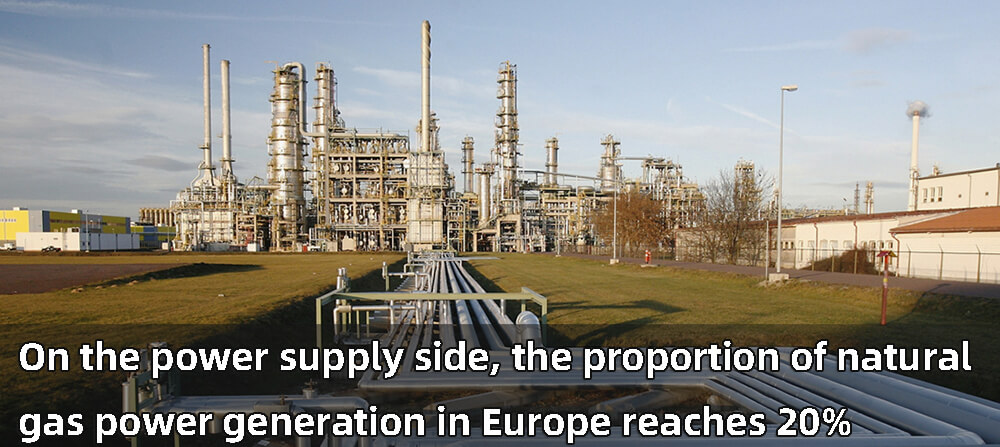
On the power supply side, the proportion of natural gas power generation in Europe reaches 20%. Under the influence of international relations, the supply of natural gas in Europe continues to be tight, which has a huge impact on the electricity supply in Europe, resulting in rising electricity prices.
According to the data, the median spot price of electricity in France in early 2020 was about 44.86 euros/MWh, while on July 23, 2022, it reached 268 euros/MWh, an increase of 500%. On July 20, 2022, the grid in east London, England, suffered a brief outage due to a surge in electricity demand. In order to maintain the stability of the power system, the UK’s electric utility companies are forced to purchase a part of the electricity from the electricity trading market at a price 50 times higher than normal (about 80 RMB/kWh) to meet the power supply demand.
The entire European region, after two years of repeated torture by the new crown epidemic and nearly half a year of conflict between Russia and Ukraine, is falling into a huge energy crisis, and there is no sign of getting out of the crisis at present.
The installed capacity of household energy storage products in Europe has surged
In 2021, European energy storage will start to grow rapidly. In 2022, due to the year-on-year rise of energy costs and electricity prices in Europe, superimposed by the Russian-Ukrainian war and large-scale power outages in other countries, the high cost of residential electricity and poor power supply stability have brought about a high increase in household photovoltaics, which in turn has brought about an unexpected outbreak of the household energy storage market.
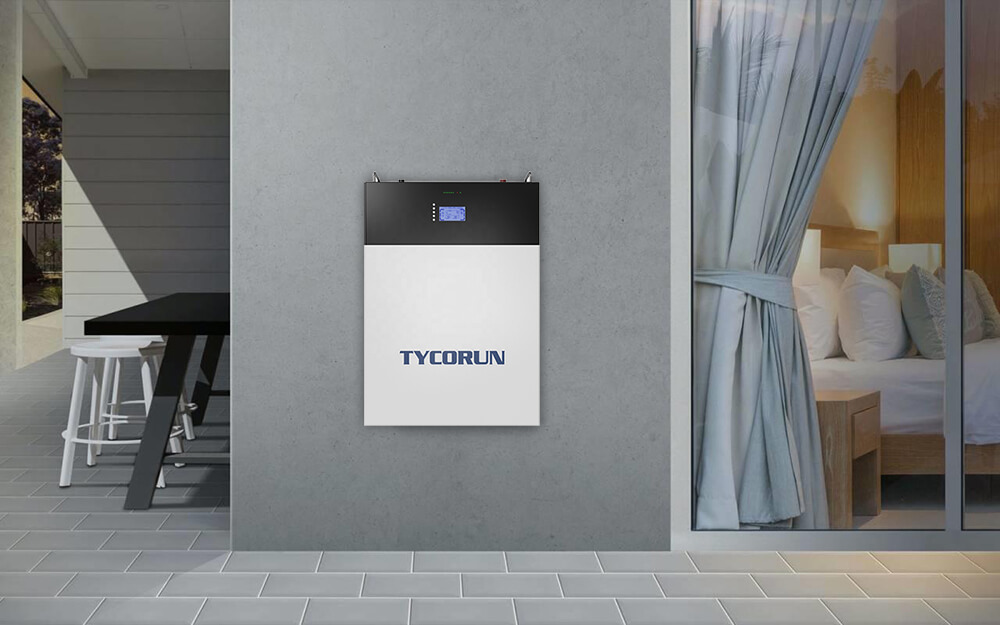
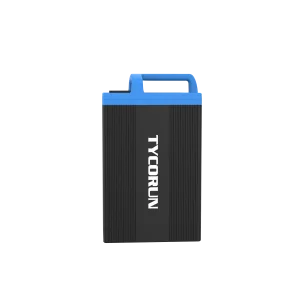
Click the picture for detailed product information
Driven by energy policy + economy in Europe, the household energy storage market has exploded. Among them, Germany is the world’s largest household storage market, accounting for 70% of the European household storage market. In 2021, Germany will add 1.48GWh of household energy storage, a year-on-year increase of 45%, accounting for 34% of the global market share; the cumulative installed capacity is 3.92GWh, a year-on-year increase of 60.6%, accounting for 32% of the global market. In 2021, Germany’s optical storage penetration rate will be 3.6%, ranking first in the world.
The investment return period of the German household storage system is generally 7-8 years. If the skyrocketing electricity price this year, tax relief or direct subsidies are considered, it will be further shortened to 2-3 years. It is estimated that in 2022, the number of installed energy storage systems for households in Germany will exceed 500,000, with a total capacity of about 4.4GWh and a total power of about 2.5GW.
In addition to Germany, the European market is located in Italy, the United Kingdom, and Austria, which are at the forefront of the installed capacity of household storage. Driven by electricity prices and policies in these countries, the scale of newly added household storage and installed capacity has grown steadily every year.
Relevant data shows that Italy is second only to Germany in the installed capacity of household storage in Europe. In 2021, the installed capacity of Italian household storage is 191MWh, an increase of 122%; by the end of 2021, the installed capacity of British household storage is 81MWh, a year-on-year increase of 113%.
As the energy crisis continues to ferment, it is estimated that the installed capacity of household energy storage in Europe in 2022/2023 will reach 10/23GWh, a year-on-year increase of 378%/133% respectively. From 2021 to 2025, the installed capacity of global household energy storage will increase from 5.2GWh to 72.6GWh, with a compound growth rate of over 90%. Therefore, the household energy storage industry is highly sought after by the capital market and becomes the most popular energy track.
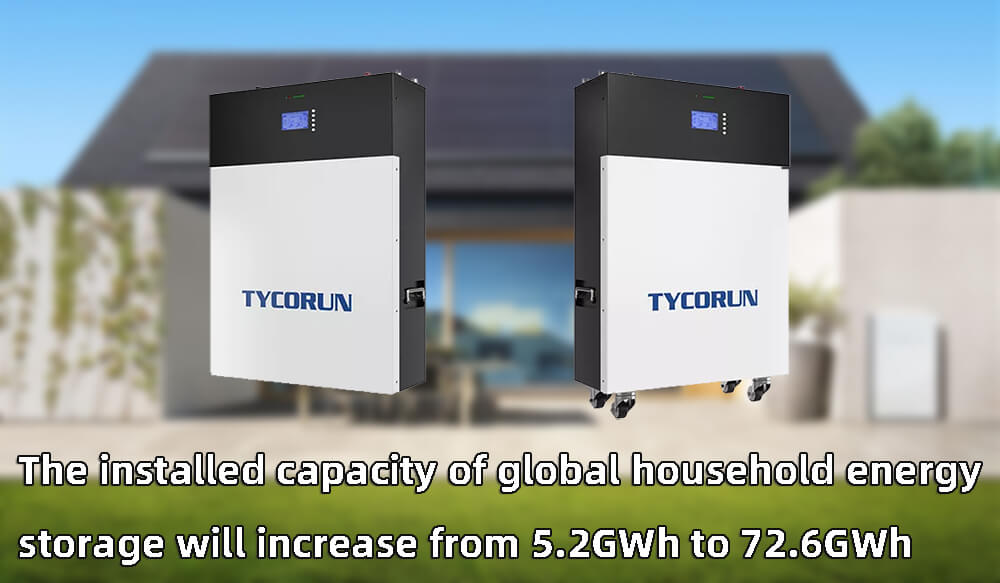
The household energy storage market has become a golden track
According to the application scenarios, energy storage can be divided into user side (industrial, commercial and household), power generation side (renewable energy grid connection), grid side (power peak regulation and frequency regulation), transmission and distribution side, and auxiliary services.
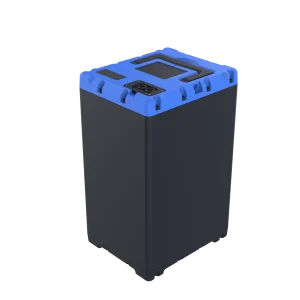
Household energy storage is an essential part of the distributed energy system, and the core of the household solar energy storage system is photovoltaic + battery + energy storage converter. Household optical storage system mainly includes cells, BMS, energy storage converter (PCS), photovoltaic modules, photovoltaic inverters, electrical connections and other parts. A typical system is generally 5KW (component + inverter) matching 10KWH (energy storage battery) or 10KW+10KWH.
Among them, the battery is the core of the energy storage system, accounting for about 45-50% of the cost; the energy storage converter can control charging and discharging, and perform AC-DC conversion, accounting for about 10-15% of the cost; Photovoltaic modules and inverters are used for solar power generation, and the cost accounts for about 20-25%; the system installation cost accounts for about 15-20%.

Household energy storage system products include all-in-one and distributed.
1) All-in-one machine: The home-style photovoltaic energy storage and inverter integrated machine is an integrated system with photovoltaic inverter, battery and controller placed inside. And powerwall battery is very popular in the market now.
The working status can be displayed conveniently, quickly and intuitively through the touch screen, the parameters can be modified and various working modes can be used, which is convenient to use.
Generally, there are three working modes: solar priority mode, AC (mains) priority mode, and SE priority mode (off-peak power consumption mode);
2)Distributed type (inverter + battery system): the battery of the household distributed machine is installed separately from the inverter, the user can match the household energy storage inverter according to their own needs, and can also match the switching power supply or inverter as a backup power usage. Generally, there are four types of hybrid home photovoltaic + energy storage systems, coupled home photovoltaic + energy storage systems, off-grid home photovoltaic + energy storage systems, and photovoltaic energy storage energy management systems.