Skip to content
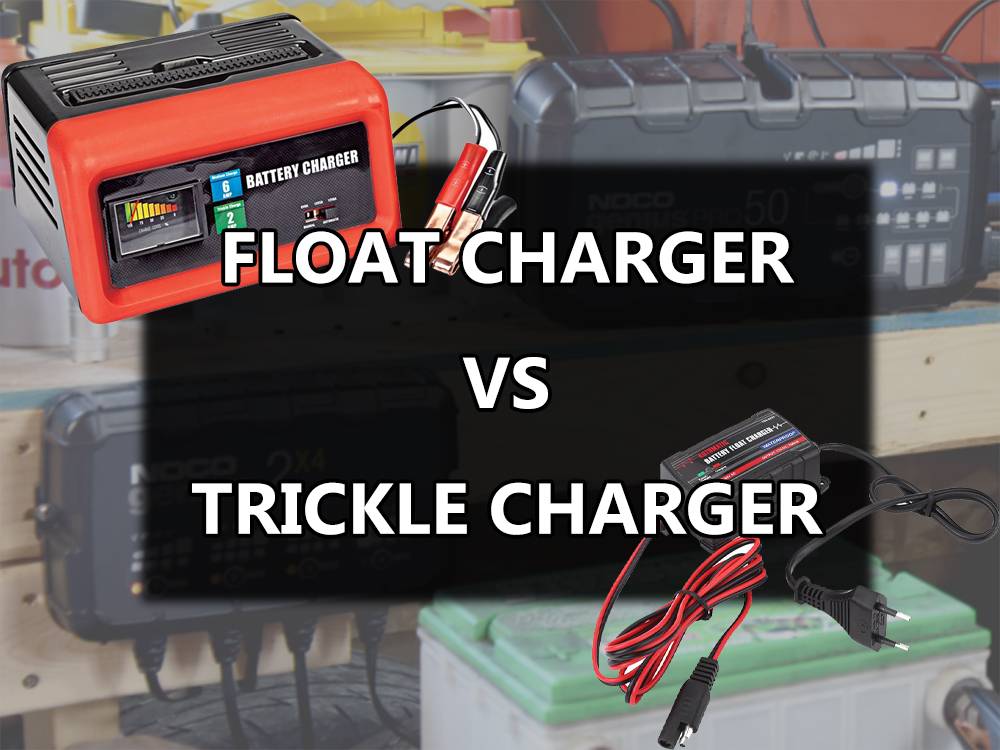


What does a float charger do
The role of float charger: The float charger is a power supply charger that delivers a constant low-voltage current to the load during battery charging. We used it to strengthen the battery cycle and prevent it from high current overcharging. The batteries we connect with the float charger mainly work like a power station to store & supply emergency backup.
The float charging system performs multiple tasks in parallel configuration mode, connecting the battery and the power supply in this mode at the same time. The float charger continuously operates at low voltage to prevent overcharge. When each lithium battery has 3.2-volt cells, you have a 12-volt battery means the cells in the battery are 4. The float charger takes each cell up to 3.65 volts which makes 14.6 volts. After that, the charger will automatically sense the voltage and disconnect charging.
What does a trickle charger do
The role of a trickle charger: A trickle charger is commonly used for slow charging to fulfill the battery charge and prevent it from self discharge. When the trickle charger pump ups the battery to fully charged, it also increases the charging of the battery to maintain its power.
While connecting a trickle charger for a long time can cause overheating and battery damage. Trickle chargers operated lithium ion batteries, hybrid batteries, dry batteries, and polymer gel batteries. It provides a low charging rate to maintain a continuous voltage and current.
Are float charger vs trickle charger good for battery
The competition with float charger vs trickle charger depends on the microprocessor-controlled technology. Float charger automatically cuts off the supply after reaching the voltage. Sometimes, the trickle charger can charge up to the mark and have enough power to charge the dead battery.
On the other hand, the float charger has a low-volt configuration and does not have enough capacity to charge a dead battery. The float chargers have low amperes while connecting to charge a battery. It can top up battery during the charging time. You can leave the charger connected to the battery to store the volt for backup.
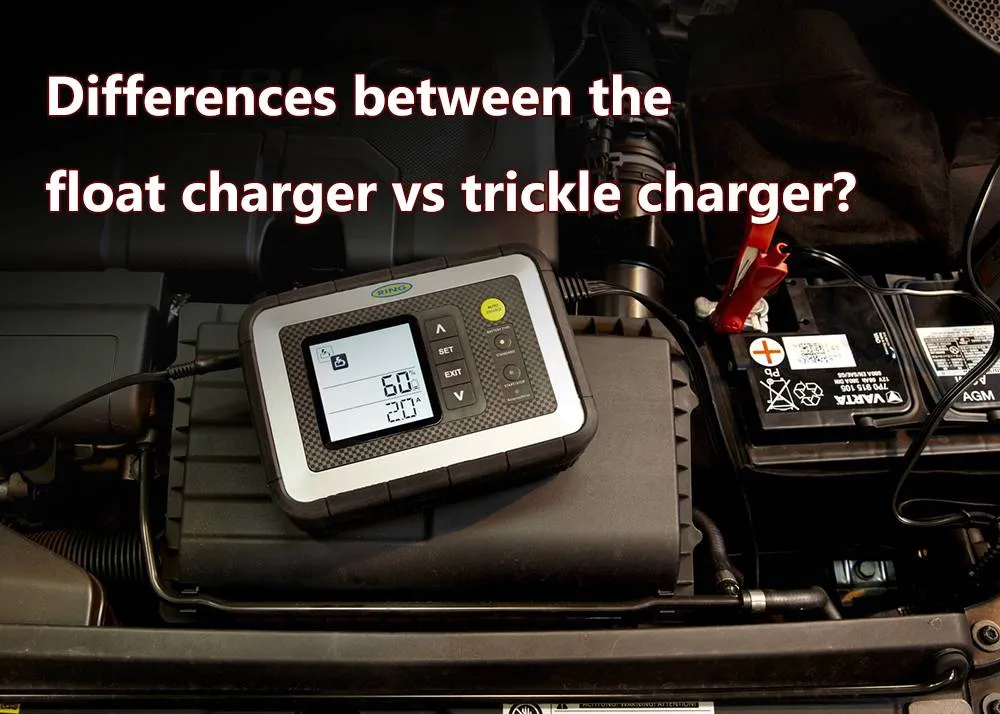
Differences between the float charger vs trickle charger
Now we are going through the main differences between these two kinds of the charger. We mainly differentiate the float charger vs trickle charger on their charging methods. It depends on plug products and checking procedures of how it works. A trickle charge can take more than a day to charge a battery and be plugged into for several hours to complete its circle.
A trickle charger is commonly known for constant low-current charging equal to self-discharge. It continuously provides current until the battery plugged out or to be disconnected. It might lead to overheating and result in an alarming scenario: a fire explosion or some burning electrolyte. When we talk about the leading difference between these float charger vs trickle charger two types, float chargers are safer to hook up.
Automatically shutting off the charger current and preventing battery overcharging is necessary to increase the smooth life cycle of your batteries. When the float charger completes its current circle, its feature has automatically shut down the current supply. When the voltage drops, the float charger will turn back.
A float charging system delivers a reduced voltage or low constant current without any self-discharge point, thus ensuring that the fully charged state is maintained. In a trickle charging system, the charging current has the same ratio as the self-discharging frequency. Another difference between float charger vs trickle charger is the loading techniques. The float charger allows itself to bear the load during charging. But trickle chargers only plugin and are unable to perform both tasks.
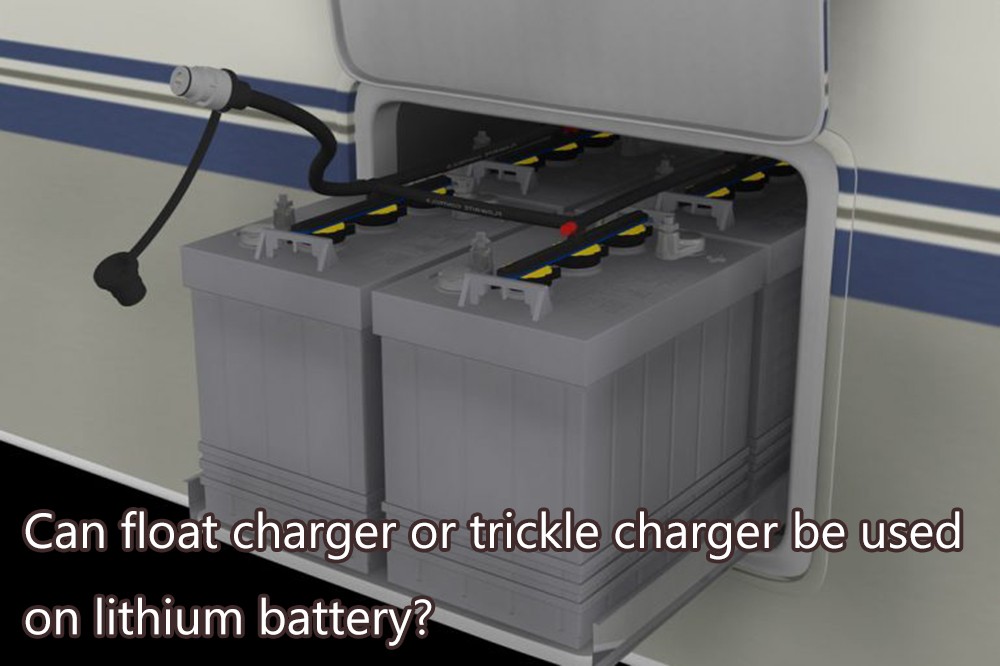
Can float charger vs trickle charger be used on lithium battery
You have to understand the discharge rate of lithium batteries and their running load conditions while connected with the chargers. The last stage in the constant current and constant voltage charging mode of lithium-ion batteries is actually float charging.
The charger dedicated to lithium-ion batteries already has the function of floating charging according to the charging stage, so there is no need for a separate float charger. The float charger understands the frequent ratio of lithium ions and checks the battery charging points before starting. But, in case of less backup, you need a trickle charger to boost once.
What is the best way to charge a lithium-ion battery
Lithium is the future and becoming a significant product in the digital/energy storage/power battery market. It is easy to use batteries with automatic on & off charging features. It can store energy for approximately 10 years. The basic charging need for lithium-ion battery is constant current (cc) and constant voltage (cv).
Suppose, we have a lithium ion 18650 battery cell rating is 3.7 volts 2200 mah. After charging, the volt will go up to 4.2 volts per cell. After combining three cells to make a 12-volt battery, the rating 3.7*3=11.1 volt converts into 4.2*3- 12.6. The basic need for lithium-ion batteries is a BMS circuit. We combined lithium with BMS to prevent overcharging and control voltage.
Using a trickle charger for lithium can be risky as it may exploit the batteries with overcharging or overheating, however, BMS can prevent this from damaging Li-ion batteries. Plus, the low constant voltage damages the batteries as lithium ions need a rapid charge of current. Choosing the appropriate battery charging devices can extend your battery health. If you want to know the relevant BMS industry information, you can refer to top 10 battery management system suppliers.
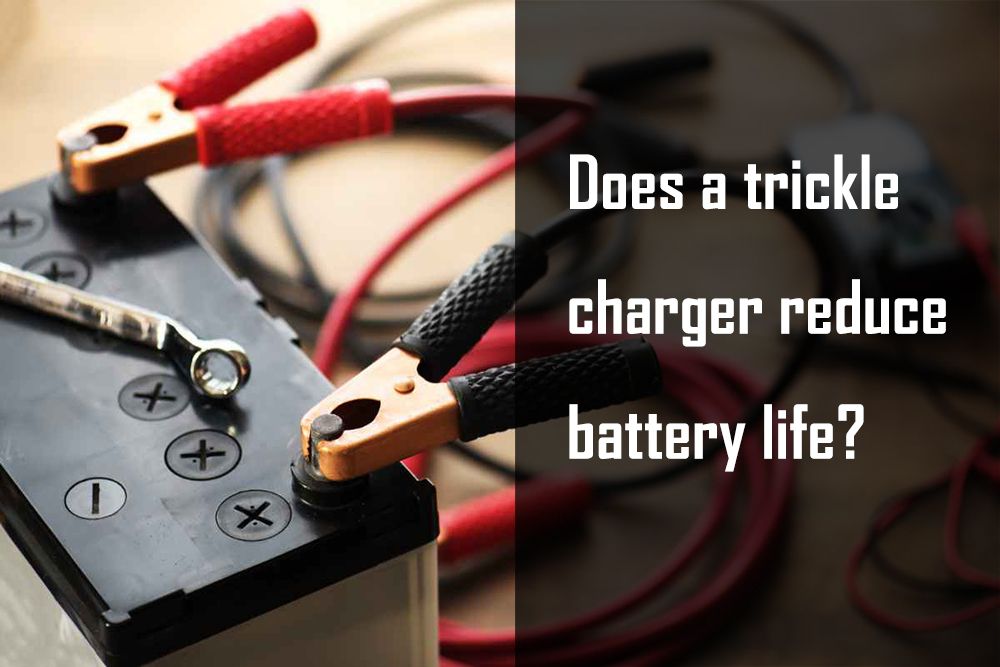
Does a trickle charger reduce battery life
Trickle chargers continuously charge the battery, it provides a charge equal to the battery self-discharge rate. The trickle charger should disconnect manually to avoid battery damage or explosion. But if you have a microprocessor technology smart charger, you do not need to be afraid. Yes, it may reduce battery life if we do not use it appropriately.
Do float chargers and trickle chargers stop charging when full
It is necessary to consider some more charging criteria like voltage range, power management, or input charging circuits when we compare float charger vs trickle charger. The float charger senses the battery current and charge the battery after full voltage. It automatically tops off a battery at 100% and has on & off features to avoid overcharging and overheating.
Trickle chargers continuously charge the battery regardless of knowing the battery has fully charged. It provides a charge equal to the battery self-discharge rate. We must disconnect the trickle charger to prevent a long period of charging. But if you have a microprocessor technology smart charger, you do not need to be afraid.