Skip to content


What’s more serious is that the increase of nickel content will lead to a substantial increase in the residual alkaline impurities between particles, which in turn will cause serious gas production during charging and discharging, resulting in battery swelling and deformation, shortened cycle and shelf life, and potential safety hazards. Residual alkaline impurities have become the key to restricting the application of high-nickel ternary materials in high-energy-density power batteries for electric vehicles.
In addition, in recent years, methods such as doping or coating of various anions and cations have been used to stabilize the bulk surface structure of ternary materials and achieve the effect of improving cycle and storage performance. These methods are difficult to solve the problem of high residual alkaline impurities in high-nickel materials.
To this end, this post studies the residual alkaline impurities under different sintering temperatures and lithium/metal ratios when preparing NCM811 materials by high-temperature solid-state method, and verifies the alkali-reducing effects of various post-treatment systems.
Experimental test
Synthesis of NCM811 material
The NCM811 material precursor Ni0.8Co0.1Mn0.1(OH)2 and LiOH were mixed according to the set stoichiometric ratio. In a high-speed mixer, mix the raw materials at a speed of 700r/min for 0.5h. The mixture was put into a corundum crucible, placed in a box-type atmosphere sintering furnace, sintered in an oxygen atmosphere and a specific temperature for 12 hours, and naturally cooled to room temperature in an oxygen environment to obtain an NCM811 sample.
Three test points were selected in different lithium ratios and temperature regions, and the corresponding n(Li):n(Ni+Co+Mn) and sintering temperature of each sample are shown in Table 1.
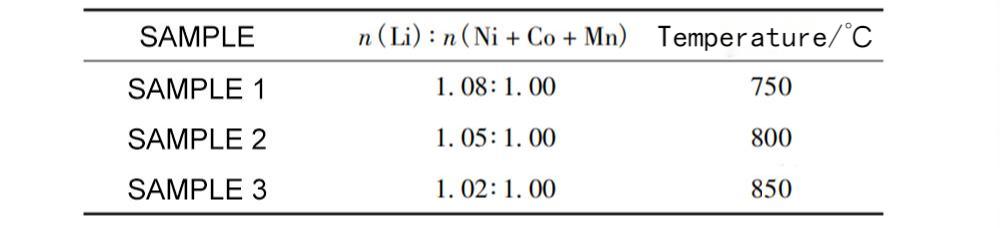
Table 1. Sintering conditions of NCM811 samples
XRD and SEM analysis of samples
The structure of the sample was analyzed by powder X-ray diffractometer, CuKα, the wavelength was 0.15406nm, the tube pressure was 40kV, the tube flow was 40mA, the scanning speed was 2 (°)/min, and the step size was 0.02°. The surface morphology of the samples was analyzed by field emission scanning electron microscopy.
Analysis and treatment of the residual amount of basic impurities in the sample
The NCM811, NCM622, NCM523 and NCM111 samples were selected as the comparative samples for the residual analysis of basic impurities. Specific manufacturers include NCM811 high nickel ternary cathode material companies for reference. Put 5g of powder sample in 95g of deionized aqueous solution, stir for 5min and then suction filter. Use a potentiometric titrator to calculate the contents of Li2CO3 and LiOH in the solution according to the equivalent point values V1 and V2, and use the contents as impurities to represent the composition.
According to the content of Li2CO3 and LiOH in the measured sample 2, the above-mentioned basic impurities that consume 20%, 50% and 80% of the theoretical value are used as the end point respectively, and the alkali-reducing substance ammonium dihydrogen phosphate is calculated and added. After fully reacting under constant stirring and evaporating to dryness, they were backfired in an oxygen environment at 700°C for 5 hours to obtain sample 2-P2, sample 2-P5, and sample 2-P8.
In addition, the comparison sample 2-H2O was prepared by rinsing with pure water at a solid-to-liquid mass ratio of 1:4, and the conditions for back-burning were consistent.
Cathode sheet fabrication and simulated battery assembly
Mix the NCM811 sample, polyvinylidene fluoride, and acetylene black in a mass ratio of 92:5:3, grind them evenly, and coat them on a 0.1mm thick aluminum foil. Punched into a circular cathode sheet with a diameter of about 14mm, which contains about 10mg of cathode material, and finally dried in vacuum at 120°C for 12h.
A CR2032 button cell was assembled in an argon-protected glove box with a lithium metal sheet as the negative electrode, Celgard 2325 membrane as the diaphragm, and 1mol/L LiPF6/EC+DMC (mass ratio 1:1) as the electrolyte.
Electrochemical performance test
Charge and discharge tests were performed at 22°C with a CT4008 battery performance test system. Rate performance test: at 3.00 ~ 4.30V, cycle at 0.10C, 0.20C, 0.50C, 1.00C, 2.00C and 5.00C in sequence, and compare the discharge specific capacity with the value at 0.01C.
Cycling performance test: first charge to 4.3V with 1.00C constant current, then switch to constant voltage charge until the current is 0.01C; then discharge to 3.0V with 1.00C constant current.
Result analysis
XRD analysis of sintered material
Figure 1 is the XRD pattern of the prepared NCM811 material. It can be seen from Figure 1 that the NCM811 prepared under the conditions of different temperatures and lithium ratios has no impurity peaks, and each sample has the structure of α-NaFeO2. The degree of splitting of ( 006 )/(102) and (108)/(110) crystal planes can usually be used to measure the degree of order of the layered two-dimensional structure.

In Figure 1, the two groups of peaks (006)/(102) and (108)/(110) split more obviously, indicating that each sample has a layered structure with good crystallinity. For samples prepared at high temperature, the peak shape is sharper, indicating a higher degree of crystallization.
Comparison of residual basic impurities
Generally speaking, under high temperature and low lithium ratio sintering conditions, the residual alkaline impurities in the prepared cathode material will be lower than those prepared under low temperature and high lithium ratio conditions. High alkaline impurities will lead to a rapid increase in the viscosity of the coating slurry during the use of the material, and even a “jelly” phenomenon;
In addition, it will also lead to a series of problems such as the reduction of the maximum compaction of the pole piece and the swelling during the cycle. The comparison of the basic impurity content between the prepared NCM811 sample and the purchased sample is shown in Table 2.

Table 2. Comparison of basic impurity content between the prepared NCM811 sample and the purchased sample
It can be seen from Table 2 that although the process conditions of high sintering temperature and low lithium ratio were selected for sample 3, the residual mass fraction of alkaline impurity lithium carbonate in the prepared NCM811 material was still 1.22%, and lithium hydroxide was 0.69%. In the purchase of ternary material products.
From the changing trend of the content of basic impurities in commercialized NCM111, NCM523 and NCM622 materials, it can be seen that with the increase of Ni content, the residual content of basic impurities also increases, and the degree of increase is higher than the linear growth.
This is due to the inherent characteristics of nickel-containing ternary materials. The optimization of the sintering process can reduce the residual amount of basic impurities, but for high-nickel ternary materials such as NCM811, other means must be used to reduce the content of basic impurities.
Alkali reduction process and effect
The reaction in the liquid phase environment is a direct solution to achieve the separation or conversion of basic impurities, among which phosphate coating is an effective modification method. The idea can be transformed into: NCM811 is used as the matrix and ammonium dihydrogen phosphate is used as the modified substance for treatment, and through secondary sintering at 700 ° C, an attempt was made to form a stable fast ion conductor layer on the surface of the NCM811 material that can protect the surface of the material, so as to consume residual alkaline impurities and improve the performance of the material.
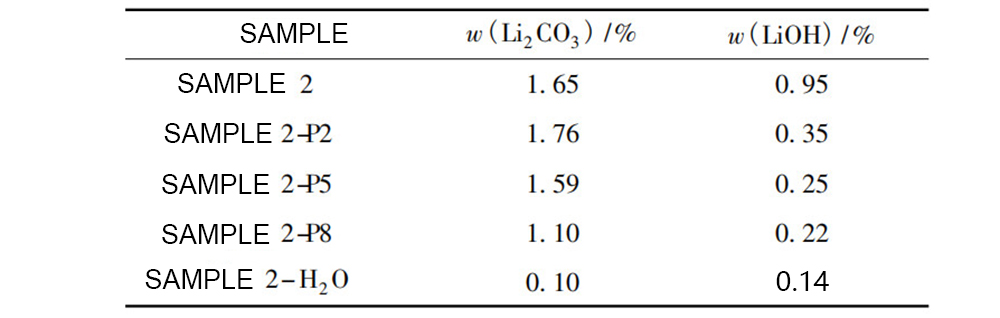
Table 3. Alkaline impurity content of samples obtained by different alkali reduction processes
It can be seen from Table 3 that with the increase of phosphate addition, the content of LiOH and Li2CO3 remaining on the surface of NCM811 decreased significantly, indicating that the basic impurities were consumed during the treatment process. Compared with Li2CO3, LiOH has a larger reduction, which may be due to:
①During the treatment process, LiOH is transformed into Li2CO3; ② During the treatment process, Li in the structure is precipitated, and new basic impurities appear again during the back-burning process; ③ Alkaline impurities of complex components exist in the order of reaction. The specific mechanism needs further experimental study. The sample 2-H2O prepared by rinsing with pure water, the content of basic impurities in the material was significantly reduced.
XRD analysis of samples before and after alkali reduction process
Figure 2 is the XRD comparison of samples before and after different alkali-reducing processes.
It can be seen from Figure 2 that although the content of basic impurities changed significantly before and after treatment, the crystal structure of each sample did not change. Combined with the analysis of the data in Table 3, the reason is that the added phosphate consumed part of the basic impurities, and formed the phosphate doping on the surface of the cathode material during the 700°C reburning process, and no new phase was formed.
SEM analysis of samples before and after alkali reduction process
The SEM images of sample 2 and the sample after alkali reduction treatment are shown in Figure 3.
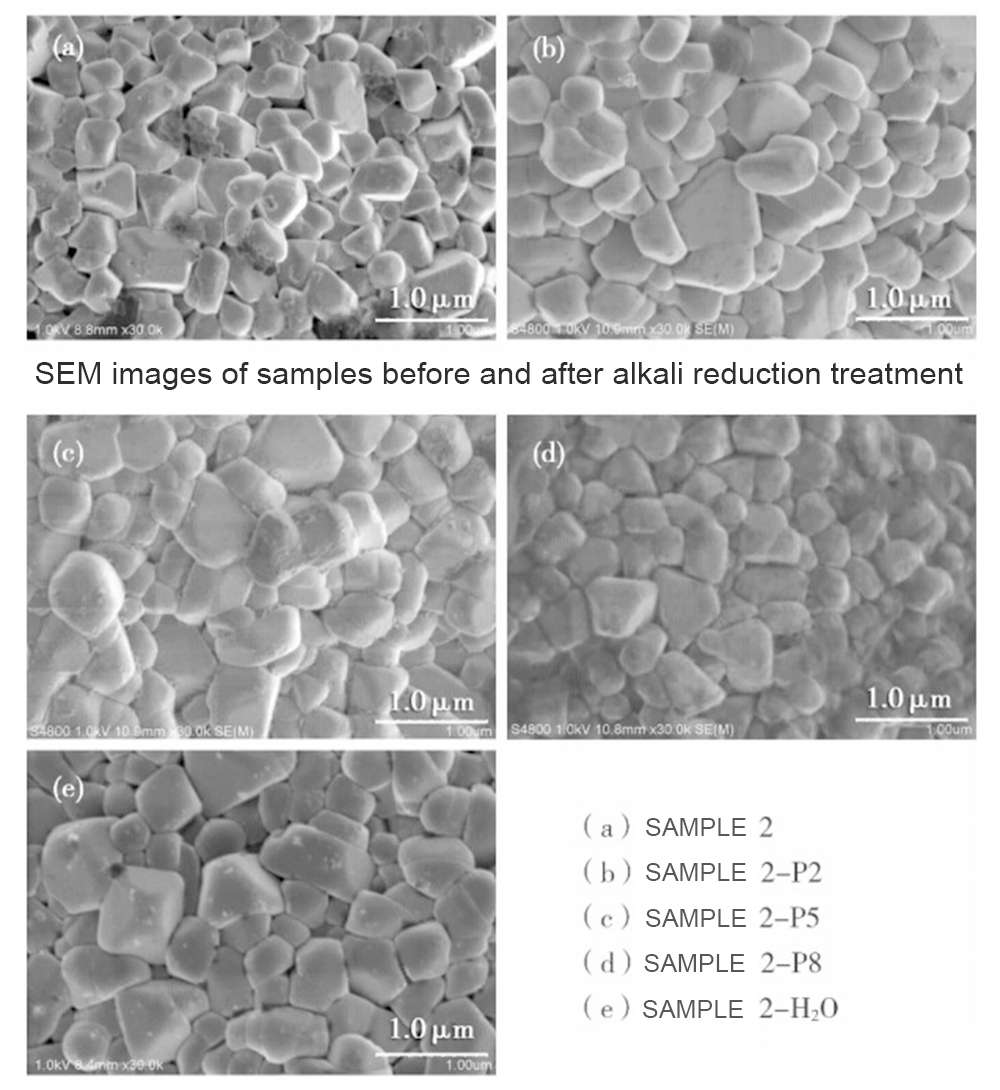
From Figure 3, it can be seen that there are obvious dark areas on the surface of sample 2, without fixed morphology, which should be weakly conductive alkaline impurities containing lithium remaining on the surface of the particles; In the treated sample 2-P2, no obvious dark dark area substances were observed. At the same time, a thin coating layer is formed on the particle surface. With the increase of phosphate addition, the clarity of the particle surface gradually decreased, and the boundary of the particle gradually blurred.
The sample 2-H2O after water washing has a clean particle surface, clear boundaries and larger particle gaps. From the perspective of particle morphology, both treatment methods can realize the separation or harmless treatment of alkaline impurities.
Electrochemical properties of samples before and after alkali reduction process
The half-cell rate data of sample 2 and the sample after alkali reduction treatment are shown in Figure 4.
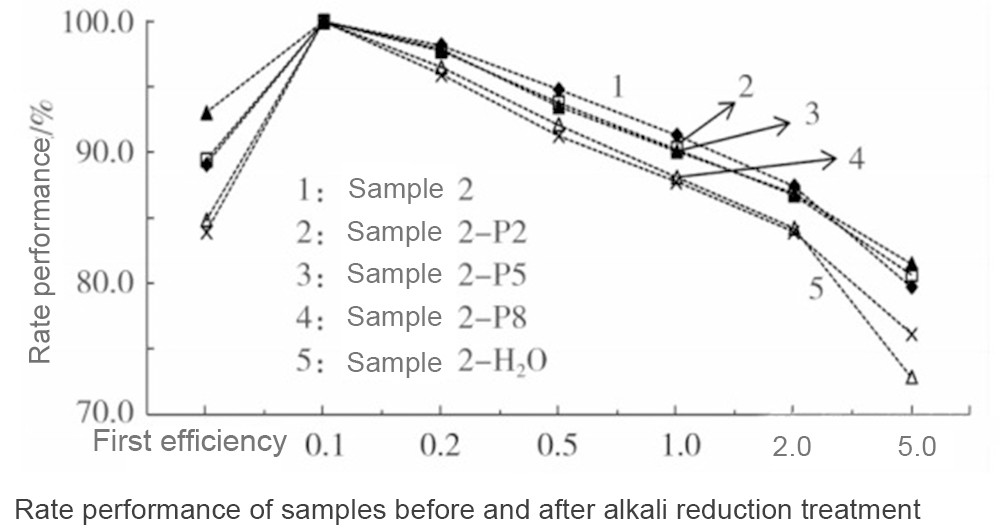
Figure 4 combined with the data in Table 3 shows that the higher the residual amount of alkaline impurities, the lower the Coulombic efficiency of the first cycle of the half-cell. The first charge-discharge efficiency of the sample after water washing is the highest, reaching 93.0%. Comparing the rate performance of samples with different treatment processes, it can be seen that sample 2-P2 and sample 2-H2O exhibit similar rate levels, which are slightly lower than sample 2.
It can be observed from Figure 3(b) and (e) that the primary particles of sample 2-P2 and sample 2-H2O have smoother and cleaner surfaces than those without treatment. Therefore, the small decrease in the rate capability should originate from the removal of lithium salt species on the particle surface that can function as Li+ conductors.
The rate performance of the samples decreased with the increase of phosphate addition. In Figure 3, samples 2-P5 and 2-P8 are enriched with dark, flocculent substances on the surface and gaps of the primary particles, it shows that the amount of phosphate added under this condition is too high, and the electronic conductivity of the formed substance is weak, which hinders the Li+ conduction of the bulk phase of the cathode material.
The cycle performance of sample 2 and the half-cell prepared from the sample after alkali reduction treatment is shown in Figure 5.
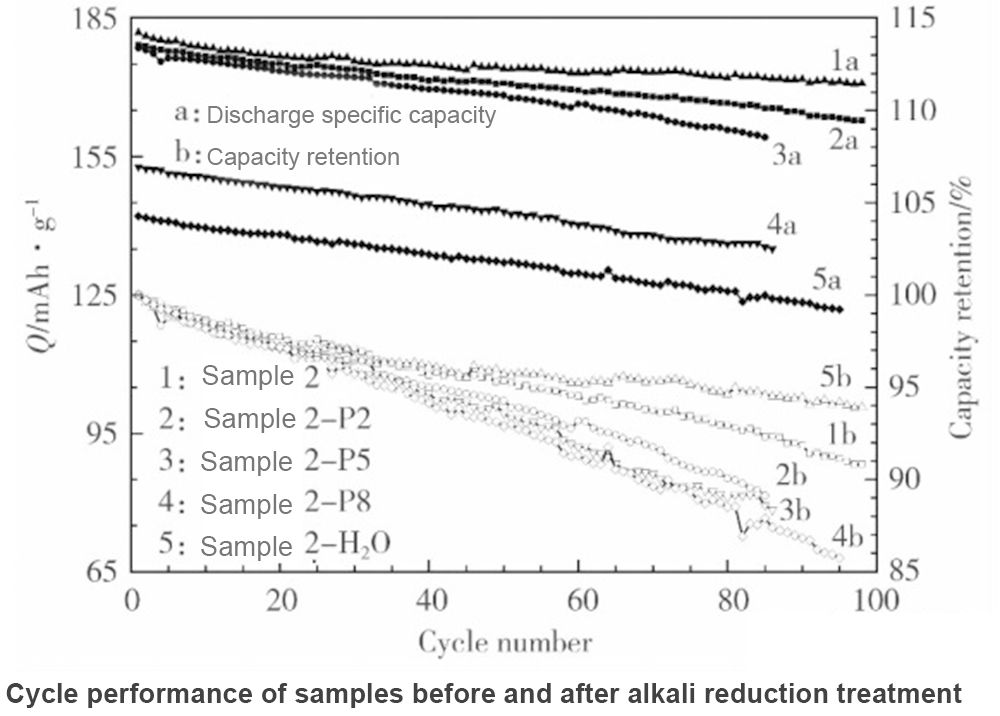
It can be seen from Figure 5 that the 1C specific capacity of the sample treated with phosphate was significantly lower than that of the untreated sample 2, and with the increase of phosphate addition, the specific capacity decreased by about 1mAh/g (sample 2-P2), 27mAh/g (sample 2-P5) and 37mAh/g (sample 2-P8), meanwhile, the capacity retention Also lower than sample 2.
Phosphate treated samples formed inert species on the surface that did not provide capacity. The poorer cycle retention of the phosphate-treated samples compared with the untreated samples indicates that lithium atoms may be detached from the structure during the treatment. In contrast, the specific capacity of the sample 2-H2O washed with pure water increased from 179.2mAh/g to 181.8mAh/g for the first time, and the discharge specific capacity after 100 cycles was still about 171mAh/g, and the capacity retention rate reached 94.1%.
The increase in discharge specific capacity may be due to the fact that water washing greatly reduces the residual electrochemically inert alkaline impurities on the surface of NCM811 material, at the same time, the removal of impurities on the surface and between particles makes the NCM811 material have enough active surface to achieve full contact between primary particles and electrolyte. The experimental results show that the removal of basic impurities is beneficial to improve the capacity retention of cathode materials.
Conclusion
The author of this paper prepared the high-nickel ternary cathode material NCM811 through a high-temperature solid-state synthesis process. The product has an α-NaFeO2 structure and no impurity phase. Under the sintering conditions of low lithium ratio and high sintering temperature, the residual basic impurity content of the sample is still higher than that of NCM523, NCM111 and other low nickel content ternary materials, indicating that high basic impurities are the common characteristics of high nickel ternary materials.
In a liquid phase environment, NCM811 was treated with different amounts of ammonium dihydrogen phosphate and re-sintered. The results showed that the residual alkali content on the surface of the material was reduced, and the crystal structure did not change, but electrochemically inert substances remained on the surface of the particles, resulting in a significant decrease in capacity and cycle retention. This shows that it is feasible to reduce residual alkaline impurities by conversion, but further optimization of phosphate addition and back-burning temperature is required.
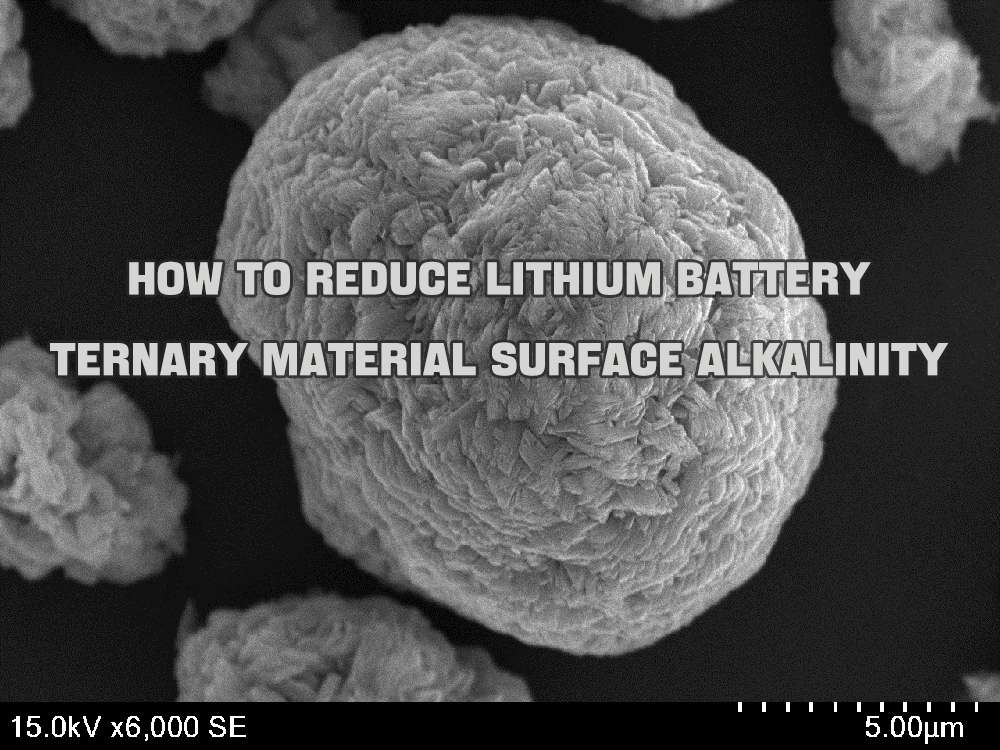
Washing with water can greatly reduce the content of alkaline impurities, which is lower than the level of imported products. Compared with the sample before treatment, the specific capacity increased by about 1.5mAh/g, and the capacity retention rate after 100 cycles also increased from 90.8% before treatment to 94.1%.
The above results show that water washing is a convenient and effective means to control the content of alkaline impurities in high-nickel ternary materials and improve the properties of materials. As the basic process for residual alkali control of high-nickel ternary materials, water washing can exert the performance of the material itself.
In the follow-up, it is necessary to focus on how to combine water washing to reduce alkali and coating, so that the residual alkaline impurities on the surface of the primary particle of the cathode material can be directly converted into a coating layer that can realize Li+ conduction. Further improve the utilization rate of lithium resources, and at the same time improve the electrochemical performance of cathode material products such as cycle and thermal stability.