Skip to content

Current development status of electric vehicles
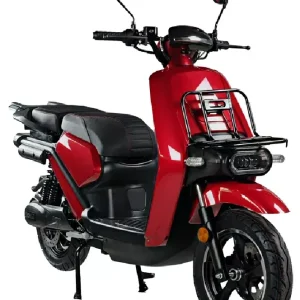
At present, household hybrid vehicles and pure electric vehicles have been put into use in broad areas, such as electric buses, patrol cars, reception vehicles, vans, shuttle buses, etc. have been widely popularized in various industries. Clean energy vehicles such as fuel battery vehicles and bio-energy vehicles are already being developed and designed in full swing, and will surely become mainstream in the future.
The development of electric vehicles in the world is growing fast. Especially in the past 10 years, the governments of various countries have continuously increased their capital investment, including technological improvement, infrastructure construction, consumption subsidies and support for key automobile manufacturers.
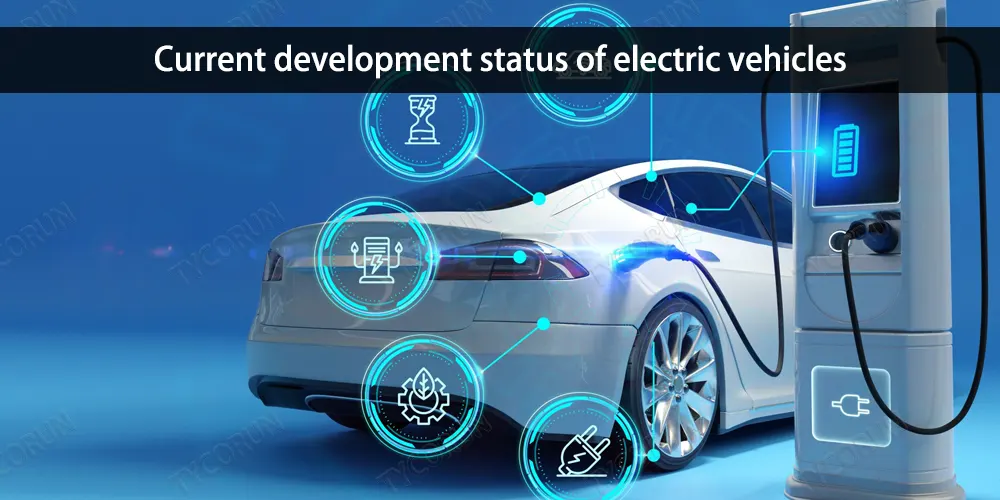
The traditional automobile industry chain involves more than 100 industries, and electric vehicles are extended on the basis of the traditional automobile industry chain. At present, most countries focus on the development of pure electric vehicles.
The upstream mainly focuses on lithium-ion batteries, motors and control systems, and vehicle control systems, while the downstream mainly focuses on charging facilities including battery charger, battery recycling and other industries.
In the cost structure of a pure electric vehicle, the electric drive system (including power battery system and motor drive system) accounts for more than 50% of the whole vehicle. Among them, the lithium battery is the key, and the battery adhesive is one of the core factors to realize the stable, efficient, durable and safe operation of the electric drive system.
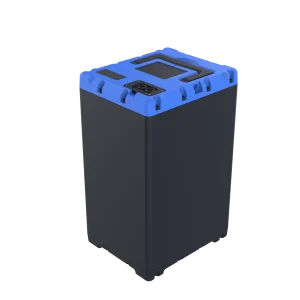
Basic composition of automotive power battery
The current mainstream automotive power batteries are: ternary lithium and lithium iron phosphate batteries. Ternary lithium batteries have the characteristics of high energy density, good low temperature performance, high reliability, and long battery life, but the cost is relatively high.
While lithium iron phosphate batteries are comparatively lower in cost, convenient for mass production of automobiles, and easy to recycle, and the safety is higher than that of ternary lithium battery, but the battery life is inferior to that of ternary lithium battery.
Classification of power batteries
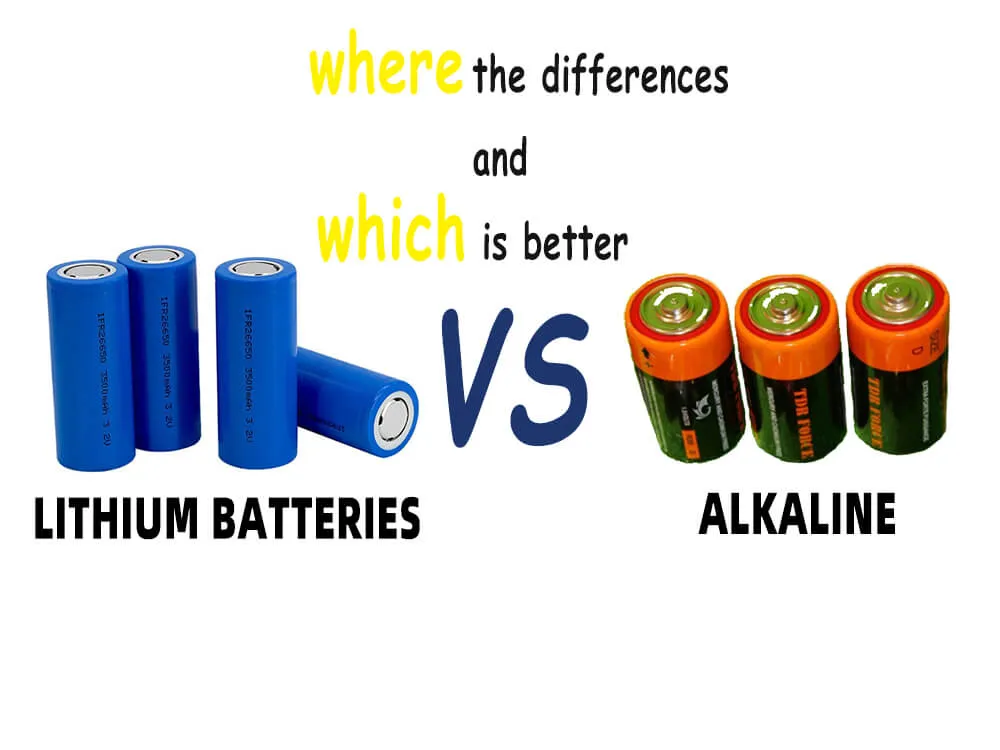
Power wheels battery can be divided into pouch type, cylindrical type and square type according to the structure.
Pouch battery:
- The structure of the pouch battery is packaged with aluminum-plastic film. In the event of a safety hazard, the pouch battery will only blow up and crack at most, instead of exploding like a steel-shell and aluminum-shell battery cell .
- The weight of the pouch battery is 40% lighter than the steel case lithium battery of the same capacity, and 20% lighter than the aluminum case lithium battery.
- The use of flexible packaging saves more than 20% of the volume and increases the specific capacity by 50%.
- The internal resistance of the pouch battery is smaller than that of other types of lithium batteries, which can greatly reduce the self-consumption of the battery.
- The pouch battery can be changed to any shape, and the shape can be customized according to customer needs, to develop new cell models.
- Poor consistency.
- The cost is relatively high, which can be solved through large-scale production.
- Liquid leakage can be solved by improving the quality of aluminum-plastic film.

Cylindrical battery:
- The automated production process of cylindrical battery is mature, the product yield is high, and the pack cost is low.
- The cylindrical battery pack has strong consistency and high energy density of the battery pack.
- The battery is small, the heat dissipation area of the battery pack is large, and the heat dissipation performance is better than that of the square battery.
- The production process is mature and the battery consistency is high.
- People are generally worried that if there is a problem with one of the batteries, it will affect the power supply of the whole vehicle, causing the electric car to not work, or even causes accidents in the severe case.
Square battery:
- The shell is made of aluminum alloy, stainless steel, etc., and the interior is wound or laminated.
- The protective effect on the battery cell is stronger than that of the aluminum-plastic film battery, and the safety of the battery cell is greatly improved compared with the cylindrical battery.
- The heavy casing leads to limited energy density of the battery pack, low degree of automated production, low product yield, and poor consistency.
The functions of power battery adhesive
Battery adhesives have four major functions in power batteries
- Provide protection for power batteries
- Realize safe and reliable lightweight design
- Thermal management
- Help the battery cope with complex using environments
Solutions for power battery adhesive
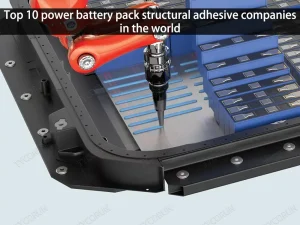
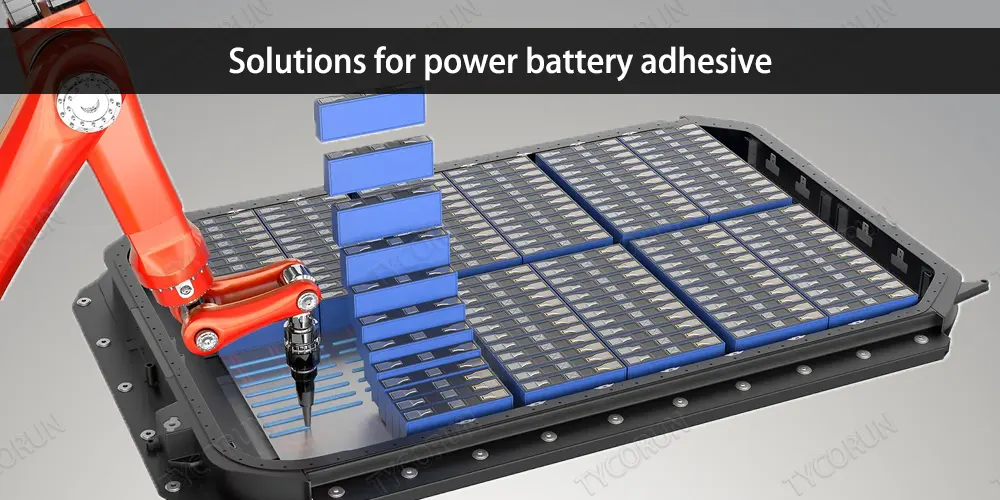
Battery adhesive for pouch battery assembly
| Bonding between cells - structural bonding | ||
|---|---|---|
| Substrate | Aluminum plate and outsourcing PET film |
|
| Requirement | Battery adhesive positioning, heat conduction, good adhesion to PET film and aluminum plate | |
| Solutions | Two-component polyurethane structural battery adhesive, One-component silica adhesive, Two-component silica adhesive | |
| Product features | Two-component polyurethane structural battery adhesive: good high and low temperature resistance, flexible battery adhesive layer, low shrinkage, good impact resistance, high bonding strength; One-component silica adhesive: easy to coat, good adhesion, but cures slowly or the interior is not cured when used in large area; Two-component silica adhesive: glue sizing equipment is required, and if a small package is used, the cost is high, but large areas can be cured and bonded inside and outside. | |
| Bonding of conductive sheet and module case | ||
|---|---|---|
| Substrate | PC sheet and nickel/aluminum sheet; Nickel sheet/aluminum sheet and ABS/PC |

|
| Requirement | Battery adhesive positioning, temperature resistance -40℃~85℃, fast positioning | |
| Solutions | The fourth generation acrylic structural battery adhesive; high temperature resistant hot melt battery adhesive | |
| Product features | The fourth generation acrylic structural battery adhesive: low odor, suitable for large-scale use in small spaces, good fatigue resistance; High temperature resistant hot melt battery adhesive: excellent timely bonding performance, but requires specific sizing equipment | |
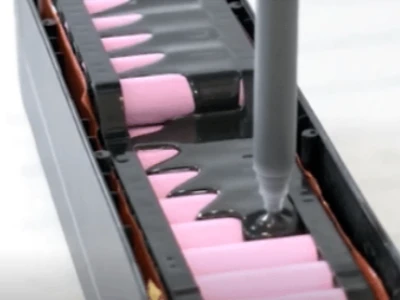
| Cell potting | ||
|---|---|---|
| Requirement | Heat conduction, fixed the cell, shock absorption, flame retardant, increased safety, low density |
|
| Solutions | Two-component thermal silica adhesive | |
| Product features | Silicone heat-conducting potting battery adhesive, flexible glue layer, excellent shock absorption effect, and adjustable thermal conductivity, but the overall potting will greatly increase the weight of the battery pack and increase the cost. | |
| Adhesive fixation of cylindrical battery bottom | ||
|---|---|---|
| Requirement | Wire harness isolation plate, solder joint position protection glue. Requires flame retardant, low odor, non-corrosive to copper, aluminum, PVC, PP and silicone materials, fast curing as much as possible |

|
| Solutions | Flame retardant yellow glue, UV glue, epoxy protective glue | |
| Product features | Yellow glue: the flame retardant level can reach V0, it has good adhesion to various substrates, but the dielectric loss is high, and it is a solvent glue, which is not environmentally friendly; UV glue: it can be cured quickly, and has good adhesion to metals and plastics , but it is difficult to reach V0 in flame retardancy; Epoxy protective glue: heat resistance, electrical characteristics, good chemical resistance, excellent bonding performance, but the curing speed is affected by many factors. | |
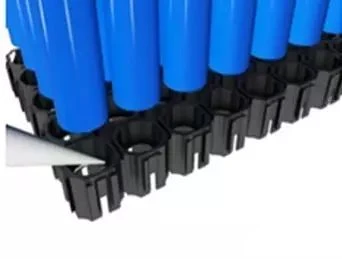
| Cylindrical battery holder fixing | ||
|---|---|---|
| Requirement | Excellent aging resistance, good flexibility |
|
| Solutions | Acrylic structural battery adhesive | |
| Product features | Low odor, high toughness, fatigue resistance, high bonding strength, good adhesion to various substrates | |
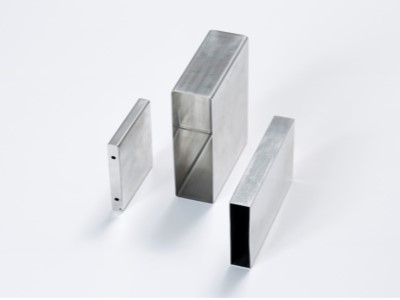
| Shell bonding | ||
|---|---|---|
| Substrate | Aluminum alloy shell/aluminum-plastic film coated Pp/aluminum material/PC |
|
| Requirement | Fast positioning, good bonding between substrates | |
| Solutions | High temperature resistant hot melt battery adhesive | |
| Product features | Good initial adhesion, fast positioning speed, good bonding, but special sizing equipment is required | |
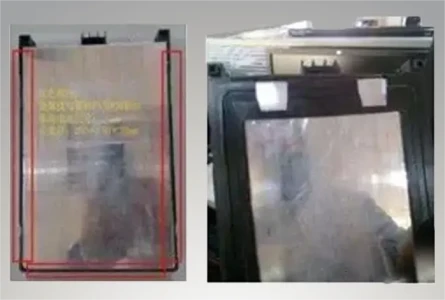
| PA | ||
|---|---|---|
| Requirement | The bonding strength between the two substrates is above 5MPa, vibration resistance, and good impact resistance in the temperature range of -40 ° C ~ 85 ° C. The operation time should be controlled within 30-40 minutes. |
|
| Solutions | Epoxy structural battery adhesive Fourth generation acrylic structural battery adhesive | |
| Product features | Epoxy structural battery adhesive: good toughness, good impact resistance, suitable for bonding of various materials; Fourth generation acrylic structural battery adhesive: low odor, fatigue resistance, suitable for small area and mass use | |
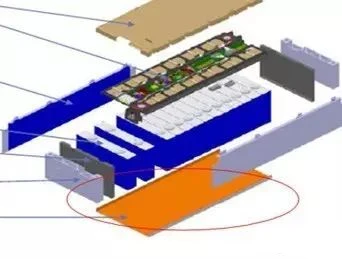
| Heat conduction between base plate and cell | ||
|---|---|---|
| Requirement | Environmental protection, thixotropy, good thermal conductivity, fast curing at room temperature |
|
| Solutions | Epoxy structural battery adhesive Fourth generation acrylic structural battery adhesive | |
| Product features | Epoxy structural battery adhesive: good toughness, good impact resistance, suitable for bonding of various materials; Fourth generation acrylic structural battery adhesive: low odor, fatigue resistance, suitable for small area and mass use | |
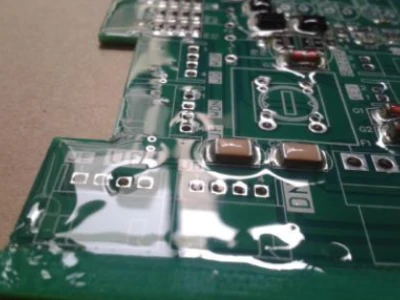
| Battery management system - PCB coating | ||
|---|---|---|
| Requirement | One-component, can be brushed, the facade does not flow, and can be operated for a long time |
|
| Solutions | One-component silica adhesive | |
| Product features | One-component silica adhesive is suitable for shallow coating, cured by moisture, and can be operated for a long time | |
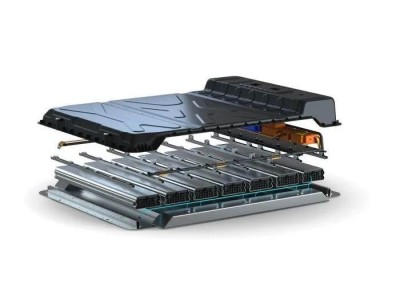
| Box sealing | ||
|---|---|---|
| Requirement | Low strength, easy to disassemble, slow surface dry, high elongation |
|
| Solutions | One-component silica adhesive; MS adhesive | |
| Product features | One-component silica adhesive: slow surface drying, good elongation at break, but not easy to disassemble; MS adhesive: elastic glue, better adhesion than one-component silicone, but poorer water resistance than silicone, difficult to disassemble. | |
| Battery screw fixing | ||
|---|---|---|
| Requirement | Can meet the requirements of vibration, mechanical shock, drop, flip, simulated collision tests, etc. |

|
| Solutions | Anaerobic threadlocking battery adhesive | |
| Product features | A variety of models can meet different bonding strength requirements, good vibration resistance and temperature resistance | |
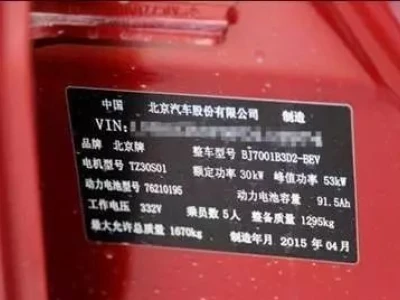
| Nameplate bonding | ||
|---|---|---|
| Substrate | Mostly aluminum alloy and surface treated steel parts |
|
| Requirement | Vibration resistance, battery adhesive layer with toughness, strong initial adhesion, adhesive with certain thixotropy, good adhesion to substrate | |
| Solutions | Acrylic structural battery adhesive; low temperature curing epoxy battery adhesive | |
| Product features | Acrylic structural battery adhesive: the colloid can be glued on the facade, has good vibration resistance and fatigue resistance, and can be well bonded to the substrate, but the cost is high; low-temperature curing epoxy battery adhesive: it can be cured faster at lower temperatures, with good resistance to oil and chemical media, but the adhesive layer is hard. | |