Skip to content


EV battery pack design
Material safety
The sharp corner design should be avoided for ev battery pack components, burrs and metal floating powder should be controlled on the edges and surfaces, and the surface should be treated with anti-corrosion.
Materials should consider the requirements of fire protection and flame retardancy. Anti-corrosion treatment should be considered for electrical connection parts to prevent heat generation caused by increased contact resistance after long-term use.
Machinery Safety
For mechanical safety protection, the design should consider the protection of the product under the working conditions of extrusion, drop, vibration, etc., so that the product can meet the functional requirements and various safety regulations.
Mechanical reliability design should meet the design life of the whole vehicle. The durability and reliability of transportation, handling and installation should be fully considered.
Electrical Safety
Select insulating sheets with high dielectric strength to ensure that the insulation of the battery pack meets the design goals. The insulation resistance of the ev battery pack should have good reliability after storage at different temperatures and humidity.
Thermal safety
The structural design of the battery pack should ensure that the single cell has a sufficient heat dissipation area, and ensure that the heat transfer between the battery pack and the thermal management system meets the corresponding heat dissipation and heating requirements.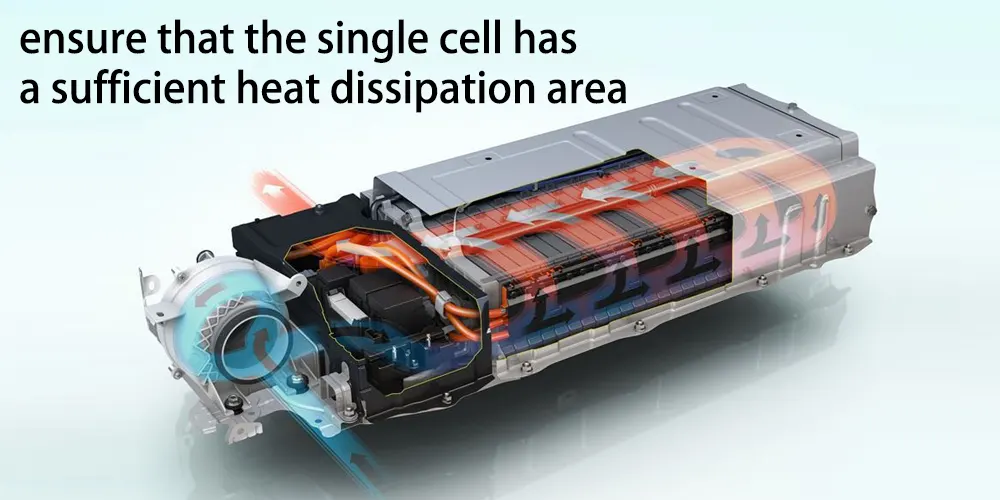
The height difference of the heat dissipation interface of the battery cell and the thickness of the heat conduction material are maintained within a reasonable tolerance range to ensure reliable contact with the thermal management system.
Functional safety
Voltage sampling accuracy. The voltage acquisition includes at least the voltage of each battery string, and the voltage drop of the voltage acquisition harness.
The accuracy of the sampling chip meet the accuracy requirements of the voltage sampling. The time for voltage sampling and conversion transmission is much shorter than the minimum fault tolerance time of the system.
EV battery pack manufacturing
Battery cell insulation
For battery cells with charged shells, insulating materials are used to achieve effective insulation protection through coating or spraying processes.
The battery cells are effectively cleaned before insulation to avoid the risk of short circuit between assembled battery cells caused by the introduction of conductive dust particles.
The insulation process must ensure the effective covering of the insulating layer according to the design requirements, and at the same time ensure that the insulating layer is not scratched or scratched.
EV battery pack connection method
Common battery pack types can be divided into three types: welding, screwing, and mechanical crimping according to the connection method between the battery core and the conductive busbar.
Welding
The welding processes applied to ev battery packs mainly include laser welding, ultrasonic welding and resistance welding. Among them, laser welding and industrial robots are gradually becoming the main force of automated battery pack production lines.
Screw connection
Screw connection, fix the connection between the battery core and the busbar with a lock screw. This form is relatively simple in technology, but it is mainly used in battery systems with relatively large monomer capacity. In particular, there are many screw-connected structures for prismatic cell.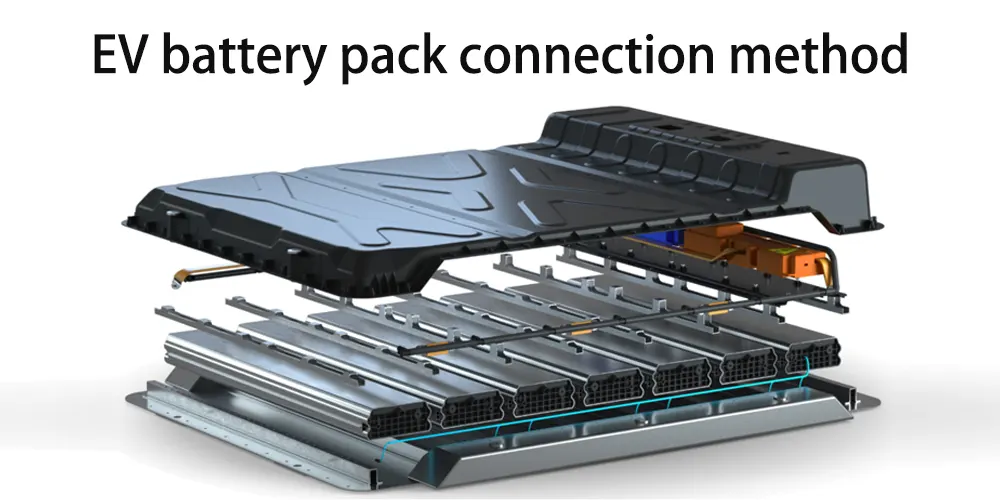
Mechanical crimp
Due to relying on the elastic deformation of the conductive parts to maintain the electrical connection between the battery and the circuit, it takes up a little space and affects the energy density, but the benefits are also obvious. The battery is easily disassembled during cascade utilization, and the possibility of obtaining a complete battery cell is high.
Comparison of three connection methods
Welded connections have less resistance than screwed connections. The connection resistance is small, and the electric energy stored in the battery can support the car to run a longer distance with higher efficiency.
However, it can also be seen that screw connection is generally applied to large batteries, and its stronger conductivity is highlighted, while the disadvantage of low efficiency is weakened.
The advantage of mechanical crimping lies in flexible disassembly and assembly, high success rate of later maintenance and secondary recycling. The disadvantage is that it is difficult to greatly improve the assembly efficiency.
Assembly of ev battery pack
Battery pack assembly is to install battery cells in different series and parallel ways with frames or fixed brackets.
If the glue needs high temperature to accelerate curing, the heating temperature should be optimized to avoid damage to the components at high temperature.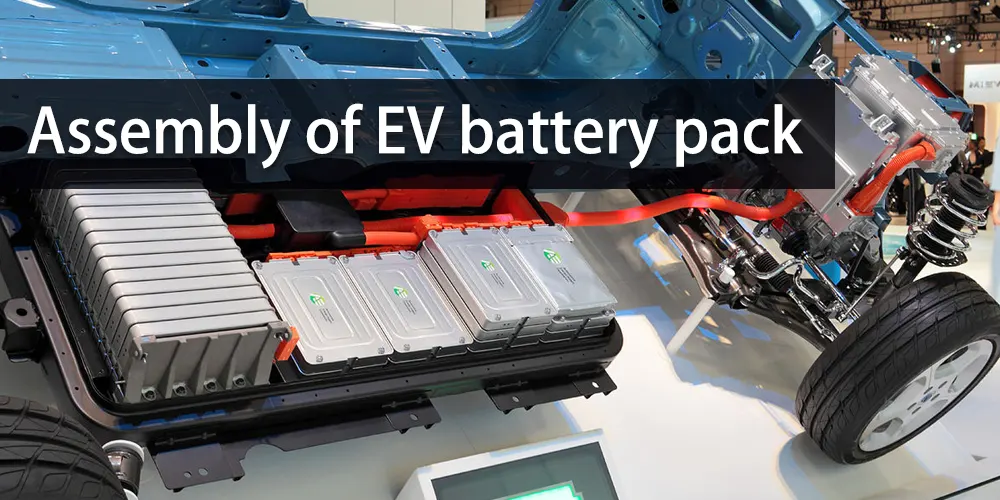
During the assembly and extrusion process of the module, the pressure that the battery core can bear cannot be exceeded. Extrusion equipment needs to have a pressure monitoring function or equipment design and selection to ensure that the pressure does not exceed the capacity of the cell.
For pouch battery cells, the battery pack assembly process ensures the flatness requirements of the battery tabs, meets the welding conditions, and ensures the reliability of the aluminum row connection.
Cylindrical ev battery pack
Cylindrical batteries are small in size and are very suitable for battery packs with irregular spaces, making full use of the corner space. The purpose of the structural design of the cylindrical ev battery pack is to fix multiple cylindrical batteries at designated positions to ensure that excessive displacement does not occur under reasonable vibration and shock conditions.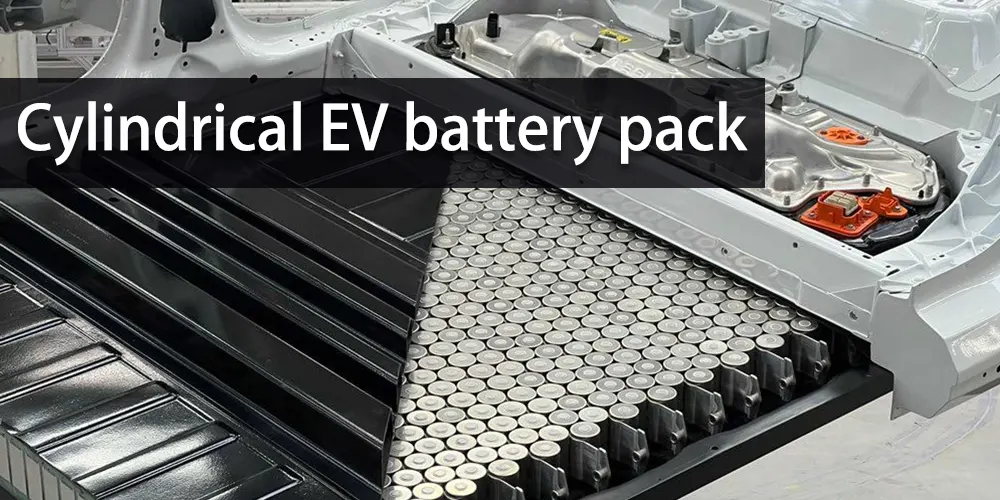
The position of the cell is determined by the cell bracket. In extreme cases, the cell bracket may be deformed. In order to maintain the distance between the cells, a high-temperature-resistant, low-quality telecom spacer is generally designed separately.
Inside the cylindrical ev battery pack, parallel connection is relatively easy to realize, as long as a busbar is connected to one pole of the battery cell. Tesla’s 18650 battery uses a parallel busbar design.
But to achieve uniform distribution of current density and uniform thermal field is the place to test the level of engineers.
Generally, try to design a relatively symmetrical structure, but the position near the battery pack inlet and outlet is always different from the uniform arrangement of other cells, so it is the key point of design simulation.
EV battery pack safety tests
Electrical safety
The electrical safety test of the module mainly includes overcharge, overdischarge, and external short circuit tests. The electrical safety test mainly simulates that when the battery management system or the charging pile fails, the battery should not have safety accidents such as fire and explosion.
Machinery Safety
The mechanical safety tests of ev battery packs mainly include extrusion, acupuncture, drop, etc. The mechanical safety test mainly simulates that when the battery is abused or has a traffic accident, the battery is subjected to abnormal external impacts, such as two vehicles colliding, the bottom of the vehicle is impacted by a hard object, etc.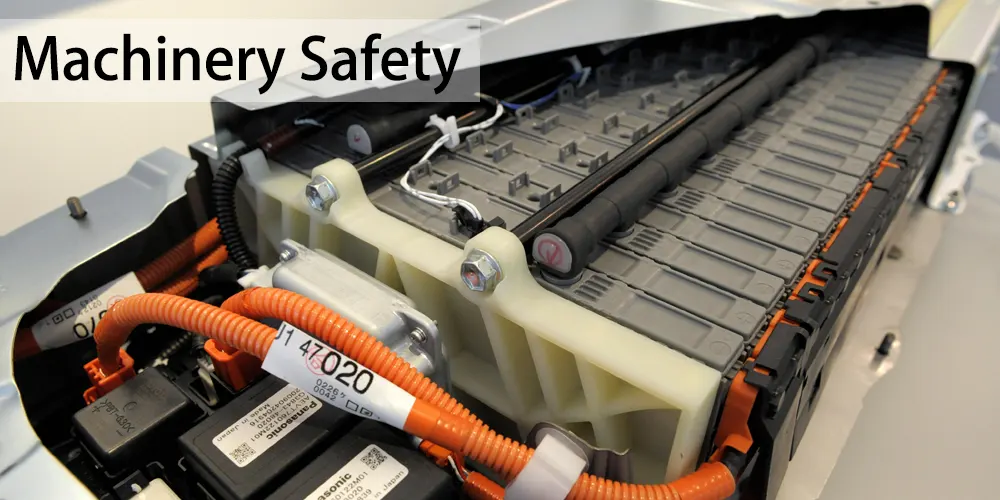
Environment safety
Environmental safety tests for ev battery packs mainly include heating, temperature cycling, low pressure, and seawater immersion tests. The environmental safety test mainly simulates the application of batteries in harsh environments, such as abnormal high temperature conditions, repeated changes in high and low temperatures and so on.