Skip to content
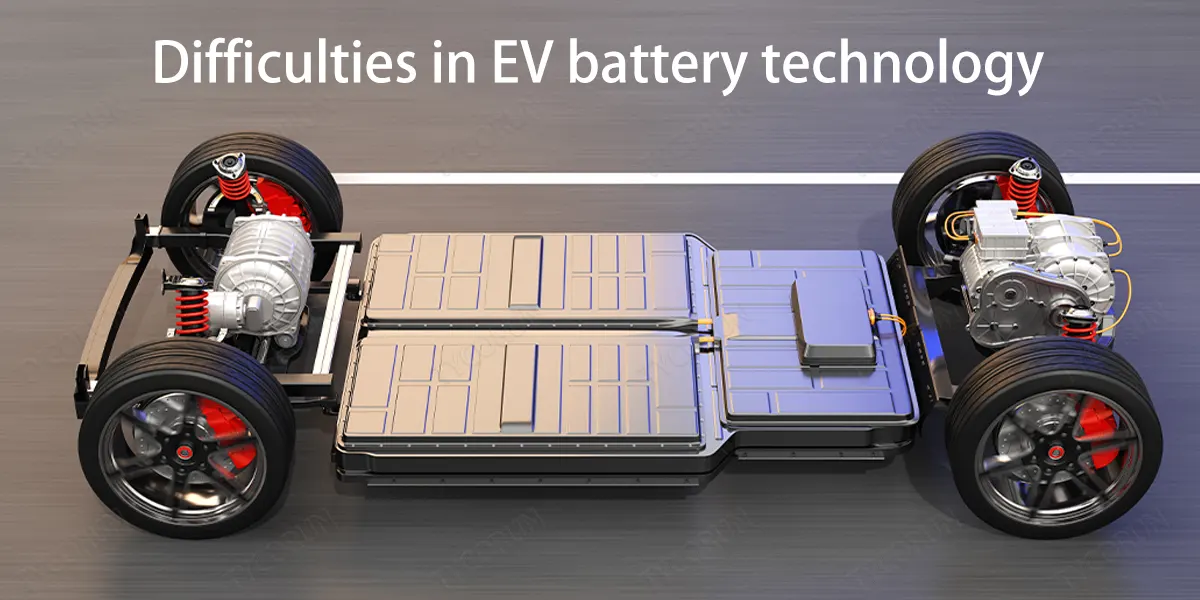
Difficulties in EV battery technology
- High price
The most commonly used metal in EV batteries is lithium, and the price of this metal is not cheap. In addition, some battery types use rare metals such as cobalt and cadmium. These metals are more expensive, so currently the battery manufacturing costs are still relatively high.
- Battery performance
Lithium batteries perform very well in all aspects, with large capacity, high charging acceptance rate, and support for fast charging (ordinary lithium batteries support up to 2C, and power lithium batteries are even higher). However, they have a fatal weakness, which is overcharge and over-discharge performance.
A single overcharge and over-discharge of a lithium battery can permanently reduce its performance, and a single serious overcharge and over-discharge can cause it to be scrapped. This is why lithium iron phosphate was developed. Lithium iron phosphate is more resistant to overcharge and over-discharge than lithium-ion batteries.
The power lithium iron phosphate battery has a much smaller capacity than the high-capacity lithium battery. For example, the capacity of a 18650 battery is generally about 2400mAH, and the highest reaches 2800mAH. The lithium iron phosphate power battery is generally 1300mAH, and the maximum capacity is 1500mAH, which is about half of the capacity gap.
- Battery pack balancing
The overcharge and over-discharge performance of lithium batteries is not good, and the battery pack discharge has uneven balancing. That is to say, when some batteries are fully discharged and some are not fully discharged, continuing to discharge will cause some batteries to be over-discharged or even reverse polarity, reducing the capacity. Then the gap will become larger and larger the next time the battery is discharged. So the batteries must be paired when leaving the factory, and try to put them together with the same capacity.
However, there are still slight differences in the use environment, such as temperature, location, voltage, battery performance, etc., which will cause the gap to grow larger. Also, the failure of single battery may cause the entire battery pack to be scrapped in severe cases.
- Fast charging technology
For example, with a current of 1C, it takes 1/1=1 hour from full charge to discharge; 2C=1/2 hour, which is 30 minutes; and 4C takes 15 minutes. Fast charging and slow charging are relative concepts. It is generally believes that fast charging of EV battery technology refers to a charging method with a charging current greater than 1.6C, that is, an EV battery technology that charges from 0% to 80% in less than 30 minutes.
But the higher current is a big challenge for the charging station and the battery. When charging, lithium ions are generated on the positive electrode of the battery, and the generated lithium ions move to the negative electrode through the electrolyte. The carbon used as the negative electrode has a layered structure and has many micropores for the insertion of lithium ions reaching the negative electrode. The more lithium ions embedded, the higher the charging capacity.
During fast charging, lithium ions need to be accelerated and instantly embedded into the negative electrode. This poses a great challenge to the negative electrode’s ability to quickly receive lithium ions. Batteries with ordinary chemical systems will produce by-products in the negative electrode during fast charging, which affects the cycle and stability of the battery cell.
Therefore, the core of fast charging EV battery technology is to accelerate the movement of lithium ions in the positive and negative electrodes through chemical system and design optimization without affecting the life and reliability of the battery cells.
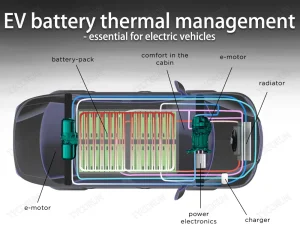
In addition, the heat dissipation rate inside the battery is also an important factor affecting the rate performance. If the heat dissipation rate is slow, the heat accumulated during high-rate charging and discharging cannot be transferred out, which will affect the reliability and life of the lithium-ion battery.
- Battery energy ratio
According to industry experts, the first way to overcome mileage anxiety is to increase the energy density of power batteries. This is also the direction of the government and pursued by the custom lithium battery manufacturers in the industry. At present, the energy density of mainstream power battery companies has exceeded 180wh/kg, the energy density of 811 batteries can reach 280wh/kg, and the energy density of silicon materials can reach more than 300wh/kg.
However, both positive and negative electrode separators require EV battery technology improvements. According to the above-mentioned experts, battery life anxiety is inseparable from low battery energy density. The current battery mileage can reach more than 300 kilometers or even 400 kilometers.
The increase in energy density requires the improvement of positive and negative electrode materials, and increased research on matching high voltage battery electrolytes, high-temperature-resistant and high-strength separators, lithium replenishment processes, battery safety control structures, system protection structures and other EV battery technology.
If there is no obvious technological breakthrough in the materials of power batteries, it will be difficult to make further breakthroughs after the specific energy reaches a certain level, while the negative impact on safety will become increasingly greater. Before mastering the fire rules of lithium batteries, the balance between energy density, safety and long life cannot be ignored.
- Battery safety
During use, the reason why lithium batteries spontaneously ignite is because protective measures are not in place or severe external force damage occurs, resulting in protection failure and contact between the metallic lithium and air.
Lithium is one of the most reactive metals but lithium-ion batteries have small size, high capacity density, and high energy density, making them the first choice for EV battery technology. Lithium-ion batteries use the gain and loss of electrons and migration and accumulation of lithium ions to store electrical energy.
When the battery is charged, the lithium atoms in the positive electrode lose electrons and become lithium ions, creating a potential difference. Lithium ions in the electrolyte medium migrate and accumulate toward the negative electrode under the action of potential difference. When discharging, the entire process is reversed. The entire working process is determined by the gain and loss of lithium metal in the electrode.
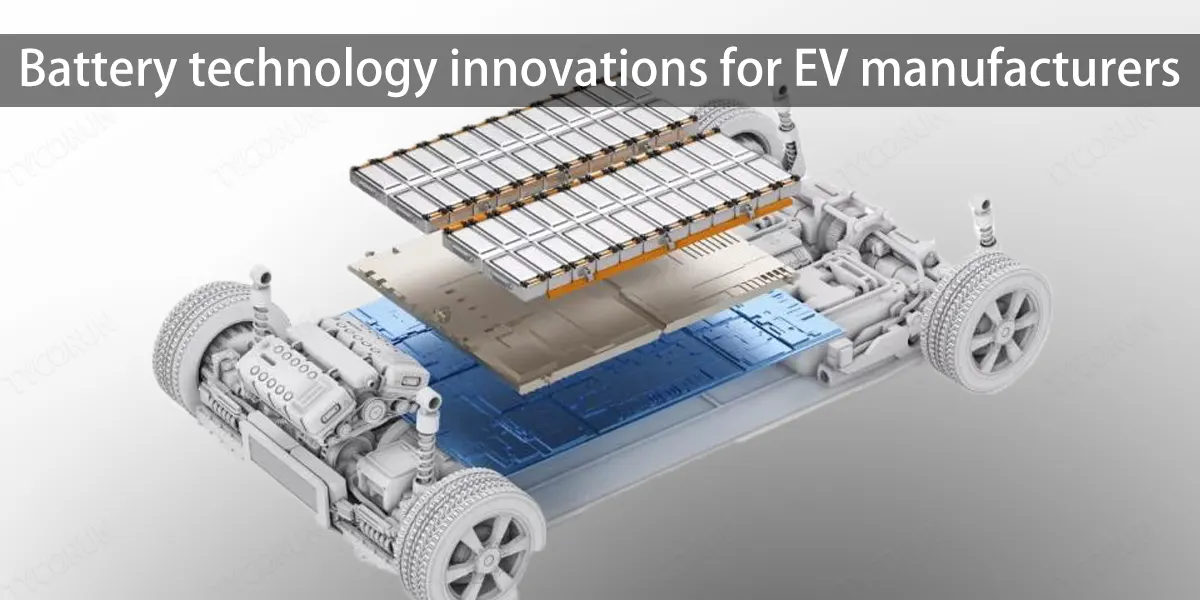
Battery technology innovations for EV manufacturers
- CATL
① Condensed battery
CATL released condensed battery products, striving to break through the energy density limit (500wh/kg), with features such as high safety, lightweight, high energy density, and long cycle life. Using condensed electrolytes to build an adaptive network structure improves the battery’s dynamic performance and lithium-ion transmission efficiency, condensed batteries have been used in the collaborative development of civil electric manned aircraft projects and are planned to achieve commercial applications.
② Kirin 4C
Kirin batteries are officially delivered to the Zeekr 009 model, and the first batch of mass-produced models equipped with 4C Kirin batteries will be used in Lixiang models.
③ AB battery system
CATL’s “iron lithium + ternary” AB battery system has been installed in NIO’s products, and then the “lithium battery + sodium battery” AB battery system was expanded to mainstream models with a range of 500 kilometers. The sodium-ion battery will be launched on Chery models. Of course, none of these products will have a particularly impact in the short term, but they could have significant long-term effects.
- BYD
Blade battery
BYD’s blade battery is called super lithium iron phosphate battery and uses new EV battery technology in the battery structure design. The main feature of the blade battery is the flat design of the battery cell, which can be up to 2500mm in length, thus increasing the volumetric energy density by 50%. Moreover, the battery life of the vehicle can reach more than 8 years and 1.2 million kilometers. Most importantly, the cost of new products may be reduced by 20 to 30%.
Through structural innovation, “modules” can be skipped when forming a group, which greatly improves volume utilization and ultimately achieves the design goal of installing more batteries in the same space. Compared with traditional battery packs, the volume utilization of blade batteries has increased by more than 50%, which means that the cruising range can be increased by more than 50%.
It has reached the same level as high energy density ternary lithium battery. The cruising range exceeds 600km and can be charged and discharged more than 3,000 times.
- Sunwoda
Flash charging battery
Regarding the world’s first mass-produced flash charging battery with a peak charging power of 480kW, Sunwoda introduced that there will be two solutions: square and cylindrical. Among them, the square battery solution can achieve flash charging and can charge from 20% to 80% SOC in 10 minutes.
According to reports, the square flash charging battery 2.0 can be matched with design solutions such as system inversion/thermoelectric separation, and is currently cooperating in depth with leading car companies. It can charge for 5 minutes and drive for 250+ kilometers.
The cylindrical battery solution charges quickly and can be charged to 80% SOC in 10-15 minutes, easily achieving 1,000+ kilometers of battery life. The battery system has high compatibility and adaptability, adapting to different envelope-compatible CTB solutions.
Flash charging battery adopts key EV battery technology such as independently designed flash charging silicon material technology, independently designed high-safety medium-nickel cathodes, and independently developed new silicon-based system electrolyte technology.
Development trends of EV battery technology
- Trend 1: Cathode materials are developing towards high nickel, cobalt and manganese are gradually reduced.
The cathode material of ternary lithium batteries is usually composed of nickel cobalt manganese or nickel cobalt aluminum. Among metal raw materials such as nickel, cobalt, and manganese (aluminum), cobalt resources are relatively scarce and unevenly distributed.
China currently has proven cobalt reserves of about 80,000 tons, accounting for only about 1% of the world’s total reserves, and is highly dependent on imports. With the development of EV battery technology, cobalt prices have also risen. Therefore, reducing the cobalt content in ternary materials is crucial to the overall cost control of cathode manufacturers.
Cobalt plays a role in stabilizing the structure of the ternary battery and does not participate in the electrochemical reaction; nickel’s role is to increase the volume energy density of the material. Therefore, lowering the cobalt content while increasing nickel is a good way to increase battery energy density and reduce costs.
Power battery leading companies such as Panasonic, LG, and CATL have taken low-cobalt and cobalt-free batteries as their next-generation power battery research and EV battery technology development directions. However, EV battery technology problems such as safety and electrolyte matching of ternary batteries after cobalt removal still need to be overcome.
At present, NCM811 (the content ratio of nickel, cobalt and manganese is 8:1:1) is the nickel-cobalt-manganese ternary battery with the lowest cobalt content that has been mass-produced.

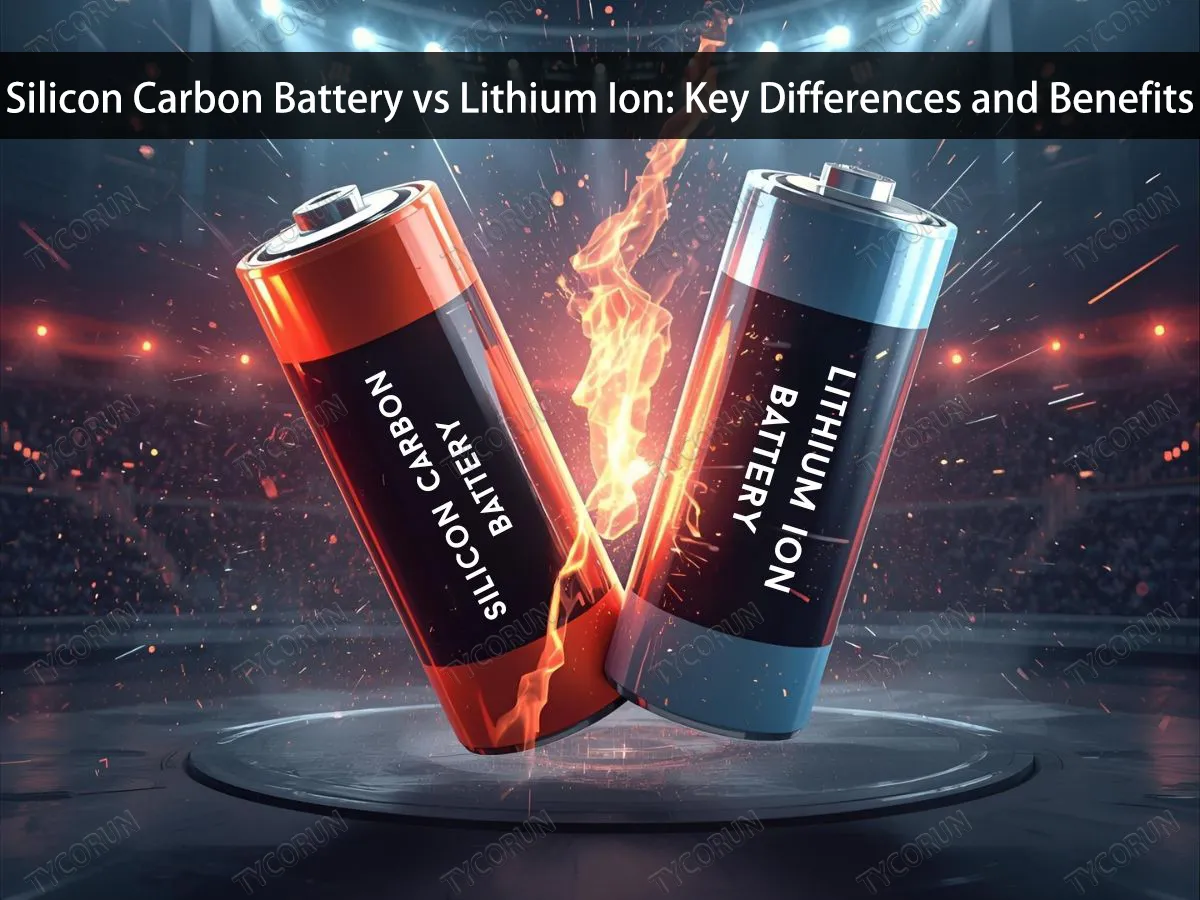
- Trend 2: Anode materials such as silicon-based are the future development direction of EV battery technology, and silicon-carbon and silicon-oxygen are the main EV battery technology routes.
Anode material is one of the core materials of lithium-ion batteries. The improvement of lithium-ion battery performance depends to a certain extent on improving the performance of anode materials.
Lithium battery anodes are mainly divided into two categories: carbon materials and non-carbon materials. At present, the anode material market still maintains a product structure dominated by artificial graphite and supplemented by natural graphite.
From a EV battery technology perspective, the upper capacity limit of graphite anode materials can no longer meet the demand for higher energy density of electric vehicles. Silicon is the key to improving the energy density of power batteries. At present, the main development direction of silicon-based materials is silicon-carbon composite materials and silicon-oxygen composite materials.
As the energy density requirements of power batteries increase, a system of silicon-carbon negative electrodes paired with high-nickel ternary materials has become a development trend of EV battery technology.
For example, Tesla’s 4680 battery uses high nickel positive electrode + silicon carbon negative electrode material. Battery companies such as CATL, Panasonic, LG, and EVE all have production capacity plans for 4680 EV battery technology. The 4680 large cylinder and fast charging technology are also expected to accelerate the application of silicon-based negative electrodes.
- Trend 3: Power battery structure is moving towards large modules or module-free.
In addition to material iteration, structural innovation is another important technological development path for EV battery technology. The traditional EV battery technology system is generally a three-level assembly model of “cell-module-battery pack”. However, the space utilization rate of the module configuration is only 40%, which greatly limits the space for other components.
Therefore, the leading manufacturers have made structural improvements and simplifications in aspects such as cells, modules, and packaging methods to improve battery system performance. The development of battery integration (CTP, CTC, CTB) has gradually become a key research and application direction in the industry.
- Trend 4: Power battery technology routes are developing in diversified ways.
Global lithium resource reserves are limited, and China’s proven reserves of cobalt, nickel and other resources account for a low proportion of the world. The development of lithium-ion EV battery technology will be restricted by the shortage of lithium resources in the long term.
In 2021, the National Development and Reform Commission and the National Energy Administration’s policy pointed out that new energy storage solutions are important and basic equipment that supports new power systems. The opinion calls for the diversified development of EV battery technology to be adhered to.