Skip to content
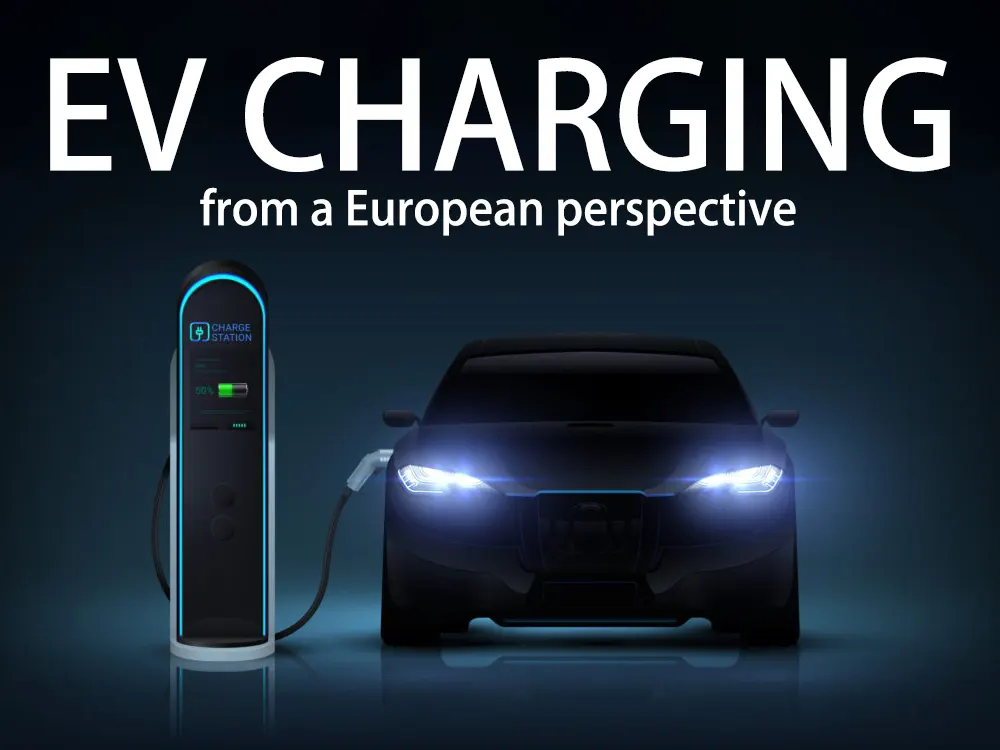


Despite the ambitious plans set out by the European Union to have 1 million charging stations in place by 2025 and 3 million by 2050, the charging infrastructure in Europe is not yet fully ready to support the expected growth in EV adoption.
This is especially true in countries that have been slower to invest in charging infrastructure, such as those in Central, Eastern, and South-Eastern Europe.
This article aims to provide an in-depth analysis of the state of electric vehicle charging infrastructure in Europe. It will explore charging power distribution of European facilities and the investment of EV charging in European .
Overview of charging facilities in Europe
European charging infrastructure technology is relatively more advanced globally, but the existing total is still relatively small, which may also be one of the biggest problems facing the development of electric vehicles in Europe.
As of April 2023, Europe has a total of 610,000 charging points, a monthly increase of 20,000, a year-on-year increase of 60.8%, and a month-on-month increase of 3.46%. Public charging piles accounted for 55.31%.
However, 84.23% of the equipment in European charging facilities has a power lower than 22kW, and the charging status still needs to be improved, and the distribution of charging points is very concentrated.
Judging from the distribution of charging facilities in Europe, they are mainly concentrated in rich countries, especially developed countries such as the Netherlands, Germany, France and the United Kingdom.
The Nordic countries Norway and Sweden also have a large number of charging facilities. For example, the Netherlands has almost 2,280 times as many charging stations as Malta, which has the fewest number of charging stations at 51 across the country.
The density of charging networks within Europe also varies considerably: countries in Central, Eastern and South-Eastern Europe in particular lag far behind in the expansion of electric vehicles. For example, Romania, which is almost six times the size of the Netherlands, has just 0.3% of all charging points in the EU.
Charging facilities in the Netherlands
However, there are some bright spots in the European EV charging landscape, such as the Netherlands, which has the highest density of charging points in Europe and is known as a “charging paradise”.
The Netherlands has made remarkable progress in the construction and use of charging infrastructure. Charging solutions in the country are mainly concentrated on roadside charging piles, which are suitable for charging at night. This approach is ideal for homes without a private garage.
In Europe, the housing conditions of most people do not have private garages. According to statistics, more than 2/3 of Dutch households do not have their own garages, but 2/3 of plug-in car drivers have private charging piles.
In addition, the Netherlands is also the fourth European country to launch a battery swapping station after Norway, Germany and Sweden.
Charging power distribution of European facilities
DC fast charging is very important for long-distance travel and fast charging needs. It can charge electric vehicles in a relatively short period of time and improve the convenience of long-distance driving.
However, due to the limitations of the construction and layout of DC charging facilities, as well as the location and availability of charging stations, it is not convenient to perform DC charging at a specific time and place.
AC charging is suitable for regular charging needs during daily parking, especially for parking at home or office. AC charging facilities are more widely distributed and take longer to charge. For the driver, if there is a long-term parking—for example, during work or at night, it is completely sufficient and can make full use of the time.
In most of Europe, the electric vehicle market is still in its infancy. Even in Norway, the leader in the electric car market, many people still buy used cars or conventional gasoline cars.
According to statistics, European charging facilities are still dominated by AC charging (slow charging):
● The proportion of exchange piles is close to 90%.
● The proportion of DC piles above 100kW is only 6.43%
● DC piles below 100kW accounted for 5.6%.
Europe mainly builds charging facilities around big cities, such as London and Amsterdam.
Investment in charging facilities
Despite these challenges, several trends are emerging that could help accelerate the development of EV charging infrastructure in Europe.
The Volkswagen Group plans to install a total of 40,000 charging points across Europe, 11,000 of which will be developed by the Volkswagen brand itself. The charging points will cover towns and cities where Volkswagen factories and around 3,000 Volkswagen dealerships are located.
In order to support the development of charging infrastructure, the Volkswagen Group established a charging infrastructure company called Elli (Electric Life) and provides a charging service called “We Charge”.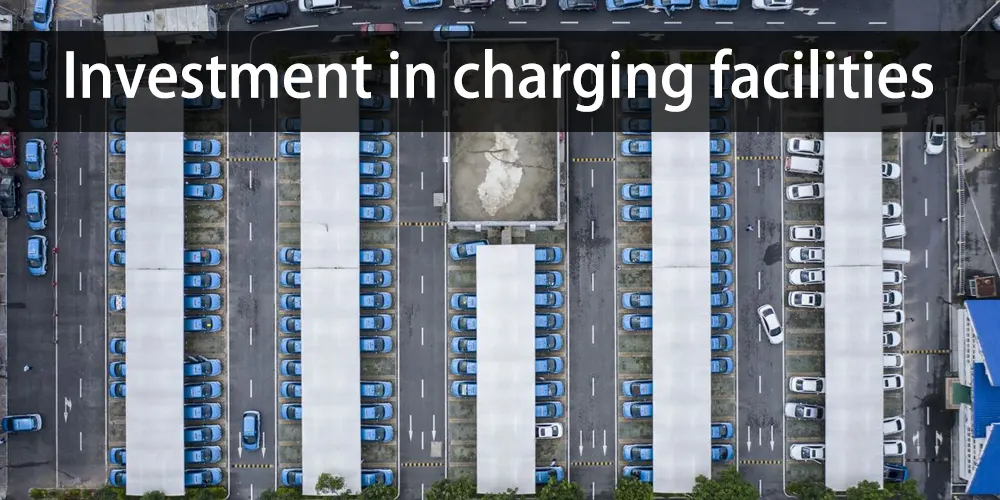
The three major European commercial vehicle manufacturers Volvo Group, Daimler Trucks and TRATON Group have signed an agreement to install and operate a high-performance public charging network for heavy-duty electric trucks and buses to meet the needs of long-distance transportation across Europe.
In addition, oil companies such as BP Petroleum are also getting involved in the expansion of EV charging networks in Europe, recognizing the growing importance of electrification in the transportation sector.
At the same time, top 10 power battery companies in the world are also working hard to lay out the European market.
Summary
In conclusion, the development of electric vehicle charging facilities in Europe has a long way to go. The overall development of charging facilities in Europe is slow, and the investment in charging facilities is still relatively insufficient, which seriously affects the experience of using EVs in Europe.
The investment in charging facilities has to be more evenly distributed across different countries and regions in Europe. While some countries are investing heavily in charging infrastructure, others are lagging behind. Car manufacturers and oil companies are starting to invest in charging stations to support electric vehicle development.
However, investment in charging facilities requires long-term planning, and Europe still needs to increase its efforts in the construction of charging facilities to meet the growing demand for electric vehicles.