Skip to content
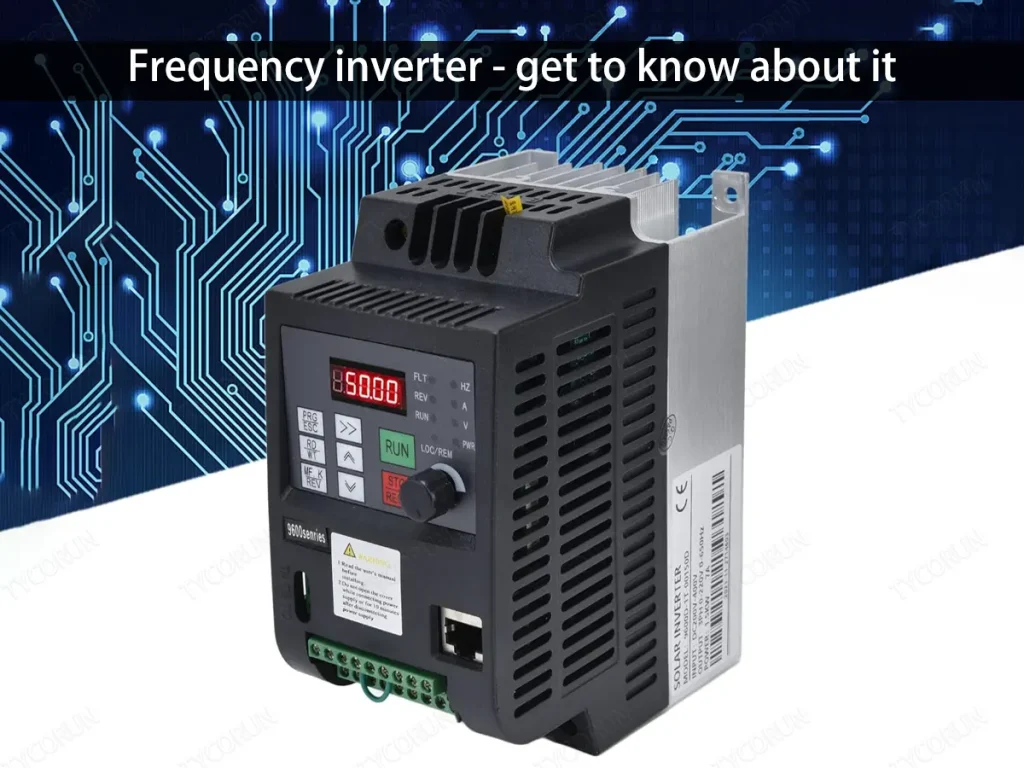


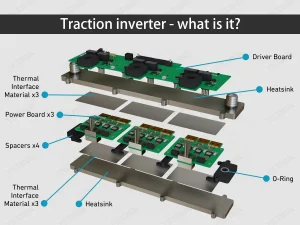
A frequency inverter is a power electronic device that converts fixed-frequency alternating current into adjustable-frequency alternating current. It mainly consists of rectifier, intermediate circuit, inverter and controller, which is the same complex as string inverter or micro inverter.
The rectifier converts alternating current into direct current, the inverter converts direct current into alternating current, the intermediate circuit is used to regulate voltage and current, and the controller is responsible for controlling and regulating the entire system.
- Soft start function
Use commercial power to start the motor directly, and the starting current is 5-7 times the rated current of the motor. In this case, the direct start of the motor will cause the grid voltage to drop and affect the normal operation of other electrical equipment.
Using frequency inverter soft start, the starting current is generally 1.2-1.5 times the rated current, which effectively reduces the starting impulse current and reduces the occupation of the transformer. - Frequency conversion speed regulation
The traditional motor speed regulation is pole-changing speed regulation; according to the same speed of the three-phase asynchronous motor:
By changing the number of magnetic pole pairs of the motor’s stator winding, its synchronous speed can be changed, thereby changing the rotor speed. Through different combinations of winding connections, two-pole, three-pole, and four-pole speeds can generally be obtained. The speed regulation range is narrow, usually two speeds.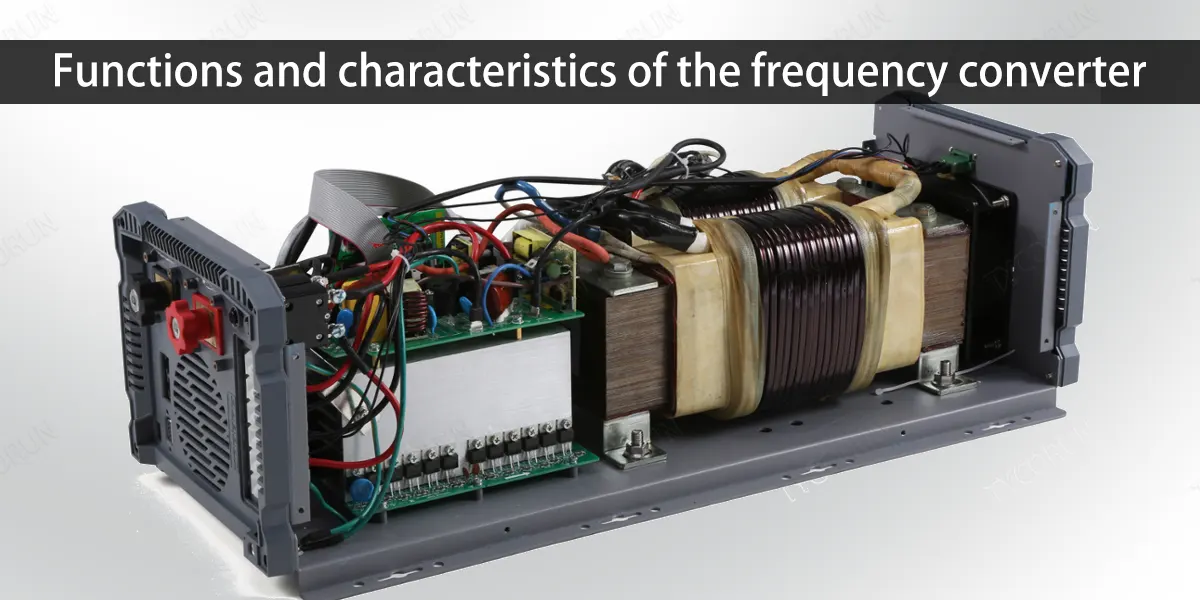
- Energy saving effect
In various fans, water pumps, and oil pumps, the resistance generated by air or liquid is roughly proportional to the square of the motor speed, and the required power is proportional to the cube of the motor speed. When the required air volume and flow rate decrease, using a frequency inverter to regulate the air volume and flow rate can significantly save electric energy.
- Physical environment
- Temperature factor
Temperature has a huge impact on the life and reliability of the electronic components inside the inverter. When using the inverter in an environment with high operating temperature, additional cooling measures must be taken to ensure that the ambient temperature is stable within the range required by the inverter user manual (-10~+40/45℃).In the electric control box, the frequency converter should generally be installed on the upper part of the box, and it is strictly prohibited to install the heating element close to the bottom of the frequency inverter! In addition, the cooling fan of the inverter should be inspected and cleaned regularly during use. - Humidity factor
When the ambient humidity is greater than 90%, the insulation of the components inside the inverter will deteriorate, causing the inverter to malfunction. Therefore, putting desiccant in the frequency converter becomes a necessary means of moisture removal when necessary. - Corrosive gas
Since corrosive gases have a great destructive effect on the electrical insulation performance of the internal PCB board and plastic product casing of the inverter, a sealed casing that meets the safety regulations should be used when using the inverter in such an environment. - Vibration and shock
These two physical phenomena will cause poor electrical contact in frequency inverter and open welding of components, and will also have a greater impact on the normal use of the inverter. For this reason, daily maintenance and repair work should not be careless.
- Electrical environment
- Prevent electromagnetic interference
Due to the rectification and inverter links during operation of the frequency inverter, this working process will inevitably produce a lot of electromagnetic wave interference. These high-frequency electromagnetic waves will cause certain interference to nearby instruments and meters. For this reason, instruments and meters on the same network as the frequency converter should be grounded first. Cables with shielding layers should be used for connections between various electrical components and instruments, and the shielding layer must be grounded.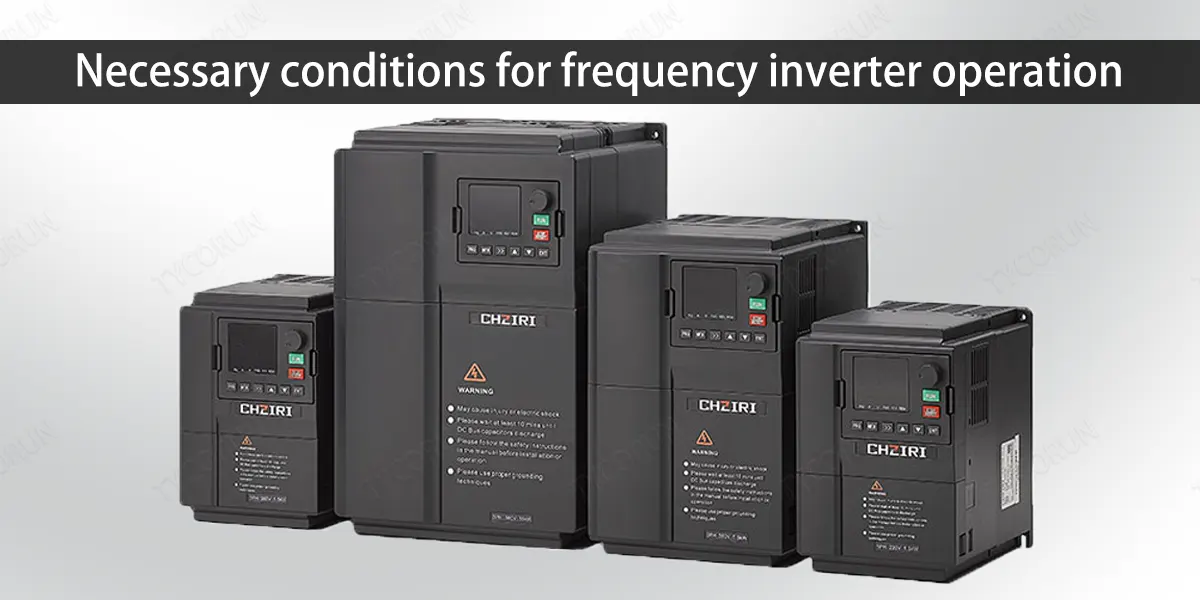
- Prevent input overvoltage
Although most inverter power input terminals have an overvoltage protection function, if the high voltage at the input terminal of the frequency inverter is applied for a long time, related components inside the inverter (such as varistors, rectifier devices, etc.) will often be damaged. For power supplies with frequent and large voltage fluctuations, consider using voltage stabilizing equipment. - Grounding
Correct grounding of the frequency converter is an important means to improve system sensitivity and suppress noise interference. The grounding resistance of the frequency inverter grounding terminal G (also marked as E) should be as small as possible. The cross-sectional area of the grounding wire should not be less than 2mm², and the length should be controlled within 20m. - Lightning protection
Inverters are generally equipped with lightning absorption and discharge circuits to prevent instantaneous lightning intrusion from causing damage to the inverter. For this reason, if you are in a lightning active area and the inverter power supply is introduced via an overhead line, a lightning arrester dedicated to the frequency inverter should be installed at the incoming line.
Like 2000w pure sine wave inverter, frequency inverter is widely used in industrial production, transportation, household appliances and other fields, and have the advantages of energy saving, high efficiency and safety. The following are some typical application scenarios:
- Industrial automation: In the industrial production process, many equipment need to adjust their speed according to process requirements. For example, fans, water pumps, compressors, etc., through the use of frequency converters, can achieve stepless speed regulation of motors, improve production efficiency, and reduce energy consumption.

- Transportation:In the field of rail transportation, frequency converters are widely used in the power systems of subways, light rail and other trains. By adjusting the running speed of the train, precise control of the train can be achieved and transportation efficiency can be improved. In addition, inverters also play an important role in transportation equipment such as electric vehicles and elevators.
- Household appliances:In the field of household appliances, frequency converters are widely used in air conditioners, refrigerators, washing machines and other equipment. By adjusting the speed of the motor, precise control of the equipment can be achieved, the energy efficiency ratio can be improved, and energy consumption can be reduced. For example, an inverter air conditioner can automatically adjust its cooling or heating capacity according to changes in indoor and outdoor temperatures to achieve comfort and energy saving.