Skip to content
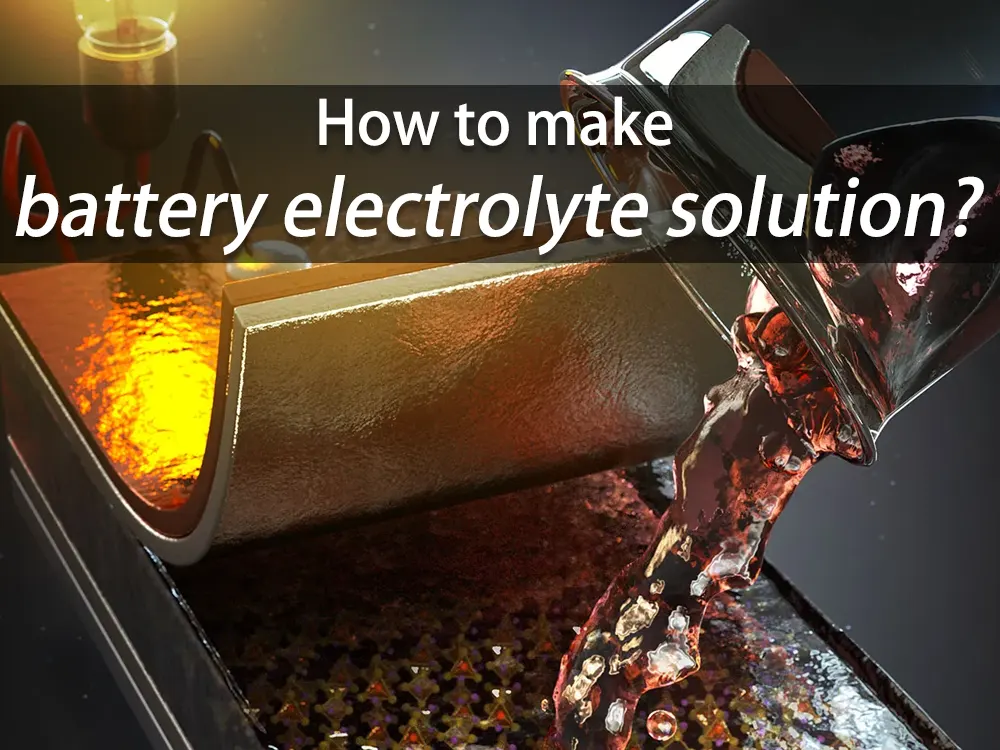


How to make battery electrolyte solution is an important aspect of understanding battery construction. This article will introduce how to make battery electrolyte solution in detail. By reading this article, you will gain new knowledge about batteries.
What is electrolyte?
Before understanding how to make battery electrolyte solution, first understand what is electrolyte.
The discharge process of lithium-ion batteries is as follows: lithium ions are extracted from the anode, pass through the SEI film into the electrolyte, and are transported to the surface of the cathode by diffusion in the electrolyte, and finally realize the lithium intercalation process by embedding the cathode material to realize discharge, charge and this process on the contrary.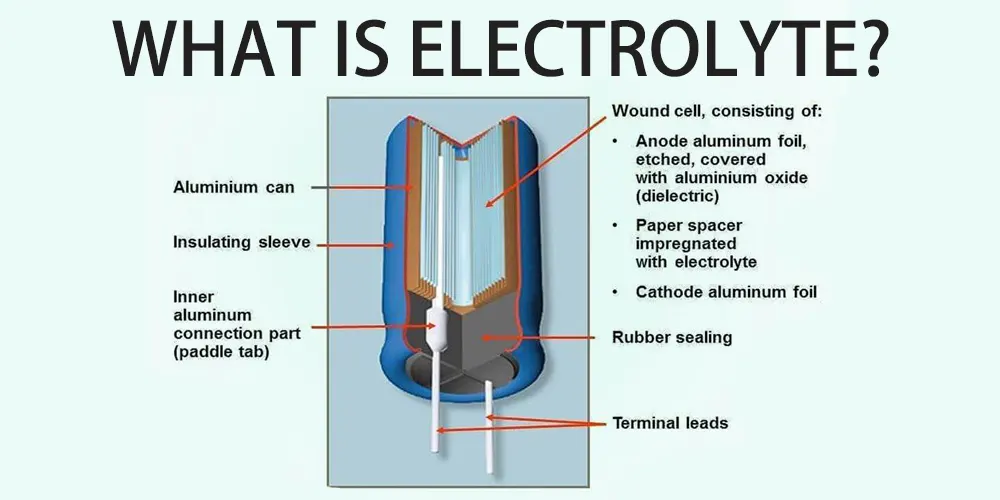
The smooth transport of lithium ions from the anode to the cathode is the key, so the electrolyte as a carrier for transporting lithium ions becomes the key to the performance of lithium-ion batteries.
The main components of the electrolyte
A clear understanding of the electrolyte composition can help to understand how to make battery electrolyte solution. The main components of the electrolyte include electrolyte lithium salt, organic solvent and additives.
Among them, the organic solvent is the main part of the electrolyte, and its performance is closely related to that of the solvent.
Solvent
The role of solvents in lithium battery electrolyte components is mainly to dissolve lithium salts. The electrolyte requires that the purity of the organic solvent be above 99.9%. The solvents in the electrolyte mainly include cyclic carbonates (PC, EC); chain carbonates (DEC, DMC, EMC); carboxylates (MF, MA, EA, MA, MP, etc.).
Lithium salt
Lithium salt is mainly used to provide lithium ions to ensure that the battery has enough lithium ions during charging and discharging.
High-quality lithium salts have a great influence on the energy density, power density, wide electrochemical window, cycle life, and safety performance of lithium batteries. The elements often contained in lithium salts are LiPF6, LiClO4, LiBF4, LiAsF6 and so on.
Additive
There are many types of additives, and the type of additives used is mainly determined by the use and performance of the battery.
The types of lithium battery electrolyte component additives mainly include film-forming additives, conductive additives, flame retardant additives, overcharge protection additives, additives for controlling H2O and HF content in the electrolyte, additives for improving low-temperature performance, and multifunctional additives.
Detailed explanation of the electrolyte manufacturing process
This section will introduce the specific steps of how to make battery electrolyte solution in detail.
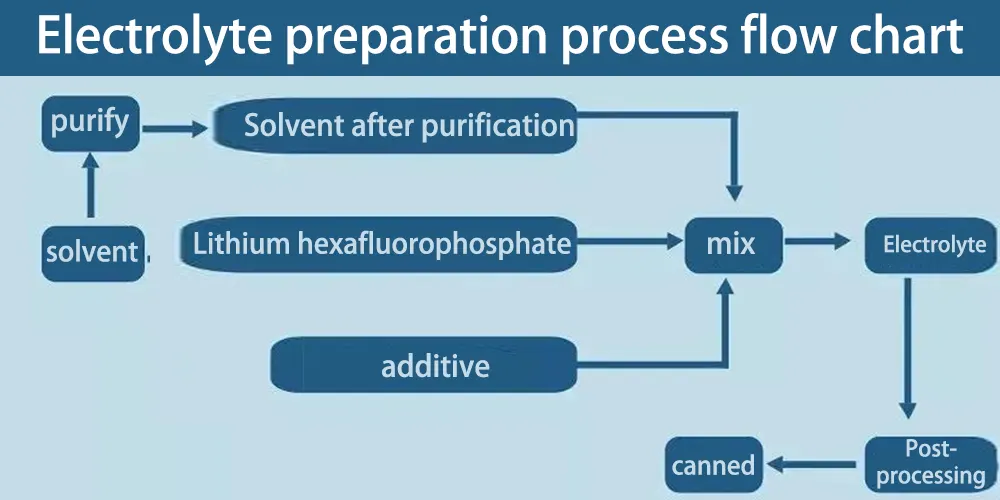
Solvent preparation:
Taking EC as an example, briefly introduce the production process of the solvent.
The earliest way to prepare EC is to use ethylene glycol and phosgene to react, but this process plant has low yield, high cost and serious pollution, so it has been eliminated.
EC is prepared by transesterification reaction, the reaction speed is increased, and the yield is also improved.
The haloalcohol method and the synthesis method of ethylene and carbon dioxide all have problems such as complex reactions and cumbersome processes.
Urea alcoholysis method: due to the simple reaction, cheap raw materials, unreacted ethylene glycol can be recycled, the economy is obvious, and it has a good development prospect.
Purification:
The organic raw materials used have been purified to meet the standards for the use of lithium-ion battery electrolytes. Here, the items that need to be inspected include purity, water content, and main content.
LiPF6:
At present, there are mainly four methods of preparation, which are gas-solid phase method, hydrogen fluoride solvent method, organic solvent method and ion exchange method.
The gas-solid phase method has high product purity, but the cost of raw materials is high, there are too many processes, and continuous production is difficult.
The hydrogen fluoride solvent method has fast reaction speed and high efficiency, but HF is generated, which has high requirements on the corrosion resistance of the reaction vessel.
The organic solvent method avoids the generation of HF, and the operation is relatively safe, but PF5 still needs to be prepared, which is highly corrosive.
The ion exchange method avoids the disadvantages of using PF6 as a raw material, but the lithium alkoxide and ammonia used will react, the raw material is expensive, and it is difficult to realize industrial production.
For the final use of LiPF6, it needs to be refined to meet the purity requirements of the electrolyte.
Packaging barrel
Due to the sensitivity of the electrolyte, the packaging barrel also needs to go through pretreatment, water washing, argon replacement and other processes to ensure that it is dry and free of impurities.
Outlook for the next generation electrolyte
How to make battery electrolyte solution is just a part of electrolyte production. There may be new progress and breakthroughs in the electrolyte in the future.
1) In the 3C field, due to the development of mobile phones, tablets and wearable devices. For small batteries such as flashlight battery, the electrolyte emphasizes high energy density and develops towards high voltage;
2) For large-scale energy storage fields, it is necessary to take into account the requirements of electrical conductivity, high and low temperature, low cost and long life;
3) In other aspects, due to the improvement of energy density, high compaction of negative electrode materials is required, so the wettability of the electrolyte, film formation stability, and cycle stability need to be considered in depth;
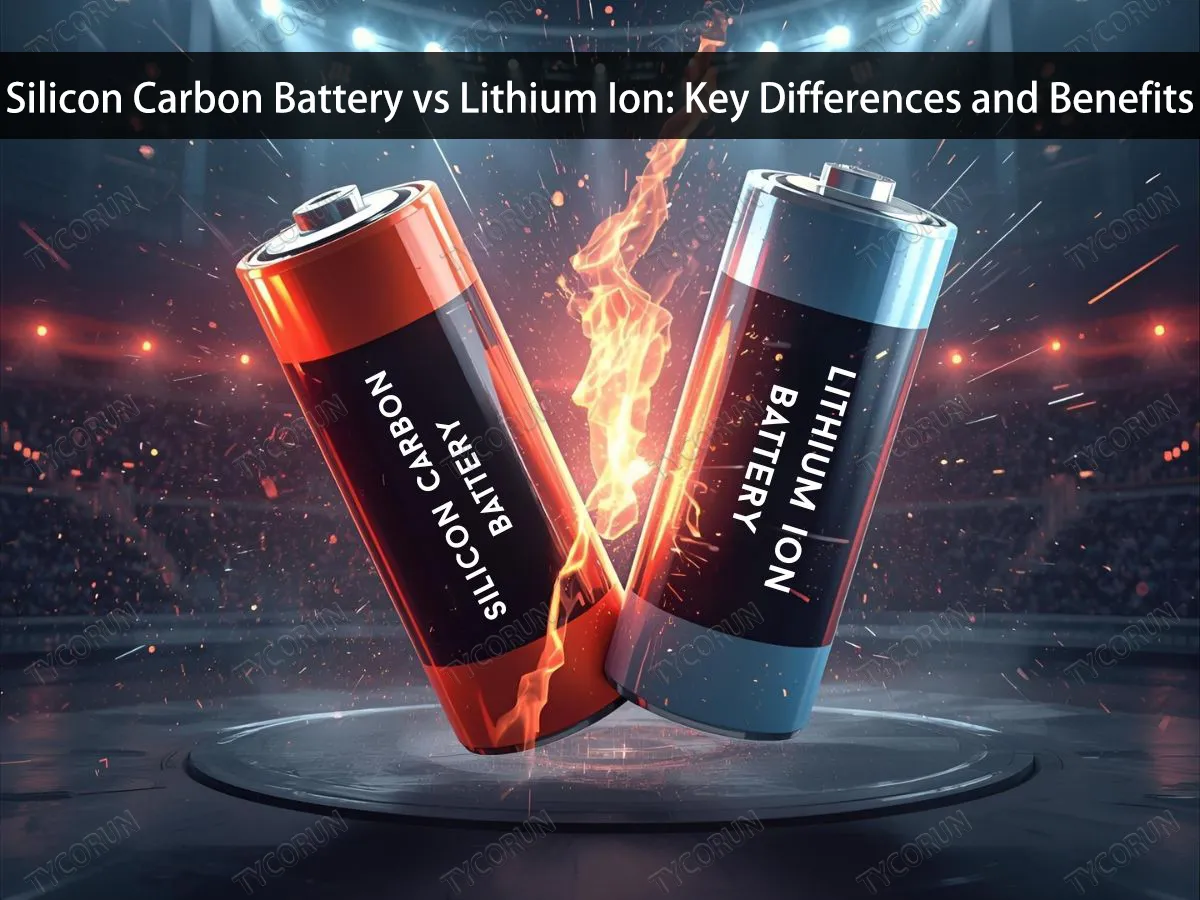
4) With the widespread use of silicon materials, electrolytes suitable for silicon systems have gradually become a hotspot of documented research; based on safety considerations, flame retardant additives, positive and negative surface protection additives under high voltage, and composite functional additives have been documented. hotspot.
Summary
Research on next-generation electrolytes is becoming a hot topic as the demand for high-performance batteries increases. This article on how to make battery electrolyte is just one aspect of a preliminary understanding of batteries.
By keeping up with the latest research and technology, we can continuously improve the performance and safety of lithium-ion batteries for various applications.
If you are also particularly interested in lithium ion battery manufacturers, you can click our top 10 lithium ion battery manufacturers to learn more.