
So far, Chinese top 10 lithium ion battery manufacturers including CATL, Envision AESC, CALB, EVE, SVOLT, Farasis, and Sunwoda have deployed zero-carbon transformation strategies in advance, exploring solutions such as battery carbon footprint, digital battery passport, recycled materials, and traceability.
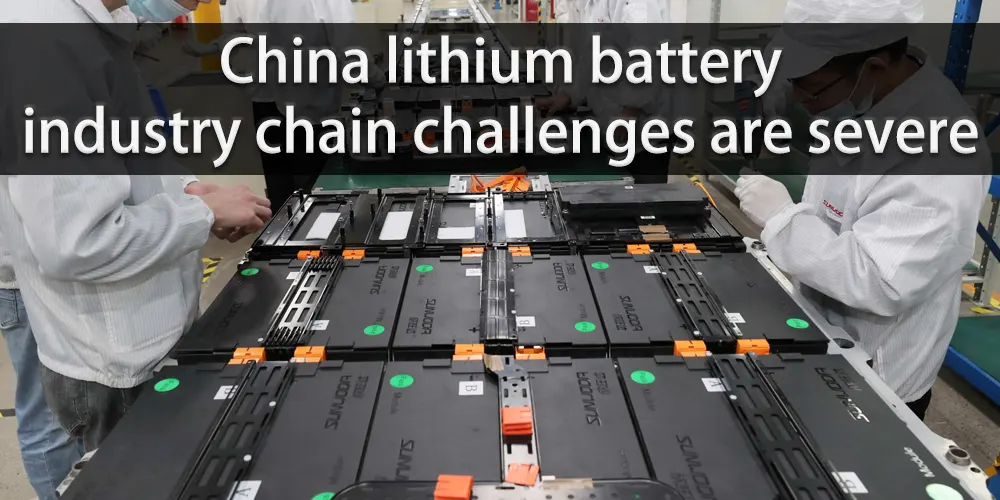
China lithium battery industry chain challenges are severe
According to the latest revision of the “New EU Battery Law”, more stringent requirements have been imposed on the sustainability and other indicators of battery products sold in the European Economic Area. Focus includes:
Carbon footprint statement: From July 1, 2024, power batteries and industrial batteries must declare the carbon footprint of their products. At least battery manufacturer information, battery model, raw materials, total carbon footprint of the battery, carbon footprint of different life cycles of the battery, third-party certification reports, and links that can display carbon footprints are required. And in July 2027, it will reach the relevant carbon footprint limit requirements.
Battery digital passport: From January 1, 2026, industrial batteries and EV batteries with a capacity of more than 2kWh put on the market or put into use must hold a battery passport. The battery passport needs to be linked to the EU battery electronic information exchange system, and users can view basic information such as lithium battery manufacturer, battery type, production place and date.
Minimum requirements for waste battery recycling rate: The minimum recycling rate of waste lithium batteries is required to reach 65% in 2025 and 70% in 2030. At the same time, there are also minimum recycling standards for waste lead-acid batteries, nickel-cadmium batteries and other batteries.
Minimum requirements for the recovery rate of metal materials: by 2027, 90% cobalt, 90% copper, 50% lithium, 90% nickel, and 90% lead are required. In 2031, 95% cobalt, 95% copper, 80% lithium, 95% nickel, and 95% lead.
The minimum requirements for recycled materials in batteries: 16% cobalt, 6% lithium, 6% nickel, and 85% lead 8 years after the regulations come into effect. 13 years after the regulations came into force, 26% cobalt, 12% lithium, 15% nickel, and 85% lead.
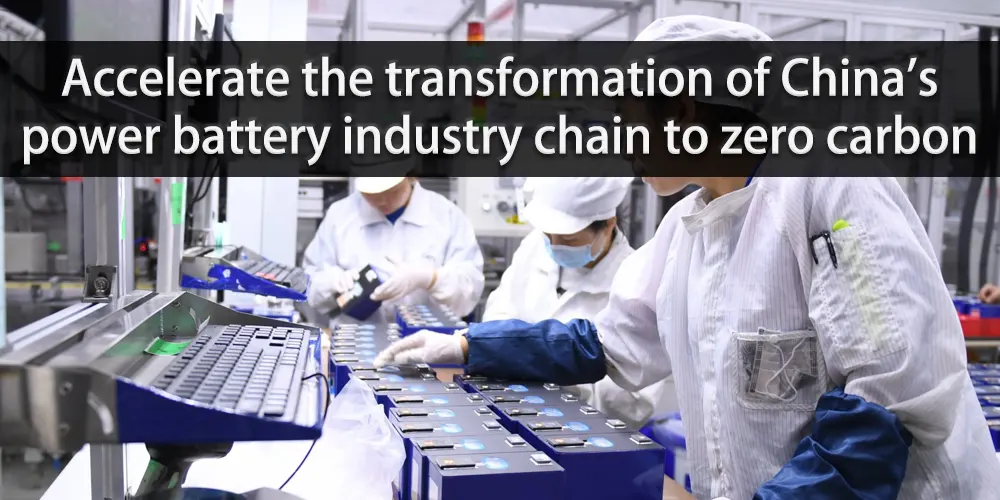
At present, Europe has become the main market for China’s lithium battery exports. According to the data of the General Administration of Customs, in the first quarter of this year, the top five countries in China’s lithium battery exports were the United States, Germany, South Korea, the Netherlands and Vietnam, accounting for 62.6% of the total exports.
Among them, the total value of exports to two European countries, Germany and the Netherlands, reached 27.297 billion RMB, exceeding the 22.47 billion RMB exported to the United States.
This also means that it is urgent to meet the requirements of the new EU battery law and accelerate the transformation of China’s power battery industry chain to zero carbon. It should be pointed out that in the face of the requirements of the “New EU Battery Law”, China lithium battery industry chain still has many challenges in the fields of battery carbon footprint, battery passport, and battery recycling.
What is the impact of the new battery law?
The analysis believes that after the implementation of the new European battery regulations, it may have a profound impact on multiple links such as the battery end, material end, manufacturing end, and recycling end.

On the battery side: The new EU battery regulations impose a series of restrictions on imported batteries, which will affect the decision-making of battery companies in various aspects such as raw material selection and procurement, battery production technology and waste battery recycling, thereby increasing battery production costs.
The rise in battery costs in the short term may also be further transmitted to downstream industries. Facing global competition, zero-carbon transformation will also become one of the core competitiveness of power battery companies.
Material side: Regulations on the information traceability of the battery life cycle will affect the development of lithium battery material companies in the direction of carbon reduction technology, green manufacturing, precise traceability, safety protection, normative standard formulation, and improvement of recycling and recycling systems. At the same time, the increase in the application of metal material recycling will also stabilize and reduce the price and supply risks of upstream mineral resources.
On the manufacturing side: To meet the needs of battery companies for zero-carbon transformation in their entire life cycle, equipment companies will innovate in technology in the direction of high efficiency, low energy consumption, green and low carbon. On the production side, the demand for green energy applications such as intelligence, digitalization, and photovoltaics will be further enhanced.
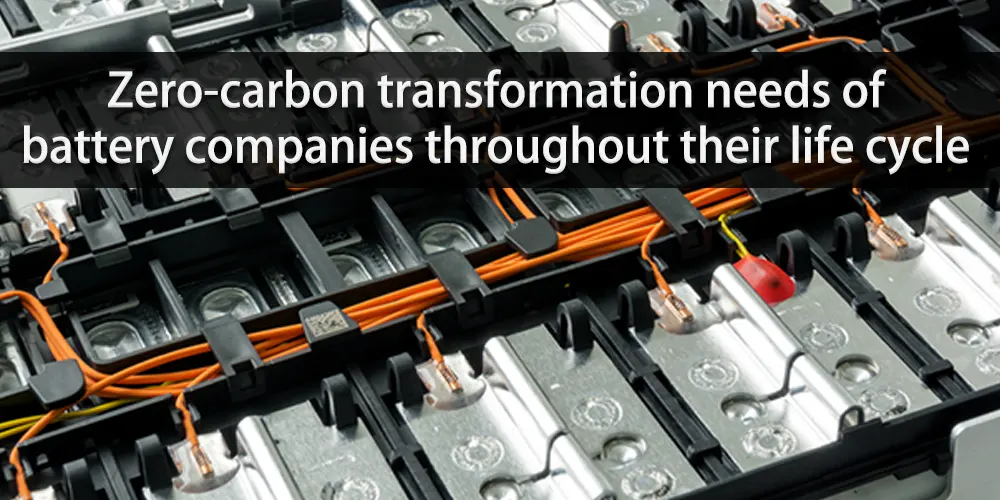
Recycling side: The regulations have set clear recycling goals, which will not only lead to an increase in the demand for waste battery recycling, but also put forward higher requirements for its recycling technology. The relationship between OEMs, battery companies and recycling companies will be closer, and a new business cooperation model integrating “production end-application end-recycling end” may be born.
Battery companies speed up to seize the global zero-carbon initiative
The core appeal of the “EU New Battery Law” is to implement zero-carbon production, traceability management and recycling of power batteries throughout their life cycle. Taking the initiative in the zero-carbon transformation will also determine whether China can continue to maintain global competitiveness.
In fact, both regional policies and regulations and the requirements of downstream international OEM manufacturers are forcing Chinese top 10 power battery companies to accelerate their efforts to seize the global zero-carbon initiative.
In April this year, CATL released its zero-carbon strategy, which aims to achieve carbon neutrality in core operations by 2025 and carbon neutrality in the value chain by 2035. Focusing on this goal, CATL will achieve technological carbon reduction in five key nodes of mines, bulk raw materials, battery materials, battery cell manufacturing, and battery systems through four innovation systems.
At the same time, CATL has extensively carried out CREDIT projects in the supply chain, and has comprehensively controlled carbon footprints with partners. Participate in the formulation and improvement of relevant regulations on battery passports, promote the transparency of the industry supply chain, traceability management and recycling of batteries throughout their life cycles.
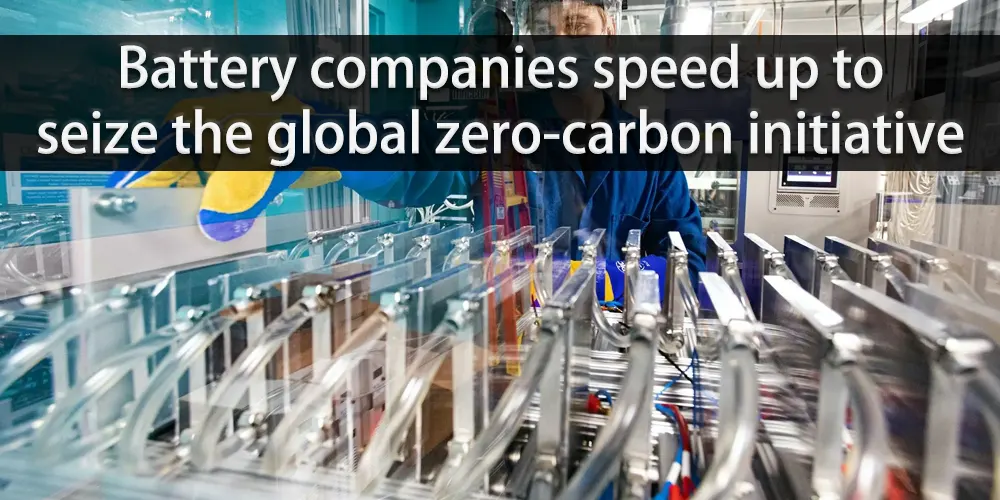
Envision AESC is accelerating global replication of zero carbon capacity. At present, Envision AESC has deployed 12 zero-carbon battery production bases in China, Japan, the United States, the United Kingdom, France and Spain. In 2026, the total production capacity of zero-carbon batteries will exceed 300GWh.
In recent years, CALB has continued to focus on the four major manufacturing technology directions of minimalist manufacturing, extreme manufacturing, green low-carbon manufacturing and intelligent manufacturing to build an industry-leading zero-carbon factory.
SVOLT’s first zero-carbon industrial park has been signed in Dazhou, Sichuan in June 2022. This is SVOLT’s “source-grid-load-storage” integrated lithium-ion zero-carbon industrial park using all-green electricity, with a total investment of 17 billion RMB.
The Farasis Zhenjiang factory has passed the carbon-neutral production certification issued by the third-party DEKRA in June 2021. In March 2022, the “Guidelines for Carbon Footprint Evaluation of Lithium-ion Batteries” led by Funeng Technology was officially released.
In April this year, Sunwoda launched the supply chain low-carbon management project and product carbon footprint project, and cooperated with the world’s leading third-party certification bodies SGS and TUV Rheinland to officially launch the supply chain emission reduction plan.