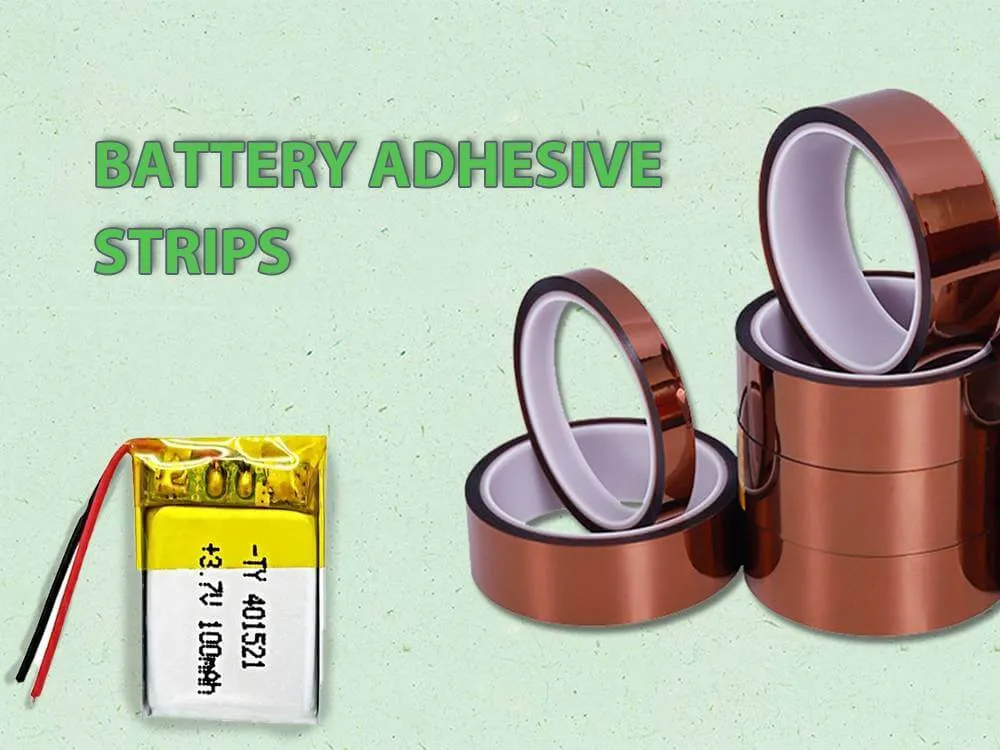
Do you know what battery adhesive strips is and what it can do. What kind of adhesive strips are top 10 lithium ion battery manufacturers using? Next, I will help you understand lithium-ion battery adhesive strips and its classification.
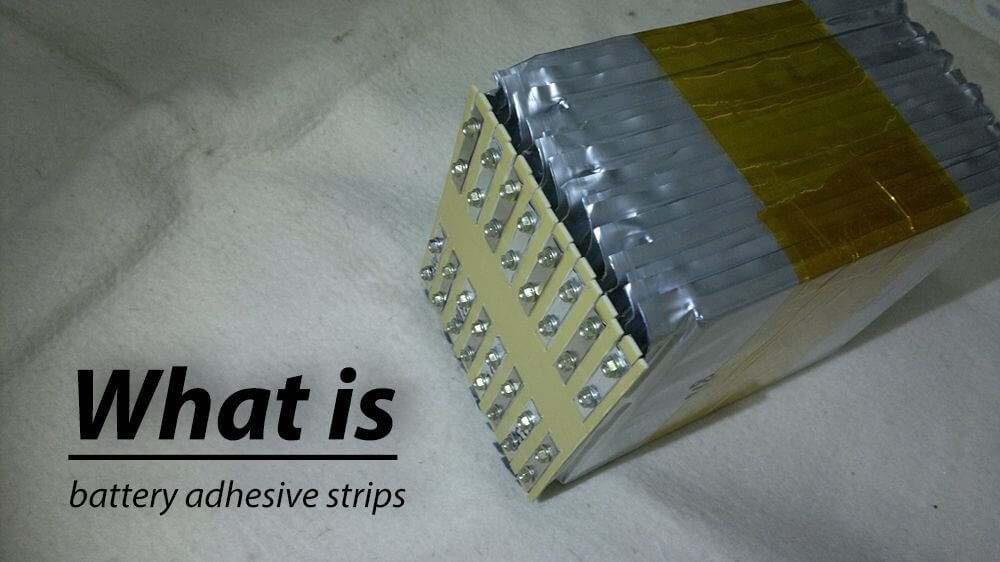
What is lithium battery adhesive strips
Lithium battery adhesive strips refers to the pressure-sensitive adhesive strips used for electrode winding, pole piece protection and winding core termination in the middle production process of lithium battery cells (winding/lamination, shell welding and sealing, etc.). Its main function is to insulate and fix the lithium battery. The development of the lithium battery adhesive strips is accompanied by the development of the lithium-ion battery.
Research status of lithium battery adhesive strips
Lithium battery adhesive strips is a pressure-sensitive adhesive strips with special functional properties. It has certain initial tack, stickiness, temperature resistance and chemical resistance, and can be used repeatedly without pollution. No pollution and other characteristics.
Lithium battery adhesive strips are divided into lithium battery adhesive strips with different characteristics in order to meet customer and market needs due to the needs of different parts of lithium batteries, different efficacy requirements, different performance standards and different production companies. China’s lithium battery adhesive strips manufacturers are uneven, the technology research and development level is relatively backward, lack of core technology, and most of them are in the processing and production stage.
The characteristics of lithium battery adhesive strips are mainly determined by factors such as substrates, adhesives and uses, so lithium battery adhesive strips are generally classified according to substrates, adhesives and uses. There are many types of lithium battery adhesive strips. Manufacturers develop and produce lithium battery adhesive strips according to the customer’s requirements for the use of materials. Among them, the composition of the adhesive determines the characteristics and uses of the lithium battery adhesive strips. Commonly used adhesives include acrylate adhesives, rubber adhesives, etc. .
Lithium battery adhesive strips prepared with different adhesives have different characteristics:
●The acrylate lithium battery adhesive strips prepared with acrylate adhesive has good aging resistance and weather resistance, high temperature resistance and good thermal stability, good adhesion to polar surfaces, and good adhesion to non-polar surfaces. The surface adhesion is small, the initial peel strength is low, etc.;
●The rubber lithium battery adhesive strips prepared with rubber adhesive has higher shear resistance at high temperature, can be pasted with various surfaces, and has good initial adhesion, but has poor anti-aging and solvent resistance.
Base material of lithium battery adhesive strips
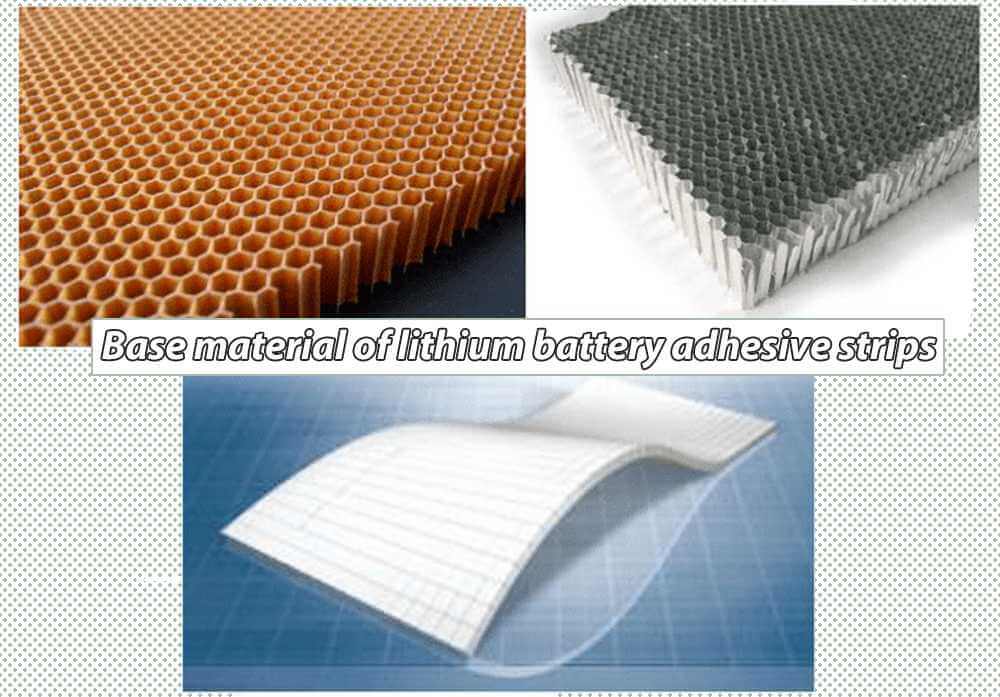
The substrate is the carrier in the lithium battery adhesive strips, which affects the temperature range, tensile strength, shear resistance and material cost of the lithium battery adhesive strips. Common substrates are BOPP (biaxially oriented polypropylene film), PET (high temperature polyester film), PI (polyimide film) and nomex (meta-aramid or aramid 1313) paper, etc.;
Polymer film has become a common carrier substrate for lithium battery adhesive strips due to its excellent properties such as dimensional stability, high elasticity, good insulation, good acid and alkali resistance, good tear strength and plasticizer resistance.
Different substrates endow the lithium battery adhesive strips with different characteristics. Guo Peijun et al. made BOPP and PET substrate adhesive strips by adding an appropriate amount of crosslinking agent and pigment into the same acrylate glue. The products with BOPP film as the substrate are temperature-resistant Poor performance and electrolyte resistance PET-based adhesive strips.
The temperature resistance of the substrate determines the upper limit of the use temperature environment of the lithium battery adhesive strips. The temperature resistance is PI substrate > PET substrate > BOPP substrate. The temperature resistance of PI substrate is relatively the best, and the temperature resistance of BOPP substrate is relatively high. worst. The cost of the substrate is opposite to the temperature resistance. The cost of BOPP lithium battery adhesive strips is relatively low, and the cost of PI lithium battery adhesive strips is relatively high.
Main types of adhesive strips
Battery adhesive tape is composed of substrate, adhesive, and release paper. It is mainly divided into two types: single-sided and double-sided. The main types of tapes are as follows:
Hot melt lithium battery adhesive strips
With the development of new materials, the lithium battery adhesive strips industry has introduced some new types of adhesives, such as single-sided hot-melt lithium battery adhesive strips and double-sided hot-melt adhesive strips for lithium battery.
The single-sided hot-melt lithium battery adhesive strips is composed of a sealed hot-melt pressure-sensitive adhesive layer and a base film layer. The single-sided adhesive strips has good viscosity and can resist the corrosion of the electrolyte of the lithium battery. performance of lithium batteries. The lithium battery pole group and the outer packaging material using single-sided hot-melt lithium battery adhesive strips are firmly bonded, without relative displacement, with good fall resistance, high safety, long service life and stable quality.
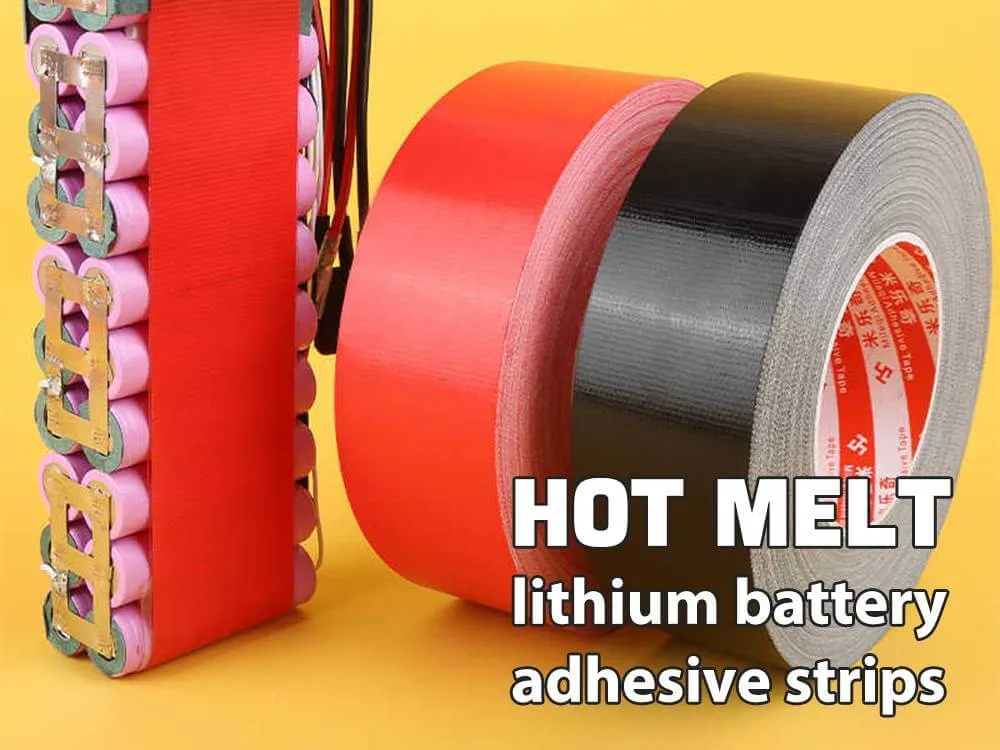
One side of the double-sided adhesive strips for lithium batteries is sticky, usually acrylate adhesive; the other side is non-sticky at room temperature, and sticky when heated, usually hot melt adhesive. In use, one side of the adhesive strips has adhesion to aluminum foil and polyethylene film at room temperature, and the other side has adhesion to the polypropylene surface only when the temperature is above 80 °C, which is more suitable for the production process requirements of lithium batteries.
Lithium battery termination adhesive strips
Lithium battery termination adhesive strips refers to the pressure-sensitive adhesive strips used for electrode winding and winding core termination in the middle production process of lithium battery cells, such as electrode winding and winding core termination. It has special requirements in terms of substrate selection, adhesion, temperature resistance and electrolyte resistance, and is a special type of pressure-sensitive adhesive products. Lithium battery termination adhesive strips is a type of pressure sensitive adhesive strips used in batteries.

Lithium battery high temperature adhesive strips
Lithium battery high temperature resistant adhesive strips is to make lithium battery have good stability under high temperature extreme conditions such as production and use. A battery adhesive strips developed for the characteristics of no short circuit, no leakage and liquid leakage in the environment.
The original high temperature resistant adhesive strips for lithium batteries is silicone silicone adhesive strips, but in recent years, the lithium battery industry has proposed that the cell cannot contain silicon elements, so most of the high temperature resistant adhesive strips used on the market are acrylate battery adhesive strips.
Lithium battery tab adhesive strips
When making lithium battery cells, it is necessary to weld Tab leads (TAB leads) on the tabs, so that the tabs are lengthened, so that the sealant can be melted and sealed when the top side is sealed in the next process. Tab lead welding adopts ultrasonic welding. After the welding is completed, there will be solder joints on the tabs.
Because the protrusion height of the tabs may not meet the requirements. Generally, the tabs need to be bent. In this case, a short circuit is easy to occur. Therefore, it is necessary to apply insulating adhesive strips to the welding position, and both sides of the tabs need to be pasted with insulating adhesive strips.
Double layer lithium battery protective film adhesive strips
The lithium battery shell is hard and the water chestnut is clear. The lithium battery adhesive strips for protecting the edge is required to be soft, strong, sticky, and not warped for a long time. This type of adhesive strips is called a double-layer lithium battery protective film adhesive strips. The composite structure of double-layer PET film and double-layer adhesive layer makes the adhesive strips softer while being wear-resistant and tough;
By coating the high-viscosity modified acrylic adhesive with phenolic resin, the viscosity is stronger, so as to achieve better adhesive strips, not easy to warp, and bake at 130 ° C for more than 0.5 to tear off without residual adhesive, which can be better Protect the battery.

Power battery adhesive strips
Power battery adhesive strips is based on PET film, and is coated with non-silicon pressure-sensitive adhesive (acrylate glue or rubber glue) on the PET film. The battery adhesive strips is used for insulation, maintenance and fixation of the casing of the flexible packaging power battery of electric vehicles, the battery cells arranged in the casing, the top cover of the cover-sealing casing, the top surface of the battery core, the two sides and the bottom surface. If you want to know about leading power battery manufacturers, you can refer to top 10 power battery companies.
Lithium battery protective film adhesive strips
Lithium battery protective film adhesive strips mainly uses PET film and BOPP film as the base material, and is coated with acrylic glue.
It is characterized by high cleanliness, moderate viscosity, no warping when pasting the aluminum-plastic film, no damage to the barcode, high temperature resistance without residual glue, scratch resistance, puncture resistance, and the product complies with ROHS standards.
Although tape is a small product in application of lithium battery, it has a wide range of practical uses and a large role, and has a high core technology content. Continuous research and development is required to adapt to the technical iteration and product update of lithium batteries.