Detailed explanation of inverter communication method

Detailed explanation of inverter communication method

The digital and intelligent development of photovoltaic power plants has become an inevitable trend in its development. As a core component with extremely intelligent characteristics in the entire photovoltaic industry chain, the pv inverter is the only photovoltaic system that has multiple digital functions and is directly connected to the power grid. Intelligent equipment is an important “carrier” for the intelligent development of photovoltaic systems.
 
As the brain of the entire power station, the photovoltaic inverter can transmit the collected power station operation data to the communication hardware. Operation and maintenance personnel or users can view relevant data through the intelligent operation and maintenance platform to realize intelligent management of the power station. So how does the inverter transmit data? What are the differences between various communication methods?
 
youtube play button

Four major communication technology solutions for inverters

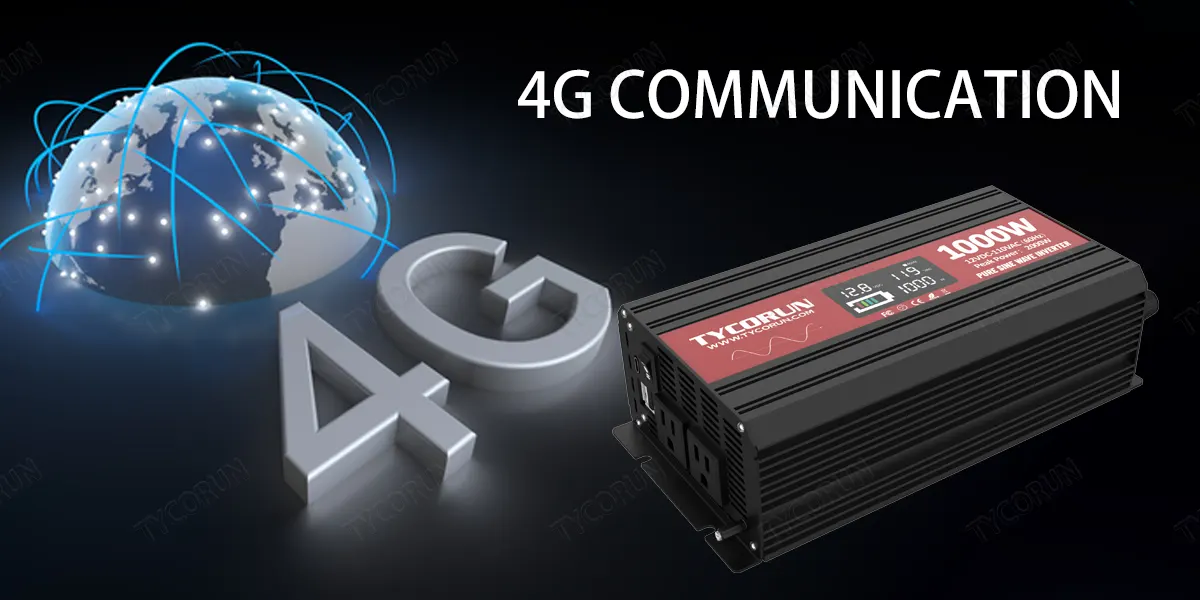
GPRS/4G communication

Usually, each inverter is equipped with a GPRS/4G data collection module. Through the built-in SIM card, the collected data is uploaded to the inverter company’s server through the wireless network and the communication base station.

Scope of application:
Suitable for medium and large distributed projects and areas with good signal coverage by service providers4G communication
Advantage:
Easy to use, no additional wiring required

Shortcoming:
Need to pay traffic fees


WiFi communication

Usually the inverter is connected to the router through a built-in or external WiFi module, and the collected data is transmitted to the inverter company’s server. It can also be directly connected to the mobile APP through WiFi for data interaction.wifi communication

Scope of application:
Suitable for user or small and medium-sized industrial and commercial systems and areas covered by wireless networks

advantage:
Easy installation, no traffic charges

shortcoming:
Stable wireless network coverage is required, so it is greatly affected by external factors such as distance and weather.


PLC communication

Power line communications (PLC for short) technology refers to a communication method that uses power cables to transmit data and media signals. The data is transmitted over power lines, aggregated into data collectors, and transmitted over the network to the inverter company’s servers.

Scope of application:
Suitable for user or small and medium-sized industrial and commercial systemsScope of application of communication

advantage:
Data transmission is carried out through power cables, without the need for additional communication lines, and the reliability is high

shortcoming:
The communication rate is low, and the data collector must be connected to the same power circuit.


RS485 communication

RS485 communication

After the inverters are connected in series through RS485, the end inverter is connected to the data collector, and the data is transmitted to the inverter company’s server through the network.

Scope of application:
Suitable for medium and large industrial and commercial projectsAdvantages and disadvantages of communication methods

advantage:
Strong anti-interference ability and stability

shortcoming:
Additional communication cables need to be laid, increasing costs
 

How to connect the inverter to the communication platform?

The communication between the inverter and the monitoring platform relies on the communication protocol from the software aspect, and from the hardware aspect, the data collector module (monitoring stick) mainly serves as a medium or bridge for data transmission and reception, thereby making the inverter Operation status can be displayed on the monitoring and operation platform.

The monitoring and operation cloud platform can be understood as a page summarized and displayed by the Ethernet remote/cloud server on the client side. Depending on the performance or technology, the cloud platform supports a variety of functions, such as providing the ability to view the most basic equipment power generation, voltage, current, real-time power, operating status, equipment serial number, etc.

At present, there are mainly the following ways to implement communication between the inverter and third-party platforms:


API interface data forwarding

API is the abbreviation of Application Program Interface (API=Application Program Interface). It is actually a set of defined programs and protocols that realize mutual communication between computer software through API interfaces.

A primary function of an API is to provide applications and developers with the ability to access a set of data based on a piece of software or hardware without having to access the source code or understand the details of its inner workings. API is also a kind of middleware that facilitates data sharing on various platforms.


Cloud data direct delivery

Cloud data direct transmission is also called “cloud-cloud communication”. Once the operating data of a certain part of the inverter is generated and automatically transmitted to the Growatt cloud server through the data collector, it is not automatically analyzed there, but is started on the server.

A specific account corresponds one-to-one with the account and port of a third-party platform. Unparsed data is automatically pushed to the third-party platform account through the standard mqtt protocol. The frequency is consistent with the data update frequency of the inverter data acquisition. .

This method is preferred by many large companies because they need to obtain “first-hand raw data” and do not intend to change the collector hardware. The direct data transmission method of cloud push or mqtt subscription can directly realize their needs. requirements.


Multi-channel collector direct transmission

The manufacturer’s standard wireless data collectors are generally single-channel. The IP address pointed by the channel is the inverter manufacturer’s own cloud platform. The operating data of the inverter can be transmitted to the cloud through this channel for users to view on the mobile APP. Or access the data via PC.

Multi-channel collectors can generally be designed as dual-channel or three-channel. Among them, one channel sends data to the inverter manufacturer’s server normally, and the other channel sends data synchronously to the user’s server without going through the manufacturer’s server; the third channel each pass can continue to send data synchronously to the target platform when necessary.

This method sends the original data bytes directly to the third-party server address of the writing channel. Users can parse the data according to their platform format to meet the needs of direct data transmission to the user’s third-party server. At the same time, the manufacturer’s monitoring channel is retained, which provides basis and convenience for later equipment and power station operation and maintenance, thus ensuring that many operation and maintenance tasks can still be solved remotely.

Related posts
tycorun logo

TYCORUN ENERGY

We offer lithium ion battery products, solutions, and services across the entire energy value chain. We support our customers on their way to a more sustainable future.

Products

Recent Posts

Hot Posts

Contact Form Demo (#3)
Scroll to Top

Request A Quote

Email:info@takomabattery.com