Skip to content
The current situation and development of lithium-ion battery separators industry in China
As an emerging high-energy density energy storage device, lithium-ion batteries have the advantages of high efficiency, high safety, and low cost, and are being widely used in home appliances, electric vehicles, and other fields.
The separator is an important part of the lithium-ion battery structure, and its quality and performance directly affect the safety and stability of the battery. This article will study lithium-ion battery separator materials and situation and development of lithium-ion battery separators


Introduction to lithium-ion battery separators
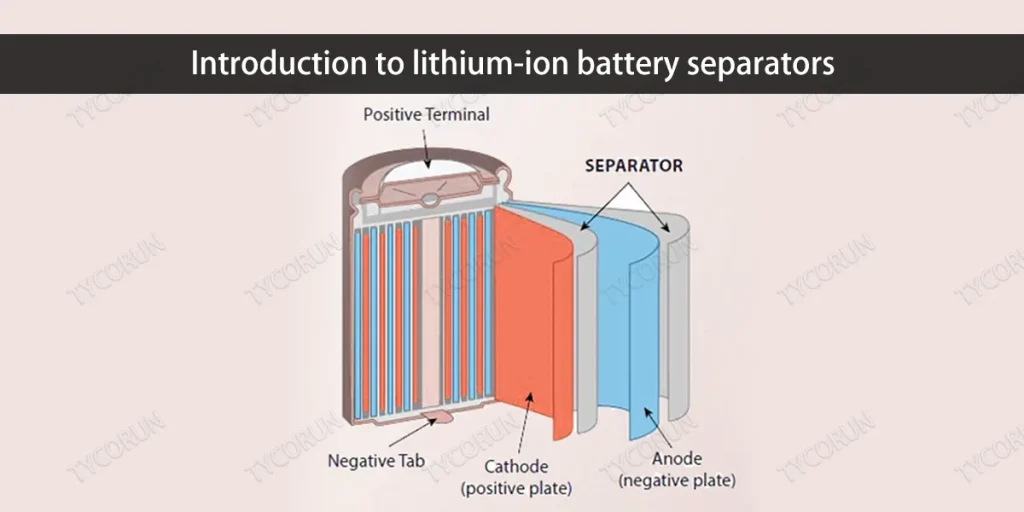
At present, the lithium-ion battery separators on the market are mainly polyolefin microporous separators represented by polyethylene (PE), polypropylene (PP), etc. Although this type of separator has mature preparation technology, high mechanical properties, and chemical stability.
On one hand, its electrolyte affinity is poor, which cannot fully absorb the electrolyte and affects its electrochemical performance; On the other hand, its own thermal stability is low, and it will deform and shrink in size when heated at high temperatures, resulting in poor safety and easy occurrence of safety accidents such as short circuits, which cannot meet the needs of high-end lithium-ion battery equipment.
Therefore, the development of safer, more stable, and better performing separators has important research significance and application prospects for the development and application of lithium-ion batteries in China.
Development status of China's separators industry
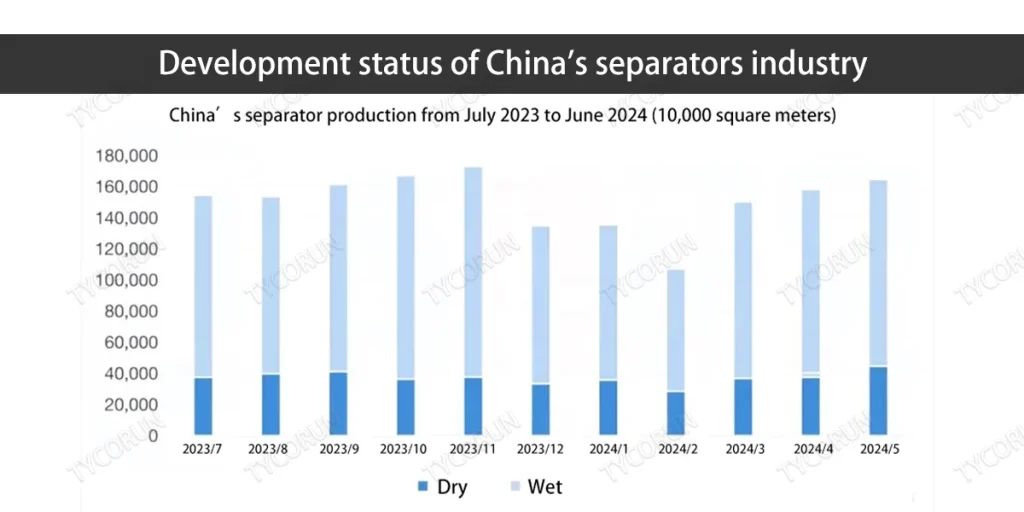
According to the data, China’s lithium battery separator production was 158.1 million square meters in June 2024, a decrease of 3.89% from the previous month and an increase of 19.19% from the previous year.
In terms of raw material types, the shipment volume of dry-process separators in June was 40.35 million square meters, a decrease of 9.63% from the previous month and an increase of 20.09% from the previous year; the shipment volume of wet-process separators was 119.9 million square meters, a decrease of 1.79% from the previous month and an increase of 18.88% from the previous year.
China’s total lithium battery separator production in the first half of 2024 was approximately 8.737 billion square meters, a year-on-year increase of 26%.

According to statistics, in the first half of 2024, the price of 12um wet-process separators dropped by more than 11%, the price of 9+3um wet-process separators dropped by 31.644.44%, and the price of 16um dry-process separators dropped by 44%. Due to the continuous release of new production capacity and a certain degree of control over production capacity, the price war has intensified.
Based on this, a research institute analyzed that according to the performance data of leading enterprises, the current competition in China’s lithium battery separator market has intensified. At the same time, due to the fluctuation of raw material prices and the absorption of production capacity that is lower than expected, China’s separator prices have dropped sharply, which has also led to a decline in the operating income of production enterprises.
Therefore, some companies have expanded production, while others have contracted, and lithium battery separators have staged an offensive and defensive battle.
Future development trends of the separator Industry
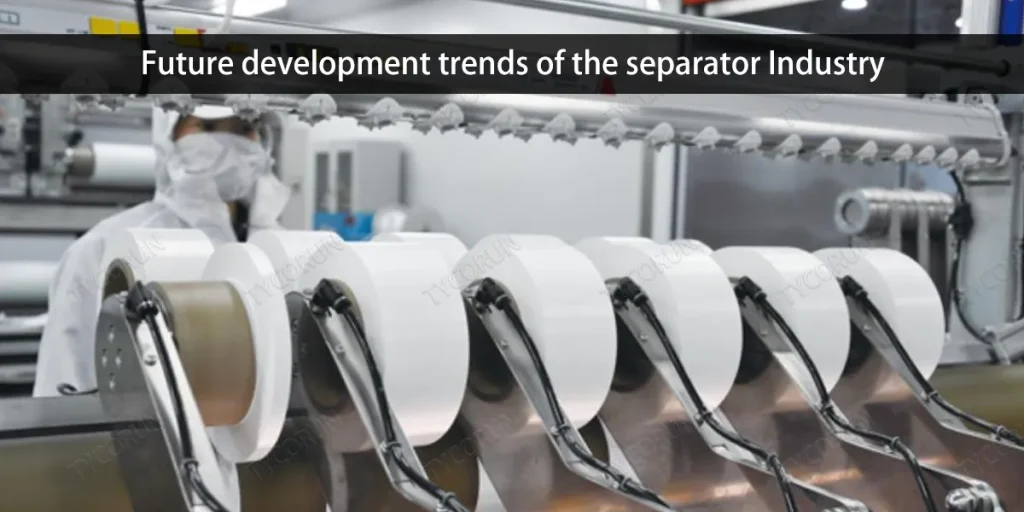
With the increasing global attention to green, low-carbon and sustainable development, and the rapid development of the new energy vehicle market and energy storage market, lithium battery separators are an indispensable key raw material in lithium battery manufacturing.
Their stable and reliable production capacity and product quality are the important cornerstones for separator companies to accept large-scale orders from downstream customers. According to the future development of lithium batteries, the future development trends of the separator industry are as follows
Solid state batteries are the ultimate development direction of lithium batteries
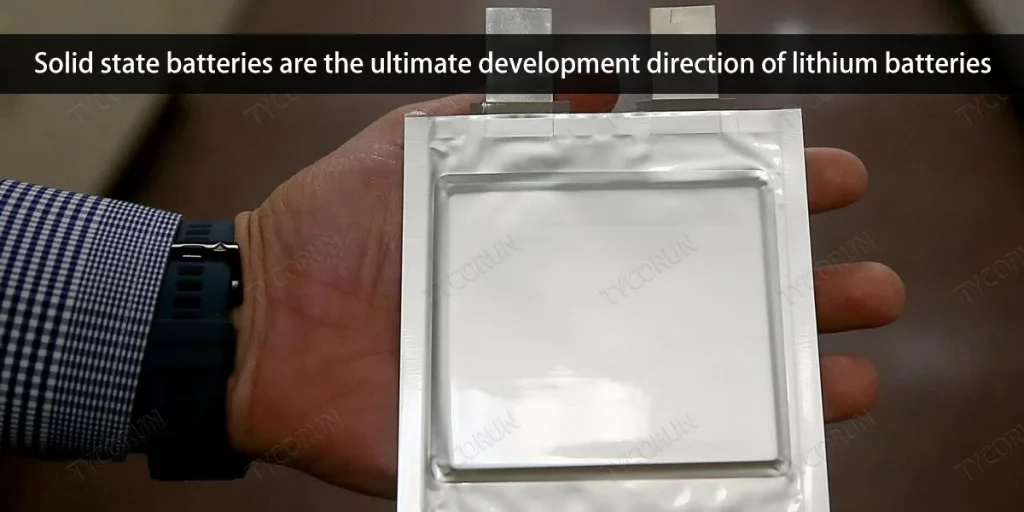
Solid-state batteries are divided into semi-solid and all-solid-state batteries. Semi-solid batteries retain some electrolyte and separator structures, but because semi-solid batteries need to improve lithium ion conductivity, the separator aperture is required to be larger and stronger.
At present, China’s mainstream separator companies have layouts for semi-solid separators. Some companies also stated that some semi-solid battery customers are currently considering the high confidentiality of spraying technology and formula, as well as product quality and yield rate.
After purchasing the separator, they only entrust the picture compensation to provide spraying services. The relevant technology of semi-solid separators is still in the accumulation stage, and it is waiting for a breakthrough to usher in a formal growth trend. Solid-state batteries are completely replaced by solid electrolytes. There is still no accurate statement on whether the separator will be retained.
Continuous research and development of new materials
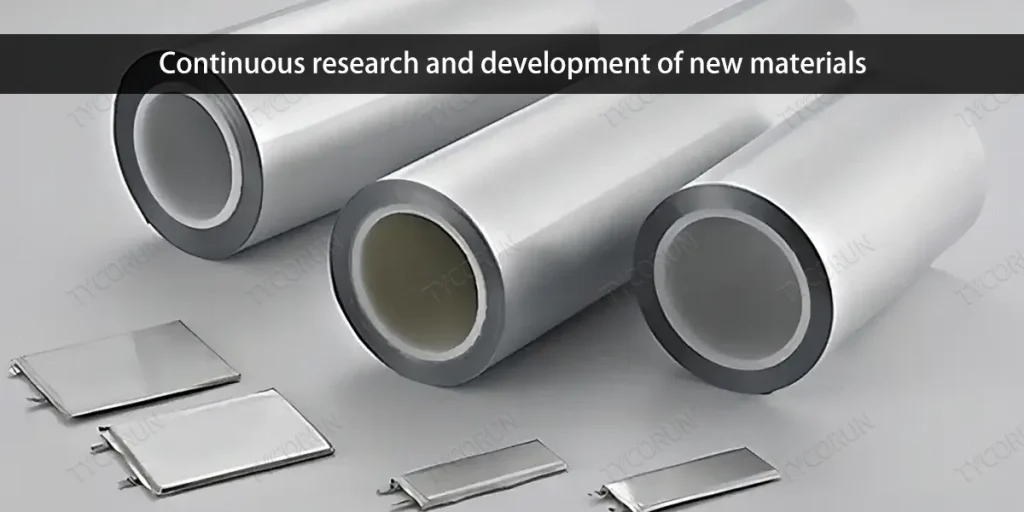
Research and innovation of separator materials
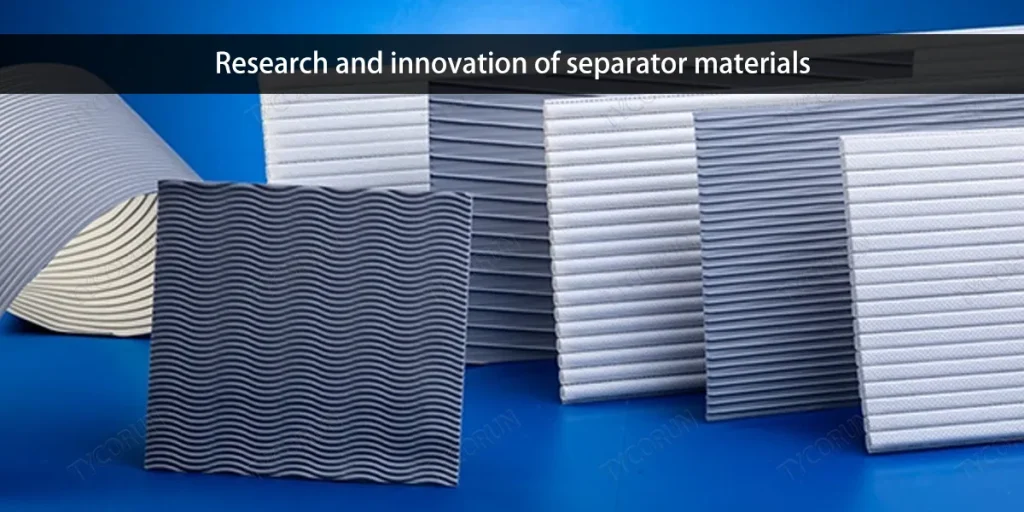
Polyolefin separators are currently mainly made of polyethylene and polypropylene materials, which have the disadvantage of poor temperature resistance.
As non-polar materials, they have poor absorption and retention of electrolytes. By coating Al₂O₃, PVDF-HFP, aramid and other materials on the separator base film, the thermal stability, absorption and retention of electrolytes, and the adhesion of the electrode can be improved, thereby improving battery safety, energy density, rate discharge, cycle life, etc.
Research and modification of separator coating materials
Polyolefin separators are currently mainly made of polyethylene and polypropylene materials, which have the disadvantage of poor temperature resistance.
As non-polar materials, they have poor absorption and retention of electrolytes. By coating Al₂O₃, PVDF-HFP, aramid and other materials on the separator base film, the thermal stability, absorption and retention of electrolytes, and the adhesion of the electrode can be improved, thereby improving battery safety, energy density, rate discharge, cycle life, etc.

Generally speaking, improving the temperature resistance of the separator can improve the safety performance of the battery, improving the liquid absorption and retention of the separator can improve the battery charging and discharging performance and capacity, and improving the adhesion of the pole piece can improve the safety and energy density.
The basic principle of separator coating is to improve the temperature resistance, liquid absorption and retention, and the adhesion of the pole piece, while not affecting the air permeability and pore size uniformity too much.
Conclusion
Lithium-ion separators are key factors affecting the performance of lithium-ion batteries, including permeability, conductivity, stability and durability. The performance of separators depends on their composition, of which the most important factor is the selection of separator materials, including ion exchange resins, polymers and metal oxides.
In addition, factors such as the structural design, manufacturing process and surface treatment of the separator also need to be considered.
Therefore, it is necessary to study new lithium-ion separator materials in the future to improve the performance of lithium-ion batteries and reduce the preparation cost to meet more application needs.