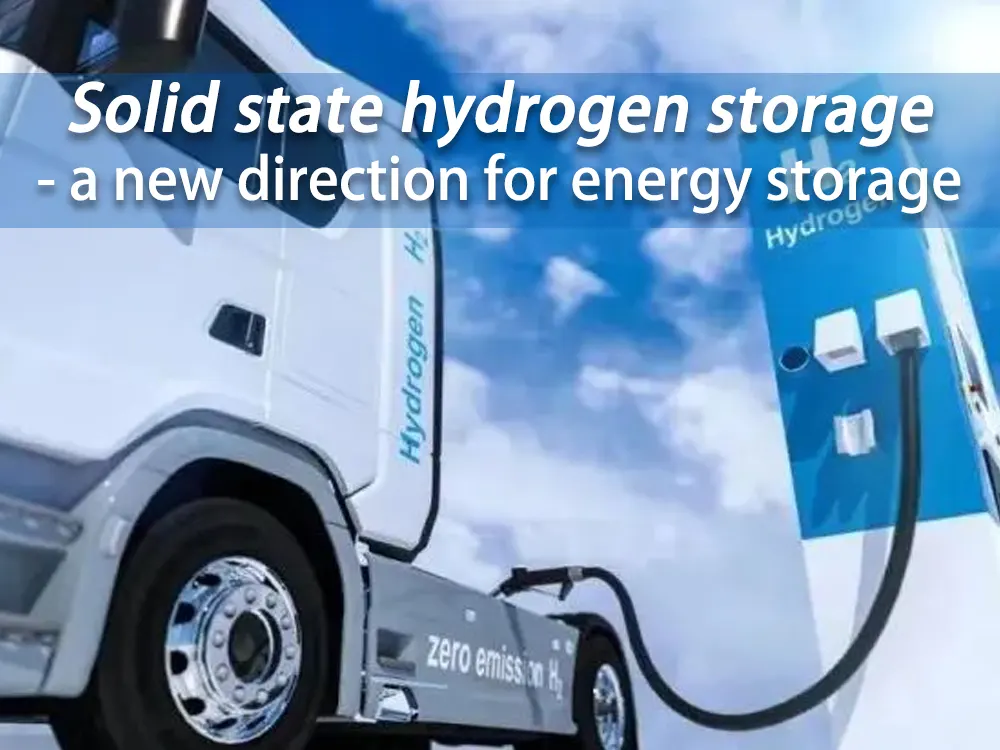
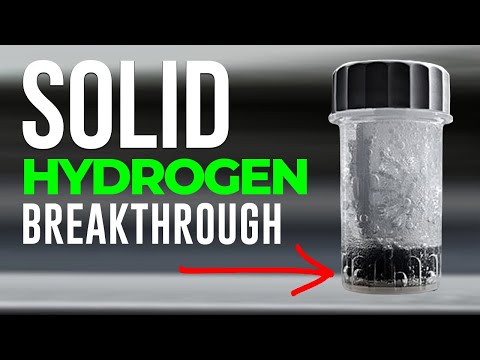

With the in-depth exploration of technologies such as solid state hydrogen storage, hydrogen energy will be more widely used in many fields, realizing the transition from 1 to N.
This article describes the advantages of hydrogen storage, the categories and the differences between solid state hydrogen storage and other energy storage solutions.
New progress in solid state hydrogen storage
Recently, the solid state hydrogen storage development project in China’s key research and development plan took the lead in realizing grid-connected power generation in Guangzhou and Kunming.
This is the first time in China to use photovoltaic power generation to produce solid hydrogen energy and successfully apply it to the power system. It is a milestone in promoting large-scale hydrogen production from renewable energy and accelerating the construction of a new power system.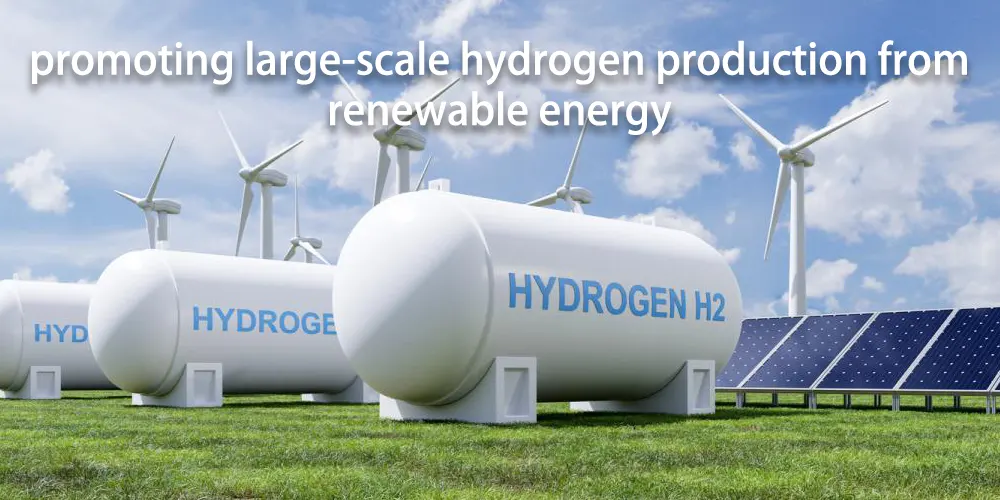
The energy station realizes the flexible conversion between electricity and hydrogen through the integration of hydrogen energy production, storage, power generation, and hydrogenation. This will well solve the problems of randomness and strong seasonal fluctuations in renewable energy generation.
In the demonstration project in Guangdong, China, based on solid state hydrogen storage, hydrogen energy has demonstrated its application in energy storage to the outside world.
Advantages of hydrogen energy storage
The advantages of hydrogen energy storage for a long time, large capacity, and across regions.
First, in terms of renewable energy consumption. Hydrogen energy storage has obvious advantages over other energy storage in terms of discharge time (hours to quarters) and capacity scale (gigawatt level).
Hydrogen energy storage basically has no rigid storage capacity limit, and can meet the energy storage needs of several days, months or even longer as needed, thereby smoothing the seasonal fluctuations of renewable energy.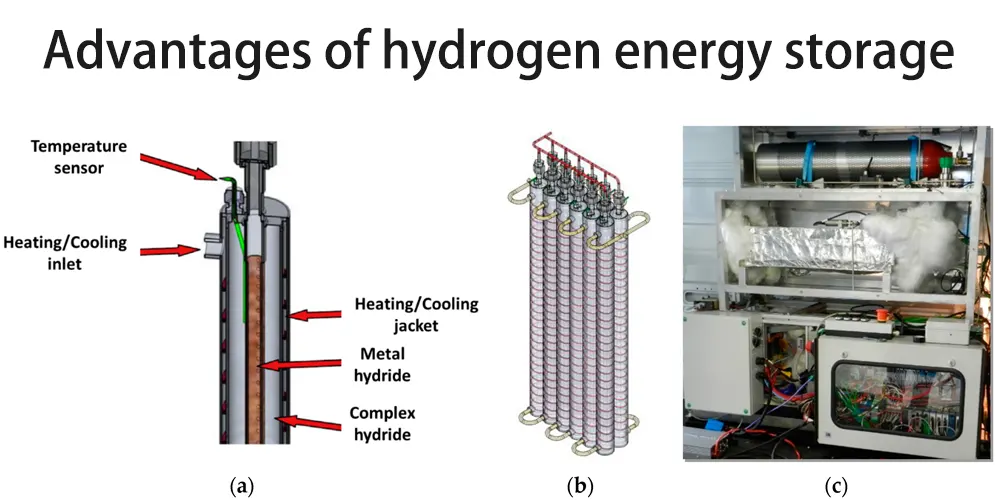
Secondly, the transfer of hydrogen energy in space is also more flexible. The transportation of hydrogen is not restricted by the transmission and distribution network, and energy can be transferred across regions, long distances, and non-directionally.
Storage and transportation methods such as long-tube trailers, pipeline hydrogen transmission, natural gas hydrogenation, and liquid ammonia can be used, which is more flexible.
Again, the scope of application of hydrogen energy is also wider. It can be converted into electrical energy, thermal energy, chemical energy, etc. according to the needs of different fields.
Finally, on geographical restrictions and ecological protection. Compared with large-scale energy storage technologies such as pumped storage and compressed air, hydrogen storage does not require specific geographical conditions and will not damage the ecological environment.
Hydrogen storage transportation methods and categories
In the hydrogen energy storage industry chain, the hydrogen storage link is connected to hydrogen production and then to hydrogen application, which is an indispensable part.
Common hydrogen storage technologies are usually divided into three methods: gas storage and transportation, liquid storage and transportation, and solid state storage and transportation.
The cost of gaseous storage and transportation is relatively low, and the charging and discharging speed of hydrogen is relatively fast. It is currently the most mature and widely used. However, the hydrogen storage density and transportation radius are relatively limited, so it is suitable for short-distance transportation.
In contrast, medium and long-distance large-scale transportation mainly considers pipeline and liquid hydrogen transportation. The hydrogen storage density of liquid storage and transportation is higher, but the equipment investment and energy consumption costs are higher.
Solid-state hydrogen storage technology has the advantages of long storage time, high safety, and convenient hydrogen release. However, there are also problems such as low hydrogen storage capacity at room temperature, expensive preparation of adsorption materials, and low commercialization.
According to the differences in the hydrogen storage mechanism of solid-state materials, hydrogen storage materials can be mainly divided into two types: physical adsorption hydrogen storage materials and metal hydride-based hydrogen storage alloys. Among them, metal hydride hydrogen storage is currently the most promising and fast-growing solid-state hydrogen storage method.
The principle is to chemically react hydrogen with the alloy, hydrogen atoms are stored in the gaps of the metal, and a solid substance called “hydride” is formed. When hydrogen needs to be supplied externally, the ambient temperature of the hydride can be released. hydrogen.
Solid state hydrogen storage vs electrochemical energy storage
Energy storage system efficiency
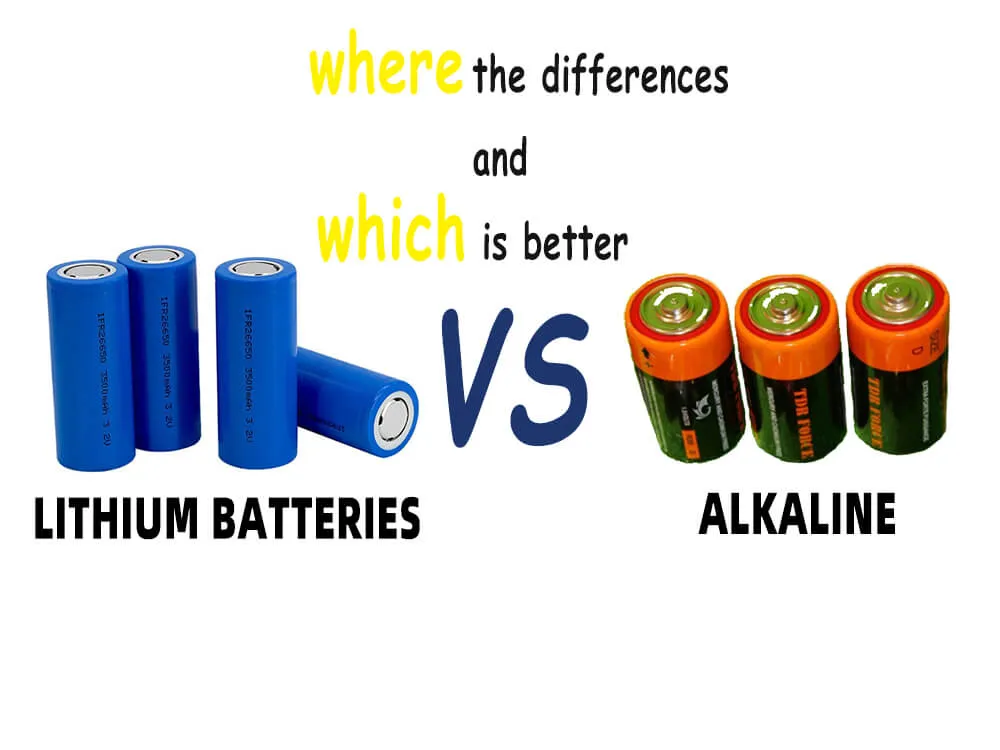
At this stage, the energy conversion efficiency of various electrochemical energy storage such as lithium batteries is above 70%. However, hydrogen energy storage needs to complete two energy conversions of “electricity-hydrogen-electricity”, and the overall efficiency is less than 40%, which is significantly different from other energy storage efficiency.
Cost
Assuming an electricity-hydrogen production-power generation scenario, the calculation results show that based on the unit kilogram hydrogen power generation and electricity sales price, the electricity sales revenue is at most barely equal to the hydrogen production cost, so the whole chain will inevitably lose money.
The current cost of electrochemical energy storage is about 2,000 RMB/kW, while the cost of hydrogen energy storage system is about 13,000 RMB/kW, much higher than other energy storage methods.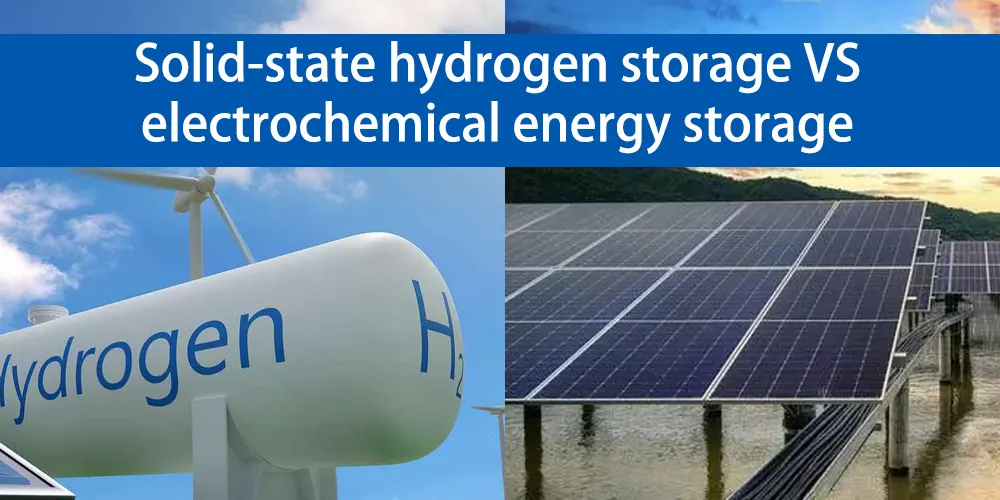
Complement each other
Compared with electrochemical energy storage represented by lithium batteries, hydrogen energy storage has greater advantages in energy density and energy storage duration. However, it is relatively poor in terms of energy conversion efficiency and response speed.
Electrochemical energy storage is mainly used for intraday and high-frequency fluctuations, while hydrogen energy storage is mainly used for seasonal or inter-regional energy transfer.
Hydrogen energy storage and electrochemical energy storage are not in an either-or competitive relationship, but complement each other to jointly support the smooth operation of the future power system.
Development and exploration of solid state hydrogen storage
All over the world, economically developed countries and regions are actively promoting the research and development of solid-state hydrogen storage technology. Countries such as the United States, Japan, and South Korea have been at the forefront of this technology, and European countries are also actively developing this technology.
Compared with the world, China’s research on solid-state hydrogen storage technology started late, but with continuous innovation and increased investment in recent years, substantial progress has been made.
With the development of China’s hydrogen energy industry, various technical bottlenecks have been broken one after another, enabling the application of solid-state hydrogen storage technology.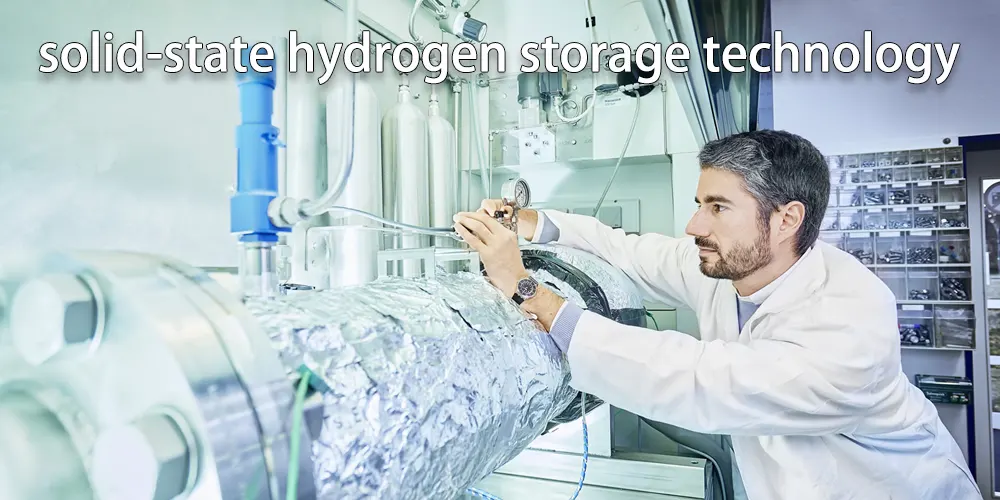
In the pilot project of Yunnan Electric Hydrogen Smart Energy Station, a 3 MPa hydrogen storage tank of the same volume can only store 10 kg of hydrogen, while solid-state hydrogen storage technology can store 200 cubic meters of hydrogen, increasing the hydrogen storage density by 20 times.
In the Guangdong demonstration project, the core technologies and devices used are all from China. The volume hydrogen storage density index of the core unit of the solid-state hydrogen storage device has reached the leading level in China.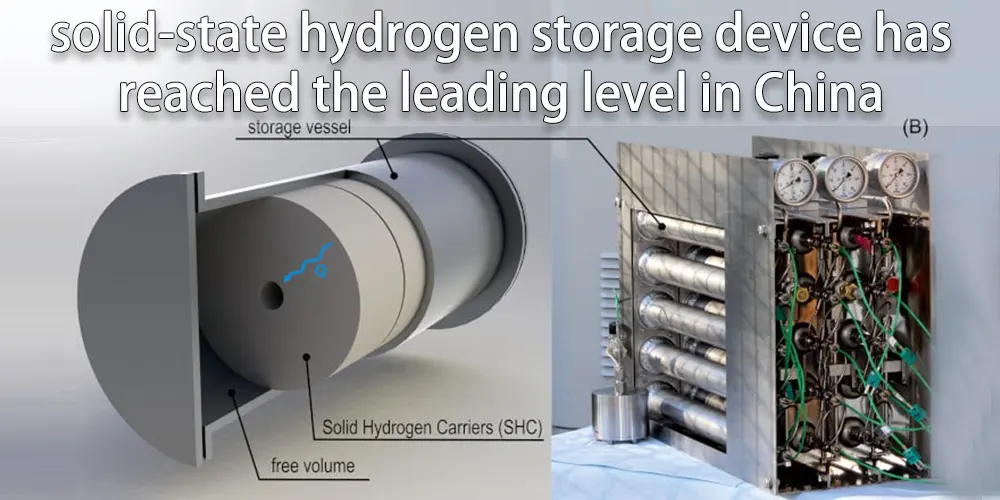
The solid-state hydrogen storage device replaces the hydrogen compressor, high-pressure storage tank and purification system in the traditional hydrogen refueling station, which can save more than 2 million yuan in the construction cost of a single station.
With the in-depth exploration of technologies such as solid-state hydrogen storage, applications in fields such as hydrogen refueling stations, fuel cell vehicles, electric hydrogen smart energy stations, cogeneration, peak shaving and frequency modulation, aviation, military industry, and metallurgy are gradually being implemented.